A frog on a banknote has an unusual assignment. It must be interesting enough to make somebody look. Crane Currency’s demonstration note, “The Beauty of Life,” fills its little world with wetland creatures and intricate vegetation. Its MOTION SURFACE feature adds apparent depth and movement. The artwork is doing security work: giving a busy person something recognizable to check before accepting the paper in their hand.
- Crane NXT sells authentication through physical features, machines and software.
- Its customers include central banks, casinos, brands and manufacturers.
- Three acquisitions have expanded the business beyond currency and payments.
That small act of recognition explains a surprisingly large company. Crane NXT supplies technologies that help establish whether money, products and transactions deserve confidence. Most people encounter the problem rather than the supplier’s name. Is the note genuine? Will the machine accept it? Can a manufacturer trace a product through its supply chain? Each question creates a possible customer.
The distracted human is part of the system
Banknote security has two audiences. One is the counterfeiter, who must find the feature difficult to reproduce. The other is the ordinary person, who must find it easy to recognize. Impressing the first audience while exhausting the second would be an expensive design mistake.
Crane Currency’s micro-optics combine miniature lenses with extremely fine printing to produce visible effects. MOTION SURFACE can make images appear to move, float above the note or sit below it. Applied during banknote printing, it works with cotton paper, laminates and polymer substrates. The company designs these effects with issuers and banknote producers, making the security feature part of the note’s identity.
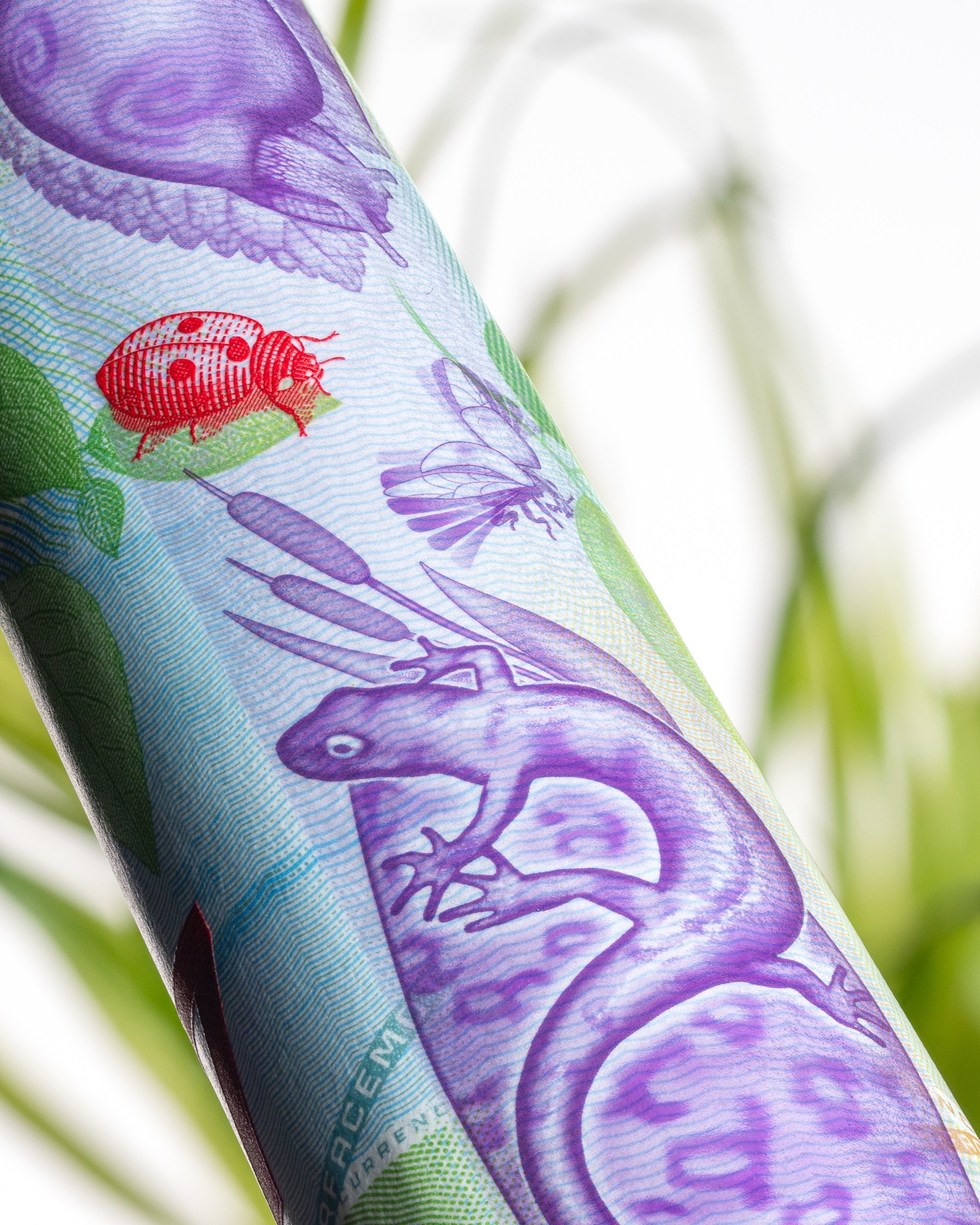
The distinction matters. Crane sells both manufacturing expertise and a recognizable result. Central banks need features they can explain to the public. A security device that requires a seminar every time someone buys lunch has a practical disadvantage.
“The more intuitive the feature, the stronger the trust.”Yadira Sierra, VP Global Design, Crane Currency
Two clocks, one company
Crane NXT’s corporate clock starts in 2023, when the separation of Crane Holdings produced Crane NXT and Crane Company as separate public companies. Calling it a startup would miss the inheritance. Calling it a company founded in 1801 would confuse that inheritance with its present structure.
The older date belongs to Crane Currency’s roots. Zenas Crane established his paper business in Dalton, Massachusetts, in 1801. In 1879, the business was selected to supply paper for U.S. banknotes. The continuity is useful because currency production rewards consistency, specialized materials and accumulated manufacturing knowledge.
Today’s parent, led by president and CEO Aaron Saak, places that knowledge beside payment equipment and newer authentication businesses. It sells to organizations rather than to shoppers directly. The consumer gets a recognizable security feature; the central bank buys the capability to put it there.
The other side of the slot
A person can tilt a note. A payment machine needs sensors and software. Crane Payment Innovations, or CPI, supplies banknote validators, cash recyclers, connectivity tools and services for markets including gaming, retail and financial services. Its SC Advance validator is designed to handle real circulating notes, including worn or damaged ones.
The operational problem extends beyond catching counterfeits. A machine that repeatedly rejects legitimate cash creates delays and service calls. CPI’s products address acceptance, note transport and cash handling; its Easitrax systems help operators manage equipment and cash information. Publicly announced customers include Circa Casino & Resort in Las Vegas and Christchurch Casino in New Zealand.
There is a concrete connection between the two sides of the business. Crane Currency and CPI jointly developed the MOTION Detect and RAPID Detect machine-readable features announced in 2019. Human-visible security and machine verification can be engineered together. That is a more specific advantage than simply owning several security companies.
Visible security
People recognize
Cash validation
Machines check
Product history
Systems follow
Three purchases widen the question
Crane NXT has spent heavily to carry its capabilities into adjacent markets. It completed the OpSec acquisition in May 2024 at an announced $270 million cash price. De La Rue Authentication Solutions followed in May 2025, with a £300 million base purchase price. The two businesses were combined into Crane Authentication.
Those purchases added physical and digital authentication for brands and governments. They also added integration work. The 2025 annual report records $12.1 million of restructuring expense in the security and authentication segment, predominantly severance associated with combining De La Rue and OpSec. Buying complementary capabilities does not make their operations fit automatically.
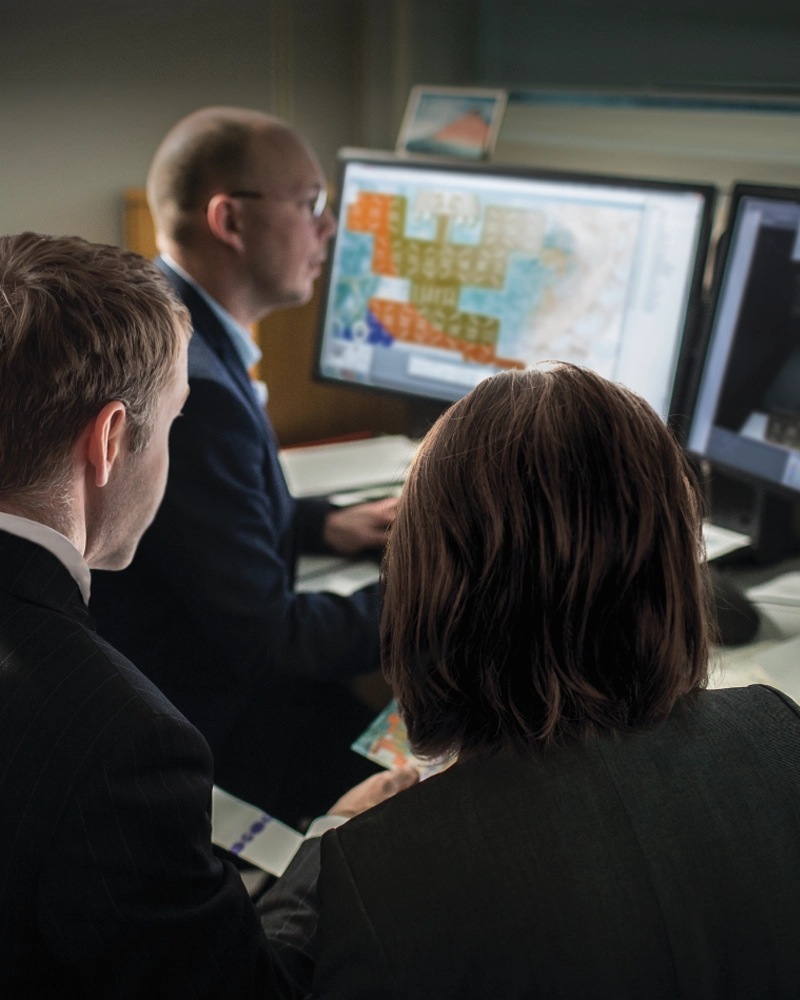
In March 2026, Crane NXT completed its Antares Vision acquisition for approximately €362 million in cash. Inspection, detection and track-and-trace technology extended its reach into life sciences and food and beverage. A medicine pack creates different technical demands from a banknote, but an organization still needs evidence about identity, quality and movement.
Read the growth twice
The August 2026 results show what this strategy produces. Second-quarter sales reached $493.2 million, up 22%. Organic growth contributed 2.8 percentage points; acquisitions contributed 18.4 points and foreign exchange 0.8. Most of the increase came from purchased businesses.
- 18.4 pts Acquisitions
- 2.8 pts Organic
- 0.8 pts Currency
Customers also have alternatives. JCM Global supplies competing bill validators. Giesecke+Devrient’s Louisenthal supplies banknote security threads and foils. Crane’s case rests on its particular combination of proprietary optics, equipment, software and services. The appropriate comparison depends on the job a buyer needs done.
There is a useful lesson here for anyone designing verification: start with the person who must perform the check. Make the evidence legible. Then consider the machinery and records behind it. Visible features still need attention; traceability still needs reliable information. Central-bank guidance recommends checking multiple banknote features. Even a very clever frog should not carry the whole burden.