An emergency loan begins with a problem of timing. A bill has arrived. The money to pay it has not. Cottonwood Financial built a business in that interval, putting the Cash Store name above physical counters where customers could ask for small amounts of credit. Then, in February 2024, the company behind the counters filed for bankruptcy. The lender had developed a timing problem of its own.
- Cottonwood built Cash Store; CNG Holdings acquired the business in 2024.
- The bankruptcy-era operation had about 43,000 active customer accounts.
- Today’s Cash Store advertises installment loans, with availability in three states.
There is something instructive about that reversal. A customer can need a service while the company supplying it struggles to survive. Demand, repayment and the cost of running a lending business are separate questions. Cottonwood’s history puts all three in the same shop window.
The counter was part of the product
Founded in 1996 and based in Irving, Texas, Cottonwood operated in retail consumer finance. Its historical products included payday loans, installment loans and auto-title loans. These addressed borrowers who needed cash quickly and had limited access to conventional credit. The customer was buying access to money, but also a process: a nearby location, an application and someone who could explain what happened next.
That physical presence distinguished the business from a purely digital lender. Cottonwood’s company profile described its branches as company owned, without franchises. The implication is practical: staffing, service and the customer encounter sat inside the same organization. A website could bring someone to the business; a person at a counter could complete the transaction.
The scale was substantial without being a nationwide blanket. At bankruptcy, financial adviser Oppenheimer described 181 branches in Texas, Wisconsin and Idaho, 537 employees, roughly 43,000 active accounts and $32.6 million in receivables. Those figures describe a particular moment in 2024. Receivables are money owed to the business, not its annual sales.
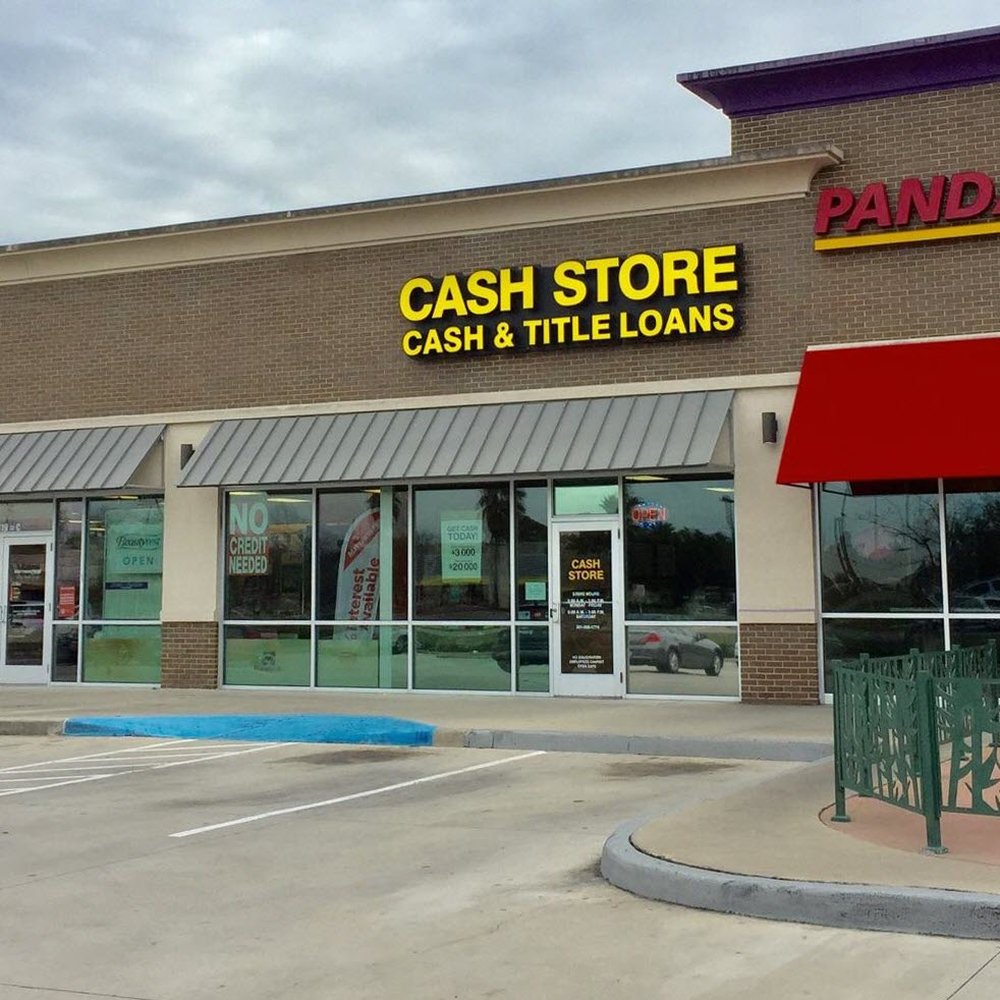
A new owner behind a familiar sign
In an August 1, 2024 transaction announcement, Oppenheimer described Cottonwood’s acquisition by CNG Holdings through a Section 363 bankruptcy sale. CNG already operated consumer-finance brands including Check ’n Go and Allied Cash Advance. The buyer’s own announcement welcomed “over 150 retail locations and 400+ team members.” That acquired footprint should not be confused with the larger count at the bankruptcy filing.
This is the distinction that makes the profile useful today. Cottonwood’s corporate history and Cash Store’s continuing customer business run along different tracks after the sale. Someone recognizing the sign may encounter a functioning lending brand, even though the former owner went through Chapter 11. Familiarity with a storefront does not establish who owns it.
The sign can stay familiar while the business behind it changes.Ownership is part of the story
What a borrower encounters now
The current Cash Store website markets installment loans up to $5,000 in Idaho, Texas and Wisconsin. Its getting-started FAQ says it no longer offers auto-title loans. That matters: a historical description of Cottonwood’s products is a poor substitute for the current menu. Product limits, eligibility and state rules determine what an individual applicant can actually receive.
The borrowing journey also has a useful wrinkle. New customers can prequalify online, but the FAQ says they must come into a store to apply. Returning customers can apply through their online portal. Digital convenience therefore means different things depending on whether the business already knows you. An online beginning does not promise an entirely online transaction.
Applicants need identification, recent income information and an active checking account that has been open for at least 30 days. Underwriting determines eligibility. This makes “underbanked” a more useful description than assuming every customer lacks a bank account. Having an account and having enough affordable credit available are different circumstances.
The price lives beyond approval
Cash Store says an approved applicant receives the proposed amount, rate, due dates and other relevant terms before accepting. Finance charges include interest and fees above the principal borrowed. The practical comparison is the full repayment schedule: how much leaves the household, on which dates, and what remains for ordinary expenses afterward.
In Texas, Cash Store says it acts as a credit services organization alongside third-party lenders. That arrangement adds another reason to read the agreement carefully: the recognizable retail brand and the entity lending the money can be different. The business earns money from consumer credit and associated services; speed alone does not explain its economics.
Cottonwood’s history also contains a concrete warning about how prices are communicated. In April 2020, the Consumer Financial Protection Bureau found deceptive discount representations and other violations involving marketing, servicing and collections. Its order required $286,675.64 in consumer redress and a $1.1 million civil penalty. The lesson is unglamorous and useful: a promotion needs to match the transaction the customer actually receives.
When the lender needed a lender
In its bankruptcy disclosure, Cottonwood attributed its distress to pandemic-related changes in demand, regulatory constraints and difficulty adapting underwriting. Bad debt rose from 19% of operating revenue in 2020 to 43% in 2023. It missed a scheduled debt payment in December 2023. The filing followed in February. These are the company’s explanations, rather than proof that any single factor caused its collapse.
For another operator, the transferable idea is to make the borrowing process understandable at every step, including collection and repayment. The limitation is equally plain: convenient distribution cannot rescue lending whose losses outrun its economics. For a borrower, the useful question survives every change of owner: once the immediate bill is paid, will the next payments fit?