Larry Lawson had a useful description for the sale of a company that had occupied a sizeable part of his working life: his sixteen-year overnight success. The joke works because an acquisition arrives on a particular morning, while building the thing being acquired takes considerably longer. In Lawson’s case, even sixteen years leaves out a substantial opening act. Before the founder, the chairman, and the investor came a keyboard player in a Texas band. He had already experienced the peculiar business of getting strangers to pay attention.
That earlier life deserves room in the account. The Clique was a working band with recording contracts and a touring schedule. Lawson’s later businesses came with different obligations, different collaborators, and rather less attractive record sleeves. Across both careers, he repeatedly reached the same practical crossroads: whether to keep doing the work in front of him or put his own enterprise into the world.
Ten copies, and a first audience
Born in Port Arthur in 1945, Lawson grew up around his father’s businesses. His father left a refinery job, became part owner of a gas station, and subsequently bought a garage. An auto parts store followed. The family lived close to the work. Business ownership was something Lawson could watch at ordinary distance, across the property rather than from the back row of a lecture hall.
Music supplied an early project of his own. He began writing songs as a boy, then arranged a recording session at a studio in Beaumont. The studio recommended musicians to accompany him. Lawson handled the arrangements and asked his father for a ride. He could afford ten copies of the resulting record. Commercial distribution would have been rather ambitious with that inventory; the satisfaction of making it was the point.
It is a modest beginning worth keeping modest. A child organized a session and came home with a record. There was no acquisition on the horizon, no reason to read a future corporate strategy into the piano. There was simply something he wanted to make, and the business of arranging for it to exist.
A band is also an enterprise
Lawson played with Johnny and Edgar Winter in his youth. Lamar University brought another opening: a music scholarship. He attended from 1963 to 1967, eventually changing his studies to accounting. As his band’s commitments grew, school and professional music became difficult to keep on the same calendar. He left without finishing his degree.
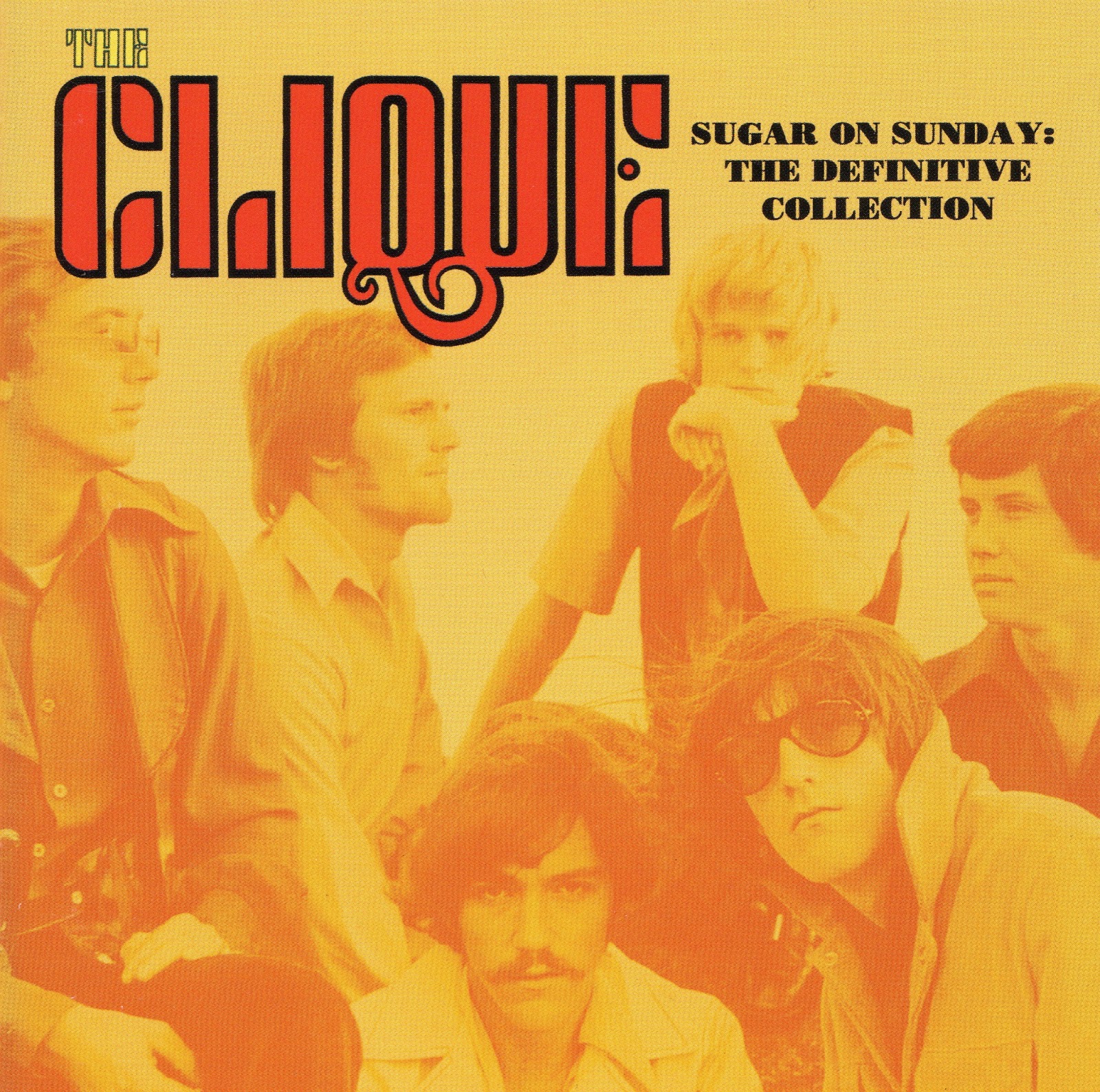
The group’s history involved several names and changing lineups. The musicians who became The Clique had performed as the Roustabouts and the Sandpipers. By 1969, a self-titled album was out on White Whale Records. “Sugar on Sunday” became a Top 40 hit. Years later, another recording, “Superman,” reached a fresh audience when R.E.M. covered it for Life’s Rich Pageant in 1986.
That is a satisfying afterlife for a record: an audience arriving long after the original release campaign has finished. The band’s place in regional music history also endured. The Clique entered the Museum of the Gulf Coast Music Hall of Fame in 2008. Lawson’s executive biography has unusually good material for the part where someone asks what he did before all this.
He had left professional music in 1969. Doubts about the industry and its long-term prospects helped move him toward business. Later, he offered Mick Jagger as an amusing objection to his own reasoning. A former musician is entitled to revise his theory of career longevity when the evidence keeps touring.
Learning what a company needs
The immediate financial adjustment was less amusing. Lawson recalled moving from earnings of $1,000 a week in music to $125 in his new working life. A former high-school coach helped introduce him to a different industry. Sales became his education in how companies operated, how products found buyers, and how much effort sat behind an order.
His early employers included Johnson & Johnson, Edward Weck, and Deseret Medical. He later founded Diagnostic Monitoring Associates, a national sales and marketing business. These were roles involving customers, manufacturers, and commercial execution. By the time eCardio appeared, Lawson had spent years working through the mechanics of getting a business into a market.
The company began in 2004. Lawson initially supplied the financing himself, then attracted outside investment, including Sequoia Capital. The familiar founder vocabulary can make those stages sound automatic. They are separate tasks. Starting a company requires one set of commitments; persuading someone else to put money into it adds another set of people whose expectations now matter.
Recognition followed the operating work. In 2009, he received a regional Ernst & Young Entrepreneur Of The Year award. His response credited the company’s team. That emphasis would surface again when he discussed the importance of giving employees equity, a practical way for the people doing the work to participate in what the business became.
The deal before the deal
September 2014 brought a structural change. eCardio and Preventice announced that they would become wholly owned subsidiaries of a new holding company. Lawson was named chairman and chief executive. Preventice co-founder Jon Otterstatter became president and global strategy officer; eCardio’s John Untereker became executive vice president and chief operating officer.
The geography of the arrangement was specific. Operating and corporate functions would be managed from Houston. Product development would remain in Rochester, Minnesota. eCardio brought a national sales force to the combination. The announcement describes a business assembled from complementary capabilities, with responsibilities divided among people and places. A merger still needs someone to decide where the work gets done.
The following year, Boston Scientific announced an equity investment and an agreement to become Preventice Solutions’ exclusive worldwide sales and marketing representative for the specified offerings. That commercial relationship preceded the eventual acquisition by years. The future buyer had already become both a shareholder and a business partner.
The arithmetic of an exit
Boston Scientific announced its acquisition agreement in January 2021 and completed the purchase on March 1. The stated terms were $925 million upfront, with up to another $300 million tied to a commercial milestone. Its existing stake of approximately 22 percent reduced the amount it would pay for the ownership it did not already hold.
The business had recorded $158 million in net sales in 2020, a 30 percent increase over the previous year. Those figures supply a useful companion to the sale price. A transaction attracts attention on one day; sales describe an enterprise already doing business. By then, Otterstatter was Preventice’s chief executive. The company had a life and a leadership structure beyond the founder’s original role.
“My 16 year overnight success!”
Larry Lawson, on LinkedIn
Making room for the next founder
Lawson’s later work has included HeartcoR Solutions, which he founded in 2015, and Proxima Clinical Research, co-founded with Kevin Coker in 2017. HeartcoR lists him as founder and chairman, alongside chief executive Ciaran Cooper. His investment firm carries a compact personal signature: LAWALA takes its syllables from Larry Wayne Lawson.
In 2022, another effort put resources within reach of younger companies. M1 MedTech opened applications for an accelerator cohort, identifying Lawson as a venture partner and investor. The offer combined money and services, with investments of up to $100,000 and a three-month program. Workshops and individual mentoring were part of the design.
The first class had five companies, selected from about sixty applicants. Isabella Schmitt had brought the accelerator idea to Lawson and Coker; Lawson supplied its initial investment. The authorship matters. Here was an experienced founder backing someone else’s proposal and helping create the conditions for other people to work. The next enterprise did not require him to be the only person with an idea.
The scholarship comes back around
Lamar remained part of his life. In December 2012, the university awarded him an honorary doctorate of humane letters. It named him a Distinguished Alumnus for 2020. The student who had left to pursue a band returned to the university’s story through a different door.
His involvement extended to its foundation and an advisory board for innovation, commercialization, and entrepreneurship. He also spoke at a faculty entrepreneurship boot camp. The connection joined two parts of his working life: the willingness to begin something and the accumulated experience of what beginning actually asks of a person.
There was financial support too. Lawson was among five alumni who each committed $20,000 a year for three years to support engineering faculty fellowships. Separately, a university account described a $1 million deferred gift in his estate plan for electrical engineering research. The distinction between a planned gift and an immediate payment matters; both belong to a relationship intended to continue.
In 2018, Lawson also received the Horatio Alger Award. He was one of twelve people selected for that year’s class, with induction ceremonies held in Washington in April. The association’s educational purpose gave that recognition a practical setting: its members support scholarships for young people. Alongside the fellowships and university service, the award belongs to the part of his biography concerned with giving someone else a place to begin.
His career leaves plenty for a short introduction to trip over: the band, the sales jobs, the companies, the board seats, the campus. Taken at full length, the connections become easier to see. Lawson has repeatedly found himself close to the start of something. Sometimes he played. Sometimes he financed it. Sometimes he helped someone else get ready. The second act has had room for other people’s opening numbers.
Keep the record spinning
Music, conversations, and the businesses along the way.