John Roa’s first useful business insight involved a very heavy computer. Customers were dragging their desktop machines, monitors and cables into a repair shop, then waiting days for an answer. As a teenager working there, he proposed going to their houses instead. He needed someone to drive him. The repair could happen in an hour. Technology had acquired an inconvenient amount of luggage; his contribution was to leave it where it was.
That small adjustment contains a surprising amount of his subsequent career. Roa has built businesses around the distance between what technology can do and what people actually want from it. He founded the Chicago design consultancy ÄKTA, sold it to Salesforce, and later founded the consumer intelligence company AnthologyAI. Now he is taking another turn, as Chief AI Officer at Raptive. The question following him has become more complicated: how much must a machine understand about a person before it can be trusted to act for them?
The customer shouldn’t have to carry the monitor
Born in Detroit, Roa spent parts of his childhood in Venezuela, where his father’s work took the family, and grew up in Grosse Pointe. By 1999, he and a friend had started an on-site computer repair business. There was a website, an office and eventually more people. He also learned an early lesson about ownership when the partnership came apart. Being instrumental in building something and legally owning it turned out to be separate propositions.
The practical streak survived. At Western Michigan University, his experience of education was considerably less tidy than a founder biography usually permits. Years later, he described a graduating grade-point average hovering near 2.0. He credited college with teaching him useful things about networking, sales, mathematics and finance, while acknowledging that conventional academic performance had never been his calling card.
In 2016, he announced an entrepreneurship scholarship with the university that dispensed with a minimum GPA. Applicants would demonstrate their ability through work such as a pitch or business plan. Here was a donor with a personal objection to the sorting mechanism. If a student could build something persuasive, the transcript would have to share the room.
“This scholarship will have no GPA requirements”
John Roa, announcing his scholarship, 2016
A design company with a non-designer in charge
Roa founded ÄKTA in Chicago in 2010. His timing put the consultancy amid companies trying to make their digital products easier and more appealing to use. He bootstrapped the business. In his later telling, he benefited from two developments arriving together: a growing technology market and customers learning to expect thoughtful design from the devices in their pockets.
He was candid about a detail that could have made an awkward opening slide: he did not consider himself the design expert. His argument for running the company anyway was a division of labor. Hire people who know the work deeply, give them responsibility, and concentrate the chief executive’s attention on the commercial decisions that make their work possible.
He put that philosophy in writing in 2015. Product specialists needed room to manage quality and direction; the CEO needed to handle growth, partnerships and fundraising. Knowing enough to hold an expert accountable mattered. Hovering over every decision made the company dependent on the capacity of one person. A founder could become a bottleneck while believing he was being indispensable.
A practical management argument Roa made in 2015: define the jobs, then let people do them.
By 2015, ÄKTA had moved into an 18,000-square-foot headquarters and innovation center in Chicago’s Loop, with four times the space of its previous office. That September, Salesforce acquired the company. Five years separated its founding from the sale. For someone whose earliest business experience had included losing his place in a venture he helped create, this was a rather different ending.
From founding ÄKTA to its acquisition by Salesforce.

Never throw the ping-pong match
There is a useful antidote to the corporate version of Roa in a story he tells about Jimmy Chamberlin, the Smashing Pumpkins drummer. Chamberlin was building a technology business and considering Roa’s company. Roa, a former drummer, was starstruck. Then the prospective client noticed the office ping-pong table and proposed a game.
Roa understood the diplomatic possibilities of losing. He won anyway. In his account, the competitiveness earned Chamberlin’s respect, and the encounter became a friendship. It is an agreeable footnote to all the solemn literature about winning clients: occasionally, the ball simply has to go back over the net.
His writing offers a less theatrical view of competition. An enthusiastic poker player, he has compared long tournaments with lengthy negotiations: reading people, anticipating decisions, calculating what a risk might cost. Yet he also draws a boundary around the analogy. Business depends on cooperation, and treating every relationship as a contest with one survivor is a poor way to keep one running.
That distinction makes the ping-pong episode more revealing than a generic tale about determination. He could enjoy a contest without turning every other person into an opponent. His poker advice explicitly warns against dishonesty and the desire to destroy competitors. The entertaining story gets the attention; the qualification does the useful work.
A detour with a return ticket
Roa’s interests have often carried him well outside an office. He has described riding a wooden sled down a volcano in Nicaragua and using travel to reconsider decisions that seemed settled at home. After a visit to Israel, he brought a particular exercise into ÄKTA: when executives agreed on a major decision, someone would be assigned to argue against it.
There is something pleasantly inconvenient about a company paying someone to interrupt its own agreement. The method made dissent part of the job, rather than an act of personal disloyalty. For a founder who sold confidence for a living, arranging to hear a convincing objection was a useful counterweight.
His activities beyond software included Digital Hope, a nonprofit supporting underfunded international organizations through crowdfunding, and animal advocacy. His publisher also identifies him as an angel investor. Roa’s career has room for commercial bets and charitable work, without requiring either to explain away the other.
In 2020 he published A Practical Way to Get Rich . . . and Die Trying, a memoir of his entrepreneurial experience, and hosted The John Roa Show. Writing supplied another way to examine a career that looked much neater when compressed into an acquisition announcement. A book has room for the wrong turn, the odd encounter and the joke that refuses to fit the slide.
What is a person’s data worth to the person?
In 2021, Roa founded the venture that became AnthologyAI. Its consumer app, Caden, addressed an exchange most internet users had already been making for years: personal information in return for a service. Caden offered a more explicit bargain. People could connect accounts, see information about their own activity and opt to receive compensation for sharing data.
The commercial counterpart was CadenOS, an intelligence suite for enterprises. Data about purchases, travel and media consumption could help organizations understand behavior across services. The engineering challenge was accompanied by a question of permission. A fuller picture of a person is commercially useful; persuading that person to participate is a separate task.
In August 2023, Caden announced a $15 million Series A led by Nava Ventures, with investors including Jerry Yang’s AME Cloud Ventures. Capital bought time to develop the exchange and bring it to market. The individual on the other end still needed a reason to connect an account and keep it connected.
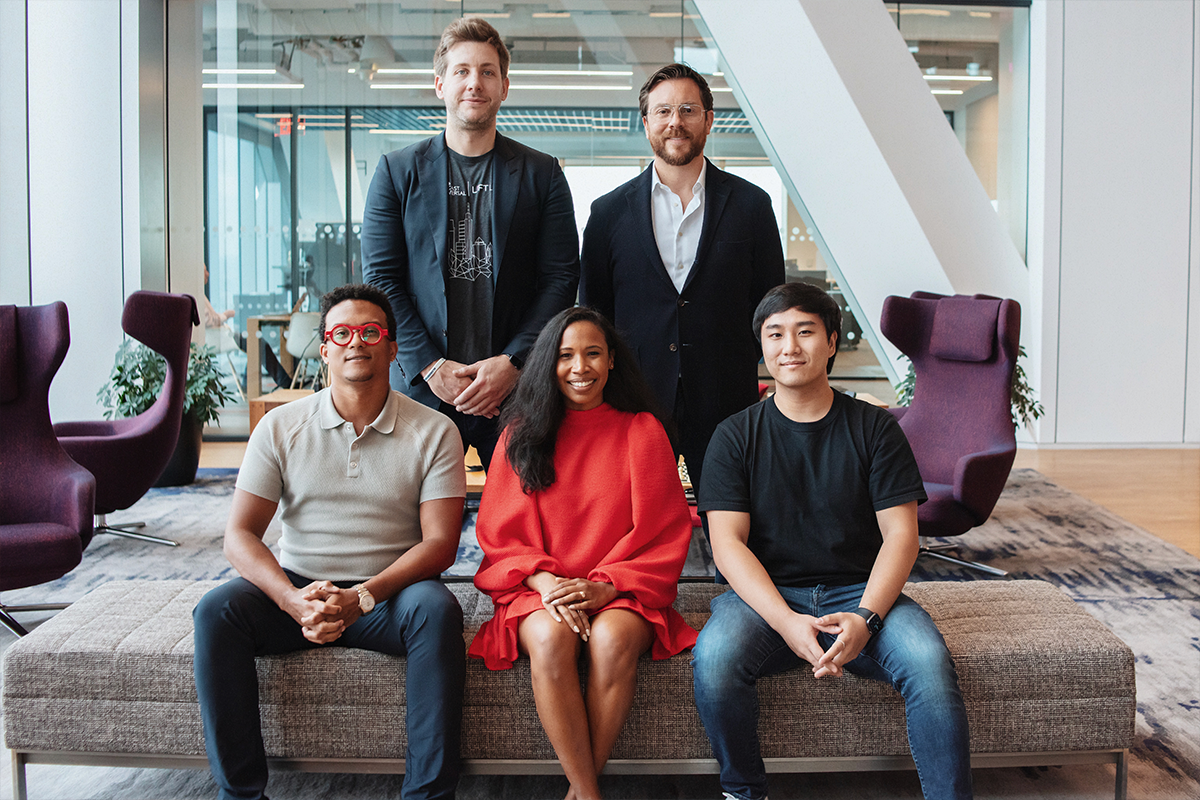
AnthologyAI joined Comcast NBCUniversal’s Spring 2024 LIFT Labs accelerator, a five-week program aimed at enterprise partnerships. Its predictive work ranged across retail, travel and entertainment. The ambition was to understand what customers might do next by connecting more of what they had already done.
By February 2025, the company was announcing interoperability with large language models. It reported an accumulated dataset exceeding 45 billion signals and more than 100 million new data points daily. Those were company figures, and the units matter: a signal is an observation, not a customer. The proposition was that current behavior could make an AI system’s answers more useful than language alone.
- 01PermissionA person chooses to share
- 02ActivityPurchases, travel, media
- 03ContextConnect the observations
- 04InsightHelp inform a decision
The first job offer he accepted
In January 2026, Roa published an essay called The Last Interface. Its central concern was personal context: an AI agent could carry out instructions and still fail to represent the person giving them. His proposed future required systems that understood preferences, constraints and priorities across different parts of a life. He presented this as an architectural problem, with trust and control built into the arrangement.
The essay gives his earlier ventures a common thread. Repair work reduced the effort of getting help. Design consulting made digital systems more usable. Consumer data supplied context. His next business question concerned the knowledge an automated representative would need before a person should delegate a decision to it.
In June 2026, he joined Raptive as Chief AI Officer and General Manager of Raptive Intelligence. Raptive also acquired AlchemyAI, the food-intelligence venture he had founded. Describing the appointment publicly, Roa said it was the first job offer he had accepted in his professional life. Seven technology companies into the journey, he was trying a new arrangement.
The new unit begins with food, combining creator expertise with technology connecting recipes, ingredients, products and shopping intent. Roa’s work now sits alongside Raptive’s existing publisher relationships. A recipe is an approachable place to encounter a large problem: instructions become useful through context, and expertise has an author whose contribution deserves recognition.
The teenager who wanted customers to stop hauling computers has arrived at software meant to carry more of their decisions. His work keeps returning to the person asking for help. The next test will be whether that person feels understood, gets a useful result and chooses to come back.
Keep the conversation going
Explore Roa’s writing, work and public conversations.