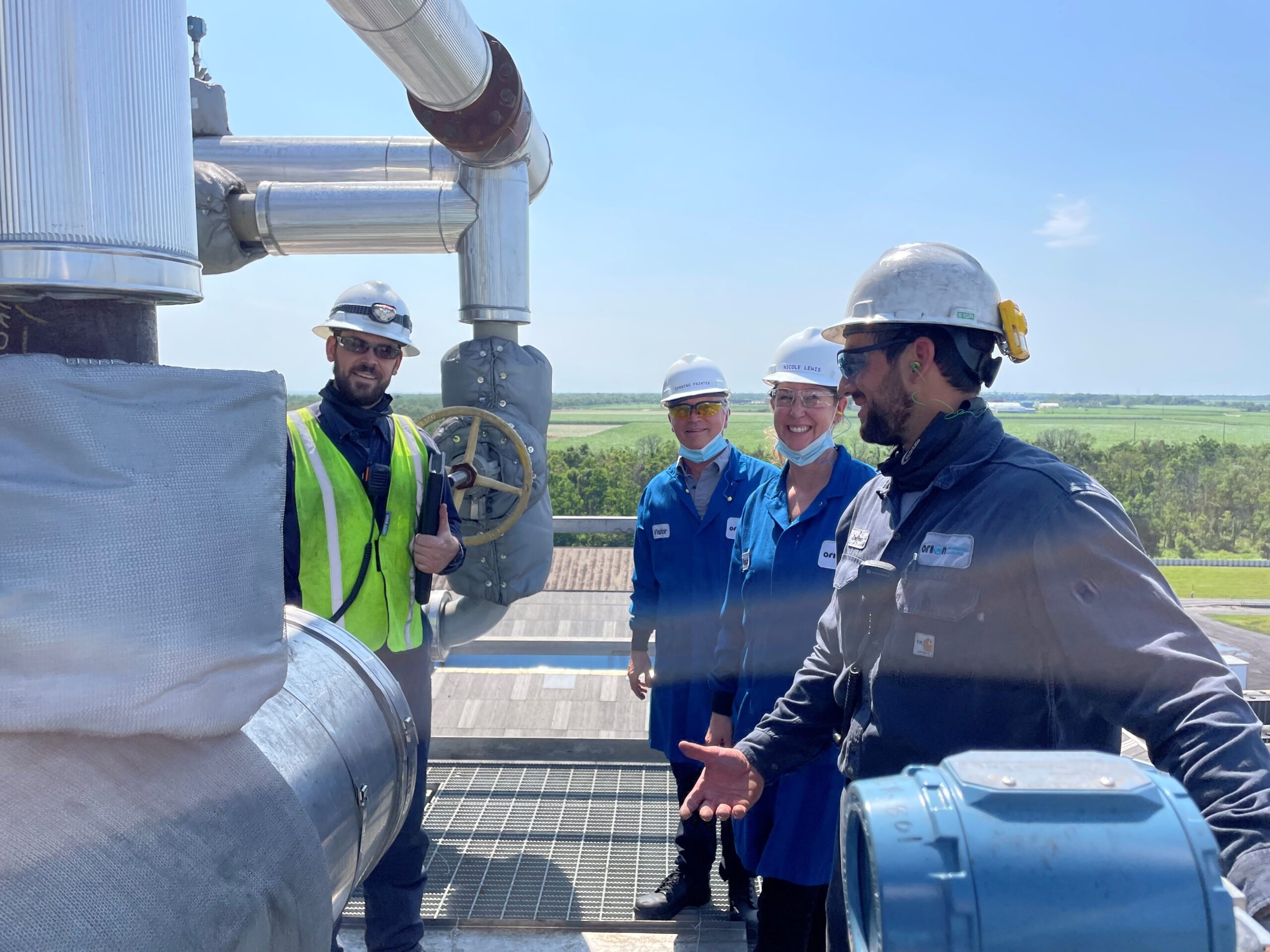
Corning Painter went to Louisiana to look at a machine most people would prefer never to think about. At Orion’s Ivanhoe plant, a flue-gas scrubbing system was taking shape among the pipes and steelwork. In a September 2021 account of the visit, he named the people leading the installation and thanked the colleagues who showed him around. Hurricane Ida had complicated an already difficult job. The chief executive’s subject was progress measured in equipment.
It is a useful place to meet Painter. He runs a business whose products tend to disappear into somebody else’s: the tire beneath a car, the black in a coating, the conductive material inside a battery. Carbon black can be sold as powder or pellets. Its contribution is more elaborate than its appearance suggests. A black powder has, in this case, an unexpectedly long job description.
Since becoming Orion’s CEO in September 2018, Painter has had to reconcile two demands. Customers want materials that perform consistently. They also want ways to reduce dependence on conventional fossil feedstocks. His answer has involved old tires, new supply agreements, research partnerships and considerable plumbing. The interesting part of his story lies in how often a large ambition returns to a very physical question: what can this plant actually do?
Thirty-four years before the new desk
Painter arrived at Orion with a long industrial apprenticeship behind him. He studied chemical engineering at Carnegie Mellon University from 1980 to 1984, then joined Air Products through its career development program. The beginning sounds orderly enough. What followed was an education in the many ways a chemical business can be run: commercial assignments, operations, electronics, supply chains, strategy and technology.
His career included ten years overseas in Europe and China. By 2013 he was senior vice president of Merchant Gases; from 2014 to 2018 he served as executive vice president of Industrial Gases. At the time Orion hired him, that Air Products business was described as an $8 billion operation. He had spent 34 years at one company before taking responsibility for another.
That route helps explain the vocabulary of his subsequent work. A supply agreement and a production line are connected decisions for someone who has managed both supply chains and operations. Painter also holds a professional engineering credential in Pennsylvania. His move into the chief executive’s office followed a career in which the commercial proposition repeatedly had to meet the process that would deliver it.
At Orion he succeeded Jack Clem, who had led the company since 2011. Painter joined the board in October 2018. The succession put him in charge of an established manufacturer with an international footprint, rather than a business waiting to be invented. Its existing plants, customers and technical capabilities would be the means of changing what it made and how it made it.
The tire has another appointment
For a consumer, a worn tire is an errand. For Painter’s business, it can be raw material. Pyrolysis exposes discarded tires to high temperatures, yielding products that include oil and recovered carbon black. Orion’s circular route uses the oil as feedstock to manufacture new carbon black. The distinction matters: processing the oil into a new material is a separate step from recovering the solid material during tire recycling.
Painter has explained the opportunity through the ordinary economics of buying tires. In a sustainability interview, he put it simply: “They are thinking about how much the tire costs and how long it lasts.” That observation gives the circular economy an unusually demanding customer. An environmental benefit must make its way into a purchase shaped by price and service life.
“They are thinking about how much the tire costs and how long it lasts.”
Corning Painter, on tire buyers
Making that proposition work takes more than a successful trial. In May 2024, Orion announced an investment in French recycler Alpha Carbone, paired with a long-term agreement to buy its tire pyrolysis oil exclusively. The arrangement was intended to help the recycler expand to commercial volumes and give Orion feedstock for circular grades. The announcement described a partnership to build capacity; it did not mean every planned expansion was already operating.
In February 2025, Orion added a long-term supply agreement with Warsaw-based Contec. This widened its sources of tire pyrolysis oil. The sequence is revealing: before the new material can become a dependable product, yesterday’s tires need to become a dependable input. Circularity acquires a procurement department surprisingly quickly.
The unglamorous importance of a tank
By June 2026, the project had another concrete expression. Orion announced circular carbon black production at its ISCC PLUS-certified Qingdao plant in China, with three ECORAX Circular grades for tires and mechanical rubber goods. The company had already expanded production in Jasło, Poland, during 2025. What began as a recycling proposition was becoming a geographically broader manufacturing operation.
Both plants used dedicated oil tanks to keep tire pyrolysis oil separate from conventional carbon black oil. Separate streams then fed the reactor, allowing controlled blending. Pedro Riveros, Orion’s senior vice president for Global Rubber Carbon Black, described the importance of receiving, storing and dosing the material in a controlled way. These details explain what scale means here: repeatable handling, measurable inputs and consistent output.
Painter’s work has also included protecting the supply of conventional feedstock. In South Africa, the threatened closure of the Dom Pedro tank facility put Orion’s Nelson Mandela Bay operation under pressure. The company relied on imported oil and could not simply dispense with storage. A replacement tank farm in the Coega special economic zone provided a way forward.
At the 2024 celebration, Painter recalled the difficulty of finding an alternative facility and the trucking costs of looking farther away. The new infrastructure included a 5.2-kilometer pipeline and two 18,000-cubic-meter tanks. Public bodies and the Coega Development Corporation were involved in delivering it. For the executive overseeing a global business, local infrastructure could determine whether a plant had a future. A tank, on occasion, deserves the speech.
Innovation comes with colleagues
The circular-materials program is visibly collaborative. Orion developed the carbon black recognized by the European Commission’s Innovation Radar through BlackCycle, an EU-funded initiative led by Michelin. Seven industrial partners and five research and technology organizations participated. In March 2025, Orion announced its recognition as a Key Innovator for the work. The achievement belonged to a research and industrial network, with Painter directing the company participating in it.
His choice of technical leadership offers another clue to what he values publicly. Announcing Natalia Scherbakoff as chief technology officer in October 2024, he emphasized her experience moving ideas into successful product launches and her commercial understanding. Based at the Cologne innovation hub, she would oversee technical centers across several countries and a €12.8 million project to develop carbon black production from alternative carbon sources.
There is a similar emphasis on working relationships in his public comments about culture. In 2021, he signed the CEO Action for Diversity & Inclusion pledge, supporting constructive workplace conversations and the sharing of experience. His LinkedIn profile also records five years chairing the board of Valley Youth House, from February 2014 to February 2019. Those commitments sit alongside the industrial career, rather than explaining away its demands.
The ledger has a vote
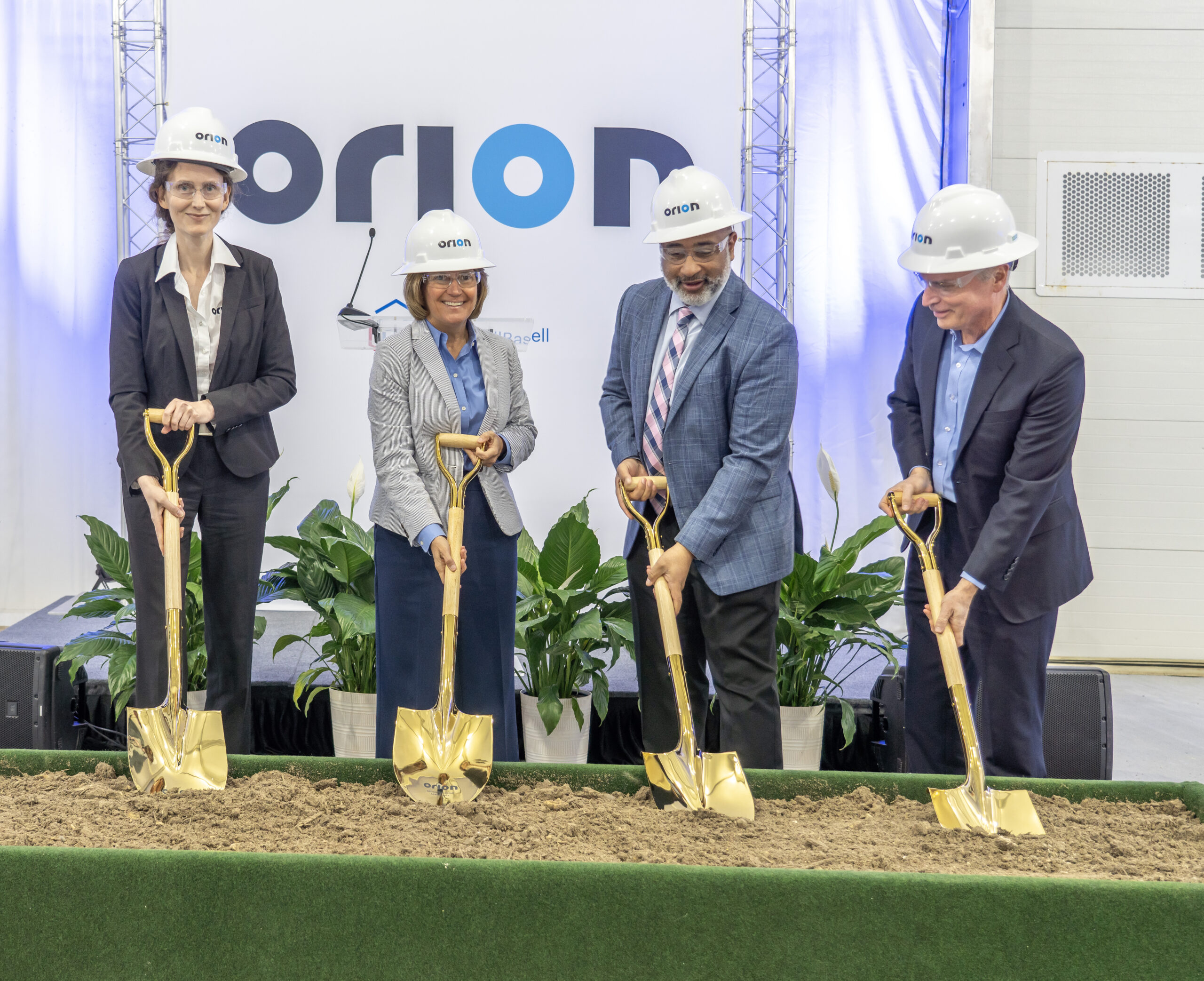
The commercial test remains unavoidable. In July 2025, Orion announced plans to discontinue three to five production lines across the Americas and EMEA by year-end. Painter linked the decision to concentrating maintenance investment on better-performing assets and improving free cash flow. Building new capabilities and withdrawing from weaker ones can occupy the same executive calendar.
The second-quarter 2026 figures illustrate why. Specialty Carbon Black generated $39 million in adjusted EBITDA, compared with $19.9 million a year earlier. Rubber Carbon Black went the other way, falling from $48.9 million to $19.2 million. Adjusted EBITDA is a company-defined, non-GAAP earnings measure. The contrast within the business is more informative than treating either segment as the whole story.
Quarterly adjusted EBITDA
Painter has also become more outspoken about the conditions surrounding manufacturing. In his letter accompanying Orion’s 2025 sustainability report, published in 2026, he supported the underlying goal of Europe’s Emissions Trading System while challenging its treatment of his industry. He argued that energy-intensive carbon capture, the handling of circular feedstocks and competition from imports needed greater recognition. These are his policy arguments, with the interests of European production plainly at stake.
In June 2025, Stepan appointed him to its board, adding another chemical company to his responsibilities. The connecting thread through these roles is industrial judgment: where to invest, which inputs to secure, how to move research into production and when to stop spending on an asset. Back at Ivanhoe, the photograph supplies a less abstract version. Painter stands among colleagues and machinery. The next question is close at hand, somewhere along the pipe.