SaaS • CRM • Google Workspace Partner
Copper CRM
The relationship management platform that lives inside Gmail - where your team already is. Google's only recommended CRM. No manual entry, no excuses.
The relationship management platform that lives inside Gmail - where your team already is. Google's only recommended CRM. No manual entry, no excuses.
Open your inbox on a Monday morning. Somewhere in there is a client you haven't followed up with, a deal that stalled out after the holidays, a promising lead from last week's conference. Most CRMs want you to close Gmail and go log the information somewhere else. Copper decided that was the entire problem.
Copper is a customer relationship management platform built specifically for teams who live in Google Workspace. It pulls contact information directly from Gmail threads, auto-populates records without anyone touching a keyboard, and sits right inside the tools your team already uses every day. No separate tab. No copy-pasting. No reps skipping the CRM because it takes too long.
As of 2026, more than 30,000 businesses across 100 countries use Copper - from creative agencies in Brooklyn to consulting firms in London to real estate teams in Sydney. And one fact keeps showing up in every conversation about the platform: it is the only CRM that Google has ever officially recommended on the Workspace Marketplace.
Copper by the numbers - a 12-year-old company that still has Google's only CRM endorsement.
"Salesforce might have Einstein, but if you give Einstein garbage, it will give you garbage results."- Jon Lee, Founder of Copper CRM
The dirty secret of the CRM industry is that most CRMs don't get used. Industry analysts have spent decades writing about it. Sales managers have complained about it at every offsite since Salesforce went public. The problem isn't that the software is bad. The problem is that most CRM systems are built to serve the organization - not the person actually doing the work.
A sales rep closes a call on Monday, then has to remember to open Salesforce, find the right record, log the call notes, update the deal stage, add the follow-up task. Every step is friction. Every step is a reason to do it later, or not at all. And when the data doesn't get entered, the reports are meaningless, the forecasts are wrong, and the manager wonders why they're paying six figures a year for an empty database.
Jon Lee had lived this problem. Before founding the company in 2013, he'd worked in investment banking at Merrill Lynch, run operations at Yahoo, and founded a gaming company that Zynga eventually acquired. He'd seen how people actually worked: inside email, inside their calendar, switching as little as possible. The CRM had to meet them there, or it wouldn't get used at all.
"CRMs are traditionally systems of record, but we see Copper as a system of action as well."- Steve Holm, CEO of Copper CRM (2025)
The original company name was ProsperWorks - which, as names go, is exactly as forgettable as it sounds. But the idea underneath it was sharp: Google was already winning the productivity war. Gmail, Google Calendar, Google Drive - millions of teams had moved their entire work lives into Google's ecosystem. Nobody had built a CRM that actually belonged there.
Lee's bet was that a CRM inside Gmail would get used, while a CRM outside Gmail wouldn't. That bet turned out to be right enough to attract Google Ventures, True Ventures, and Norwest Venture Partners. By 2016, ProsperWorks had won Google's Partner of the Year award. By 2017, the company had raised $53 million in a Series C led by Norwest's Promod Haque - a Midas List Hall of Fame investor who doesn't exactly back maybes.
In July 2018, ProsperWorks became Copper. The name was chosen with deliberate symbolism: copper conducts energy. It's been used as a medium of exchange across civilizations. It's common, unassuming, and essential. The rebrand marked a shift in the company's self-understanding - from a "sales CRM" to a platform for any business built on relationships.
Jon Lee launches the company in San Francisco with 5 employees and a single idea: put the CRM inside Gmail.
Recognized as the recommended CRM on the Google Workspace Marketplace. Series A from True Ventures closes.
$24M Series B closes with GV (Google Ventures) joining as an investor. Named Google Partner of the Year.
Norwest Venture Partners leads the round. Total raised crosses $75M+. Product expands beyond pure CRM features.
12,000 customers in 110+ countries. The company becomes Copper - named after the metal that conducts energy between everything.
Copper buys Sherlock, an engagement analytics and scoring platform, adding intelligence to the relationship layer.
Hits 30,000+ paid customers across 100+ countries. Growth concentrated in creative agencies, consulting, and professional services.
Copper announces evolution from CRM to end-to-end client management platform for professional services. Users add 1M new contacts.
The core premise hasn't changed since 2013: if your team uses Gmail, Copper is invisible in the best possible way. Open an email from a client you've never logged before, and Copper already knows their company, their title, their LinkedIn. It has read your inbox - with permission - and built the contact record before you thought to ask.
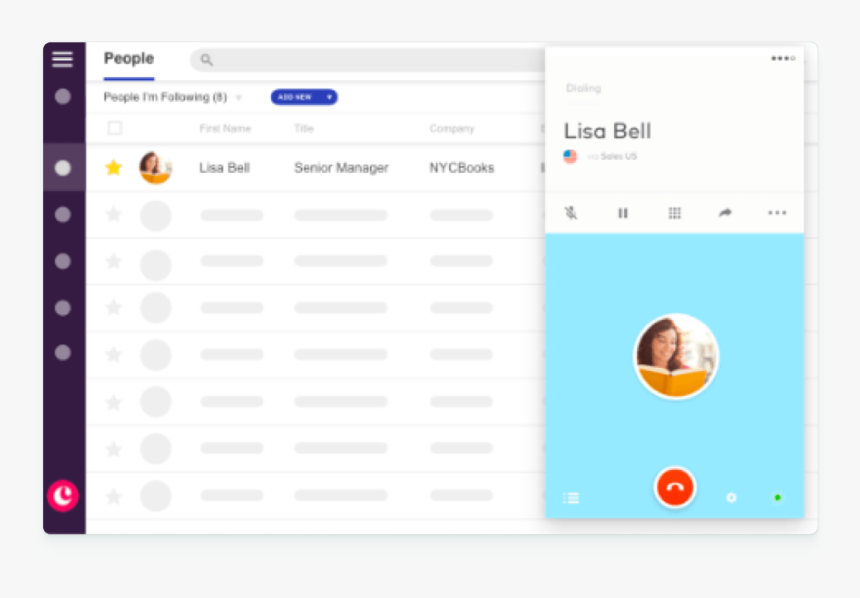
From there, deals move through visual pipelines. Tasks get assigned. Projects tracked. The Chrome extension means reps never leave Gmail to update a record. Google Calendar appointments are automatically linked to the right contact. Google Drive files attach to deals without dragging anything anywhere. The integrations aren't bolted on - they're the product.
In 2024, Copper shipped 35+ new features: contact forms that auto-populate the CRM, business card scanning, pipeline automation, click tracking for emails, and tighter LinkedIn integration. In 2025, the company went further - positioning itself as a full client management platform with project management, review tracking, and AI-powered enrichment via Copper GPT. The phrase the CEO uses is "system of action, not just a system of record." The product changelog backs it up.
Pulls contact data, email history, and activity automatically from Gmail threads. Zero manual logging required.
Visual drag-and-drop deal and project pipelines with customizable stages, lead scoring, and automated reminders.
Surfaces all CRM data inside Gmail and Google Calendar. Update records without switching a single tab.
ChatGPT-powered AI for contact enrichment, email drafting, and surfacing relationship insights automatically.
Import contacts, log activity, and manage relationships directly from LinkedIn profiles without leaving the platform.
End-to-end project tracking for professional services - from first contact to final delivery - inside one platform.
Six tools that replace the entire "I'll log it later" promise your team keeps breaking.
Copper's most credible endorsement doesn't come from a G2 badge or a customer case study. It comes from the fact that Google - a company that could build any CRM it wanted - chose to recommend Copper on the Workspace Marketplace. Not as a paid partner. As the recommended CRM. That distinction held in 2015, again in 2016 when Google Ventures wrote a check, and again in 2023 when the Workspace Marketplace refreshed its recommendations.
The customer list includes names like Zendesk, Lyft, Betterment, SoftBank, and Udacity - companies with sophisticated operations that made a deliberate choice to run their relationship management in Gmail. One consulting firm grew its client base 10X after adopting Copper. A creative agency called Weave doubled its client base in a single year.
The 2024 and 2025 product cycles tell the story in user data: in 2025 alone, Copper's users collectively added one million new contacts and 127,000 new companies to the platform. That's not a software feature getting used - that's a daily workflow. Teams are actually opening Copper, adding data, and managing their most important relationships through it.
Bar widths are proportional representations of relative scale, not absolute values.
"Your fave client and project management platform." - Copper CRM's actual Instagram bio, because apparently B2B companies can have personality
Copper's investor list reads like a who's who of people who had a reason to believe in the Google Workspace thesis. Google Ventures invested directly. Norwest Venture Partners - whose Promod Haque is in the Midas List Hall of Fame - led the Series C. True Ventures came in early and stayed through multiple rounds.
| Round | Amount | Date | Key Investors |
|---|---|---|---|
| Seed | undisclosed | Jun 2013 | Bloomberg Beta |
| Series A | undisclosed | Mar 2015 | True Ventures |
| Series B | $24M | Sep 2016 | GV, True Ventures, Storm Ventures |
| Series C | $53M | 2017 | Norwest VP, GV, Texas Pacific Group |
| Series C+ | $15M | 2019 | Norwest VP, IGSB, CrunchFund |
Six rounds, 17 investors, and a Google partnership that money can't quite replicate.
The CRM market is genuinely overcrowded. Salesforce owns enterprise. HubSpot owns marketing-led growth. Pipedrive owns activity-based selling. Zoho owns "I need everything for under $50 a month." Copper made a different choice: it owns the team that lives in Gmail.
That focus is a feature. Copper doesn't try to compete with Salesforce's 3,000-page feature list or HubSpot's marketing automation suite. It competes by being frictionless for a specific kind of team - 5 to 100 people, relationship-driven work, Google Workspace already in use. For those teams, the question isn't "which CRM is technically superior." It's "which CRM will my team actually open tomorrow morning."
Every CRM claims to be different. Copper is the only one Google actually recommends.
There's a version of the future where AI handles all the relationship logging automatically - where your CRM is just a layer that reads your communications, builds your contact graph, and tells you what to do next without you ever filling out a form. Copper's 2025 pivot toward a full client management platform - complete with Copper GPT and AI enrichment - is a bet that this future arrives inside Gmail, not somewhere else.
CEO Steve Holm, who returned to lead the company after being one of its original product architects, talks about shifting Copper from a "system of record" to a "system of action." The 2025 product launches backed that language: end-to-end client management for professional services, integrated project tracking, LinkedIn syncing, review management. It's not just a CRM anymore. It's the platform where a 20-person consulting firm runs its entire client-facing operation.
Which returns us to Monday morning. That sales rep with the stalled deal and the unfollowed lead - if they're using Google Workspace, Copper already knows about both. The contact record is populated. The deal is in the right pipeline stage. The follow-up task is queued. The CRM worked because it didn't ask anyone to do anything extra. It just lived where the work was already happening.
That's the entire thesis. It's been the thesis since 2013. And twelve years later, 30,000 businesses in 100 countries are still proving it right - one Gmail thread at a time.
"Copper is built for teams who want to manage relationships, not manage software."- Copper CRM, product philosophy