A freezer seems an unlikely place to discover the limits of a machine. The machine is supposed to be the reliable part. Yet when Larry Laurin introduced automation at Conestoga Cold Storage, he encountered a problem: available stacker cranes were poorly suited to the punishing environment. His response was to get into the crane business himself.
That decision explains much of what Conestoga has become. It stores and distributes frozen food, but it also designs the machinery and software that make the operation possible. The answer begins with what customers asked the warehouse to do.
- Frozen-food storage, picking and distribution for businesses.
- Own cranes and software, developed around operating needs.
- A phased Halton Hills expansion with an early C$250 million estimate.
01The meat pies began moving faster
Laurin founded Conestoga in 1974 after six years managing poultry processing plants in Ontario. Its Kitchener operation initially served processors of turkey, vegetables and meat pies. By the late 1970s, customers wanted smaller selections of cases at shorter notice. Food was becoming more demanding about its departure time.
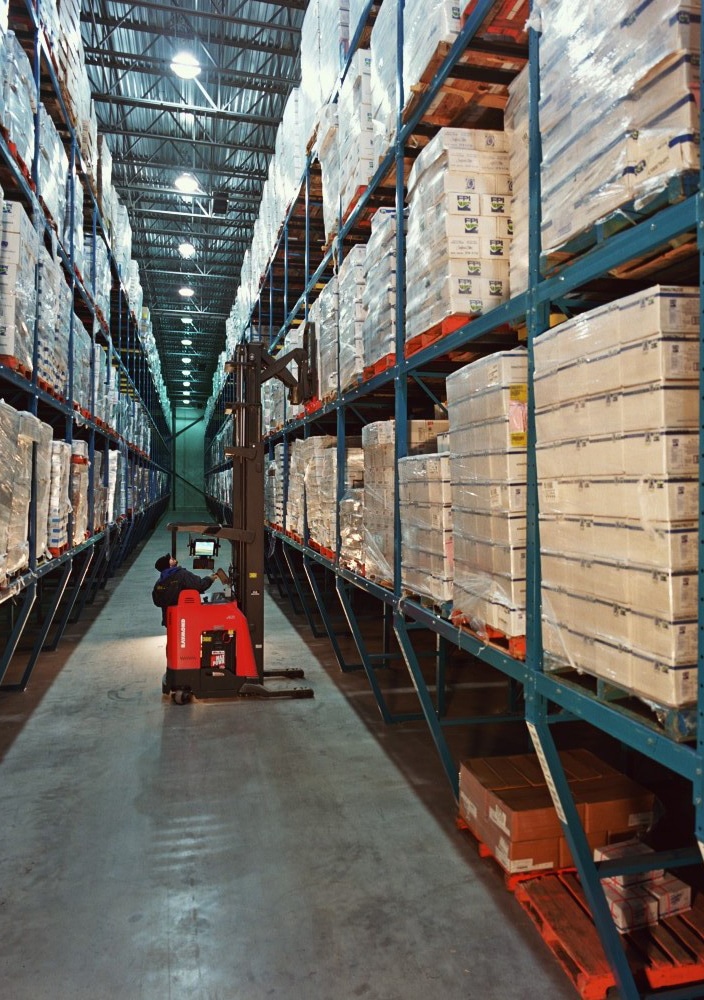
An expansion decision in 1979 brought land prices, labour and handling requirements together. Automation offered a way forward. Laurin later described a shortage of rugged, low-maintenance cranes for the cold; the first two Conestoga-designed cranes were installed in Kitchener in 1992. Buying automation had turned into learning how to build it.
A supplier can deliver a machine. An operator must live with its maintenance, its awkward moments and its effect on every order waiting behind it. Conestoga made those operating problems part of its own engineering brief.
02The customer buys a departure, too
For a food manufacturer or distributor, renting freezer space is only one part of the job. Conestoga also offers blast freezing, case picking, full-pallet shipments, load consolidation and cross-docking. Its commercial role is a third-party logistics provider: businesses pay it to store, handle and distribute goods rather than construct that operation themselves.
Its six warehouse locations span Ontario, Alberta and the Montreal area, supported by a distribution network. Customers can use that network to reach Canadian markets and arrange cross-border flows. Conestoga says its facilities have Canadian Food Inspection Agency approval for exports of regulated products, including meat and fish. That makes compliance part of the service.
Consider a manufacturer adding a new region. It needs somewhere to hold stock, a way to assemble the right orders and a receiver who can accept them. Conestoga’s bundled services put those tasks within one operating relationship. The value depends on the customer’s route and order pattern, which should determine the service mix.
The smaller requirements are revealing. A 2016 warehouse report described labels tailored to Walmart requests and GS 128 labels for Loblaw. Those are historical examples of retail requirements the system accommodated. A pallet can contain perfectly frozen food and still be troublesome if the receiver cannot identify and scan it.
- 01FreezeBlast freezing
- 02StoreInventory control
- 03AssemblePick + consolidate
- 04MoveDistribution
Services vary by customer.
03A warehouse that does its homework
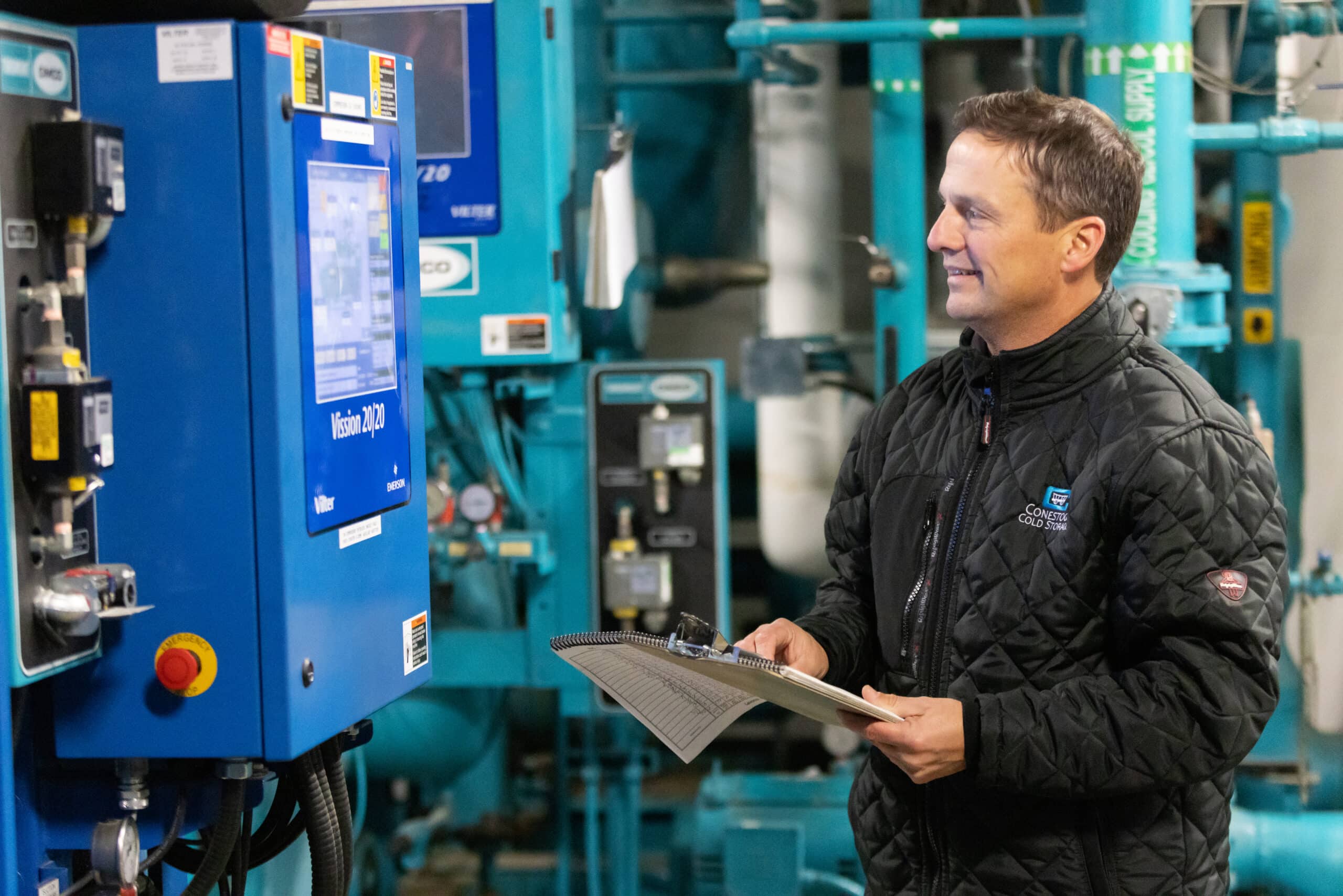
Conestoga develops and supports its own warehouse management system. Customers get real-time inventory visibility through a web portal, while electronic data interchange connects order and inventory information. Advance shipping notices carry case-level information and customized labels. The freezer has a second job: keeping the paperwork as orderly as the pallets.
In a 2011 interview, president Greg Laurin described software that looked ahead at forthcoming orders. When the system was idle, it repositioned products for busier shipping periods. He also reported a 40% increase in crane movement speeds after a drive upgrade. These were specific improvements to an existing operation, each aimed at a particular source of delay.
This is the part another business can copy without buying a tower. Find the work that will arrive tomorrow. Use today’s quiet interval to prepare for it. Then measure the actual bottleneck. Conestoga’s example suggests that useful automation often starts with an unglamorous understanding of waiting.
04A C$250 million argument for height
Halton Hills makes the physical stakes visible. In its 2022 economic development report, the town estimated roughly C$250 million of investment across a phased cold-storage development, with 150-250 jobs expected. That was an early project estimate, rather than a final construction bill. Nearly half the anticipated warehouse jobs required technical skills.
Conestoga’s June 2023 announcement described a facility exceeding 150 feet in height. The company announced it was open for business in December 2024; the town’s 2025 report records a formal opening celebration on September 25, 2025. That report describes approximately 240,000 square feet in Phase 1 and another 210,000 in Phases 2 and 3 nearing completion.
Height has an operating rationale. Conestoga describes high-rise freezers with small doors and no interior lights, reducing sources of heat. It also reuses refrigeration waste heat at docks and beneath floors. These are design choices directed at the peculiar expense of a building whose job is to keep heat outside.
Town’s 2022 phased estimate. Not a final bill.
150-250 expected jobs05The bill still arrives
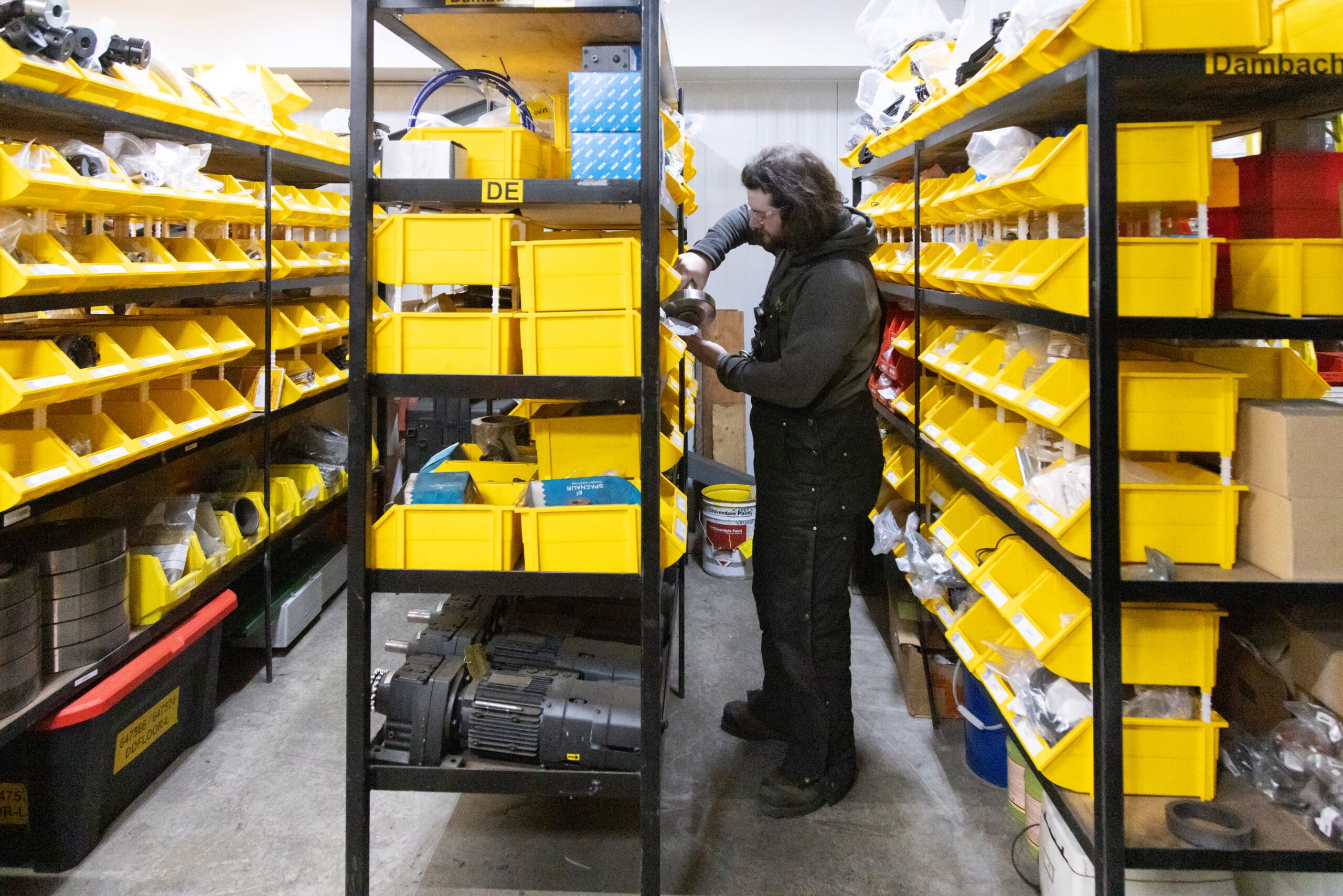
Automation changes the workforce it needs. Conestoga’s careers page lists electricians, millwrights, an engineering technologist and construction roles alongside warehouse positions. The company emphasizes training and long-serving staff. Its own machines require people who understand them, and those people need somewhere to put their accumulated knowledge.
Protection requires specialist suppliers, too. Conestoga standardized on WAGNER aspirating smoke detection in 2012. The supplier’s case study identifies electrical faults in automated systems and the difficulty of conventional detection in deep cold. Removing routine human traffic from a freezer does not remove the obligation to watch it.
Conestoga competes for Canadian cold-chain business with operators such as Congebec, whose 2025 alliance with Bradner extended its network across six provinces. Conestoga’s distinctive proposition is its combination of storage, distribution and internally developed technology. For a buyer, the sensible comparison is the whole journey: location, picking needs, data integration and delivery requirements.
“Automation is not without its risks.”
Larry Laurin / founder
For someone shopping for cold storage, that suggests a concrete starting point: describe the goods, expected volumes, order sizes and destinations. A storage quote becomes useful when it covers the work around the pallet. Software access and inspection support deserve attention alongside available space; each affects what happens when the shipment leaves.
The economics remain conditional. Laurin has argued that automation suits fast-moving locations with expensive land and high wages; reliable operation and maintenance are essential. Low throughput or weak technical support would weaken that case. In early 2026, Greg Laurin also described pressure on operators to absorb higher labour, insurance and building costs. A tall freezer can improve the arithmetic. It still has to earn its keep.