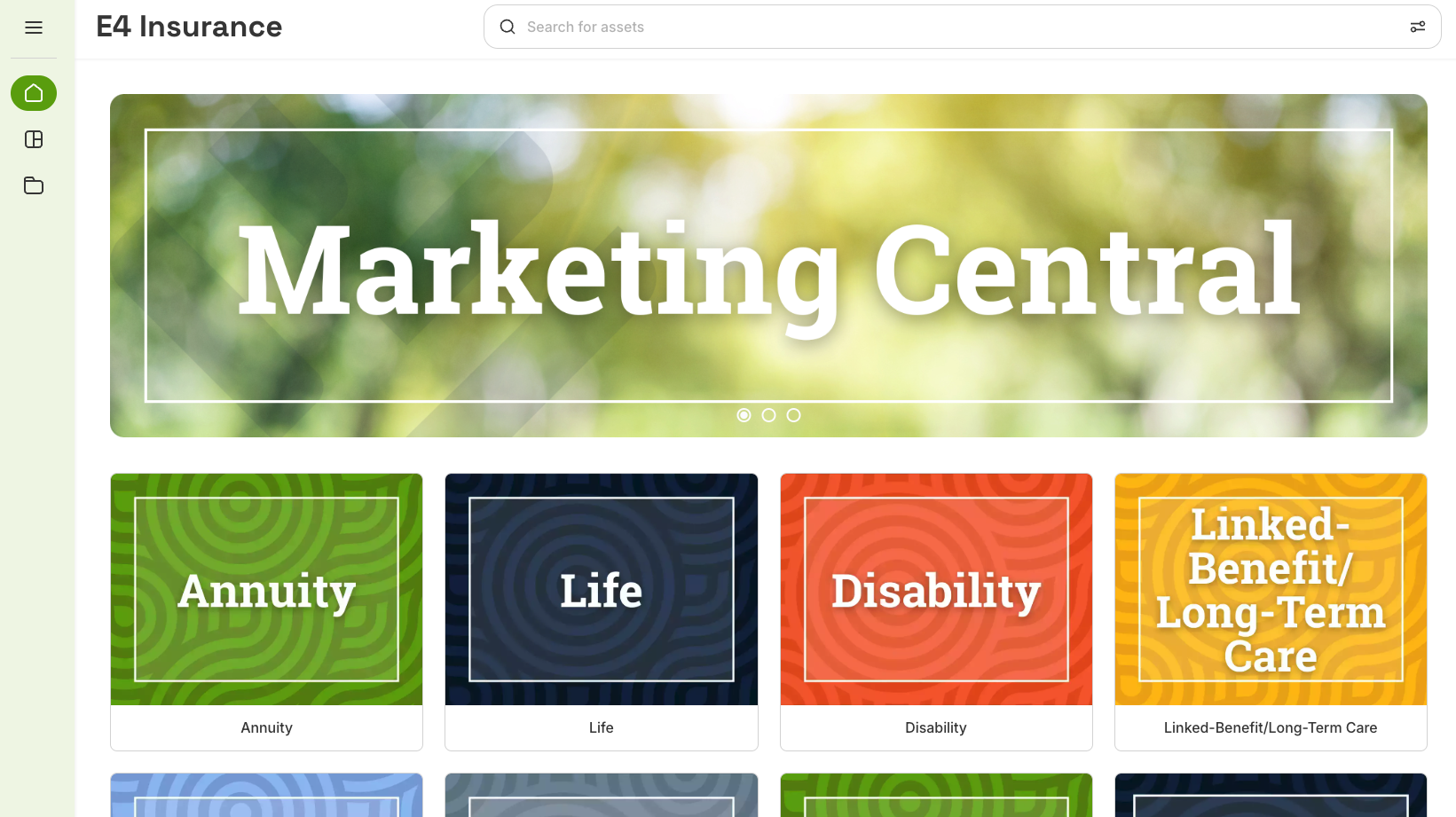
Every Monday, Jessie Carlquist changes a PDF. At E4, a financial services firm, the Annuity Solutions Weekly report needs fresh figures. The old-fashioned response would be another upload, another link, another email explaining which attachment is current. In Collage, she replaces the version behind the existing link. An advisor opening an older email reaches the updated report. The address stays put. The information moves.
- Organize brand files, then give other people a clear way to get them.
- Branded portals and current share links reduce routine requests.
- Migration includes work on the library’s structure, not just its location.
It is a modest piece of software behavior with an unusually clear purpose. Nobody has to remember a new destination. Nobody has to ask marketing which file to use. That is the territory Collage occupies: the awkward distance between owning useful content and getting it into someone else’s hands.
A library with an exit
Digital asset management, or DAM, gives a company a system for its photographs, videos, presentations and other brand files. Collage combines folders, tags, custom metadata and AI-assisted search with version control, permissions and analytics. Its particular emphasis is what happens after an asset has been organized: a partner opens a portal, a salesperson follows a link, a designer finds approved material.
Think of the difference between a stockroom and a shop window. Both contain merchandise; each serves a different visitor. A well-kept stockroom can still be baffling to a customer. Collage’s branded portals provide a more deliberate entrance to the content library, with material selected for the audience arriving there.
Its own vocabulary makes this separation concrete. Folders preserve working structure. “Collages” curate content around a campaign or purpose. Portals present material to the people who need it. A single asset can participate in several useful groupings without requiring everyone to navigate the same production maze.
The company hiding inside the agency
Collage’s beginnings were practical. ColoradoBiz reported that Huebner Marketing had developed a basic DAM for clients. Founder Jim Huebner contributed the software in exchange for equity when Ross Durbin and Daniel Campbell took it forward. Collage launched in 2024 with something already built and an argument about whom the market was overlooking.
Campbell had spent 12 years at Brandfolder. In the 2024 account, he described a market pursuing ever larger feature sets while smaller customers were left behind. He identified companies with roughly 50 to 500 employees as a promising audience: businesses whose needs had grown beyond ordinary cloud storage.


That background supplies category knowledge, although it also gives the founders a stake in the comparison. Collage positions itself against enterprise systems such as Brandfolder and the improvised arrangements built around shared drives. Its pitch deserves evaluation through the buyer’s actual workflow: who uploads, who approves, who downloads, and who gets stuck.
In February 2026, Collage appointed Durbin CEO and named Luke Beatty and Mike Gellman among its recent investors. The move put a familiar product argument at the center of its next phase: make distribution easier for brands that lack the staffing and appetite for elaborate administration.
What failed was the handoff
E4’s published customer account describes an inherited Brandfolder setup that the team lacked sufficient training and support to use well. Daily work remained in difficult SharePoint folders. Requests kept landing with marketing. Its new portal used color-coded collections, while share links let external recipients reach material without signing in. The change was as much about access as storage.
“Collage is built around distribution, not enterprise complexity.”Ross Durbin · CEO and co-founder
At phone-accessory brand Loopy Cases, a migration had collapsed a valuable folder hierarchy. The team rebuilt around photographers and numbered shoots, then used curated collections for campaign material. One person managed tagging. The portal offered other departments and partners a simpler way in. Different jobs received different routes through the same library.
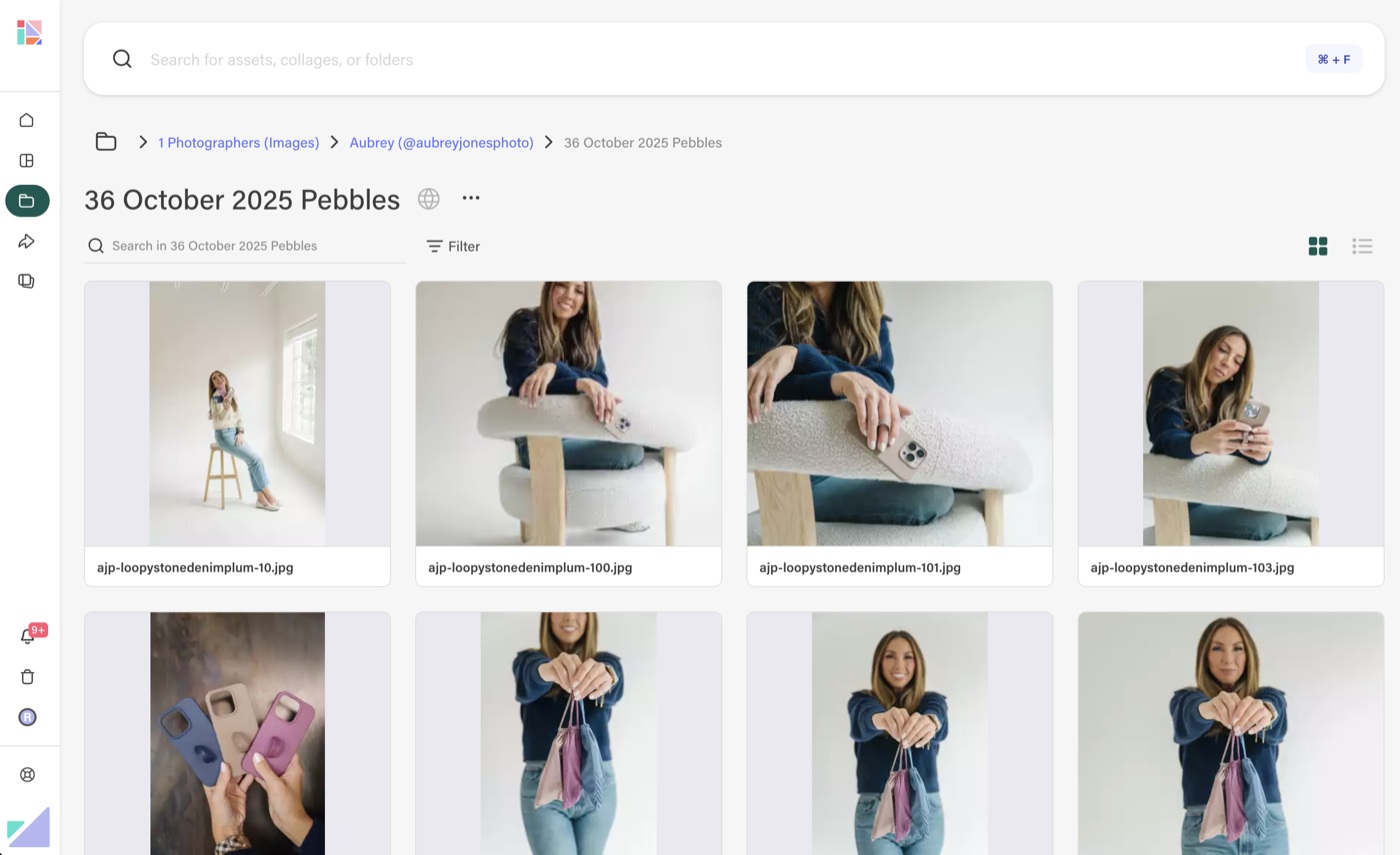
The company’s account also records an unusually decisive adoption tactic: Loopy emptied its old Box account. Keeping the familiar alternative available would have made the new system optional. The transferable lesson is the importance of choosing one authoritative home, with a planned transition and a clear distinction between working files and approved content.
Before the clever search, the boring cleanup
Collage’s migration work adds another useful wrinkle. Its audit process examines filenames, folders, tags and custom fields alongside conversations about how the customer works. Moving an incoherent library faithfully would preserve the very problems that prompted the move. Cleanup makes migration an opportunity to repair the system’s accumulated habits.
Conceptual workflow, not a performance measurement.
That matters to the AI story, too. In his October 2026 writing, Durbin argues that governance should precede natural-language workflows and new content generation. The distinction is useful: deciding which asset is approved and what it means supplies the context for automation. Generating more material cannot settle those questions for a team.
The price includes a decision
Collage sells through custom quotes tied to team size, storage and requirements. Annual contracts are typical. Its pricing page offers a guided trial, the full platform in every plan, direct support, and help with migration and training. A buyer can test the proposition using real content and real recipients before making that commitment.
The fit depends on the work. A team sharing a handful of files may be adequately served by a drive. An organization requiring specialized enterprise workflows should test those requirements explicitly. For everyone considering Collage, a useful trial has a plain finish line: send a partner to find an approved asset. Watch what happens before offering help.
The promise becomes tangible at that moment. A file someone can retrieve, recognize and trust is ready to do a job. Collage’s case rests on making that ordinary event happen more often, with fewer people waiting in the middle.