A driver checking an allowance is an unlikely mascot for the future of artificial intelligence. Yet it is a useful place to begin with CodeNinja. In its Almarai engagement, the problem was ordinary and expensive in the way ordinary problems become expensive: coordination passed through people, systems were fragmented, and routine work required too many handovers. Multiply that friction across a large logistics operation and the small inconvenience acquires an impressive payroll.
- CodeNinja builds software, cloud infrastructure and enterprise AI, and supplies engineering teams.
- Its client work ranges from dairy logistics to 3D visualization and neighborhood retail.
- Hyper Anthologies packages its newer pitch: clients should own their AI systems and operational learning.
- The useful lesson is to begin with a specific workflow, its rules and a measurable bottleneck.
CodeNinja’s answer for Almarai combined Microsoft Power Platform, Twilio and integration with SAP. Drivers received a familiar mobile interface; behind it sat structured communication, task tracking and approvals. The company reports that the system served more than 9,000 drivers. A conversational interface was the visible part. The less photogenic achievement was connecting a question to something the business could actually do about it.
Figures reported in CodeNinja’s client case study.
That distinction explains much of the company. Enterprise software often looks polished at the surface and awkward at the joints. CodeNinja works at those joints: where a person asks for something, a rule determines whether it is allowed, and an older system holds the record. The interesting question is how much of that arrangement an organization can improve without surrendering control of it.
A services company discovers an ownership question
CodeNinja began as a bootstrapped engineering firm in Lahore in 2014. Its account of its development describes an expansion into Riyadh, Dallas and Santiago, followed by a move toward systems that operate and improve within consequential business environments. Today, it calls itself a Middle Eastern-American AI lab. The description is ambitious; the underlying business still includes the familiar work of building and repairing enterprise software.
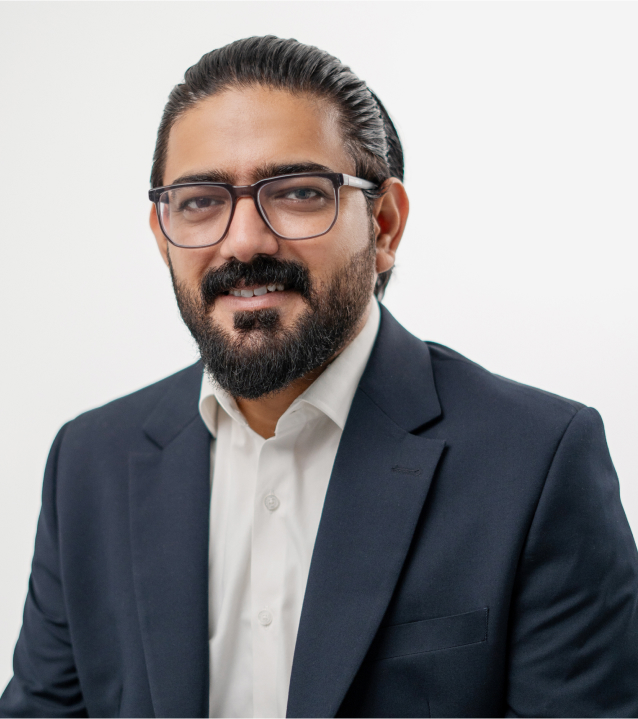
There is a revealing personal wrinkle. In an August 2024 essay, co-founder Umar Bilal described an earlier venture, Klipda, which helped women turn home kitchens into restaurants. It closed after COVID. He then joined his friend Mukhtar at CodeNinja as what he called a retrospective co-founder. The company’s origin is therefore less tidy than a founding-team photograph suggests. Its leadership took shape over time.
Bilal’s essay also supplies a more useful explanation for the change than the arrival of fashionable terminology. A decade of software work, he wrote, had exposed two difficulties: engineers needed domain expertise, and simulating the real world well enough to make decisions remained hard. That is a shift in emphasis from writing an application to understanding the business it inhabits. A fast coder who misunderstands an approval rule can merely deliver the wrong answer sooner.
The old application had already voted
Consider Locka Vision, a Swedish visualization studio. Its Neo4 platform had an ageing technology stack, slow loading, periods of unresponsiveness and an interface that needed attention. Before any discussion of organizational intelligence, the product had a straightforward problem: the experience was falling behind what users needed.
CodeNinja upgraded the platform to Unreal Engine 5.0 and PHP 8.0, redesigned the interface, streamlined code and introduced continuous integration and delivery pipelines. Its case study reports 90% less downtime and a 30% faster time to market. Those are vendor-reported outcomes, rather than a universal promise. They nevertheless describe a recognizable purchase: specialist engineering to restore a product’s usefulness.
The transferable idea is modest. Identify whether the bottleneck lives in the interface, the underlying engine or the release process before buying a new layer of software. In this case, CodeNinja worked on all three. A company with a perfectly adequate application and no comparable performance problem would have a very different brief.
The corner shop needs a common picture
Another engagement involved 24SEVEN, whose work brings traditional baqalas, or neighborhood shops, into digital commerce. The challenge included retailers without point-of-sale systems, manual sales entries, inventory visibility and the need to connect wholesalers, retailers and consumers. A beautifully designed shopping app would address only one end of that chain.
CodeNinja built an ecosystem comprising a B2B marketplace, consumer app, integrated POS and insights engine. The case makes its expertise easier to understand than a catalogue of programming languages does. The work spans who has stock, who buys it, how payment is recorded and which information becomes visible afterward. Here, the practical value of software is a common picture of the transaction.
A Saudi e-logistics case shows a related pattern. An existing MVP struggled with bugs, route visibility, multimodal integration and reverse logistics. Hyper supported a broader marketplace covering express delivery, freight and warehousing. The progression is familiar: a prototype proves there is a business; subsequent engineering makes the business less dependent on improvisation.
Four products with a single argument
In August 2026, CodeNinja announced Hyper Anthologies as the complete production release of its sovereign AI ecosystem. Its proposition is that a client should keep the organizational model, agent execution, accumulated decision memory and means of inspecting its AI. Think of the offer as four connected responsibilities.
- 01 / MODELOntologyBusiness context + permitted actions
- 02 / ACTPragmaAgents + routing + human escalation
- 03 / LEARNEngramDecision records + owned model weights
- 04 / UNDERSTANDNoesisInterpretability + drift monitoring
Findings return to the organizational model. The client is meant to retain the loop.
Ontology defines entities, relationships and permitted actions. Pragma executes agent work, directing predictable decisions through rules and escalating decisions that should remain human. Engram retains decision records and is designed to distill accumulated judgment into owned model weights. Noesis examines accessible model internals and monitors drift. These are product descriptions; buying them still requires the unglamorous work of mapping a particular organization.
Noesis has a consequential prerequisite: access to the model’s weights. Its interpretability proposition cannot simply be attached to any closed model endpoint. Ownership is doing technical work in this argument, as well as contractual work. CodeNinja says it has deployed Engram and Noesis in its own operations, using itself as an operating example.
“Integrity First: Maximizing truth over comfort.”CodeNinja’s published Ninja Code
The invoice buys engineering, too
The commercial model combines commissioned projects, consulting, managed staff augmentation and dedicated teams. Capability-center engagements add longer-term engineering and research capacity, including build-operate-transfer arrangements. Hyper’s product pages describe deployment by engineers working inside the client’s operating context. This is a substantial implementation proposition with people attached.
Clutch’s current profile lists a minimum project size of $50,000 and an hourly range of $25-$49. Its historical review summary puts the most common reviewed project band at $10,000-$49,999. These describe different things: a current listing and a collection of past engagements. Neither is a fixed price for Hyper or for the Almarai project. A sensible budget must also consider integration, cloud operation, support and the staff responsible after handover.
The company announced a $1.6 million investment from sAi Venture Capital, with participation from Plutus21 Capital and affiliates, in December 2023. The stated expansion priorities included enterprise cloud, data and AI. It subsequently formed the Quantum AI Alliance with Core9 and FiveRivers Technologies, and announced AWS Select Tier Partner status in July 2026. Those relationships add delivery capacity; they do not substitute for examining the proposed work.
Start with the allowance check
CodeNinja sits between the custom-development consultancy, the engineering-capacity provider and the enterprise AI platform builder. Its ownership pitch gives buyers a concrete comparison to make with vendor-hosted alternatives: which assets transfer, which dependencies remain, and who can operate the system when the engagement ends?
For a reader borrowing its approach, the first move is to choose one repetitive decision, document the approval rules and measure the current delay. Integration and accountable human review should be part of the brief. Client-owned infrastructure also requires a client capable of maintaining it. If the organization cannot provide reliable records, clear authority or an operating team, a larger AI ecosystem may enlarge the confusion. The driver’s allowance check remains a good test: can the system resolve it correctly, record it properly and leave the business able to understand what happened?