Consider a photograph of a jacket. Someone has arranged the lighting, persuaded the fabric to behave and chosen the frame. The creative work appears finished. Then the photograph meets the internet. A product page needs one shape, a phone another, a social post a third. The file must arrive quickly, retain its detail and survive the indignity of a poor connection. The photograph has acquired a second career: administration.
Cloudinary sells the machinery for that career. Its cloud software handles images and video from upload through transformation and delivery. The interesting thing about the company is how much business it found in work that looked too ordinary to deserve a business of its own.
- The job: turn a media original into the versions websites, apps and campaigns actually need.
- The audience: developers building products, plus the creative teams supplying them with assets.
- The business: a free entry point, paid usage and enterprise contracts.
- The lesson: repeated production chores can reveal a market - provided the replacement is easy to adopt.
01 / The chore that kept coming back
Before Cloudinary, its founders worked in consulting. Different clients kept bringing variations of the same requirement: let people upload pictures, store them, change their dimensions and display them properly. Each application needed its own version of the plumbing. The customer might have a new idea; the engineers were still building another image pipeline.
Itai Lahan, Tal Lev-Ami and Nadav Soferman founded Cloudinary in 2012. Their expertise came from encountering the problem repeatedly in actual projects. That is a useful distinction. They could examine work customers already needed done, with the frustrating details attached.
“We had paying customers almost from day one,” Lahan told SiliconANGLE in January 2022. Revenue was an early piece of evidence that this deserved to become a separate product business. A developer could try the service, integrate it and pay as the application required more capacity. The small decision could precede the large purchasing process.
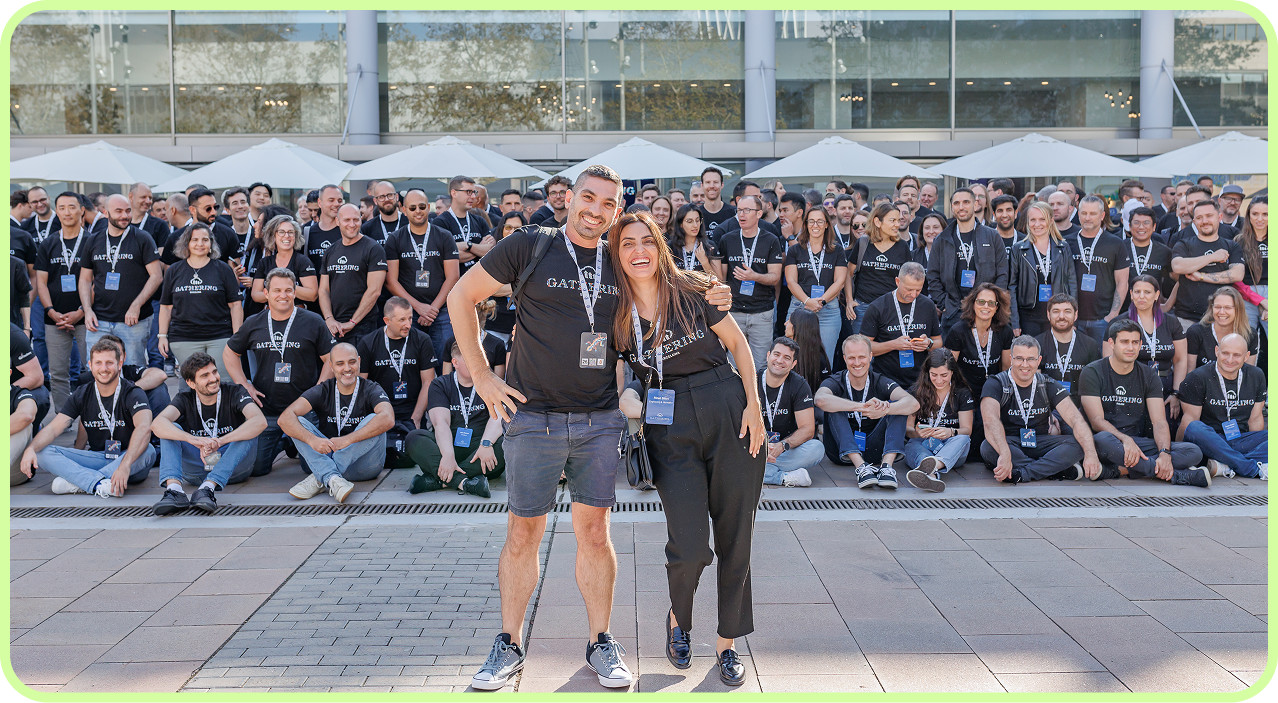
By December 2021, Cloudinary had passed $100 million in annual recurring revenue. In February 2022, Blackstone Growth bought more than $100 million of existing shares at a $2 billion valuation. The sequence matters: the recurring business came first. The transaction gave selling shareholders liquidity, rather than functioning as a conventional injection of new operating capital.
Bessemer, an earlier shareholder through secondary purchases, described the founders’ approach as growth within the company’s means. This is a story about the economics of a particular product. A useful free tier and customers who increased their usage helped make that approach possible. A business with large upfront manufacturing costs would face a different equation.
02 / Give the photograph instructions
The product’s central trick is to make an image’s variations programmable. Upload an original, identify it, then request the version you need. Transformation instructions can live in a delivery URL or be built through a software library. Width, crop, quality and format become repeatable decisions.
Two compact settings illustrate the appeal. f_auto lets Cloudinary select a supported delivery format; q_auto asks it to choose compression quality. Content-aware cropping can help retain the subject when a wide photograph becomes a narrow one. The developer defines the desired result instead of manually exporting another file.
Video brings a related set of complications. Cloudinary supplies transcoding, adaptive streaming, transformation, player tools and analytics. A clip can need different encodings and proportions before it reaches different screens. These are engineering tasks even when the thing being delivered is a six-second advertisement.
There is also the question of finding the right original. Cloudinary Assets, its digital asset management product, adds search, metadata, access controls and collaboration. MediaFlows supplies low-code workflow automation. The combination gives developers and marketers ways to work on the same underlying media without doing the same job.
03 / A customer changes shape
Opinion Stage provides an unusually useful test of this idea. Cloudinary identifies it as its first customer. It began as a debating platform and later pivoted toward visual quizzes, forms and surveys. A debating site and a quiz builder sell different experiences, but both need user-supplied media to arrive and display reliably.
In a June 2024 interview published by Cloudinary, Opinion Stage said implementation took hours. Its Upload Widget let customers bring in media from their repositories and other providers, with cropping available before upload. The customer reported managing close to five million assets and saving hundreds of development hours by outsourcing delivery and optimization.
“It took us just hours to get up and running.”Opinion Stage interview · June 2024
Those are customer-reported results, rather than a promise about every deployment. What travels well is the decision behind them: spend engineering time on the quiz product while buying a shared solution for the media chores around it. Infrastructure becomes especially valuable when the business changes but the chores persist.
Paul Smith offers the larger-company version. Its headless commerce setup put Cloudinary alongside Storyblok’s content management system and Adobe Commerce. The brand reported more than a 40% reduction in asset management costs and a 45% boost in video-enabled sales. These figures belong to that customer’s implementation; they do not isolate Cloudinary from the rest of the redesign.
The arrangement explains where Cloudinary fits in the market. It can become the media layer inside a collection of specialized tools. Contentful and WordPress integrations connect it to publishing workflows. A June 2025 alliance also put its technology behind Akamai’s next-generation Video Manager.
04 / The bill follows the work
The Image and Video API pricing page lists a Free plan with 25 monthly credits. Plus costs $99 a month, or $89 a month with annual billing; Advanced costs $249, or $224 with annual billing. Enterprise arrangements are custom, and a digital asset management purchase needs its own pricing conversation. These are listed prices checked in October 2026, rather than a quote for a particular project.
The practical budget question concerns consumption. Transformations, stored media and delivery bandwidth contribute to usage. A quiet application with a modest library and a popular video-heavy campaign can therefore produce very different bills. The entry price is only useful alongside a realistic workload.
Cloudinary also crosses several competitive categories. Mux supplies developer-oriented video infrastructure. Bynder supplies digital asset management. Image-processing alternatives and custom storage-plus-CDN systems give teams other ways to assemble a pipeline. Cloudinary’s case rests on combining media organization, processing and delivery. That breadth matters most when a team would otherwise stitch those jobs together.
A small site needing only occasional resizing may have little reason to add a broad platform. A team requiring entirely local processing would need another architecture. For a plausible fit, begin with a demanding workflow: measure time spent, delivery quality and usage before making the service a dependency across the whole library.
05 / Even a good machine can launch the wrong product
Cloudinary’s expansion supplied a lesson less flattering than its valuation. In a 2024 SaaStr presentation, its developer-experience leader described applying the established product’s commercial machinery to new products before they had proved demand. The approach consumed resources without an adequate return. His prescription was smaller, faster experiments for unproven offerings, with mature scaling operations following demonstrated product-market fit.
The company also changed how it connected self-service customers with enterprise sales. Initially the two motions were separated. As users grew and requirements became more complex, an engagement team helped create a route between them.

The same presentation noted that employee number five worked in customer success. For software sold to developers, technical support can influence whether an experiment turns into a lasting integration. The copyable move is straightforward: help users finish something useful, and make room for their needs to become more complicated.
06 / Now the instructions have an agent
In June 2026, Cloudinary released Image to Video, an add-on that generates videos from existing image libraries. In August it introduced an Agent Experience layer, including temporary Claimable Clouds that AI agents can provision while experimenting. The CLI documentation says those clouds expire in about 24 hours unless claimed, with delivery initially restricted to the creating IP.
The newer tools extend the original proposition: keep production steps close to the assets and their rules. Generated video still needs review. An agent still needs metadata and permissions. Automation becomes useful when the system knows which image it may use and what it may do to it.
Cloudinary reported more than four million developers in July 2026. The number suggests how many people have encountered its proposition. The proposition itself remains almost comically plain: somewhere behind a handsome page, someone has another image to prepare. Cloudinary asks whether that person should have to do the same work again.
Keep exploring
Build with the platform, try the product demos, browse the documentation or visit GitHub. Follow the blog and newsroom.
LinkedIn · X · Instagram · Facebook
Watch & learn