Clare Dorrian once tried being a developer. Briefly. The experiment did not produce a software engineer, but it did produce something more useful for the career she was about to build: sympathy for the people who make the machinery work. She had started as a business analyst, brokering understanding between IT and the business. Code was another language to sample, another side of the table to understand.
That feels apt for a Liverpudlian who studied French and Hispanic Studies at the University of Glasgow, earned a distinction in oral Spanish, and then found her working life in technology. The degree and the job title may look like distant relatives. In practice, both reward the same instinct. Listen closely. Notice context. Translate meaning without mangling it.
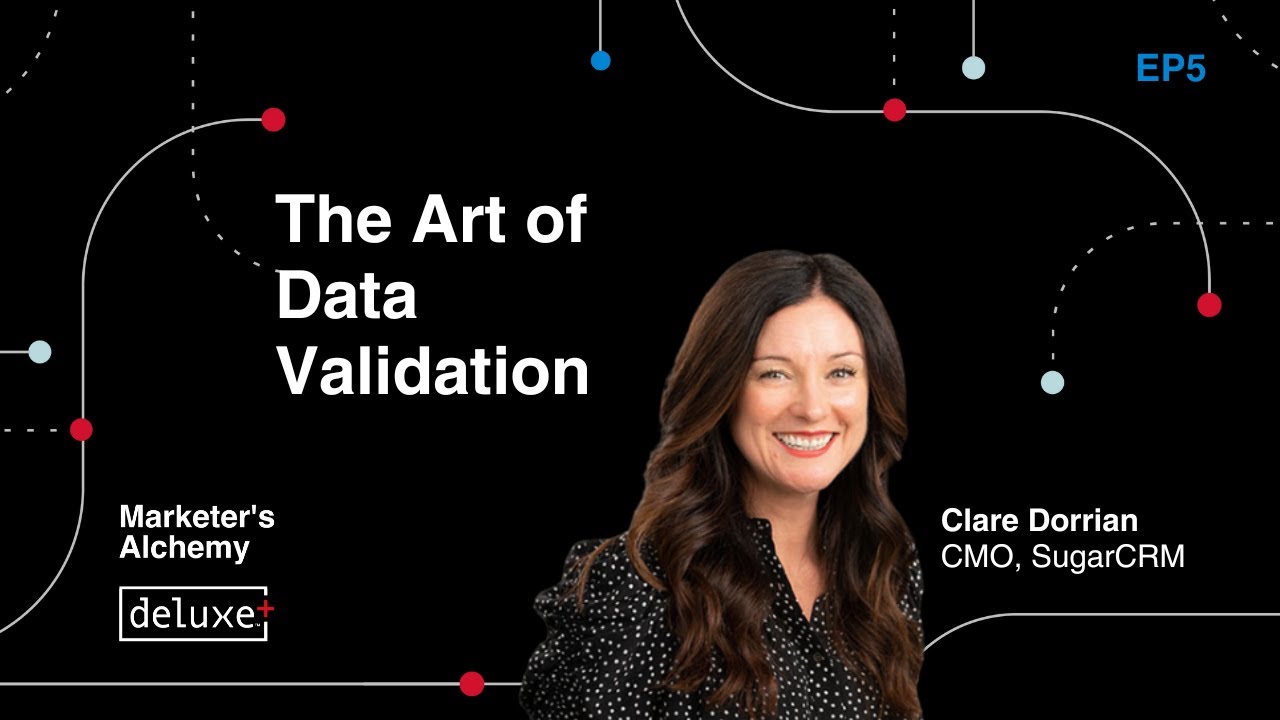
Today Dorrian is chief marketing officer at SugarCRM. She oversees customer marketing, revenue generation, product marketing, and marketing operations. The territory is broad, but the old translation problem remains: turn what customers do and say into something product teams, sellers, and marketers can act upon. The software has become more sophisticated. Human beings remain gloriously untidy.
The career between two rooms
Dorrian's route to the C-suite was less a leap than a steady widening of the lens. She moved from business analysis and consulting into product marketing at Ciboodle, then analyst relations, international marketing, worldwide marketing at KANA Software, and global marketing and brand at Verint. By the time she joined SugarCRM in January 2020, she had spent years moving between rooms that often share a calendar invite but not quite a vocabulary.
The timing of that last move deserves its own raised eyebrow. It was her first CMO role, taken immediately before the pandemic. Dorrian has summarized the arrangement with cheerful British economy: “Ideal, eh?” Suddenly the digital customer journey was not a conference theme. It was the road.
She began by listening. Dorrian spent a significant share of her early time asking customers what they valued about SugarCRM and what dealing with the company felt like. It was fieldwork before fireworks. Her conclusion was that the company needed a clearer ideal customer profile and better use of the evidence already scattered across its systems.
“This is the beauty of data. It flags the opportunity for you to think differently.”Clare Dorrian
When the favorite theory loses
One of Dorrian's most revealing stories concerns a pricing page. The familiar B2B software debate asks whether pricing should sit in plain view or wait behind a conversation. SugarCRM ran a qualitative survey. Visitors, the team learned, often wanted to speak with somebody about price. The point was not that every company should hide or reveal a number. The point was that a seemingly settled argument had met an actual customer and needed to sit down.
Dorrian likes data precisely because it can embarrass a cherished assumption. She also distrusts the opposite mistake: treating a model as a tiny oracle. When SugarCRM builds target-account lists, historical performance, intent signals, and predictive modeling do much of the sorting. Sales experience gets a smaller experimental allocation, a protected patch in which people can test what they believe the numbers missed.
“The data can only get you so far,” she has said. The marriage of data and intuition is the useful part. It also creates a more durable bargain between marketing and sales. The list is not imposed by one side or waved through by the other. It is examined together, amended by evidence, and left open to a few disciplined surprises.
That method produced a number worth pausing over. After SugarCRM combined first-party information with Bombora intent signals and the Triblio account-based marketing platform, the team found $2 million in pipeline it had not known existed within ten weeks. Two weeks later, the figure had doubled.
A pipeline number can sound bloodless. Behind it is a practical change in behavior. Salespeople could see prioritized accounts and relevant signals inside the CRM rather than ricocheting between systems. Marketing could reach prospects according to what they appeared to care about. The dashboard did not replace a conversation. It improved the odds that the conversation would be timely and useful.
The human job hiding inside the stack
Dorrian is plainly enthusiastic about AI, analytics, automation, and the forward glance they can give a team. Her Formula One analogy is neat. In Stirling Moss's era, winning centered on the car and driver. Modern racing feeds real-time information about weather, engine, and track to the driver. Marketing, in her telling, is learning to do the same.
But she calls AI a “wingman,” not a human replacement. Automation should clear tedious work and expose blind spots. People should do the things that resist a tidy field in a database: establish trust, hear hesitation, recognize a changed mind, and make a customer feel understood rather than processed.
This is why her most repeated principles sound almost stubbornly social. People buy from people. Marketing and sales must agree on why an account-based program exists before they launch it. They must decide what success looks like. Customer partnerships matter. Community matters. The clever tool enters after the adults have agreed on the problem.
Her channel advice follows the same logic. Being everywhere is not the prize. Dorrian warns that covering every channel can dilute the work, especially when a team delivers the wrong information in the right place. The better sequence is to learn where customers gather, understand what they need at each stage, and make the message fit the moment. Attracting someone calls for education. Nurturing them calls for relevance and recognition. Automation can carry those messages across channels, but it cannot decide why the recipient should care. That decision still begins with listening, an activity no dashboard has managed to make glamorous.
“We need to know when we need to be the student versus the teacher.”Clare Dorrian
Her own list of leadership strengths runs in the same direction: tenacity, relationship building, and humility. Tenacity came from her father. He had left school to help support his mother and sister, then returned to education in his mid-thirties and later grew a business. Dorrian remembers both his drive and his willingness to catch her when she fell. His example taught her that mistakes deserve a route forward, not permanent residence.
Relationship building, for Dorrian, is not the soft garnish served beside strategy. It is how marketing works across a business and how a brand earns attention outside it. Humility is the permission to ask for help, to find the person with the answer, and eventually to return the favor. A former colleague's public recommendation adds a charming prop to the picture: passion, methodical work, humor, and a love of Post-it notes. The executive suite has survived worse stationery.
A challenger learns to move
SugarCRM competes in a category stocked with larger names. Dorrian has called it a market of Davids and Goliaths. A challenger can move quickly, but speed is only useful when aimed. This is where her affection for curiosity becomes operational. Test messages. Read the signals. Ask customers. Change the target list. Do not turn agility into merely making the wrong decision at a brisker pace.
The company's recent direction has tightened around intelligent selling for manufacturers and distributors. The 2024 acquisition of sales-i brought ERP data into the story, combining transactions from the back office with customer relationships in the front. In early 2026, SugarCRM and Syspro announced a deeper go-to-market partnership intended to connect what a company can sell with what it can actually deliver. Dorrian described the principle publicly as a shift from momentum chasing toward precision.
It is another translation problem. Revenue intent lives on one side. Operational reality lives on the other. Join them, and a salesperson can make a promise with some knowledge of the factory floor. Leave them apart, and optimism may outrun inventory.
Dorrian's larger aspiration reaches beyond a better funnel. She has said she wants to see more women in technology, arguing that the industry needs greater gender diversity to keep thriving. Her own career offers no grand mythology for getting there. It offers something more believable: curiosity applied over time, fluency earned across functions, and the willingness to be student or teacher as the moment demands.
The through-line from Liverpool to California is not a devotion to data alone. It is a devotion to finding out. Sometimes the answer sits in a customer survey. Sometimes it appears in an intent signal, a colleague's experience, or the awkward first attempt at writing code. Dorrian's craft is to gather those dialects around one table and make them intelligible to one another. Then she lets the evidence speak, keeps a chair free for instinct, and gets on with the work.