Consider the cigar box. It is handsome, orderly, and rather demanding. Before you know whether you like what is inside, it asks you to buy a collection of the same thing. For an experienced smoker, that can be convenient. For someone exploring unfamiliar brands, it is a wager. Cigars International found a business in making the wager smaller.
- Smaller packs made unfamiliar cigars easier to try.
- Catalogs, clubs, and lounges create different reasons to return.
- A 2017 systems failure exposed the cost of getting fulfillment wrong.
The company began in 1996. Its founders were Keith Meier and John DeMarco. A retrospective in Scandinavian Tobacco Group’s 2013 annual report describes an internet shop for men’s gifts that followed its early market tests toward cigars. The consequential adjustment was modest: smaller bags and mixed samplers let customers explore without buying an entire box. The product changed less than the terms of the decision.
That distinction explains the retailer better than a list of famous cigar labels. Cigars International, usually shortened to CI, sells access to variety: premium handmade cigars, less expensive selections, machine-made cigars, humidors, cutters, lighters, and gifts. It earns money through merchandise sales and recurring club orders. The customer gets several ways to buy, at several levels of commitment. For the shopper, the useful choice is which format fits an existing preference, an experiment, or a recurring gift purchase.
A reading of CI’s assortment, not a measured customer funnel.
02The internet shop that added paper
CI added catalogs in 1999, according to that same retrospective. A downtown Bethlehem shop followed in 2000. This is an amusing reversal of the familiar retail story: an internet business discovered paper, then a storefront. Each offered another occasion to encounter the merchandise. A website handles a deliberate search; a catalog can invite browsing before a shopper has decided what to search for.
By the time Swedish Match announced its purchase in August 2007, CI combined catalogs, email, websites, two retail outlets, fulfillment, and wholesale distribution. It employed about 100 people and had approximately SEK 400 million in annual sales for the period ending that June. The acquisition closed in September. Its terms were undisclosed. Swedish Match was buying a direct route to customers as well as a retailer.
The preparation involved less glamorous work. Investor Svoboda Capital says its 2004 recapitalization was followed by stronger reporting, working-capital discipline, management recruitment, and acquisitions, including Cigar.com. That is a useful corrective to the charming sampler story. Offering more choice means financing inventory, understanding which stock moves, and making sure the warehouse can keep up with the advertisement.
THE OPERATING LESSON“operational insight and financial flexibility”Keith Meier on investor Svoboda Capital’s contribution
03Four cigars, then a reason to return
The modern club makes the small-commitment idea recurring. At the time of research, the Original Cigar of the Month Club listed four cigars for $21.99 per month; Double Decker listed eight for $34.99. Club shipments include shipping. Open memberships continue until canceled. Those are subscription prices, not a promise that any particular premium brand will appear every month.
For existing adult cigar consumers, the practical appeal is discovery with fewer decisions. A sampler tests preferences; a club delegates selection; a box replenishes a known favorite. Accessories address the less romantic chores of storage, preparation, and maintenance. CI’s Cigar 101 library explains cutting, lighting, humidor seasoning, and hygrometer calibration. Drew Estate sponsors that educational hub, putting a recognizable maker beside the instruction.
This also reveals where CI fits. A local tobacconist offers personal familiarity and immediate advice. Other online retailers, including JR Cigar and Famous Smoke Shop, compete for selection and price. CI combines a broad assortment with direct marketing and physical gathering places. The interpretation here is straightforward: it gives the same customer several reasons to return, even when the next visit does not begin with a specific cigar in mind.
04The expensive lesson inside the warehouse
In 2017, that connected system became a liability. Scandinavian Tobacco Group reported that CI’s new IT infrastructure, including enterprise-resource-planning and warehouse-management systems, disrupted campaigns, invoicing, customer service, and inventory management. The trouble reached the customer-facing parts of the business while the underlying machinery was being replaced. A marketing engine cannot outrun an order system that is struggling.
The first-quarter report described higher costs for discounts and expedited shipping used to win customers back. The annual report said CI lost market share and temporarily operated with a higher cost base and more promotions. Performance improved quarter by quarter; management described the resulting system as functioning and scalable by year-end. The recovery required spending on the customer relationship as well as fixing operations.
For another merchant, the copyable lesson is specific: connect an attractive introductory purchase to reliable replenishment, then protect that sequence during a systems change. More advertising will not repair an incorrect invoice. More selection will not compensate for a missing parcel. CI’s difficulty shows how quickly the advantage of coordinated channels can become a shared point of failure.
05A humidor you can walk into
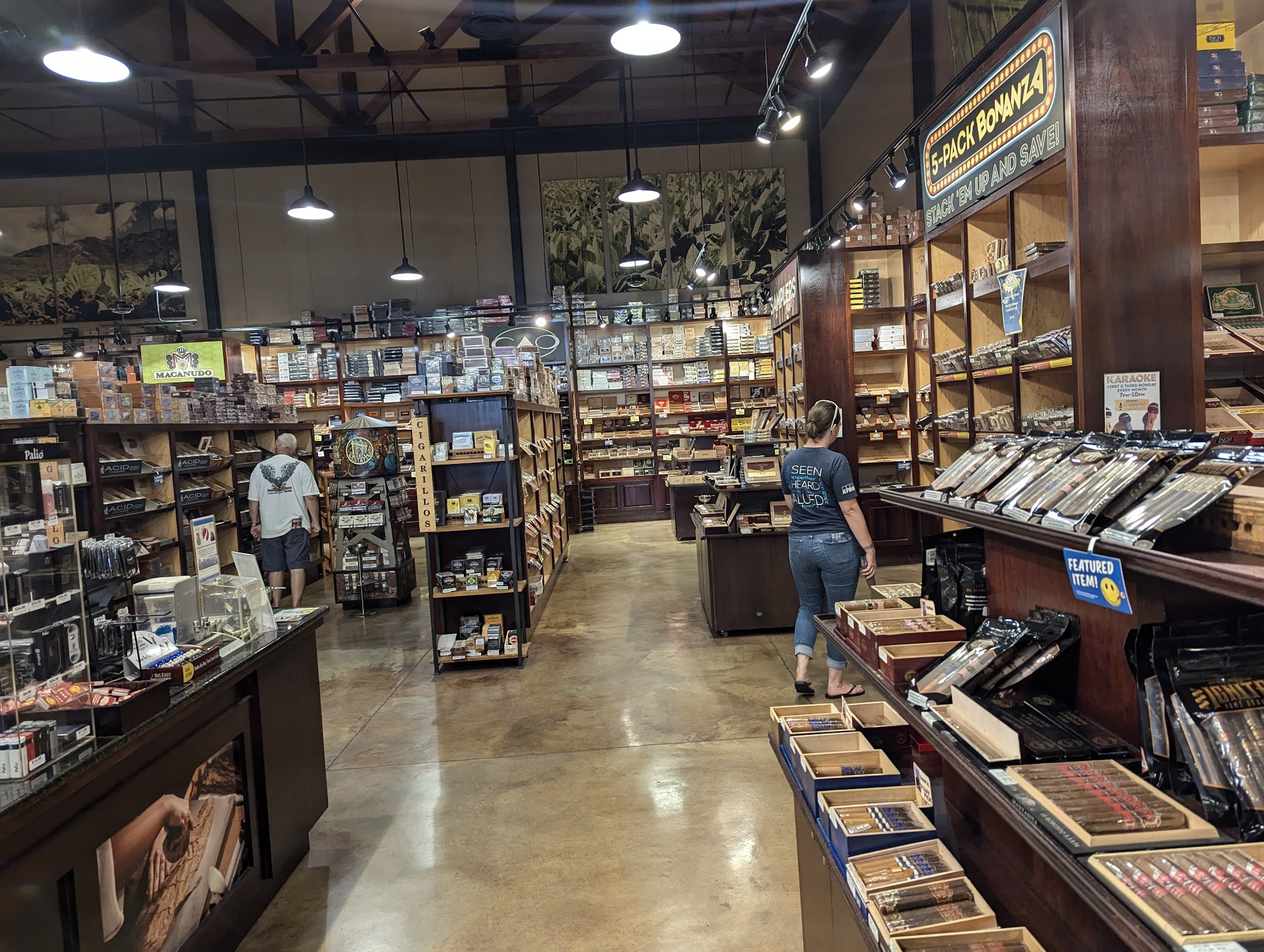
Today, CI’s welcome page lists 15 retail locations across Pennsylvania, Florida, Kentucky, Tennessee, and Texas. Many combine shopping with lounges and bars; the Bethlehem locations advertise BYOB. The format extends the transaction into a place to spend time. In an online catalog, a customer moves between pages. In a lounge, the next conversation can happen across a table.
The owner’s numbers explain the interest in stores, with an essential distinction: these are division figures, covering more than the CI website. Scandinavian Tobacco Group’s 2025 report put retail at 12% of North America Online & Retail sales, with online and catalogs accounting for 88%. Its 2024 report said stores open for more than three years each exceeded a 25% EBITDA margin, with combined returns on invested capital above 15%.
The August 2026 interim report described positive organic growth in North America Online & Retail in the first half. Competition remains intense. Customers also face delivery costs, product-specific restrictions, and state-dependent availability. CI’s shipping policy excludes all deliveries to Hawaii and Utah. An inexpensive advertised cigar is only one component of the final purchase.
The broader lesson needs those conditions attached. Smaller packs help when buyers want to experiment; subscriptions help when they welcome delegated choice; lounges need enough nearby customers willing to stay. None automatically fixes weak fulfillment or poor economics. CI’s enduring insight is the humble one inside that first sampler: sometimes the obstacle is the size of the commitment you ask the customer to make.