Brian Tate had a perfectly serviceable reason to keep playing poker: he was winning. After twelve years as a professional, he had reached the sort of games most players only watched. Then he began putting his money into oatmeal. Breakfast offered fewer opportunities to wear sunglasses indoors, but it had something else going for it. He could make a product, send it to somebody, and find out whether they wanted it again.
The tidy version of this story would have him push back his chair after one decisive hand. His own account is more measured. Oats Overnight began as a side project. Before leaving poker full time, he looked at the cost of finding customers on Facebook and the responses of people who had tried the product. A promising idea had to survive contact with strangers and their wallets.
A good year to walk away
He has also resisted the suggestion that breakfast was a refuge from a collapsing poker career. Asked whether the games had become too difficult, Tate said he had left at his peak. “My last full year was actually my biggest winning year ever.” The distinction matters. A successful career can become an obstacle to trying something else precisely because it keeps supplying reasons to stay.
There was no need to discover a talent for risk. He already had that education. The new question concerned where to spend it. Poker offered another game, another session, another chance to make a profitable decision. A company offered decisions that could accumulate into an organization. Once the early response to his breakfast looked encouraging, he chose to give that organization his attention.
The game before the game
Before poker came Magic: The Gathering. Tate competed in the card game as a teenager, learning through preparation and conversations with other players. His friend Brandon Demes introduced him to poker near the end of high school. Online, using the handle grpoker, Tate worked his way into higher-stakes Limit Hold’em. A game played with friends had become a way to make a living.
His route continued through Arizona and Los Angeles to Bobby’s Room at the Bellagio in Las Vegas. There he played mixed games alongside familiar names, including Doyle Brunson. As the games changed, he had to learn unfamiliar variants. The glamorous destination had an unglamorous requirement: more homework. Knowing one game well did not excuse him from learning the next one.
That history helps explain the apparent oddness of the oatmeal move. His working life already included repeated changes of rules, opponents and setting. A food business would require another education, with considerably more packaging. Experience at a card table could help with a decision under uncertainty. It could hardly tell him how to run a production line.
Breakfast, minus the shopping list
The idea began with a small, recurring failure of domestic administration. Tate made overnight oats at home, but he kept running out of ingredients. He was trying to have breakfast ready before early poker games. Shopping, measuring and preparing the mixture every night made a supposedly convenient meal less convenient. He looked for a packaged equivalent and saw an opening.
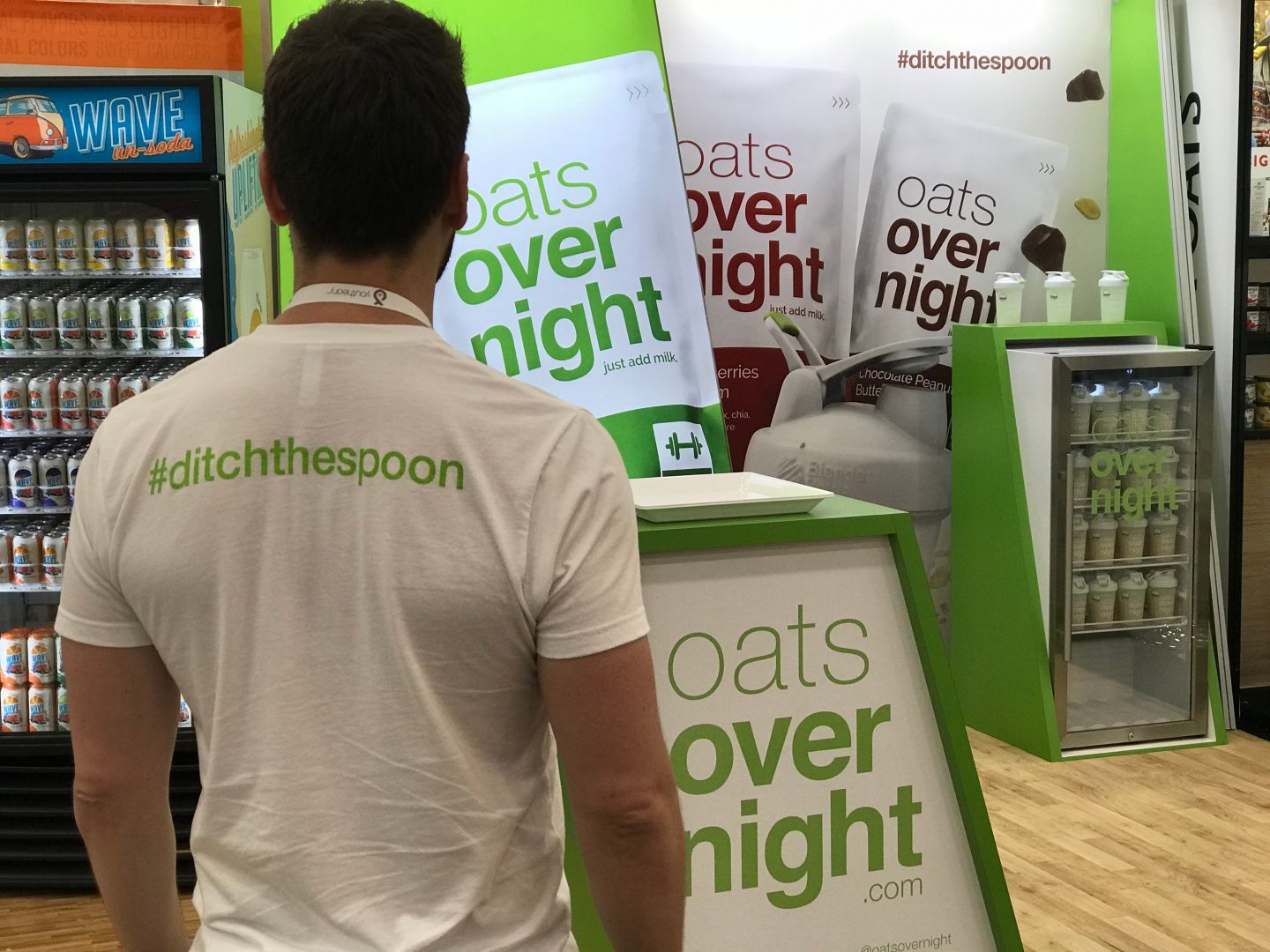
Oats Overnight launched in 2016. The format was unusual enough to need explaining: prepare the mixture with milk the night before, refrigerate it, then drink it from a shaker cup in the morning. Removing the spoon changed how the meal could fit into a day. The proposition started with something practical and mildly impatient: breakfast should be ready when its owner was.
He financed the company with his poker bankroll and savings. That gave a familiar business phrase, putting your own money in, a particularly literal backstory. The money had been earned one way and was now paying for an unfamiliar undertaking. The kitchen supplied the idea; turning it into something repeatable required people, equipment and knowledge he did not yet possess.
An expensive education in making things
Outside manufacturers proved difficult to secure for the new format. Oats Overnight began making its own product. Tate has described the flexibility this gave the business, but flexibility came attached to a substantial list of responsibilities. A company that owns production must organize the making as well as the selling. Equipment and staffing do not disappear when an advertising campaign needs attention.
By late 2021, the limits of the existing operation were becoming visible. The company was planning to move from a 20,000-square-foot Arizona facility to one measuring 50,000 square feet. It had grown beyond 100 employees, including about 40 on the production line. The change of scale made the original kitchen look less like a romantic origin and more like a very small first draft.
2.5 times the floor space. A dated expansion plan, not a measure of current capacity.
Owning the operation also connected product decisions to production decisions. If customers wanted a change, the company had an internal route to making it. That connection became increasingly important as the assortment expanded. The factory was doing more than filling orders. It gave the company a place to act on what the orders, and the people placing them, were saying.
The customer who wasn’t Brian
One of Tate’s useful early mistakes concerned the person on the other side of the transaction. Because he had made the product for himself, he initially expected the audience to resemble him. Marketing aimed in that direction performed well enough to keep the assumption alive. Success, in this case, made the lesson harder to see. The campaign was working; why question the picture behind it?
About a year in, broader targeting and messaging produced a significant improvement. More people could find a use for the product than its founder had first imagined. The discovery put a limit on the value of personal experience. It could identify an inconvenience with unusual precision. It could also make the potential customer look suspiciously like the person who had identified it.
For Tate, advertising had a familiar analytical rhythm: a fixed budget, incomplete information, decisions about where to continue and where to stop. Yet a customer buying breakfast was introducing a new kind of evidence. The buyer could revise his idea of the business. Being good at the calculation still required being willing to change what went into it.
A breakfast that keeps asking questions
The company developed a subscription model around more than replenishment. Customers also responded to flavors being developed. Their opinions helped shape what came next and what needed adjusting. This gave a recurring order a second job. It delivered breakfast while sustaining a conversation about breakfast. Even oatmeal, it turned out, could invite correspondence.
By June 2025, the range included 60 flavors. Tate said roughly 90% of first-time direct customers subscribed immediately, while subscriptions generated 94% of e-commerce revenue. Those figures describe that period, rather than a permanent condition. They nevertheless show how central the recurring relationship had become. The company was building around people who expected another box, and had opinions about its contents.
Of e-commerce revenue, as described in June 2025. A relationship measured in repeat orders.
Flavor names such as Space Brownie and Glazed Blueberry Donut suggest that the daily ritual need not be solemn. Variety also creates work: more things to develop, make and understand. Tate’s background makes the feedback aspect especially interesting. The company can keep asking which changes deserve another round. The answer comes from people eating breakfast, an electorate with little obligation to be polite.
More rooms, different stakes
Retail brought the product to shoppers beyond its own website. By 2025, the business had expanded into stores including Costco, Target and Whole Foods. A shelf introduces different demands from a subscription page. Online, there is room to explain an unfamiliar format. In a store, a package has less time to earn attention. Tate’s work now included making those channels function together.
Investment added another set of relationships. In July 2024, Oats Overnight announced a $35 million Series B led by Enlightened Hospitality Investments, with manufacturing and retail expansion among its priorities. In January 2026, Astō Consumer Partners invested $45 million. Reporting described that transaction as a secondary offering involving the purchase of an early investor’s stake. The amount should not be confused with an equivalent deposit into the factory budget.
Tate has described the Astō relationship as developing over four years. His stated priorities include continued innovation, operational scale and growth across direct sales and retail. The next stage asks a familiar question in a less forgiving setting: can the company keep learning from its customers while more people, facilities and selling channels depend on its decisions?
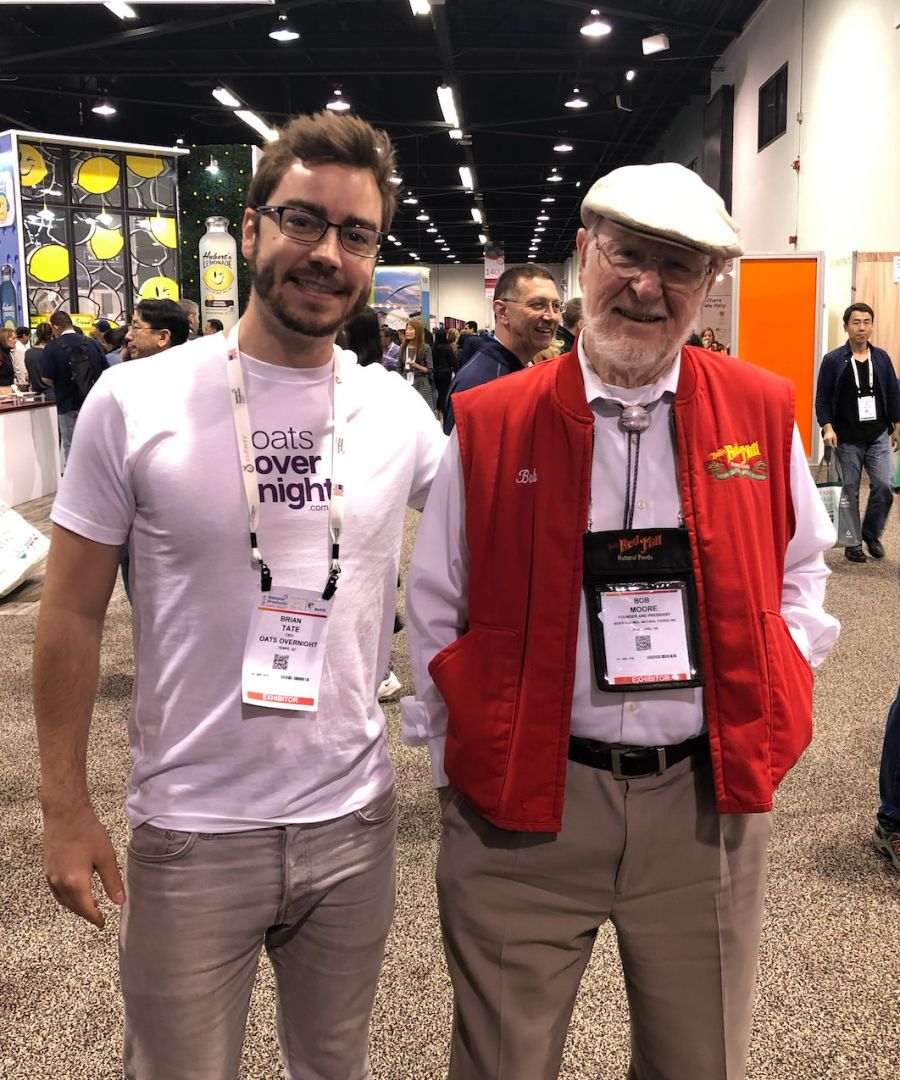
There is a family connection beneath the professional reinventions. Tate has credited his parents, Frank and Diane, with supporting his card-playing interests and taking him to tournaments. They continued backing him when he left college for poker. Before customers and investors voted on the oatmeal idea, he had already benefited from people willing to take an unconventional path seriously.
“Each of your employees are different.”
Brian Tate, on understanding his team
Running a company also means taking other people’s differences seriously. Tate has emphasized learning what motivates individual employees through regular conversations. That is a different task from reading an opponent across a table. A colleague must want to return tomorrow. The organization has to keep working after one person has finished making a clever decision.
The pleasure of Tate’s story is that the breakfast remains so ordinary. A customer prepares it at night and finds it waiting in the morning. Behind that modest convenience sit years of learning, a manufacturing operation, and a founder who once decided a winning career could be left behind. He wanted to see whether people would come back for something he had made. Each repeat order supplies another answer.
Keep the conversation going
Photographs: Brian Tate / Shoutout Arizona. Original interview and photo gallery.