On May 10, 2014, Chung Dao published instructions for persuading a supercomputer to do something it had not been designed to do. The machine was Tokyo’s Oakleaf-FX. The visitor was Hadoop, software for processing large datasets. Getting them acquainted required a little intervention. Even very expensive computers can be provincial about their houseguests.
The guide moved through preparation, deployment and a test job. It included a fix for a Java problem, configuration files and commands a reader could try. At the end of the deployment sequence came the small satisfaction every programmer recognizes: a machine reporting that it was ready.
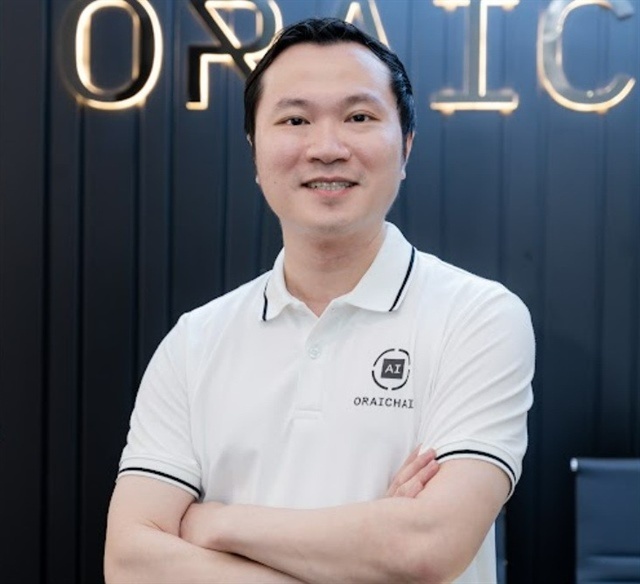
Years before his name became associated with AI and blockchain, Dao was working on the unglamorous business of compatibility. He is now CEO and co-founder of Oraichain Labs and a co-founder of Rikkeisoft. The vocabulary around his work has changed considerably. The recurring difficulty is familiar: two useful technologies do not automatically become useful together.
A passport full of computer science
Dao’s academic name is Thanh-Chung Dao, or Đào Thành Chung in Vietnamese. His education took him through Japan and Finland. He received a bachelor’s degree from Keio University in 2011, a master’s from the University of Eastern Finland and a doctorate in Information Science and Technology from the University of Tokyo in 2017.
By January 2018, he was presenting his research at Hanoi University of Science and Technology. The subject was the effective deployment of data-intensive frameworks on supercomputers. The distinction inside that title matters. Hardware built for intensive calculation can still struggle when an application spends much of its time moving and storing data.
His research addressed the mismatch between familiar frameworks such as Hadoop and Spark and the environments offered by supercomputers. Reusing established software held an attraction: developers could retain tools they understood instead of beginning again with a blank screen. But those tools made assumptions about processes and storage that the hardware did not necessarily share.
There is a useful way to read this early work: as an interest in the cost of making systems cooperate. That is an interpretation of the work, rather than a claim about a private motive. The technical problems themselves are quite concrete.
The machine was fast. The data had to catch up.
In 2016, Dao and Shigeru Chiba described an approach to in-memory Hadoop that assigned additional nodes to storing data. Those nodes served as memory space rather than running computation tasks. The point was to ease a storage bottleneck without being confined to the memory available on an individual computing node.
Their paper reported a 15 percent reduction in total execution time on the TSUBAME supercomputer compared with the original Hadoop in its experimental comparison. That figure belongs to those experiments. It is a result with a setting, a workload and a baseline, which gives it more meaning than a speed claim floating free of all three.
The work also received a student encouragement award at the Japan Society for Software Science and Technology’s 33rd annual conference. Its appeal is easy to understand without mastering the code: a powerful computer should spend less time waiting for its own information to arrive.
Less total execution time in the paper’s TSUBAME comparison.2016 experiment · versus original Hadoop · workload-specific result
Research of this kind is full of qualifications, because the qualifications are part of the result. For a future founder entering an industry fond of large promises, that earlier habit of specifying the machinery provides an interesting counterweight.
Before AI oracles, there were diplomas
Another part of Dao’s research record brings the story closer to everyday life. In 2020, he co-authored work with Binh Minh Nguyen and Ba-Lam Do on a blockchain-based certificate authentication system for Vietnam. Its name, VECefblock, was unlikely to win a poetry competition. Its proposed job was easier to explain: help check educational credentials.
The prototype connected educational records with a blockchain using Hyperledger Fabric, with deployment and testing on Amazon EC2. It considered the steps behind issuing a qualification, the different institutions involved and the conversion of their data into a common structure. A certificate would carry a history of recorded information rather than depend only on the persuasive appearance of a document.
This was a prototype and research program. It nevertheless gives Dao’s later talk about useful blockchain a specific antecedent. Here was a familiar problem involving institutions, records and people who needed to check a claim. Technology entered through the administrative door, carrying a rather large folder.
The company connection came with engineers
Dao’s career also includes co-founding Rikkeisoft in 2012. That software-company connection became practical support for Oraichain. At a November 2020 partnership ceremony, the two businesses committed to working together; the agreement was announced the following month.
Rikkeisoft invested an undisclosed sum for a 10 percent stake in Oraichain. Chairman Ta Son Tung and CEO Phan The Dung joined Oraichain’s board. The announced support included engineering resources, AI services and help finding partners in Japan and the United States.
For Dao, the relationship joined an existing professional network to a new technical undertaking. The proposed AI services included speech recognition, speech generation and optical character recognition. These are ordinary enough tasks to keep a discussion of artificial intelligence anchored to things someone might actually request.
Oraichain Labs dates its establishment to 2019, while Oraichain’s project formation belongs to 2020. Its mainnet launched on February 24, 2021. A lab, a project and a working network mark different stages of the same developing enterprise.
A blockchain needed an outside opinion
In March 2021, Dao explained the founding question behind his AI oracle idea: what value could blockchain add to human life? He wanted more functions available to applications. The work focused on connecting external AI models with smart contracts, whose execution environment was poorly suited to running those models directly.
An oracle carries information into a blockchain from elsewhere. With AI in the arrangement, the incoming material might be a model’s judgment rather than a simple observation. An application must then decide how much reliance to place on it. The journey from answer to action acquires several opportunities for trouble.
“what can Blockchain technology add value to human life?”
Chung Dao · March 2021 public Q&A
His January 2021 video conversation with Decentralised Chain had already explored AI-driven oracles and a marketplace for AI models. Together, those early explanations show a founder trying to make a technical proposition intelligible beyond the people writing the software. That, too, is part of getting systems to cooperate: prospective users need a reason to join.
THE PROBLEM DAO CHOSE / CONCEPTUAL VIEW
Checking execution and judging an answer’s usefulness are separate tasks.
In March 2021, Oraichain also announced a partnership with Ocean Protocol. The proposed connection brought together AI services, data markets and Compute-to-Data technology. It widened the practical question: a model marketplace needs access to data and people willing to provide services, alongside the infrastructure that connects them.
When the question became a picture
By June 2021, Dao was discussing his technical leadership of aiRight, an application combining AI, NFTs and decentralized finance. One purpose was checking the originality of digital works. The application put a recognizable problem in front of the underlying infrastructure: how should a system assess whether an image resembles something already published?
aiRight’s later explanation described a crawler collecting NFTs across networks, a database with labeled features and similarity scores for newly minted work. This made the oracle discussion less remote. Artists and buyers could understand the stakes of a copied image even if they had no desire to inspect a smart contract.
A similarity score still needs interpretation. Visual resemblance can raise a question; it cannot provide an entire account of authorship. The application illustrates the care required when a machine’s assessment enters a process involving ownership. A useful tool must make the meaning of its output clear enough for someone to act on it.
The next mismatch was in the rules
In June 2025, Dao spoke publicly about Vietnam’s proposed crypto-asset framework. He called for clearer treatment of decentralized exchanges, non-custodial wallets and software development. His concern was that technical work and services offered directly to asset users needed distinct treatment.
He also advocated transparency, clearer asset classification and controlled testing environments for new models. These were his proposals during a policy debate. They show the founder’s attention moving beyond the boundary between two pieces of software to the boundary between building infrastructure and regulating its use.
Meanwhile, Oraichain’s AI Oracle 2.0 design notes confronted a familiar engineering inconvenience. Repeated tests and model calls could make verification expensive and inference slow. The proposed architecture shifted heavy computation to a separate Distilled AI layer and moved aggregation ahead of inference. More checking could itself become an obstacle to making the system practical.
That problem would have been recognizable to the researcher working with Hadoop: locate the bottleneck, then reconsider where the work happens. The technologies are different. The discipline of looking closely at the handoff remains useful.
Dao’s career supplies no shortage of elaborate nouns. Its most approachable thread is a series of concrete questions. Can this software run here? Can this credential be checked? Can this AI answer reach an application in a form it can use? Each requires more than putting two fashionable words beside each other. Somewhere, eventually, the machine has to report that it is ready.