A restaurant can have an ambitious chef, an expensive dining room and scarcely enough space to store tomorrow’s ingredients. Christopher Pappas found a business in that awkward arrangement. Explaining the name Chefs’ Warehouse, he has pointed to the cramped kitchens of New York: independent restaurants needed frequent deliveries because they had so little room for inventory. The supplier became an extension of the kitchen. Somewhere between the cheese and the loading dock, a pantry acquired wheels.
It is a useful place to begin with Pappas, whose title now runs to founder, chairman, president and chief executive officer. A grand title can obscure a very particular service. His company had to hold what a chef could not, deliver it when needed and understand why one ingredient would do while another would spoil the plan. In his telling, the business’s name came from the work.
Before the menu, the milk run
The apprenticeship began in a family dairy business. His father, Peter Pappas, distributed to Manhattan restaurants. Christopher grew up around the trade; the Food & Beverage Association also credits his mother’s cooking with awakening his interest in varied, fresh ingredients. The influences fit together neatly: one parent supplied the restaurants, the other gave him reasons to care about what went into the saucepan.
The company’s family history reaches back to Veterans Butter & Egg Co., established by Peter in 1956. In 1985, Christopher and his brother John founded Dairyland USA. The starting point was modest enough to be remembered in vehicles: one van and one truck. Their mother allowed her house to be mortgaged to help launch the business. In a founder’s retrospective, the trucks are picturesque. The house makes the risk rather more personal.
Between the dairy apprenticeship and Dairyland came an unlikely buying trip: professional basketball. Pappas graduated from Adelphi University in 1981 with a business administration degree, having played varsity basketball, and spent several years playing professionally in Europe. The Food & Beverage Association identifies Greece as the place he was recruited to play. Basketball gave him a job abroad; the food supplied another direction.
His corporate biography preserves that sporting detour alongside the dates of his executive appointments. It deserves the space. A business degree and experience with a family delivery operation already offered a plausible career route. Playing overseas introduced another set of ingredients and expectations. European food could become something to bring back to American kitchens, provided someone could do the practical work of importing, selling and delivering it.
“My roots in food distribution run deep.”
Christopher Pappas, 2024
A chef’s request is a buying brief
Early customers included Charlie Palmer and Thomas Keller. Pappas remembers learning alongside chefs as their ambitions expanded. That relationship gives the origin story its particular character: customers were helping to shape the assortment. A distributor with an attentive ear could discover demand before it appeared in a purchasing spreadsheet.
There was also a practical interest in the people doing the cooking. An early industry biography credits Pappas with initiating a Chef Placement Program in 1991 to help chefs and sous-chefs find work. It is a telling addition to the delivery business. Ingredients move through kitchens staffed by people whose careers move too. Helping with one creates another reason to pick up the telephone about the other.
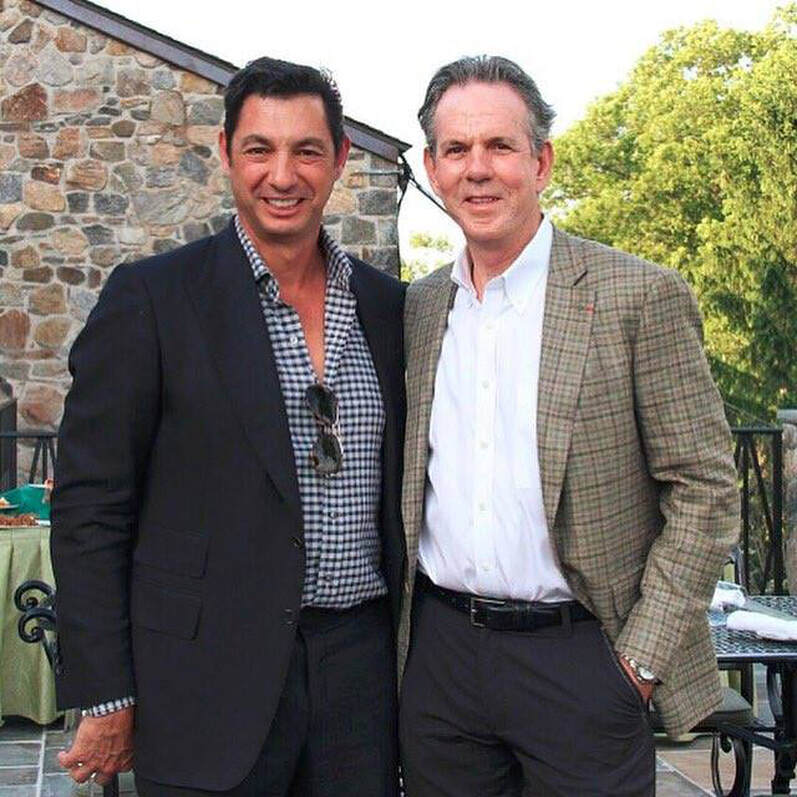
The warehouse idea depended on repetition. A chef could be impressed by an unusual cheese once. Tomorrow required another delivery. Pappas’s account of New York’s storage problem explains why timing belongs beside taste in this story. The promise had to survive an ordinary service, then the next one. A reputation acquired over dinner can be lost before lunch.
The delivery route reaches Times Square
On July 28, 2011, Pappas rang Nasdaq’s opening bell to mark the company’s stock market debut. Dairyland’s successor was trading under CHEF. The symbol was admirably economical: four letters for a business whose customers could spend considerably longer deciding on a butter.
The occasion put a public stage beneath a career that had begun in distribution. Pappas had led the business as chief executive since 1985. He became chairman in connection with the public offering and had resumed the presidency in April 2009, after an earlier stretch in that role. The continuing presence of a founder gave the listed company a direct connection to its original trade.
John remained central to that continuity. Today he is vice chairman and chief operating officer, with responsibility for the North American distribution network. Christopher’s remit spans procurement, sales, marketing, strategy, business development and operations. Their partnership connects the customer-facing promise with the facilities and transport needed to keep it. Neither side has much room to be merely decorative.
The company’s anniversary history records ten acquisitions between 1999 and 2012, followed by sixteen between 2013 and 2019. Those dates describe how the original territory widened across the United States. They also complicate the tidy founder narrative. Pappas was increasingly leading a collection of established businesses, each arriving with customers, employees and habits of its own.
A familiar kitchen, farther from Queens
The November 2022 acquisition of Chef Middle East extended that collection into the United Arab Emirates, Qatar and Oman. Pappas emphasized the resemblance between the businesses: imported specialty foods, meat, seafood, pastry and bakery products, sold to restaurants, hotels and caterers. The geography changed; the type of customer offered something recognizable.
There were existing connections to follow. Some Chefs’ Warehouse customers had already opened restaurants in the region. Buying an established distributor offered a local organization as well as a new market. Chef Middle East’s chief executive, Steve Pyle, described a shared focus on quality and service, with technology and infrastructure supporting further growth.
For Pappas, the transaction put a broader test to the original idea. A specialist supplier needs enough local understanding to serve a kitchen’s daily requirements. International reach brings more purchasing possibilities, but the final delivery still has a destination and a time. A map of markets is only the beginning of an operating plan.
Four billion dollars, measured in deliveries
By fiscal 2025, the company’s annual net sales had reached approximately $4.15 billion, up 9.4% from 2024. Pappas’s annual letter described investment in distribution capacity, technology and a Denver acquisition, Italco Specialty Foods. Expanded capacity in Qatar and Oman appeared alongside projects in Portland and Las Vegas. His responsibilities now extended well beyond finding the next ingredient.
The second quarter of 2026 offers a more recent view. Sales reached $1.17 billion, a 12.9% increase over the comparable quarter. Organic growth accounted for most of the rise. Specialty case counts and customer numbers both increased. Those measures help explain the scale in terms closer to the original business: more products moving to more kitchens.
The same results carried a qualification: Middle East operations ran at about 94% of the prior year’s level during May and June. Growth across the company did not mean identical conditions everywhere. Pappas’s update paired the larger sales figures with that regional detail. The original warehouse problem had multiplied into many local operating problems.
The work behind “easy”
At a March 2026 investor conference, Pappas described the task in unusually plain language: “Easy is gonna win.” He was discussing the need to make work easier for customers and salespeople. Facility improvements, trained specialists and digital tools belong to that effort. The convenience visible to the buyer requires a considerable amount of organization elsewhere.
He also discussed team selling and continued education through Chefs’ Warehouse University, supplier visits and customer events. His approach gives expertise a place alongside software. A catalogue can display an ingredient; a knowledgeable salesperson can help a chef decide whether it belongs on the menu. His comments suggest that removing friction and maintaining informed relationships remain linked ambitions.
That interest in learning has an outward-facing counterpart. In November 2021, the company announced a partnership with New York’s Food Education Fund, including a Bridge Program planned for spring 2022. Students would receive mentoring in areas including procurement, food sales and finance. Pappas welcomed the partnership as support for the industry’s future workforce.
The range of those subjects matters. A young person interested in food could encounter the business beyond the stove: how ingredients are bought, how customers are served and how the accounts work. Pappas’s own route had crossed several of those boundaries. The program offered students a way to see more of the operation before choosing a place within it.
A return to the place he started
In May 2026, Adelphi awarded Pappas an honorary degree and welcomed him as the speaker at its graduate commencement ceremony. The university identified him as a former first-generation student. Forty-five years after graduation, the basketball player who had gone abroad returned with a business career to explain.
“Whatever path you choose, do not settle for ordinary,” he told the graduates. Commencement advice tends to float pleasantly above the complications of earning a living. His own path gives the words something solid underneath: family distribution work, professional sport, a new company and decades spent managing its expansion.
The missing pantry remains a useful way to understand the result. Pappas found opportunity in something a restaurant lacked, then organized a business around supplying it. The dining room gets the applause. Somewhere outside, a delivery still has to arrive.