Steve Liou arrived at a New York panel with a number that could make a warehouse manager reach for a chair: more than 400,000 product codes. That was the catalog one of Clarium’s customers had to manage. Each code represented another item to identify, track and understand. Liou had spent years working with financial data. Here was a different sort of portfolio.
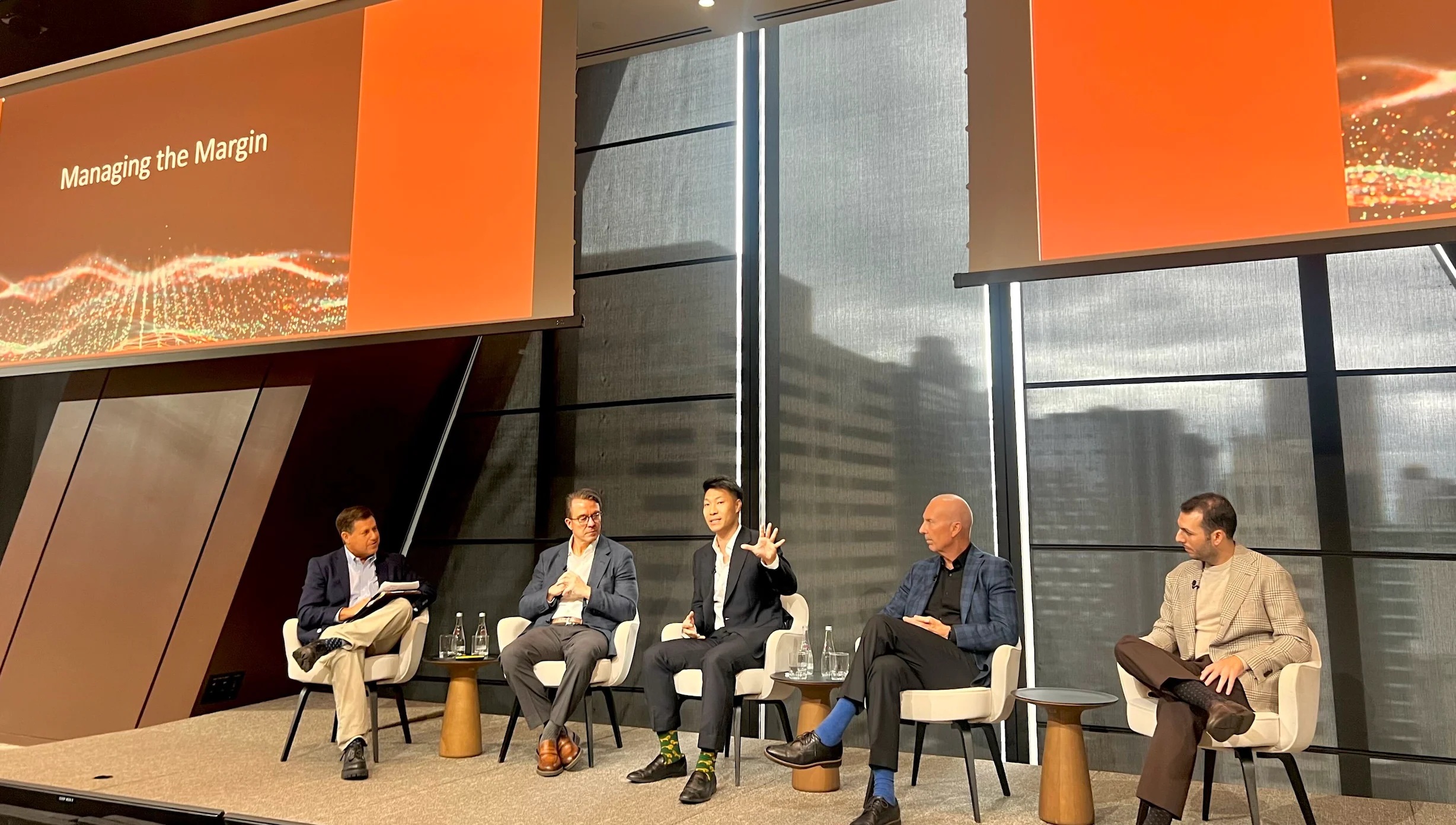
The occasion was J.P. Morgan’s 2026 CEO/CFO Health System Summit. Liou sat in the middle of a five-person panel called “Managing the Margin,” with Scott Becker moderating. His argument concerned something less glamorous than the usual AI conversation: knowing what an organization buys, where it goes, and what it costs. The room’s advertised subject was finance. Liou had brought inventory.
It was a fitting place for him to turn up. Before founding Clarium in 2020, he worked in investment banking, venture capital and public-market investing. His résumé includes Point72, Citadel and Millennium. Those names describe a career spent assessing businesses. Clarium made him responsible for one, including the awkward business of persuading software and people to get along.
A New Yorker’s idea of opportunity
Liou grew up in New York. When he describes choosing Columbia, the reasons are refreshingly compatible: he wanted a strong academic program, wanted to stay near family, and wanted access to the city’s finance industry. A university could satisfy all three. There was no need for a dramatic departure at the beginning of this particular founder story.
In a 2026 conversation, he described Columbia as a longstanding ambition. The city offered proximity to the work he hoped to do, along with the people he wanted to remain close to. His account makes geography feel like a practical career decision. Opportunity, in his case, was already nearby. He intended to make use of it.
His early work included J.P. Morgan and venture investing at WFD Ventures. He later worked at Point72, Citadel and Millennium. Across those roles, the recurring subject was the business of a particular industry: its spending, its incentives and the information used to evaluate it. The institutional names changed. Looking closely at numbers remained part of the job.
That background helps explain why his eventual company would concern records that others might hurry past. Procurement data is unlikely to win a beauty contest. It can, however, tell you a great deal about an organization, provided its various systems agree on what they are describing. Getting them to agree became central to Clarium’s work.
Leaving the other side of the spreadsheet
Liou’s account of Clarium’s origin begins with fragmented information. Years of investing gave him exposure to supply chain data and its shortcomings. Records lived across separate systems. The information existed, but assembling a useful picture took work. He saw room for a company that could connect those records and make them useful to the people making purchasing decisions.
He founded Clarium in 2020. The business focused on supply chain technology, developing software to bring information together and support operational decisions. It was a change in responsibility as much as occupation. An investor can identify a problem and decide whether a business deserves capital. A founder inherits the follow-up questions, including who will build the solution and who will use it.
Clarium’s platform, Astra OS, gathers information from different participants and systems, brings it into a common format, and uses AI to help users interpret it. The ordinary language matters here. A useful record has to mean the same thing across the organization before anyone can act confidently on it. Sophisticated analysis still needs an agreed vocabulary.
Think of a group project in which everyone has brought a different spreadsheet. Even when all the participants are competent, their separate versions create work. Clarium addresses a much larger operational version of that coordination problem. The analogy is simple; the undertaking includes the difficult details of connecting existing systems and fitting into established routines.
An editorial outline of Clarium’s data and workflow approach.
The customer gets a pencil
Liou has repeatedly described building Clarium with its customers. Yale New Haven Health, Geisinger and Boston Children’s Hospital contributed input to Astra OS. This gives product development a specific constituency: people who will eventually have to use the result. Their participation also makes it harder to mistake a polished demonstration for a finished working tool.
A product team can imagine an elegant sequence of steps. The person doing the job may have interruptions, competing priorities and an existing system that cannot simply be wished away. Co-development puts those conditions into the conversation early. It gives the customer some authorship over the software, along with a chance to point out where the proposed elegance would cause trouble.
Implementation receives the same attention in Liou’s account. In August 2026, he described assigning a dedicated group of engineers and subject matter experts to each onboarding. Customer IT teams already had numerous projects competing for their time. Clarium’s approach was to take on the deployment work rather than assume those teams could readily absorb another assignment.
This is one of the more revealing details of his operating philosophy. Selling software creates obligations well beyond the sale. Someone has to make it work in the organization that bought it. Liou speaks about that labor as part of delivering the product. It belongs in the business model, the staffing plan and the promise made to a customer.
A round of funding, a longer to-do list
In August 2024, Clarium announced a $10.5 million financing led by General Catalyst. Participants included investment arms associated with Kaiser Permanente, Yale New Haven Health and Texas Medical Center. The combination reflected the company’s place between software development and the organizations whose operations it was trying to improve. Some of the capital came from within that working world.
In May 2025 came a $27 million Series A led by Northzone, with participation from existing investors. Disclosed funding reached $43 million at that point. Northzone’s account of the investment noted that Clarium had doubled its team since the seed round. For Liou, the next phase included further platform development, new functionality, hiring and more customer relationships.
Individual announced rounds. The May 2025 round brought disclosed total funding to $43M, including earlier capital.
He said the company had not been actively seeking that 2025 round when venture firms expressed interest. The eventual financing gave Clarium resources for an agenda already taking shape. A funding announcement compresses a great many future tasks into one pleasing number. Developing software, recruiting people and earning new customers tend to expand it back into a calendar.
His earlier investing career offers an interesting perspective on the change. He had worked where companies were examined as investment opportunities. Now his own company was being assessed, funded and expected to execute. He could recognize the questions from both sides of the table. Answering them as an operator required a product, a team and continuing evidence.
The investor still asks for the return
By August 2026, Liou was publishing advice that sounded quite comfortable coming from a former investment professional. AI buyers should ask vendors to commit to measurable returns within a defined period. They should examine existing customer relationships and practical results. They should give supply chain leadership an executive voice. The financial test remained close to the center of his argument.
“Fix your data before you deploy AI.”
Steve Liou, August 2026
His warning about data quality puts a condition on the appeal of automation. Faster processing is useful when the underlying information can support the decision being made. Separate systems and inconsistent records need attention first. It is a fairly demanding message for a company selling AI: the foundations require work, and the buyer should insist on a return.
At the J.P. Morgan summit, he carried that case into a discussion about margins. The customer with more than 400,000 product codes illustrated the scale of the information problem. His proposal was to normalize and connect data so leaders could understand purchasing and costs. The comparison brought his career’s two subjects, financial judgment and operational detail, into the same conversation.
Room for a picnic
There is a smaller map of New York in Liou’s public answers. Asked about favorite spring destinations, he named the lawns of Central Park, Bryant Park and Madison Square Park. He liked picnics there with friends and family. For someone whose career has involved large financial institutions and complicated enterprise software, the preferred outing has admirably few system requirements.
The parks fit with the reasons he gave for choosing Columbia: the city mattered, and so did proximity to family. His career changed substantially without requiring a new personal geography. The same New York that offered access to finance could also provide somewhere to spend an afternoon with people whose company he enjoyed.
Reflecting on his move into building, Liou said, “I’m actually building something and seeing it come to fruition.” That satisfaction gives the career change its personal weight. Clarium brought him responsibility for a tangible piece of work and the people trying to use it. After years of evaluating businesses, he had one of his own to get working.