Consider the restaurant delivery. A case of tomatoes arrives, someone checks it, and dinner becomes possible. Nothing about this transaction looks especially ambitious. Yet repeat it across enough kitchens, add the freezer, the cleaning cupboard, and the spare frying pan, and you begin to understand Sysco. The company occupies the space between a menu’s promise and a kitchen’s ability to keep it.
- Sysco bundles ingredients, supplies, and delivery for professional kitchens.
- Its advantage depends on purchasing scale and useful local service.
- A proposed Restaurant Depot deal would add shopping trips to scheduled deliveries.
In fiscal 2026, that space produced $84.553 billion in sales. The interesting question is how much trouble a distributor can remove from an ordinary working day. A chef can rewrite a dish. Rewriting the supply chain before lunch is harder.
Nine businesses, one purchasing problem
John F. Baugh understood frozen food before he understood national scale. He and his wife, Eula Mae, founded Zero Foods in 1946. In 1969, Zero Foods joined eight other businesses to create Sysco. The name compressed “Systems and Services Company” into five letters. Even the name sounded like the part of dinner nobody photographs.
At its March 1970 public offering, the founding companies had aggregate sales of $115 million. The central idea was practical: connect regional distribution businesses into something that could serve a wider market. Restaurants were buying ingredients locally; a growing distribution organization could coordinate more of that buying.
There is an enduring tension here. Buying power improves with size. Understanding why one particular kitchen needs one particular cut of meat requires attention. Sysco’s business has spent decades trying to make those two things coexist.
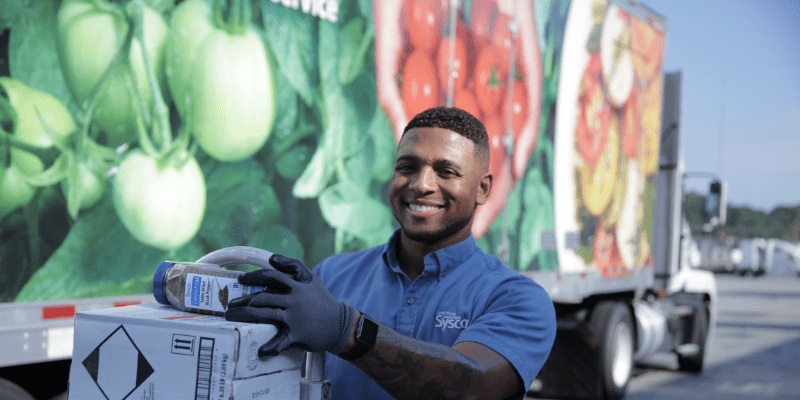
The truck is only half the product
Sysco supplies restaurants, hospitals, schools, hotels, and other places that prepare meals away from home. Its catalog crosses the kitchen: proteins, produce, dry groceries, beverages, disposables, cleaning products, and equipment. A customer can consolidate purchases that might otherwise require several suppliers.
Specialty operations complicate the familiar image of a truck carrying interchangeable boxes. FreshPoint handles produce. Buckhead | Newport focuses on meat and seafood. Greco & Sons anchors an Italian specialty platform. Edward Don adds equipment and supplies. These businesses let Sysco address more specific purchasing needs alongside broadline delivery.
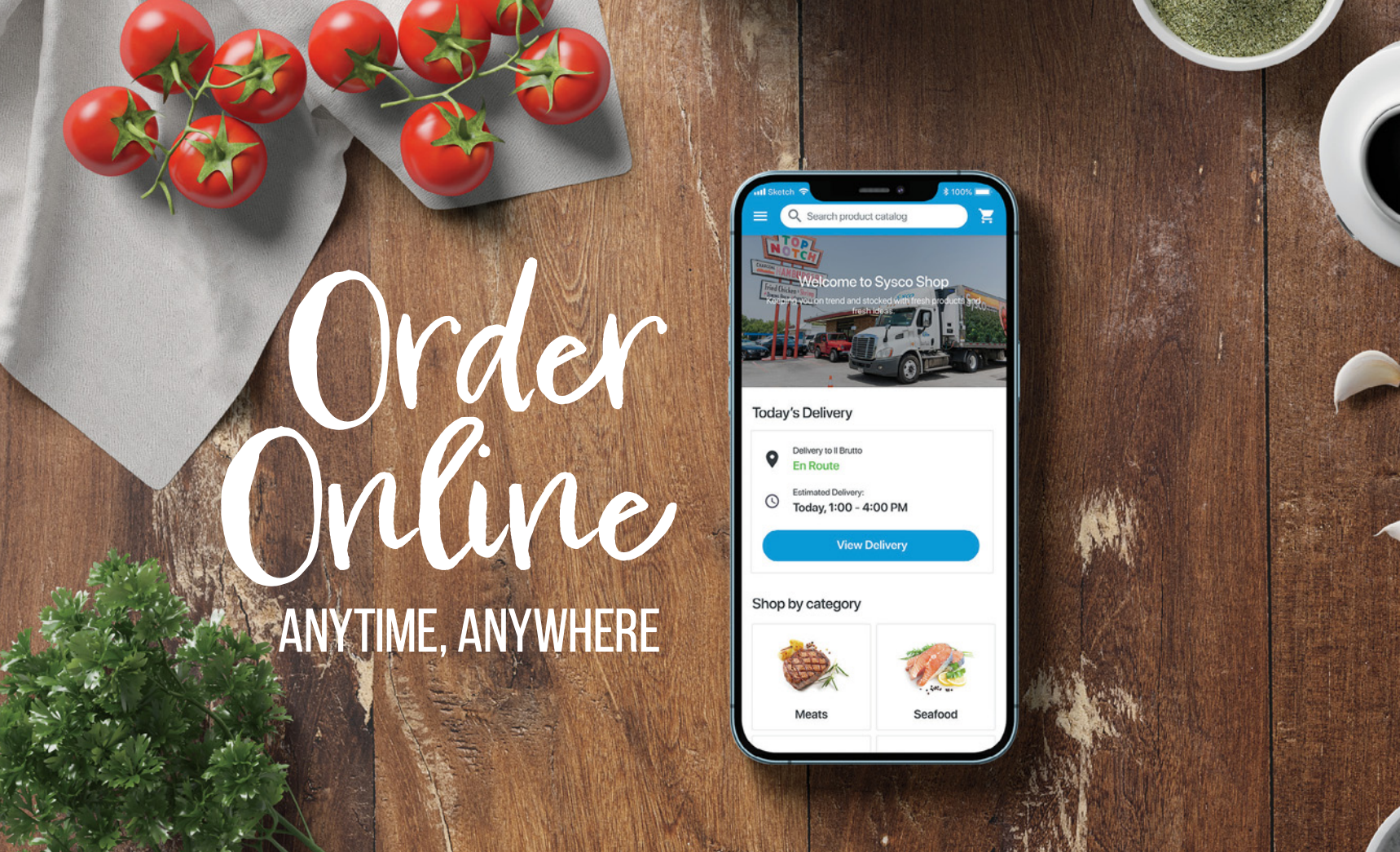
Sysco Shop puts catalog search, previous orders, lists, and delivery information into a web and mobile interface. The app listing also describes offline order building. That is a useful detail for a product used around walk-in refrigerators: the purchasing task can continue when the connection cannot.
The economics are wholesale economics. Sysco buys products and resells them; the difference must cover warehouses, transportation, selling, and support. US Foods, Performance Food Group, Gordon Food Service, and regional specialists offer alternatives. Sysco’s case rests on how effectively its breadth, people, and network work together in a customer’s market.
A very expensive lesson in size
Scale has boundaries. Sysco’s proposed combination with US Foods met one in 2015. The Federal Trade Commission challenged the transaction, arguing that it would reduce competition nationally and in local markets. A federal court granted a preliminary injunction. The companies abandoned the merger.
The termination payments totaled $312.5 million: $300 million to US Foods and $12.5 million to Performance Food Group, which had a related facilities agreement. That was the breakup bill, before treating it as a complete accounting of the effort.
Sysco subsequently expanded in Europe through the approximately $3.1 billion Brakes transaction. The sequence illustrates a constraint every consolidator eventually encounters: an attractive acquisition still needs a permissible market structure.
When the kitchen goes quiet
The pandemic exposed another weakness: a network built around meals away from home depends on people eating away from home. In a 2022 TIME interview, CEO Kevin Hourican described how the disruption reduced resistance to changes in technology, sales organization, and supply chain operations. He also described staffing shortages and inexperienced recruits slowing productivity during the recovery.
That distinction matters. Demand returning does not instantly restore operating capacity. A warehouse needs trained people; a delivery route needs reliable execution. The culture customers experience is the cumulative result of those practical jobs.
The $29.1 billion shopping trip
In March 2026, Sysco agreed to acquire Jetro Restaurant Depot for an enterprise value of approximately $29.1 billion. Restaurant Depot’s cash-and-carry warehouses serve operators willing to collect supplies themselves. Scheduled delivery and a shopping trip solve different versions of the same kitchen problem.
As of October 22, the purchase remains pending. Sysco expects a calendar first-quarter 2027 close, subject to approvals and other conditions. On October 6, it announced the closing of $14.65 billion and €1 billion of notes offerings intended to help finance the acquisition. Raising the money is an advance commitment; it does not complete the purchase.
“These savings reflect a durable change in how we execute our day-to-day business”Kevin Hourican · September 2026
Separately, Sysco is targeting at least $500 million of AI powered efficiencies by fiscal 2029, including work on routing, warehouse productivity, and procurement. Those are projected savings. The useful test will be whether operational changes make each order cheaper to fulfill while keeping service dependable.
Copy the routine, not the fleet
For an operator, the transferable lesson is to measure the whole purchase: price, storage, waste, staff time, and delivery accuracy. Consolidating orders can simplify work. It can also concentrate dependence. A specialty supplier may be a better fit for a particular ingredient; a nearby wholesaler may handle an urgent shortage better.
For another business, Sysco offers a related lesson: make the recurring chore easier, then keep earning the next order. That only works when local demand supports the route and execution supports the promise. Dinner is a daily deadline. The box has to arrive.