Consider the convenience-store shelf. It looks like a resting place for potato chips. It is actually a series of bets: on hunger, habit, price, and how long a customer will stand still. Every new product needs room. Every slow seller occupies room another product might deserve. Core-Mark International has built a business around this small, stubborn problem.
The truck attracts the attention. The decisions behind its contents are where the story gets interesting.
- Core-Mark supplies convenience retailers, from single stores to national chains.
- Its offer combines merchandise, shelf planning, ordering tools and foodservice support.
- Retailers gain help with execution; programs can also bring purchasing commitments.
A candy counter with a long memory
The business began in San Francisco in 1888 as Glaser Bros., a family candy and tobacco distributor. Those products explain its original place in the world: frequent purchases, modest baskets, dependable replenishment. Today’s Core-Mark still supplies those categories, alongside beverages, groceries, health-and-beauty products and fresh food.
Its history contains a less comfortable lesson about dependence. Fleming bought Core-Mark in 2002. When Fleming entered Chapter 11 in 2003, Core-Mark entities were drawn into the proceedings because they had guaranteed the parent’s debt. A reorganization followed in 2004. An operating business can be useful to its customers and still be vulnerable to decisions made above it.
Performance Food Group completed its acquisition in September 2021. The announcement had valued the transaction at about $2.5 billion, including net debt. PFG brought foodservice capabilities; Core-Mark brought convenience-store relationships. Eby-Brown joined the expanded business under the Core-Mark name. Dinner became a larger part of the proposition.
“We thought we’d never fill it up!”
Richard Pierson, on the move to a larger Sacramento warehouse in 1980
The shelf has to earn its keep
Core-Mark’s basic economics are familiar wholesale economics. Buy goods, sell them to retailers at a markup, and manage the expense of getting them there. Supplier discounts and promotional programs also matter. In its final full calendar year before the acquisition, 2020, the former standalone company reported roughly $17 billion in sales and $94.7 million in operating income. Big turnover leaves little room for sloppy execution.
A historical standalone snapshot. Sales are not profit.
For the store owner, the corresponding problem is choosing an assortment that sells without trapping money in idle stock. SmartStock combines category reviews, shelf plans, product rotation and shelf-tag checks. A planogram is simply a map of what belongs where. The map becomes useful when somebody actually follows it.
There is an exchange here. The 2024 SmartStock brochure requires at least $1,200 in monthly program-product purchases, buying all SmartStock categories through Core-Mark, a prominently placed snack rack, and at least 90 percent compliance with required items. It also calls for accepting specified automatic distributions. Retailers should compare those commitments with their own demand and buying flexibility.
When the planners needed a plan
Growth created its own friction. Blue Yonder’s customer case study describes planners working across incompatible legacy systems after expansion. Libraries could not be shared easily. Files moved between people instead of everyone working from consistent information. The company’s shelf advice depended on a process that needed rebuilding.
Core-Mark standardized planning on Blue Yonder’s cloud platform and trained analysts together. The vendor reports that each analyst could subsequently manage 40 percent more stores. That is a supplier-reported productivity result, rather than proof that every retailer sold more. The transferable idea is practical: give people a common system and teach them how to use it together.
- 01Read demandSales and category data
- 02Assign spaceStore-specific shelf plans
- 03Check againRotation and replenishment
CustomerFirst handles another set of repetitive decisions: searching products, building orders and checking delivery records. CORE-SOURCE brings business tools together, including a retailer analytics dashboard. These tools matter most when they reduce the distance between noticing an empty space and doing something about it.
The chicken is a distribution decision
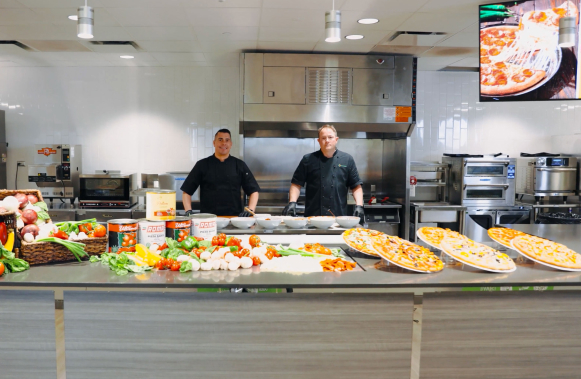
Core-Mark’s Center of Excellence contains a culinary test kitchen and store-innovation displays. Retailers can explore menus and equipment before making changes back home. It is a revealing facility for a wholesaler: the customer needs help turning ingredients into a repeatable operation.
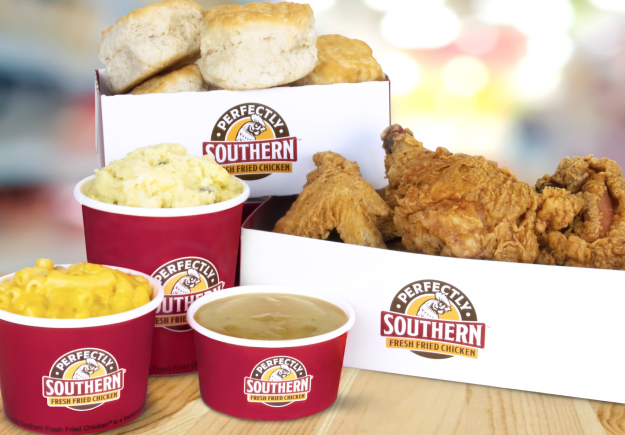
The foodservice lineup includes Perfectly Southern fried chicken, Contigo Taquería, Red Seal Pizzeria and Fresh Take salads and sandwiches. Core-Mark advertises no franchise fees and offers marketing and operational support. That removes one familiar charge. Equipment, ingredients, staffing and waste remain part of the retailer’s calculation.
For an operator, the sensible starting point is the store’s actual capacity. A made-to-order menu asks different things of a team than a grab-and-go cooler. A supplier can simplify purchasing and provide a program; the store still has to prepare, hold and sell food properly. An appealing photograph cannot do the lunch shift.
New brands need a way in
Core-Mark also sits between emerging manufacturers and retail buyers. Its Curated program, launched in 2020, offers selected brands onboarding and promotional exposure. In 2025, 168 entries produced four winners: PhoLicious, SimplyProtein, UNiTE Food and VALR Energy. The list stretches from instant pho to energy drinks.
For a manufacturer, being discovered is only the opening. Getting into catalogs, trade shows and conversations with buyers helps connect a product to the people who decide what stores stock. For a retailer, that same network supplies unfamiliar choices without requiring a separate search for every new item.
The promise arrives by truck
McLane and regional wholesalers give retailers alternatives. Core-Mark’s pitch ties delivery to merchandising and foodservice expertise. Its relationships also reach substantial chains: Love’s expanded its supply agreement in 2025, followed by RaceTrac’s extension to company-owned stores.
Execution depends on people as much as systems. In March 2026, drivers and related employees at Core-Mark’s Corona operation voted 51-13 for Teamsters representation. The union said workers sought better pay, benefits and safety. That belongs beside the software story: somebody still has to bring the order through the door.
Core-Mark’s useful lesson fits on a shelf tag. Choose deliberately. Make the choice easy to execute. Check whether it worked. Then give the next inch to something that earns it.