Christine Yen had built the feature. It had shipped. For about a month, things had gone well. Then came a phone call, on what she remembers as a Saturday, about a Cassandra cluster that was struggling. Around her, engineers frowned at graphs of CPU and memory. Yen joined in the frowning. It seemed the appropriate professional response.
She was working on analytics at Parse, the mobile backend company where Charity Majors led infrastructure. The charts described machines; Yen wanted to understand customers. Eventually, the team inspected live network traffic and isolated a newly launched app sending punishing payloads. Throttling its traffic restored service. The larger discovery stayed with her: two groups responsible for the same software were trying to understand it in different languages.
Honeycomb, which she co-founded with Majors, grew out of that divide. Yen is now its CEO. Her subject is observability, the practice of investigating what software actually does while it runs. Her recurring interest is the person standing in front of the graph, wondering what question to ask.
The first startup had a back room
Before the server graphs, there were event venues. Yen, a Silicon Valley native and MIT computer science graduate, met Helen Belogolova through the MIT community after they moved to San Francisco in 2009. Belogolova invited her to a birthday dinner and suggested working together. Yen eventually proposed applying to Y Combinator.
Their initial idea was local event recommendations. They spent more than two months sending curated event newsletters to roughly 30 friends. People liked the idea of going out rather more consistently than they went out. Meanwhile, venue owners kept mentioning unused private rooms, and the founders themselves were putting off organizing alumni events because gathering capacity and pricing information was tedious. Venuetastic, part of Y Combinator's winter 2011 class, became a marketplace for finding venues.
Yen left at the end of that year. Her later account picked apart the assumptions behind the business. An online price list looked sensible to engineers; venues valued negotiation. Public availability looked convenient; some owners preferred keeping several potential bookings alive. The information the founders wanted to make transparent was information some suppliers preferred to keep flexible.
She published those lessons in 2017, with a caveat about her own ability to judge the market. The account is useful precisely because she resists tidying failure into destiny. A technically satisfying answer could still misunderstand the people who had to use it. That is an expensive lesson to purchase with a company, and a generous one to make public.
A taste for the questions underneath
Her personal project archive supplies a less formal introduction. After leaving Parse, she built Groupthink, a visualization of reply relationships on Reddit. Discovering discussions of A Song of Ice and Fire had given her another way to enjoy Game of Thrones. She wanted to see who repeatedly replied to whom and how those relationships crossed communities. Fiction had acquired a graph database.
Other projects ranged from an iPhone app for the fashion commentary site Tom + Lorenzo to a tool for analyzing instant-message logs. At MIT, a distributed database class project became Osprey, work published at ICDE in 2010. She also helped design the brochure for her class's Brass Rat ring. The archive moves comfortably between visual presentation, software behavior and the patterns people leave behind.
On her about page, Yen lists thoughtfully designed public spaces and observing subcultures among her interests. She calls herself a product-oriented engineer. That description fits the range: she keeps returning to the experience of using something, whether the object is a mobile app, a database or a space people share.
The company before the job titles settled
Parse was acquired by Facebook in 2013. There, Yen and Majors encountered internal tools that let them investigate detailed production data with a flexibility they wanted to bring to other engineering teams. By 2016, they were building Honeycomb around the problems they had experienced together.
Their early relationship had included occasions when code Yen wrote caused problems in systems Majors had to operate. There is something usefully unromantic about that origin. They knew each other's work from the awkward end of the release cycle. A polished pitch could come later; they already had a shared problem.
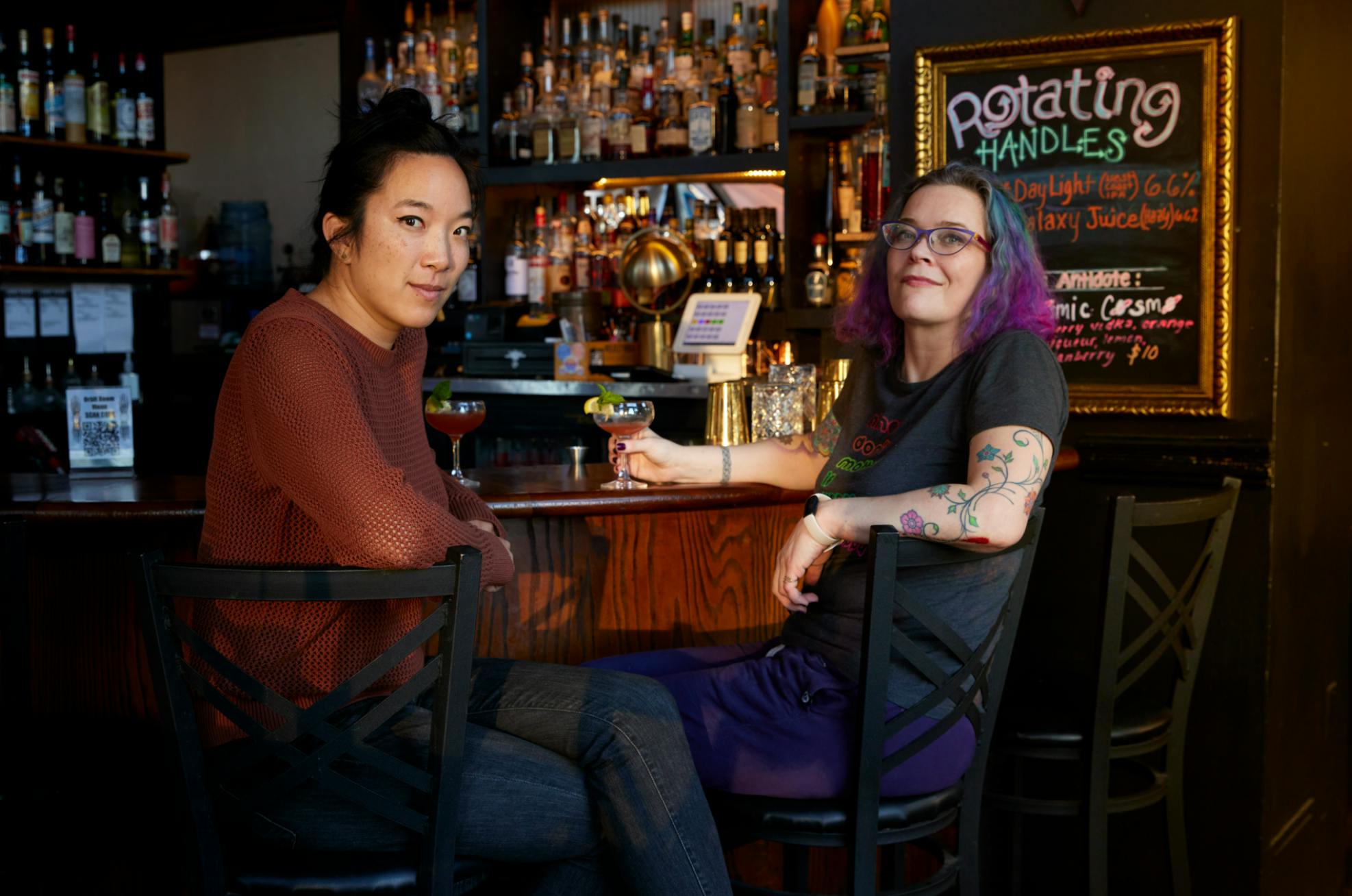
In San Francisco, the Orbit Room became a setting for interviews and company decisions. Offices changed; the bar remained a constant. Yen has said some conversations were better held over a drink than under fluorescent lighting. An enterprise software company can have a founding geography that includes a cocktail menu.
Majors initially took the CEO role while Yen concentrated on product. In spring 2019, Yen became CEO and Majors became CTO. Yen explained the change in terms of what the company needed: the public advocacy required to establish a new approach differed from the work of finding a repeatable sales model. Their trust and understanding of each other's strengths made the adjustment possible.
Titles followed the work. For two founders selling engineers a different way to investigate reality, revising the organizational chart was a fairly practical application of the same habit.
Making expertise travel
Yen and Majors developed a small routine for early pitches. Majors played the expert on whichever technology was under discussion. Yen played the newcomer, awkwardly leaning over her shoulder to watch her debug. Anyone who has hovered beside a colleague's monitor will recognize the choreography.
The point was how knowledge travels. People learn by watching another person investigate, then gradually build their own intuition. Yen argued that collaboration should be part of the product itself: a teammate ought to be able to follow an investigation without borrowing the expert's chair. Experts might even take a vacation. The software should survive this extravagance.
She watched the surrounding conversation change, too. In her account of Monitorama, the conference went from no observability talks in 2017 to six in 2018, each carefully explaining the term. In 2019, its tagline explicitly included observability, and most talks could move past the definition. That was a concrete sign of an idea becoming everyday professional vocabulary.
Her interest in shared understanding also appears inside the company. In a 2023 account of serving as Honeycomb's employee board member, engineer Fred Hebert described Yen explaining that board slides should start a discussion rather than become a school report read aloud. A meeting, like an investigation, benefited when people could contribute context.
Leave room for the next question
In her writing about pre-aggregated metrics, Yen describes a bargain: deciding beforehand what to count can make storage efficient and familiar questions quick to answer. Trouble arrives when the useful question turns out to be different. Summaries may already have discarded the detail needed to investigate it.
The distinction helps explain her persistence. Shipping software creates situations its authors did not anticipate. A useful investigative tool has to preserve enough context for a person to follow a new lead. Being able to ask a second question matters as much as getting a quick answer to the first.
A simple map of the investigative approach in Yen’s writing: follow a broad symptom toward the context that explains it.
Honeycomb's April 2023 funding announcement put business numbers beside that argument: a $50 million Series D led by Headline, more than 600 customers worldwide, and net revenue retention above 160%. Those were figures from that announcement, rather than a running score. Yen also described a third ambition alongside a useful product and a software business: building a company its people were proud to join.
She has applied a similar test to AI. In her 2025 BigDATAwire interview, she welcomed its potential while emphasizing the human context a judgment call can require. She praised OpenTelemetry for giving engineering teams control over their own telemetry data. Standardizing collection, in her view, leaves vendors room to compete on making answers easier to obtain and share.
In April 2025, Honeycomb announced its first acquisition, Grit. Yen described a relationship that began in 2023 and focused on practical ways to analyze and modify codebases, including making instrumentation easier. The transaction extended her familiar concern: reducing the work between an engineer and a useful understanding of the software.
By February 2026, she and Majors were publicly revisiting their early arguments about observability and considering what AI changed. The next question now included systems with agents alongside people. The continuing ambition was to help them reason from a shared account of what happened.
Fifty-four books, mercifully few management lessons
Yen's reading notes offer a welcome interruption to the vocabulary of enterprise software. She read 54 books in 2023, moving through narrative nonfiction, speculative fiction and literary fiction. The list included Adrian Tchaikovsky's Children of Memory, Adrian Newey's How to Build a Car and Barbara Kingsolver's Demon Copperhead.
Newey interested her as an engineer working around changing Formula One rules. Fiction offered unfamiliar perspectives and voices. Asked to assemble a CEO reading list, she felt sheepish that her choices were insufficiently businesslike. Then she explained why she read:
“I read for fun, and to Think Differently”
Christine Yen, on her 2023 reading
In another interview, she entertained an alternative career in film effects, bringing imaginary worlds to life. Asked what book she would write if she had time, she replied that she would spend the time doing something other than writing a book. Her actual reading has rather more appeal than the hypothetical productivity manual.
There is a pleasing consistency here without requiring every novel to become a business parable. Yen likes finding out how someone else sees a world. Her work asks engineers to keep enough detail to discover what they missed. Both leave open the possibility that the next interesting thing will be something she did not know to expect.