Christian Owens’s first software promotion website had no logo. No carefully commissioned pictures. Fewer than a hundred words, by his recollection, and an email signup box. The buttons were the ordinary kind. He and his collaborators did, however, centre the text. “That was our design touch,” he recalled. It is a pleasingly modest beginning for someone who would spend the next decade making it easier for other people to sell software.
The interesting part was behind that unremarkable page. Owens was asking developers to put their Mac applications into discounted bundles, then finding customers who wanted them. He was learning the distance between making a product and getting somebody to buy it. A beautiful application could sit unnoticed. A rather plain website could bring buyers together. The internet had offered him an education with unusually prompt marking.
A parental wager, with actual receipts
Owens grew up in Corby, in the English Midlands. When a journalist later asked about his wandering accent, he dismissed the idea of an international upbringing: “Nope, I’m solidly from the Midlands.” The geography was ordinary enough. His timetable was less conventional.
As a teenager he wanted to leave school at sixteen and carry on with his businesses. His parents wanted evidence that this would be a living. In his account of their bargain, permission depended on demonstrating that he could earn a substantial annual income online. The software bundle business supplied the evidence. He left after his GCSEs.
There is a temptation to make the school departure the whole plot. The more useful detail is the work surrounding it: learning to code, asking developers for help, making things, selling things, discovering which of those activities produced money. He had a practical problem to solve long before he had a founder’s biography. Even the argument at home eventually became a question that a set of sales figures could answer.
The chores had customers
Owens’s early software included an invoicing application for Mac users. Selling software drew him into a less agreeable occupation: connecting payment systems, accommodating currencies and working out what different tax regimes required. Success increased the amount of this work. Each new place where somebody could buy a product introduced another detail to administer.
He kept hearing similar complaints from other software makers. They had assembled their own arrangements and were spending time maintaining them. The same work was being done repeatedly by people whose real interest lay elsewhere. The opportunity was lodged in the hours nobody especially wanted to discuss.
With Harrison Rose, Owens founded Paddle in London in 2012. Their own difficulties supplied the brief: let software businesses concentrate on the products they were making while Paddle took care of more of the business of selling them. Payments, invoices and taxes might lack the conversational glamour of a new app. They did have the advantage of remaining necessary after the launch party.
The bit customers kept
The first version of Paddle included a marketplace as well as a checkout. The marketplace was meant to help people discover software; the checkout would let them buy it. That combination sounded reasonable. Actual software companies were more interested in one half of the proposition.
Customers worked around the marketplace to use the checkout directly. In Owens’s telling, the early marketplace produced only about $800 in its first two months. The founders discarded much of what they had built and followed the behaviour in front of them. A customer improvising a route around a product is giving a fairly emphatic design review.
The change made Paddle’s purpose more precise. Its customers already had products to sell. They needed help with the machinery of commerce. That is an uncomfortable lesson after the effort of building a marketplace, but a useful one to learn before spending years polishing it. Owens’s career contains several changes of direction. Here, the turn was visible in what customers were doing with their own websites.
A bigger customer asks a different question
By September 2016, Paddle had announced a $3.2 million Series A led by BGF Ventures. It reported a sixteen-person team and more than 400 business customers. Owens also received a Thiel Fellowship that year. Leaving formal education had not put an end to outside scrutiny; it had changed the people asking for results.
Growth brought a more expensive misunderstanding. In a later account of Paddle’s move into enterprise sales, Owens described hiring experienced salespeople and losing the team within nine months. Large companies could use the product. Persuading them required a different account of its value from the one that worked for a small software business.
A small team wants relief from work it cannot easily staff. A larger organisation already has people and processes. The discussion shifts towards how those arrangements could work better across the company. Paddle’s subsequent enterprise effort changed its approach. The product’s usefulness had to be explained in the customer’s terms.
Owens’s account is valuable because it leaves the failed attempt in the picture. Experience hired from elsewhere does not automatically become a working sales organisation. Someone still has to establish why this particular buyer should change anything. That job cannot be delegated simply by recruiting people who have held impressive jobs before.
The software founder and his text file
For a small glimpse of Owens away from funding announcements, consider his to-do list. In 2018, after trying productivity applications without settling on one, he described keeping a plain Markdown text file on his Mac. At the start of a month he moved unfinished tasks into a fresh file and archived the old one.
He had even spent a month building a to-do app himself, only to abandon it after a fortnight. Some colleagues continued using it. The software entrepreneur had become the difficult customer in his own product story. A file that remembered what needed doing had survived the competition.
His advice to founders was similarly practical. He valued a circle of peers who understood the work. He also warned against compromising on recruitment, after the strain of trying to hire a hundred people in a year. A company’s appetite for growth could outrun its judgement about who should join. His own learning, he argued, had to keep pace with the business.
“That was our design touch.”
CHRISTIAN OWENS, ON CENTRING THE TEXT ON HIS EARLY WEBSITE
The numbers grew. So did the responsibility.
In May 2022, Paddle announced $200 million in Series D financing at a $1.4 billion valuation. KKR led the round. The total raised reached $293 million. These were financing measures, recording investors’ backing and the price placed on the business at that moment.
Later that month came the acquisition of ProfitWell, valued at more than $200 million in cash and equity. ProfitWell brought subscription metrics, pricing expertise and retention tools. Its CEO, Patrick Campbell, joined Paddle’s board and became chief strategy officer. The business that had started with the difficulty of selling software was extending further into understanding and improving subscription revenue.
Paddle’s later record also includes regulatory scrutiny. In June 2025, the company agreed to pay $5 million to settle FTC allegations concerning payment processing and deceptive tech-support schemes. The settlement included restrictions on processing for certain tech-support merchants and requirements for screening, monitoring and subscription disclosures.
Paddle said the alleged deceptive telemarketing upsells happened outside its service and condemned the conduct of the two companies involved. The agreement concerned Paddle’s corporate entities. It belongs in the account of a business built to take responsibility for commerce: convenience for sellers comes with obligations to the people buying.
Making room, then starting again
On 20 April 2023, Owens handed the CEO role to chief operating officer Jimmy Fitzgerald and became executive chairman. He described a business approaching $100 million in revenue and said he wanted to spend more time on product and strategy. After eleven years, the working day he wanted had changed.
His next transition followed in April 2024, when he resigned as a Paddle director. The company said he had become a board observer and remained involved in company and product strategy. The dates matter: founder, CEO, chairman and observer describe different relationships with the same business. Founding a company does not require keeping the same chair forever.

In 2025, he co-founded Clove with Alex Loizou, who had co-founded the shopping marketplace Trouva. Their subject was personal finance. Their complaint concerned access to useful advice, especially for people who were not already wealthy enough to be well served by the existing industry.
Clove announced a $14 million pre-seed round in October 2025, led by Accel with Kindred and Air Street participating. The intended combination was human financial advisers and AI that could reduce administrative work. Advisers would have more time for the decisions people actually needed help making. Once again, the paperwork was occupying the space where the useful work should happen.
A weekly meeting about beans
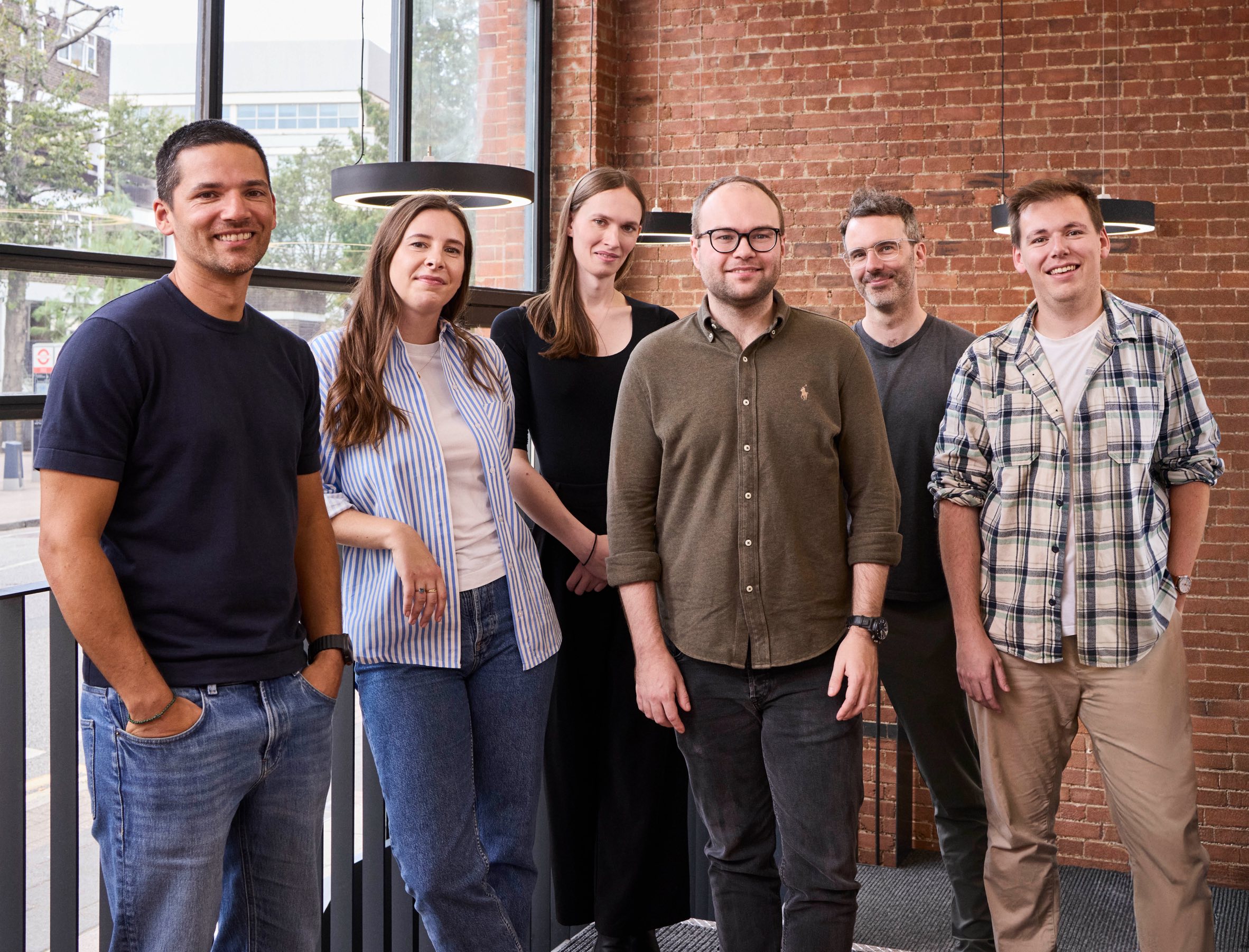
Clove’s engineering page offers a small view of the organisation taking shape: written decisions, short feedback loops, engineers talking to customers and a deliberately limited collection of tools. It also declares that ordinary standups have been dispensed with. An exception is made for a weekly review of a colleague’s growing beans. Attendance, the page insists, is mandatory.
As of October 2026, Clove’s website invites people to join a waitlist and states that it is not yet FCA authorised. The ambition remains a project in progress. Its backers and its founders have described what they want to build; the service still has to earn its place in customers’ lives.
Read across Owens’s businesses and a recurring question emerges: how much time does the surrounding work consume? Selling an application, maintaining a billing system, preparing advice for a client. He keeps returning to the tasks attached to another task. It is an unromantic place to look for a business, which may be part of its appeal. Someone has to make the boring bits work. There is usually a customer waiting on the other side.
Continue the conversation
COMPANIES & PUBLIC PROFILES
WATCH, LISTEN & READ