An insurance advertisement on a ski lift has one advantage over an insurance advertisement almost anywhere else: the audience is already considering gravity. Christian Jurinka’s agency put the message there, where a few quiet minutes above the snow could give a familiar question a fresh edge. The placement did some of the writing. A mountain, it turns out, can be an economical copywriter.
Jurinka, the Portland-based CEO and co-founder of Attack!, has spent much of his working life arranging encounters between products and people. His examples tend to involve somewhere you can stand, something you can taste, and somebody who can answer a question. They also reveal a particular sense of proportion. An idea may be entertaining; it still has to belong in the place where it appears.
That sensibility runs through a career that includes guerrilla campaigns, national field programs, an advertising jury and a second business born from family camping trips. Underneath the spectacle sits an unusually persistent concern with practicalities. Somebody must explain the product. Somebody must prepare the vehicle. Somebody must turn up.
A business built for the gaps
In 2001, Jurinka founded Attack! Marketing and Promotions with Noel Chandler and Andrew Loos. The three friends saw an opening in the fragmentation of traditional media. Their agency would work in the spaces between conventional advertising channels, combining field marketing, nationwide staffing and unconventional outdoor placements.
One early assignment put the approach on wheels. For a Los Angeles launch of CRUNK!!! Energy Drink, the team customized a 1967 El Camino Super Sport. Part of its trunk held chilled cans; another part held subwoofers. The vehicle visited ski parks, graffiti conventions and street fairs. Sampling, sound and the car itself arrived together.
The campaign’s explanation came from Loos, and its execution belonged to the agency team. It remains a useful glimpse of the business Jurinka helped establish: carry the product into a setting where an audience already exists, give people a reason to stop, then point them toward the store. By 2008, Attack! had reached No. 671 on the Inc. 5000. The noisy car and the business ranking occupied the same entrepreneurial world.
The setting earns its keep
The ski-lift campaign offers a quieter version of the same thinking. Attack! worked with resorts to place insurance advertising where the surroundings gave the message relevance. Jurinka’s explanation was precise: a campaign should speak to its environment. Boat insurance, he observed, would make little sense on that lift.
For a beverage assignment, the agency repurposed an ice-cream cart and took cold drinks to disc golfers. Traditional golfers might expect a drinks cart; disc golfers were less accustomed to the service. The surprise came with something useful attached. A thirsty player could try the product instead of merely contemplating its logo.
He is capable of laughing at the profession’s excesses, too. Asked about unconventional placements, he recalled branded urinal cakes and advised against repeating the experiment. Attention has its indignities. His examples suggest that a brand should examine what an interaction actually asks its audience to do before congratulating itself on having found an unusual surface.
“It has to be relevant.”
Christian Jurinka, on advertising in unexpected places
A very large drink, and a very human job
Attack!’s work has also allowed itself a theatrical scale. For AMC Networks’ Mad Men, the agency created a countdown cocktail glass measuring 10 feet and holding 200 gallons. Installations in Los Angeles and New York slowly drained as the premiere approached. The drink became a clock, with considerably more wardrobe presence than the average clock enjoys.
The agency’s 2015 Top Shops listing paired that spectacle with a less photogenic development: technology investment and leadership hires that enabled real-time client data. Both details matter to understanding Jurinka’s business. The visible object attracts the passerby; the less visible systems help the client understand what happened.
A campaign can therefore have two audiences. One meets it on the street. The other needs to assess its performance afterward. A giant cocktail glass may satisfy the first audience’s curiosity immediately. The second audience is entitled to further questions. In the agency Jurinka co-founded, creative production, sampling and retail marketing have developed alongside that demand for information.
The human part received its own conversation in 2017, when Jurinka joined Joey Kercher’s Talk Experiential podcast. The episode centered on the people representing brands at events: their suitability, their qualifications and the interactions they create with the public. Brand loyalty and awareness were considered through the encounter between a representative and a customer. For a business associated with conspicuous objects, it was a revealing choice of subject.
Good manners require a budget
His more recent writing returns to the unglamorous work that makes an event possible. In a March 2026 article about cheap experiential programs, Jurinka examined how an attractive initial price can conceal weak training, staffing instability and extra management work. The arithmetic becomes less agreeable when a saving produces another problem that somebody else must solve.
Continuity is central to that argument. A representative who stays with a program can learn its product and setting. Constant replacement keeps restarting the lesson. The costs spread beyond the staffing invoice, affecting how confidently a shopper receives an explanation and how much oversight the program demands.
A companion article on staffing quality considers the return on that preparation. The work takes place in front of actual customers, where product knowledge and judgment have to survive an unscripted question. A polished presentation cannot answer on a representative’s behalf once the event begins.
Jurinka has made a similar point in public posts about agency selection. He wants prospective clients to investigate logistics, measurement and contingency plans alongside the creative concept. A tour can change cities. Several things can require attention at once. His criticism has a dry practical appeal: an attractive rendering tells you rather little about how its creators will handle a difficult afternoon.
There is a broader commercial belief here, visible across these arguments. The work deserves a budget connected to what it asks people to deliver. That belief is presented as his operating philosophy, rather than a claim that every program can proceed without friction. The appeal is to make the practical questions part of the purchase.
Introducing a drink that needs explaining
Mogu Mogu gave that philosophy a specific test. Sappe’s beverage combines a drink with chewy nata de coco pieces, a format that can require explanation for unfamiliar customers. Attack!’s U.S. launch work brought together mobile sampling, visual design and social content. A branded van provided a place to try the product and an object worth photographing.
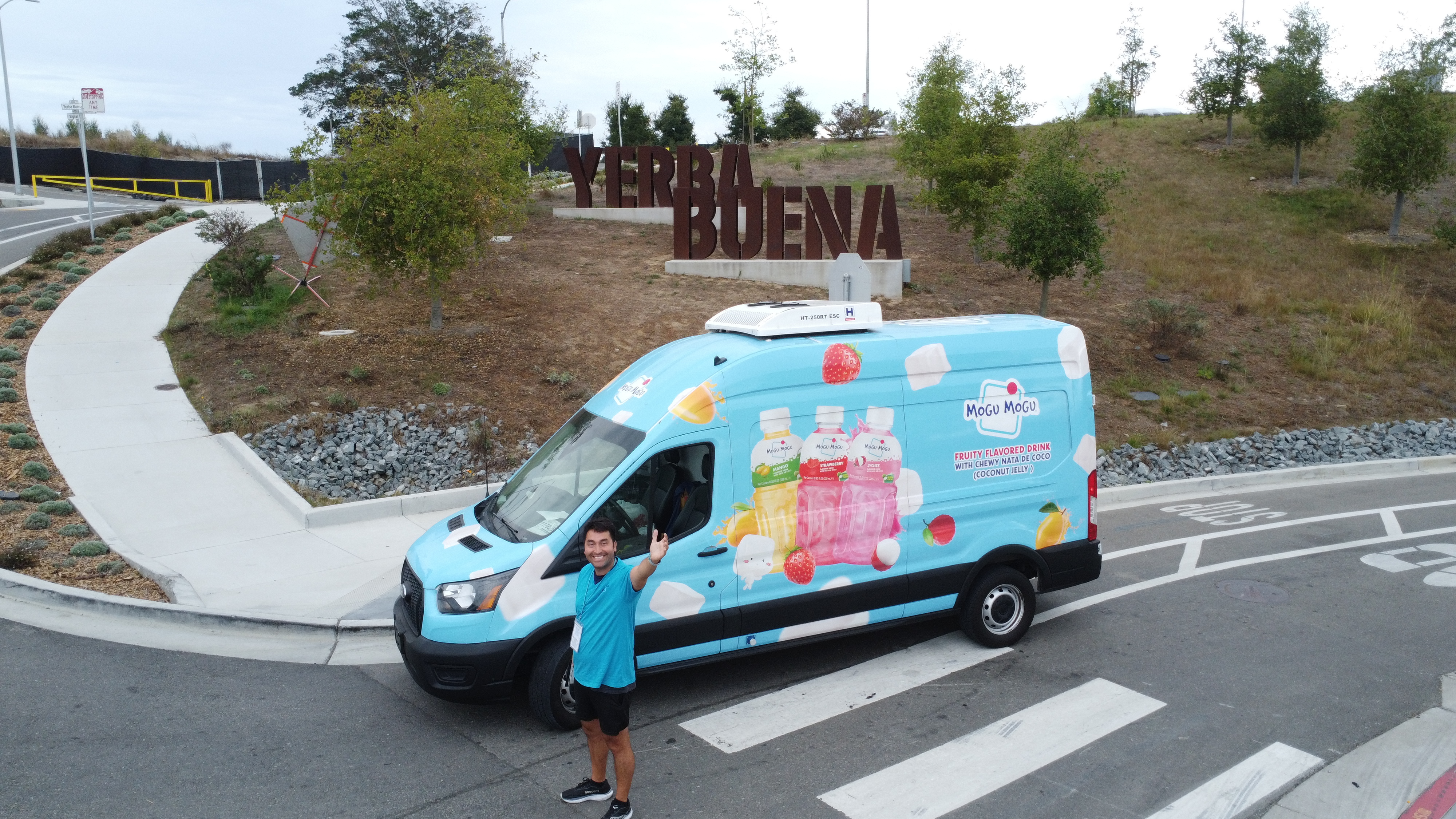
In April 2026, Jurinka’s account of lessons from the launch emphasized the explanations people needed. Some wanted to understand the texture. Others needed a familiar comparison. Different audiences connected the product to different cultural references. Staff who understood the beverage could adjust the conversation instead of repeating a line regardless of the response.
It is an intimate task inside a national program: notice hesitation, choose an explanation, leave room for a question. The account places considerable responsibility with the ambassador. Packaging can introduce an unfamiliar format, but a person can discover which part of the introduction needs another sentence.
Activity counts describe the scale of the launch; they do not establish sales or repeat purchase.
A February 2026 announcement named Attack! a Netty Awards honoree in the Best Integrated Marketing and Design Agency category for the campaign. Jurinka described an ambition to connect experiential sampling and digital storytelling within the same program. The vehicle, the conversation and the content were meant to support one another. The old interest in taking a product somewhere appropriate had acquired new ways to travel afterward.
The other van in the story
There is also a van in Jurinka’s personal business history, with a rather different brief. He and his wife, Lisa, enjoyed camping with their family. Cooking dinner inside a camper van in a national park, with waves nearby, helped convince them of the format’s appeal. They later began USA CamperVan after experiencing the work involved in renting out their own vehicle.
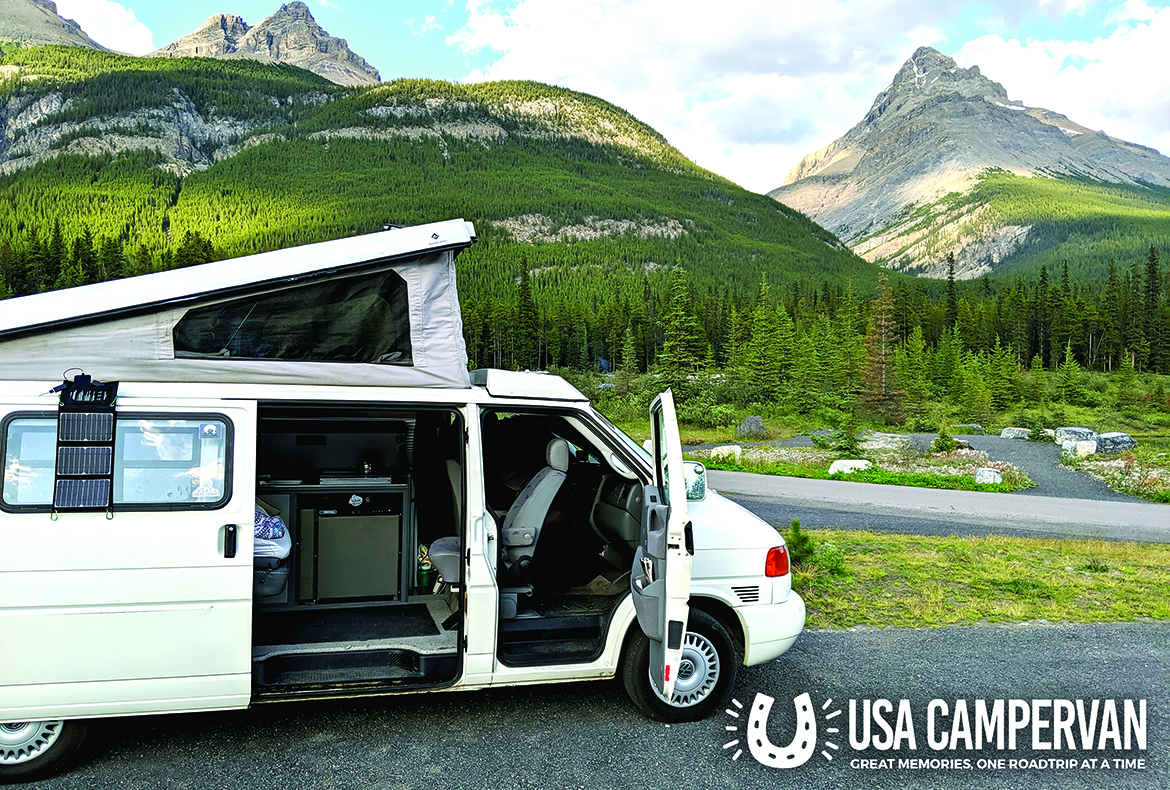
By March 2020, the venture was helping owners with marketing and prospective-renter communication. Jurinka had found a familiar business problem inside a pleasure: arranging the experience required work before anybody could enjoy it. Even his move to Portland had taken patience. He and Lisa first visited on their honeymoon road trip, promised to return within a year, and eventually moved roughly a decade later.
The overlap with his agency work is an interpretation, but a tempting one. Both businesses concern experiences whose appeal is immediate and whose arrangements are extensive. A photograph of an open road rarely includes the person answering the booking questions. A photograph of a sampling event rarely includes the briefing.
A coffee drinker with a place on the jury
When Jurinka served on the 2014 One Show Branded Entertainment jury, his biography introduced him as a father, entrepreneur, photographer and coffee enthusiast. It also described his responsibility for Attack!’s strategic direction and speaking appearances before advertising and business audiences. The personal details sit comfortably beside the professional ones: looking, making, organizing, then perhaps another coffee.
The previous November, he had appeared on San Francisco State University’s Business Ethics Week program alongside Michelle Mulkey, Neil Chaudhari and Mike Zlatoper. Their session concerned navigating moral and ethical standards in business. It places another subject beside the creative work: how a business chooses to behave while pursuing an opportunity.
Across these episodes, Jurinka’s career keeps returning to the point where an appealing idea acquires practical obligations. The audience needs an explanation. The representative needs preparation. The visitor needs a reason to stop. There is room for amusement, even for a cocktail glass of improbable dimensions. Then the doors open, the customer approaches, and somebody has to make the introduction.