A jar of chili crisp presents a small marketing problem. On a screen, it can look delicious. On a supermarket shelf, it asks a shopper to spend money on a flavor they may never have tasted. Between those two moments sits a person with a sample. Attack! has built a business around making that encounter happen, then finding out whether it worked.
- Attack! turns stores, sidewalks and events into places to try a brand.
- The service includes recruiting people, moving products and measuring results.
- Its useful lesson: decide what a successful encounter means before sending anyone into the field.
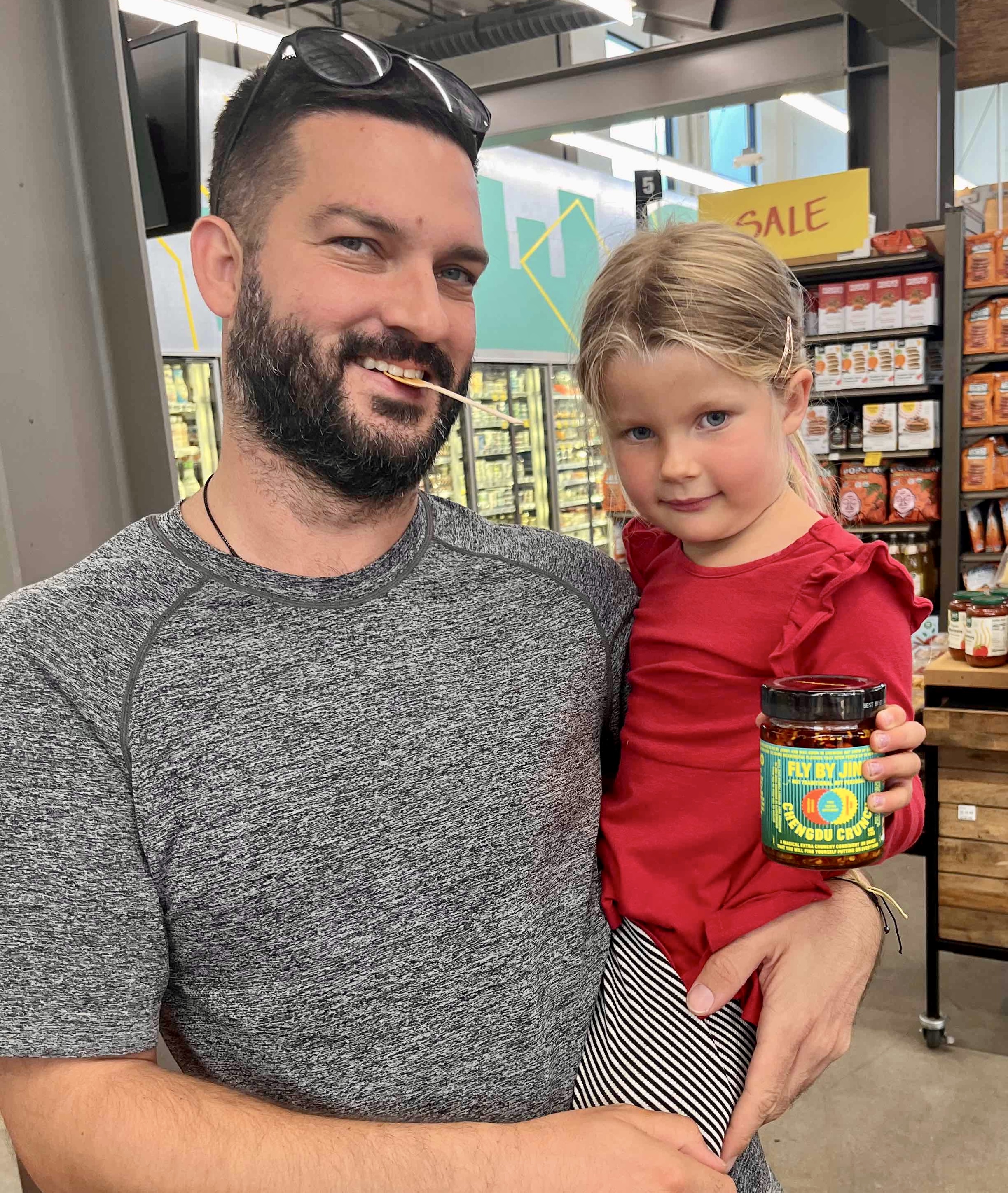
Consider Fly By Jing. From August through October 2024, Attack! ran 100 demonstrations in Southern California Whole Foods stores. Ambassadors explained the products and suggested uses, including pizza toppings and stir-fry pairings. The agency reports 5,171 consumers sampled and 1,151 units sold. Its reported average conversion rate was 22.25%, drawn from 91 approved recaps. These are campaign observations, rather than a controlled estimate of sales caused by sampling. Still, they make the encounter inspectable.
A taste is an operational problem
The entertaining part is the spoonful. The business underneath it is scheduling, training, inventory and follow-through. Attack! offers retail demonstrations, street sampling, mobile tours, event staffing and experiential activations. A brand can bring it an unfamiliar beverage, a regional launch or an understaffed event. The agency supplies the people and the machinery needed to put the proposition in front of consumers.
That places Attack! between a staffing supplier and an experiential creative agency. Its pitch joins the creative idea to field execution and reporting. The practical appeal is fewer handoffs: the company planning an encounter can also recruit the ambassador, arrange the materials and examine the recap. Competitors can offer similar combinations. The distinction buyers should test is how well those pieces actually work together.
Its customers extend beyond packaged food. Published work includes Audible, Aetna, Lyft, Samsung and Nike. Each has a different friction to remove. A shopper needs a taste. A prospective subscriber needs a reason to try. An event visitor needs someone who can explain a product without fumbling the demonstration. The common purchase is capable human attention, organized across locations.
Four empty desks, then a detour
In a 2011 interview, co-founder Andrew Loos recalled renting office space when Attack! consisted of himself in Los Angeles and business partner Noel Chandler in San Francisco. He equipped four empty desks, down to the pens and pads. Having a workplace helped him picture the business he intended to build. The company’s origin dates to 2001; its current leadership page names Christian Jurinka as CEO and co-founder.
Loos also described an experiment outside the agency’s core competence. The aim was to attract a different kind of client. The result was attention diverted from the customers sustaining the business. His account offers a useful distinction between expanding capacity and expanding scope: more services can make an agency less useful if existing work starts receiving less care. Attack!’s present positioning emphasizes field presence, experience and engagement.
“We measure everything.”Attack!’s stated operating principle
The dashboard behind the handshake
Attack!’s technology page lists permission-based GPS check-in, activation calendars, inventory tracking, event photographs and conversion reporting. These address unglamorous questions with expensive consequences. Did the representative arrive? Were enough samples available? Which shift produced useful interactions? A photograph records the setup; a sales figure records another part of the outcome. Neither alone tells the whole story.
The agency was formalizing local knowledge by 2012, when it announced SCOUT. The tool gathered recommendations from its ambassador network about venues, trends and locations. The underlying insight survives changes in software: a national campaign needs people who understand local behavior. A busy corner can be the wrong corner if everyone is rushing somewhere else.
A reporting loop, not a guaranteed conversion funnel.
Audible’s campaign made that connection explicit. Attack! built a street-level membership drive using QR codes and daily incentives, managing locations, staffing and fulfillment across New York, Los Angeles, Chicago, Washington and Seattle. The case study describes four months per market. A conversation could lead to a trackable signup route, giving the field team a defined action to pursue.
The free sample has a budget
Clients buy planned and managed services. The economic decision includes staffing, training, transport, production and oversight. Attack! also advertises selective equity partnerships for consumer brands, exchanging strategic and execution support for participation in future upside. That arrangement makes sense only when both sides accept the execution demands and the longer investment horizon.
Aetna’s Healthy Food Fight illustrates the operational scale. Attack! describes a three-month cooking competition tour across ten markets, involving 270 staffed shifts and 1,900 talent hours. The case study lists more than $80,000 in expenses managed. That figure measures the expense responsibility described in the case, rather than establishing the campaign’s total price or Attack!’s fee. Kitchens require more than enthusiasm.
Agency-reported campaign figure
Give the encounter somewhere to go
The newer work adds a camera to the sample table. A February 2026 announcement named Attack! a Netty Awards Honoree for its Mogu Mogu U.S. launch with Sappe. A sampling van combined QR engagement points with settings designed for social content. The announcement reported 79,537 consumers sampled and 92,804 bottles distributed while the campaign remained active.
The transferable move is to design the next step before the encounter: a purchase nearby, a membership link, a useful answer. Then count that action consistently. This approach depends on access to the right audience, dependable staff and a product people can obtain afterward. Sampling cannot repair an empty shelf. A crowd cannot establish repeat demand. Attack!’s proposition becomes most persuasive when the small, friendly moment comes with a clear operational plan and a measurable purpose.