Before Chris Turner had a restaurant company to run, he had a rice farm to get back to. He grew up in southeast Arkansas, where his father was a fourth-generation rice farmer, and chose industrial engineering with the idea that technology might improve the family business. The intended route was straightforward: go to university, learn something useful, come home. Then Walmart offered him an internship. Agriculture would have to wait.
By October 2025, Turner was chief executive of Yum! Brands. His route there had passed through consulting, snacks, supermarket shelves and a finance job he initially thought should go to somebody else. The interesting part is how often another person spotted a possible next chapter before he did. For someone whose work involves planning, he has benefited considerably from having his plans interrupted.
There is a practical question running through his career: what happens when a capable person gets an unfamiliar job? Turner has been that person several times. Now, with franchise owners, brand leaders and restaurant teams carrying out the work of a global business, he has to decide how often to make the same wager on others.
The internship that moved the destination
Turner attended DeWitt High School, then the University of Arkansas, graduating with a degree in industrial engineering in 1997. His early working life included a logistics analyst role at Walmart in Bentonville. It is a pleasingly literal start for a future restaurant executive: before thinking about what customers would buy, he was learning how things reached them.
Retail offered a particularly quick connection between a decision and its consequences. A change at headquarters could soon affect the customer. That appealed to an engineer interested in operations. The farm had supplied a reason to study systems; Walmart supplied another place to use the training.
His next stop was Andersen Consulting, now Accenture, where he worked from 1997 to 2000. He then went to Stanford for an MBA, completing it in 2002, and joined McKinsey. The sequence widened his working world in stages: distribution, consulting, business school, then assignments across companies and industries. There was no early restaurant apprenticeship concealed inside it. His preparation was accumulating elsewhere.
Those years also give some proportion to the familiar executive biography. A list of employers can make a career look inevitable. The transitions matter more. Turner moved from studying operations to advising businesses about them, then eventually into jobs where he had to live with the results. A good presentation was becoming the beginning of the assignment.
When the clever answer needed a team
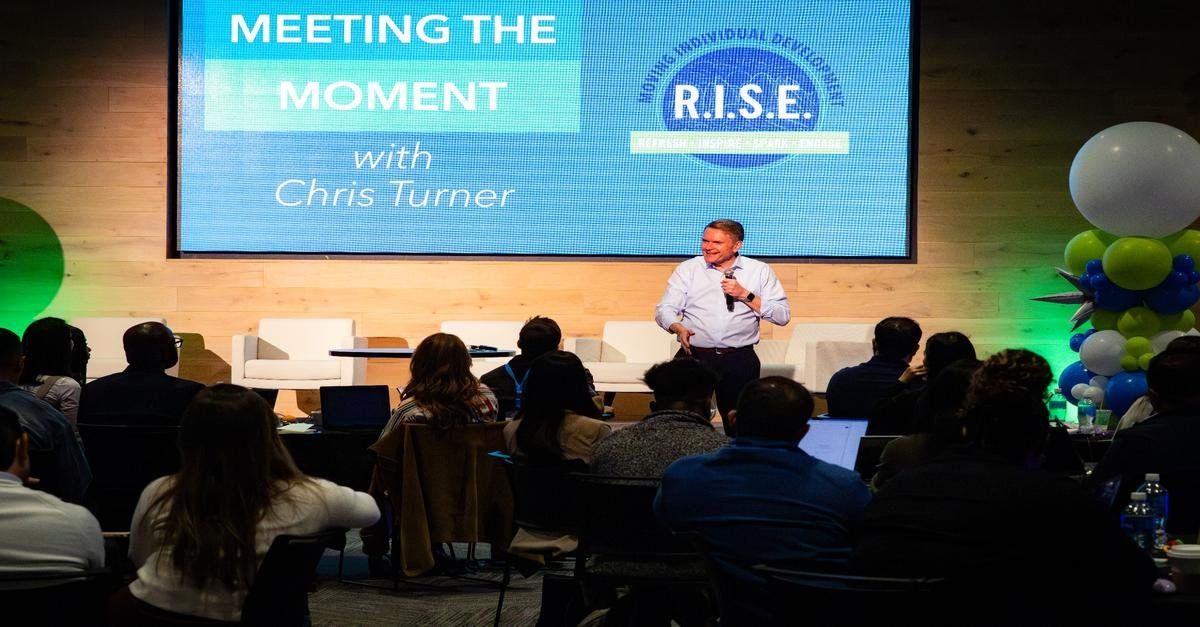
At McKinsey, Turner progressed from associate to partner. He worked on service operations and restaurants, fields in which a headquarters decision has to survive contact with a busy frontline workforce. A solution that looks tidy in a meeting room may be rather less tidy when the orders arrive together.
One early promotion brought uncomfortable feedback. Having earned responsibility through analytical work, he tried to lead by doing more of that work himself. His team reported feeling overworked and undervalued. He sought coaching, reconsidered where he could contribute, and asked colleagues to help him change his behavior.
The episode is useful because it gives his later talk about people something concrete behind it. He had received evidence that competence at a task did not automatically translate into competence at leading the people doing it. His response required a different kind of discipline: leaving room for colleagues to exercise their own judgment.
He had seen a version of that approach at Walmart. Mike Duke, who later became its CEO, gave the young intern a substantial project involving shoe distribution. Turner also remembered Duke handing meeting leadership to junior people. Responsibility arrived before a long record of readiness. Years later, Turner would find himself on the receiving end of that arrangement again.
The candidate with three other candidates
Turner joined PepsiCo in 2016, working in strategy and transformation at Frito-Lay before taking responsibility for its global Walmart business. The account covered the United States and more than 25 international markets. He was moving from recommendations into the daily business of managing a major commercial relationship.
Then David Gibbs called. Turner knew Yum through his consulting work, and Gibbs was preparing to move from finance leadership into the chief executive position. Yum needed a new CFO. Turner offered names of people he thought would fit. Gibbs had Turner in mind.
The objection was obvious to the proposed candidate: his background was in engineering, operations, strategy and general management. A finance career was conspicuously absent. But the position also involved technology and a company with an established finance team. Gibbs was hiring someone he already knew into a broader assignment than its title might suggest.
Turner became CFO in August 2019. In November 2024, franchise responsibilities were added. His remit included strategy, supply chain and support for franchise operators alongside finance. That combination matters in a restaurant group: the company’s plans depend on owners willing and able to invest in individual locations. The arithmetic has to work at the counter as well as in the corporate accounts.
- 1997Industrial engineering graduate; joins consulting
- 2002Stanford MBA; begins at McKinsey
- 2016Moves into PepsiCo leadership
- 2019Becomes Yum’s chief financial officer
- 2025Takes the CEO role on October 1
Software meets the lunch rush
Among Turner’s responsibilities at Yum has been helping develop Byte by Yum, the restaurant technology platform introduced in February 2025. Its scope includes digital ordering, point of sale, kitchen and delivery management, menus, inventory and labor tools. These are the systems behind the comparatively simple act of ordering lunch.
The choice of scope is revealing. A restaurant’s digital experience extends beyond the screen a customer touches. An order must reach the right kitchen, enter a workable queue and leave with the correct person. Each handoff creates an opportunity for friction. Software earns its place when the people handling those handoffs can do their jobs more easily.
At its introduction, Byte already had products operating in 25,000 Yum restaurants. The company described a modular approach, allowing brands and markets to choose different combinations. That is a significant detail for a franchise business. Standardization has advantages, but a system still has to accommodate differences among markets and operators.
Turner’s interest in technology fits the engineering background. Yet its success will depend on something less amenable to a diagram: whether restaurant teams find it useful. A faster process on paper has limited charm if it leaves the person running a shift wrestling with another screen. The customer, meanwhile, is unlikely to congratulate anyone on the architecture. Lunch will remain the test.
Order→Restaurant
Kitchen→Handoff
Delivery
The first year changes the menu
Turner succeeded Gibbs as CEO on October 1, 2025, and joined Yum’s board on the same date. He inherited an organization he had already helped run for six years. The transition brought continuity of people and experience, followed by a substantial change in the portfolio.
In November 2025, Yum announced a strategic review of Pizza Hut. By September 1, 2026, the sale was complete. LongRange Capital bought the business outside mainland China; Yum China acquired the mainland China business in a separate transaction that closed in August. The combined transactions amounted to approximately $2.7 billion, subject to adjustments.
The remaining company comprised KFC, Taco Bell and Habit Burger & Grill, with more than 44,000 restaurants across 151 countries and territories at the time of the September announcement. Those numbers describe the business after the sale. The larger counts attached to Turner’s appointment belong to an earlier portfolio.
For Turner, the decision makes his first year about choosing where to concentrate as well as where to expand. Selling a familiar brand changes the boundaries of the job. It also puts a clear question in front of the remaining business: what can greater attention to these brands produce? The sale settles ownership. The operating results still have to follow.
A scorecard with room for people
Turner’s public language about leadership has a less numerical side. In a November 2025 message about performance reviews, he asked employees to consider whether they had encouraged ideas, continued learning and helped build capability. The questions sat alongside the goals and measures that businesses ordinarily review at year end.
It is an interesting request from a former CFO. Counting results is part of his training and his job. Asking how those results were achieved brings attention to the conditions that might make them repeatable. A team can meet a target while exhausting its willingness to try the next thing. A review ought to notice both.
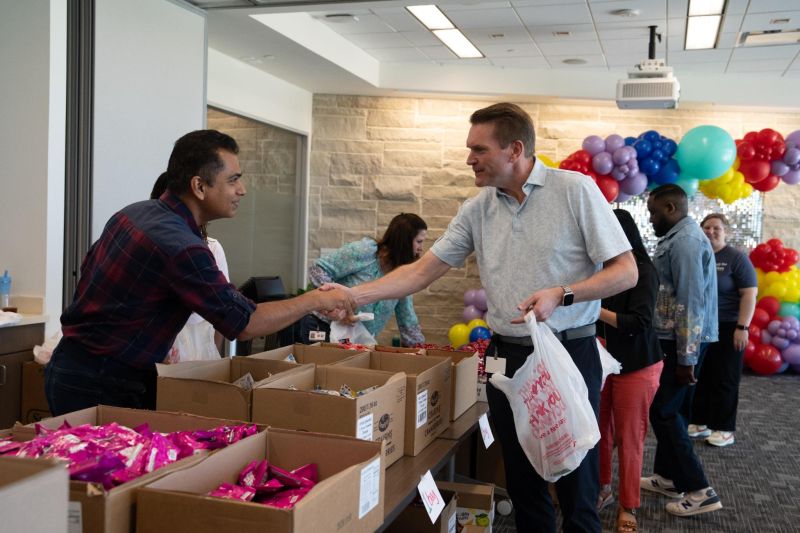
There are lighter details, too. His classmates elected him their wittiest student, and comedy was once among his possible occupations. The 2026 proxy statement records a favorite meal from Habit: a Santa Barbara Charburger, green beans and a chocolate sundae with whipped cream and no nuts. Public company paperwork occasionally rewards the attentive reader.
His own compact piece of advice is: “Let people be great at what they’re great at.” It sounds uncomplicated. His early experience as a team leader suggests he knows how much practice it can take.
“Let people be great at what they’re great at.”
Chris Turner
The farm, the internship, the consulting teams and the unexpected CFO offer give that advice a history. Turner advanced because people gave him useful work, trusted him with larger assignments and supplied help when the job was new. As CEO, he now has many more opportunities to do that for someone else. Somewhere in the organization, an employee may already have a sensible plan for the future. A good manager could be about to interrupt it.
Keep reading, keep watching
- Official leadership biography
- Chris Turner on LinkedIn
- Stanford: career and leadership conversation
- Matt Waller: mentors and leadership lessons
- Watch: Yahoo Finance’s Opening Bid interview · April 2026
- The launch of Byte by Yum · February 2025
- Pizza Hut sale completion · September 2026
- Career Q&A: How I Got Here