The Burger Chain That Grew Up and Kept the Char
It started as a burger stand under the Santa Barbara sun in 1969. Fifty-five years and one ampersand later, Habit Burger & Grill is Yum! Brands' bet that a chargrilled patty can scale without losing the char.
In 1969, a burger stand opened on the coast of Santa Barbara and called itself The Hamburger Habit. It was one flame-grill, a short menu, and a name that read more like a warning than a brand. More than half a century later that stand has become Habit Burger & Grill - roughly 380 restaurants, a corporate office in Irvine, and a parent company, Yum! Brands, that also owns KFC, Taco Bell, and Pizza Hut. What survived the whole journey is the thing you can smell before you can see it: every patty is still cooked to order over an open flame.
That single operational decision is the reason to pay attention. Most chains that reach this size trade the grill for a flat-top and the flame for a heat lamp, because those things are faster and cheaper to run at scale. Habit kept the harder version. The bet the company is now making - under new ownership, a new name, and a national footprint - is that the char is worth the trouble.
What it doesA short menu built around one flame
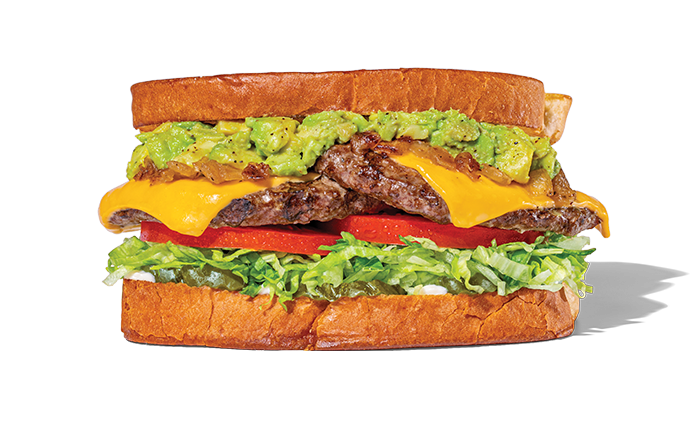
Habit is a fast-casual burger chain: you order at a counter or a screen, the kitchen cooks it fresh, and it comes out in a few minutes rather than being pulled from a warming tray. The anchor product is the Charburger - a beef patty chargrilled over an open flame, dressed with fresh lettuce, tomato, caramelized onions, pickles, and mayo on a toasted bun. The step up is the Santa Barbara Char: two patties, avocado, American cheese, and caramelized onions on grilled sourdough, a sandwich that was putting avocado on burgers long before it was a menu cliche.
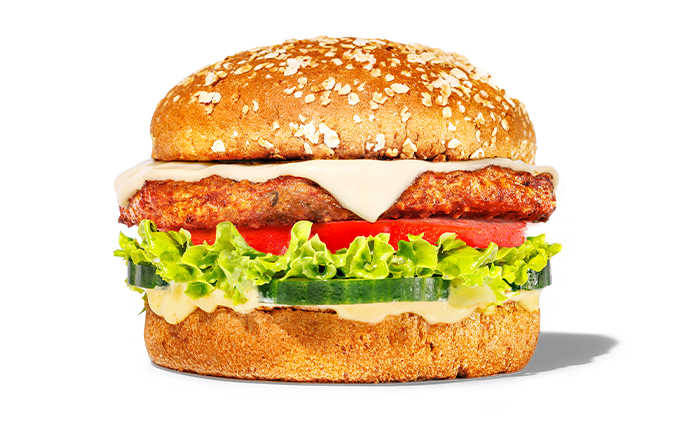
Around the burger sits the rest of the menu - chicken and specialty sandwiches, salads including a Santa Barbara Cobb, sides such as tempura green beans and sweet potato fries, and hand-spun shakes. It is a deliberately compact lineup, and the compactness is the point: fewer things, cooked to order, done consistently.
"We're not changing - we're just embracing what we've always been - an '&' brand."Jack Hinchliffe, Chief Marketing Officer
The rebrandA strategy hiding inside a punctuation mark
In August 2024 the company made what looked like the smallest rebrand in the business. It dropped the word "The" and added an ampersand, going from The Habit Burger Grill to Habit Burger & Grill. No new logo philosophy essay, no dramatic color change - one symbol. But the ampersand was doing work. It stands for everything on the menu that is not a burger: the shakes, the salads, the tempura green beans, the sandwiches. For a chain trying to convince customers to come in for lunch and dinner and a treat run, the message "we are more than burgers" is worth more than it looks.
The menu the ampersand is meant to represent - the burger anchors it, the rest is the "&."
Who buys itFamilies, students, and the lunch crowd
Habit's customer is the value-conscious diner who still wants the food cooked properly - families feeding a table without a white-tablecloth bill, students, and workday lunch crowds. The pricing sits in the fast-casual band: more than a drive-thru dollar menu, less than a sit-down restaurant. Geographically the base is overwhelmingly Californian. Of the roughly 380 to 388 U.S. locations, about 277 are in California - roughly seven in ten. That concentration is both the brand's strength and its unfinished business.
Company + franchised units. Figures are approximate and rounded from public reporting.
The problem it solvesCraveable food, fast, at a fair price
The gap Habit fills is a specific one: people want a burger that tastes made rather than assembled, but they do not want to wait for a table or pay for one. Fast food is quick and cheap but rarely cooked to order; sit-down burger restaurants cook well but cost time and money. Habit's whole model - order fast, cook fresh over flame, serve in minutes across as many channels as possible - is aimed straight at that middle. The open flame is the proof point that makes the promise credible.
How it's differentThe flame is the moat
In the crowded better-burger field - In-N-Out, Five Guys, Shake Shack, Smashburger, Culver's - most competitors griddle or smash their patties on a flat-top. Habit chargrills over an open flame, which is slower and harder to run consistently but produces a distinct taste and char. That difference is not marketing garnish. In 2014, Consumer Reports surveyed more than 53,000 people and ranked the Charburger the best burger in America, scoring it 8.1 out of 10 - ahead of In-N-Out. A cheap product winning a national taste test on one uncompromised detail is about as clean a competitive story as fast food offers.
The business modelCompany stores, franchises, and every channel at once
Habit makes money the way modern fast-casual chains do: a mix of company-operated and franchised restaurants selling food across every channel a customer might want it. Dine-in and take-out are the base; on top sit drive-thru, curbside pickup, indoor kiosks, catering, a mobile app, gift cards, and third-party delivery through the major marketplaces. The griddle-side is craveable; the back-end is a full digital-ordering stack. Since the 2020 acquisition, that machinery has been backed by Yum! Brands' franchising infrastructure and international development muscle.
Where it fitsYum! Brands' fourth flag
Yum! Brands runs KFC, Taco Bell, and Pizza Hut - chicken, Mexican-inspired, and pizza. In March 2020 it paid about $375 million ($14 a share) to add a fourth category: the American burger. At the deal's close, Habit operated 245 company-owned and 31 franchised restaurants across the U.S. and China. The strategic fit is straightforward - a proven regional burger brand plugged into a global franchisor's playbook, with room to grow well beyond California. Notably, eight original Santa Barbara-area locations stayed with the founding Reichard family and were left out of the sale.
"A celebration of our diverse menu, our commitment to fresh, high-quality ingredients, and the connections we've built with our customers and communities over the years."Jack Hinchliffe, on the 2024 rebrand
The expertiseCooking to order at scale
The hard-won skill here is operational, not culinary theatrics: running an open-flame, cook-to-order kitchen consistently across hundreds of locations and multiple service channels at once. Anyone can grill one good burger. Grilling the same good burger in 380 kitchens, during a lunch rush, while also filling app orders, drive-thru lanes, and delivery bags, is the actual competency. Layer on the digital ordering, kiosks, and delivery integrations, and Habit's edge looks less like a recipe and more like a repeatable system built around a flame it refuses to give up.
The cultureBeach cleanups and a giving farm
For a chain now owned by a global franchisor, Habit still leans on a local, community-minded identity. Its programs run to beach cleanups, charitable "Good Habits" giving days, a giving-farm effort, and support for ProStart, the high-school culinary and restaurant-management education program that feeds new talent into the industry. None of this is unusual for a restaurant brand, but it is consistent with the origin story: a coastal California business that treats hospitality and local ties as part of the product rather than a press release.
The originThe stand a teenager bought back
The company's roots are almost too tidy. Brent Reichard flipped his first burger at the Goleta stand as a young worker. In 1980, he and his brother Bruce bought the place. Private-equity firm KarpReilly took a majority stake in 2007 and funded the push beyond Southern California; a 2014 IPO raised $83.7 million and the stock roughly doubled on its first day. The Yum! Brands acquisition followed in 2020. Three owners, one product - and when the founders eventually moved on, they went and opened another burger place. When the people who built a thing can't stop building the same thing, the category is usually bigger than the brand.
The next chapter is about geography. Habit is in China, Cambodia, and the UAE, and increasingly showing up in new U.S. states - it has been filling former sites of other chains, including a planned Florida location in an old Bojangles. The question the company is answering, one market at a time, is whether a Southern California flame-grill travels. If it does, the ampersand will have been the least of it.