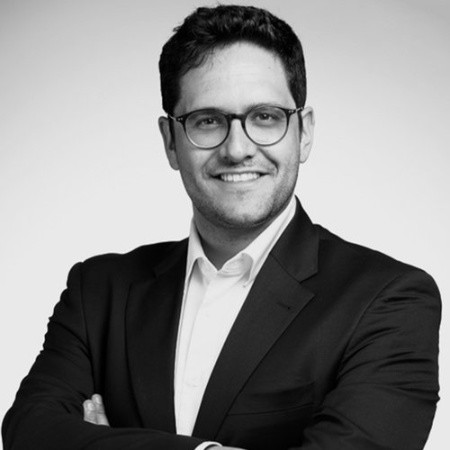
The Patient Who Started Everything
The surgery went well. The patient died anyway.
Chris Mansi was a neurosurgeon at Queen Square - the National Hospital for Neurology and Neurosurgery in London, one of the world's foremost brain centers. He knew how to operate. He knew the anatomy. What he couldn't fix was the system: the invisible bureaucratic fog that slowed a bleeding brain through triage nurses, general radiologists, on-call physicians, and finally, too late, to the specialist who could actually help.
That single patient - successfully operated on, but fatally delayed in reaching the OR - became the founding thesis of a $1.2 billion company.
Not a pivot. Not a market opportunity identified by a consultant. A specific person, a specific failure, a specific question: what if the AI could see the scan before any human and immediately text the right surgeon?
In time-sensitive acute conditions, there is often a dangerous delay in getting a patient to the right specialist for treatment.
- Chris Mansi
The insight is almost embarrassingly simple in retrospect. A CT scanner produces images. A trained algorithm can read those images in seconds. A phone can send a text. The gap between scan and surgeon - which routinely cost lives - was not a medical problem. It was a coordination problem. And coordination problems yield to software.
Mansi didn't stop being a doctor when he founded Viz.ai. He applied medicine differently. Instead of one patient at a time in one operating room, his platform now touches one patient every ten seconds across nearly 2,000 American hospitals.
Viz.ai at Scale - 2025
230M
Lives covered on platform
~2,000
U.S. hospitals adopted
60K
Healthcare providers using Viz.ai
50+
FDA-cleared AI algorithms
16+
Medical conditions recognized
66 min
Stroke diagnosis time saved
Cambridge Cognitive Science, London Neurosurgery, Silicon Valley MBA
Mansi grew up in Newcastle, England - the city that gave the world brown ale and, apparently, at least one neurosurgeon-entrepreneur. His grandmother encouraged him toward medicine. He went further than most: first to Cambridge, where he studied surgery and earned a Master's in Cognitive Science. Then to University College London for his MBBS. Then to the operating theaters of Queen Square and King's College Hospital, where he trained and practiced as a neurosurgeon in the NHS.
The Cognitive Science degree is the tell. This is someone who, from his twenties, was interested in how minds process information - not just how brains are wired. When AI arrived as a practical tool, he had an existing framework for what it could and couldn't do with complex perceptual data.
Even during residency, he was building. He founded EDUSURG Ltd., an online surgical education platform - which makes him a founder three times over before he ever landed in California. (Once as a company builder during residency. Once at Stanford. Once with Viz.ai.)
He recognized, mid-residency, that surgical training gave him clinical mastery but business naivety. Stanford's MBA and Biodesign Medical Innovation fellowship was the answer. He arrived in 2014.
Before Viz.ai
"I operated inside human brains. I knew exactly what a perfect surgery looked like. What I couldn't fix was the hour the patient spent waiting for someone to call me."
After Viz.ai
"Now the algorithm calls the surgeon. It reads the scan in seconds, identifies the bleed, and sends an alert before the patient finishes being wheeled out of the scanner."
Stanford, Eric Schmidt, and the First FDA De Novo
The year is 2016. Mansi is in Stanford's MBA program, working through the Biodesign fellowship - a structured program for clinician-entrepreneurs that involves identifying unmet clinical needs and designing solutions. The project that turns into Viz.ai begins with a focus on vein thrombosis, but the core realization is broader: in every time-critical acute condition, there is a gap between imaging and action. The gap is not technical. It is organizational.
Eric Schmidt - the former CEO of Google and one of Silicon Valley's most connected figures - was teaching at Stanford at the time. He heard Mansi's pitch. He wrote the first check.
That's the kind of origin story that sounds apocryphal until you look it up.
Viz.ai launched with co-founder David Golan, who brought the technical architecture. Mansi brought the clinical understanding and the commercial instinct. The first product was Viz LVO - an algorithm that detects large vessel occlusions (the kind of stroke where every minute of delay corresponds to roughly 1.9 million neurons lost) and automatically alerts the neurovascular team.
In 2018, the FDA granted Viz LVO the first-ever de Novo clearance for a computer-aided triage and notification platform. First of its kind. A regulatory category that didn't exist before Viz.ai asked for it.
Funding Rounds - Viz.ai
| Round |
Year |
Amount |
Notable Investors |
| Seed |
2016 |
Undisclosed |
Eric Schmidt (early backer) |
| Series A |
2018 |
$30M |
- |
| Series B |
2019 |
$50M |
Greenoaks, GV, Kleiner Perkins, CRV, Threshold |
| Series C |
2021 |
$71M |
Scale Venture Partners, Insight Partners |
| Series D |
2023 |
$100M |
At $1.2B valuation |
What the Platform Actually Does
Viz.ai sits between the imaging machine and the care team. A CT scanner produces images. Those images flow to Viz.ai's algorithms - trained on millions of scans, cleared by the FDA, operating in real time. If the algorithm identifies a critical finding, it sends an alert to the specialist's phone before anyone else in the hospital has even looked at the scan.
The surgeon gets a text. The text contains the image. The surgeon can review it from anywhere. The care pathway begins, minutes earlier than it would have otherwise.
In stroke care - where the standard phrase is "time is brain" and the clinical reality is that every 15 minutes of delay translates to measurable cognitive decline - Viz.ai's platform has been shown to reduce diagnostic timelines by 66 minutes at participating hospitals. In a 5-hour process, that's the difference between deficit and recovery.
Stroke Care
66
Minutes saved in stroke diagnostic timelines at Viz.ai partner hospitals. That's not a benchmark. That's neurons.
Platform Coverage
50
of the 50 largest U.S. health systems use Viz.ai. When the biggest systems adopt something, the industry follows.
Algorithms
50+
FDA-cleared AI algorithms covering stroke, hemorrhage, aneurysm, pulmonary embolism, cardiology, and more.
The platform has expanded well beyond stroke. Viz.ai now covers neurovascular conditions, cardiology, vascular disease, trauma, radiology workflows, and - since 2025 - oncology. It also runs a life sciences business, connecting pharmaceutical companies to the patient populations they need for clinical trials, through the same network of hospitals.
Mansi's framing for this matters: the algorithm is not the product. The care coordination is the product. The algorithm is the trigger. What Viz.ai built is not diagnosis software. It's the infrastructure that connects the right clinician to the right patient at the right moment - at scale, in real time, across the American hospital system.
The real innovation Viz.ai brings to the market is not just the algorithm, but about mobilizing care teams and coordinating care so that quality care can happen consistently and quickly.
- Chris Mansi
On Leading With Empathy (Not Jargon)
Mansi leads a company of 320 people, most of them engineers, clinicians, and operators working at the intersection of healthcare and AI. His stated approach is not typical CEO-speak about "customer-centricity." It's more specific.
"Empathy is core to how I lead because healthcare is deeply human - and so is innovation. At Viz, we build AI that saves lives, but we never lose sight of who we're building it for."
He defines empathy operationally: understanding the pain, urgency, and fear behind every scan, every data point, every decision. For a company that processes brain imaging data, this is a grounding principle with teeth. The data is not abstract. The person it came from is in a scanner right now, surrounded by frightened family members, waiting for someone to tell them what comes next.
His Lens on AI
"With generative AI, the capabilities have exponentially increased what can be done with the technology... AI is now just a part of medicine that hospitals have adopted."
His Lens on Business
Entrepreneurs building in healthcare need to show that their solution either helps make money or save money - while keeping the patient at the center of the model.
He's explicit that profitability and patient impact are not in tension. In 2025, Viz.ai achieved profitability in its healthcare business while simultaneously accelerating growth in life sciences. The financial result and the mission result arrived together - which suggests that building something genuinely useful for a system under pressure eventually becomes a business, not just a cause.
Career Timeline
Pre-2014
Trains and practices as a neurosurgeon in the UK at Queen Square (National Hospital for Neurology & Neurosurgery) and King's College Hospital. Founds EDUSURG Ltd., an online medical education platform, during residency.
2014
Enrolls in Stanford MBA program and the Stanford Biodesign Medical Innovation Fellowship, relocating from London to Silicon Valley.
2016
Co-founds Viz.ai with David Golan during Stanford MBA program. Eric Schmidt, former CEO of Google and Mansi's Stanford professor, becomes an early backer.
2018
Viz LVO receives first-ever FDA de Novo clearance for a computer-aided triage and notification platform - a regulatory category that didn't exist before Viz.ai created it. Raises $30M Series A.
2019
Raises $50M Series B led by Greenoaks with GV, Kleiner Perkins, CRV, and Threshold Ventures. Expands platform to additional hospital systems.
2021
Raises $71M Series C led by Scale Venture Partners and Insight Partners. Platform grows to majority of top 50 U.S. health systems.
2023
Raises $100M Series D at $1.2B valuation. Named AIMed AI in Healthcare Entrepreneur of the Year. Honored by Goldman Sachs for Entrepreneurship.
2024
Named to TIME100 AI list as an Innovator. Viz.ai named one of Fast Company's 50 Most Innovative Companies. Platform reaches 230M lives covered.
2025
Viz.ai achieves profitability in healthcare business. Launches Viz Oncology, Viz Assist, and Viz Agent Studio. Closes year with record scale and patient impact.
2026
Announces strategic collaboration with Johnson & Johnson for AI-powered Subdural Hemorrhage care. Life sciences business doubles over 18 months.
What Comes After Two Thousand Hospitals
Viz.ai's 2025 launch of Viz Oncology is a signal: the coordination platform built for neurovascular emergencies is generalizable. Cancer care - which involves complex multi-specialty pathways, long diagnostic delays, and critical handoffs between radiologists, oncologists, and surgeons - is structurally similar to stroke care. Different disease, same underlying problem.
The life sciences angle is equally significant. Pharmaceutical companies need to recruit patients for clinical trials. Those patients exist inside the hospital networks Viz.ai already serves. The company's platform, already cleared for clinical decision support, becomes the bridge between drug developers and patient populations. This is not a pivot. It's an extension of the same coordination logic into a new vertical.
Mansi's stated aspiration: make AI-powered care coordination the global standard of care - ensuring that every patient, regardless of geography, gets the right specialist at the right moment. The American hospital system is the proof of concept. International expansion is the next chapter.
With generative AI, the capabilities have exponentially increased what can be done with the technology, and through Viz.ai's work and others', AI is now just a part of medicine that hospitals have adopted.
- Chris Mansi
Links & Resources