There is a peculiar moment in a banker’s career when the relationship and the institution become two different things. A client trusts a person. The person relies on a bank for the machinery surrounding that trust: products, transactions, records, reporting. Leave the institution, and the conversation can continue. Keeping everything else running is the harder part.
- OneDigital equips independent financial professionals to distribute investments.
- Invictus helps wealthy families see portfolios across advisers and assets.
- A ₹280 crore funding round in August 2026 backs the next expansion.
Centricity began with this separation. Its 2022 funding announcement described an “employee to entrepreneur” transition for wealth professionals. It offered infrastructure that someone setting up independently could plug into. Read that phrase carefully. The customer was a professional who needed help doing familiar work outside a familiar institution.
The banker outside the bank
The founders knew that work. Manu Awasthy, Aditya Shankar, Gaurav Tiwari, Manish Sharma and Pushpendra Singh came from private banking. Awasthy’s published background includes IIFL Wealth, now 360 ONE, Citibank and Standard Chartered. They started the operating business in early 2022, bringing practitioner experience to a problem that can look deceptively like a software problem.
The distinction matters. A transaction screen can make buying easier. A wealth professional must also understand the client, choose an appropriate product and explain how it sits beside investments already owned. Centricity’s own origin story points to fragmented systems and operational inefficiency. Its compact founding belief is that “wealth management deserves better technology.”
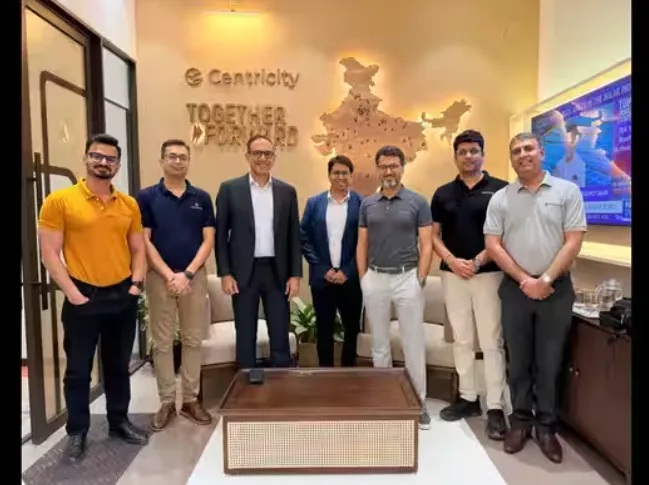
“wealth management deserves better technology”Centricity’s founding belief
Two doors into the same market
OneDigital serves the independent intermediary: the mutual-fund distributor, financial adviser or other professional who brings the relationship. Invictus Private Wealth serves the affluent family directly. In Lightspeed’s description of the business, the distribution arm reaches the mass affluent beyond the biggest cities, while Invictus addresses wealthy clients seeking greater transparency and alignment.
These customers face different versions of a coordination problem. The distributor needs access and execution. The family needs oversight. Buying another investment does not necessarily make either task easier. The larger the product shelf, the more useful it becomes to have a system that can keep track of what is on it.
OneDigitalIndependent distributor
↓
Access + execution
InvictusWealthy family
↓
Reporting + oversight
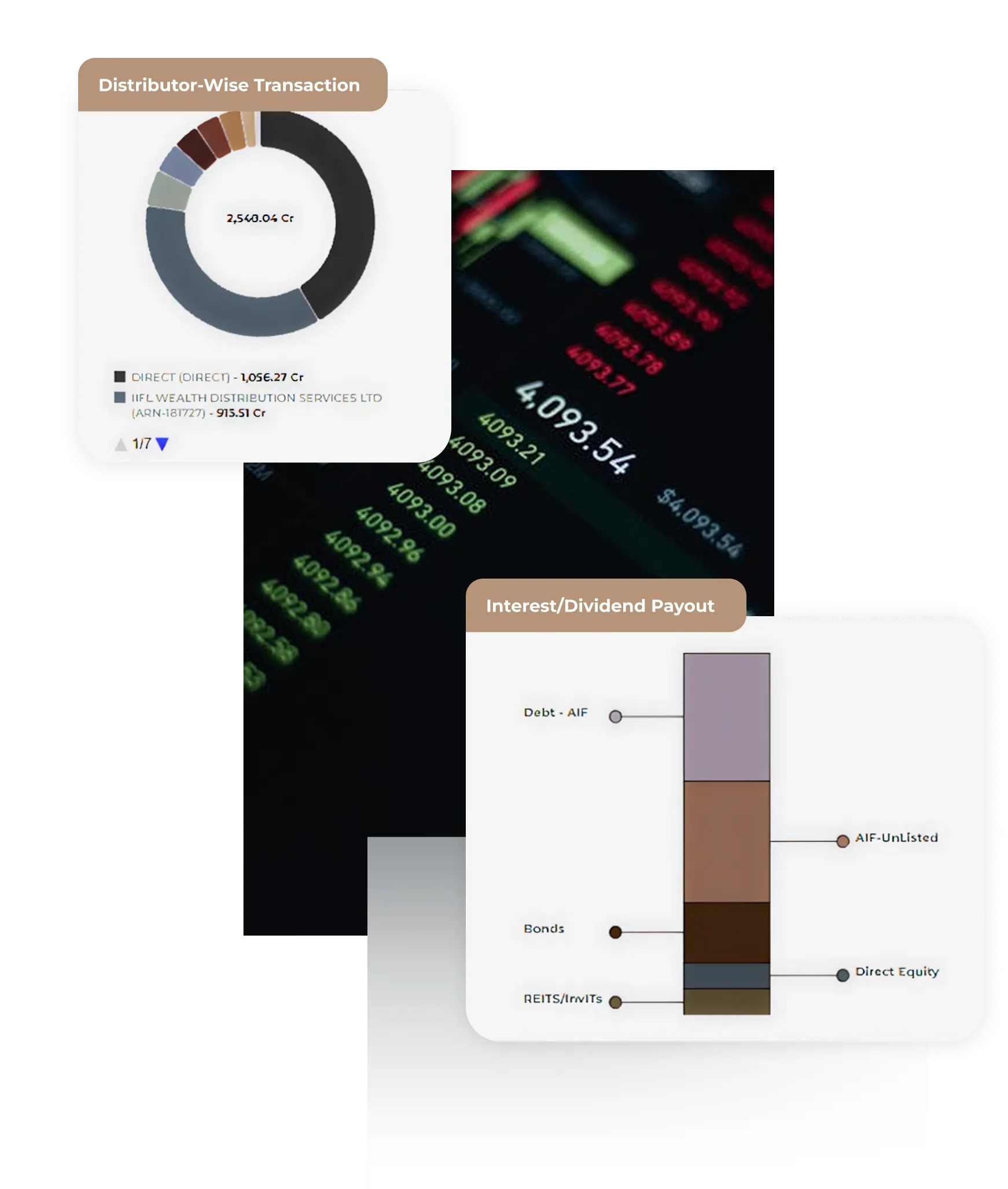
Invictus’s current offering makes that second problem tangible. Its platform brings investments across advisers, products and asset classes into a consolidated view. Liquidity profiles track assets against future obligations. An investment-policy breach monitor flags departures from a family’s mandate. Those tools address questions a list of account balances cannot answer: what is available, what is committed, and what has drifted?
The trouble with a bigger menu
OneDigital puts several categories within reach, from mutual funds and bonds to portfolio-management services and alternative investment funds. Centricity advertises partner membership without an upfront fee or capital investment. Its proposition includes training and specialist support, alongside the technology. That combination is revealing: making a product available and helping someone understand it are separate jobs.
There are practical boundaries. The partner programme says mutual-fund distributors need the relevant NISM examination and ARN registration. A catalogue is not a qualification. For a prospective partner, the useful exercise is to follow one real client task from product selection through transaction and reporting, then examine the remuneration terms attached to it.
Nor is human advice combined with digital tools an exclusive invention. Nuvama’s annual report describes its own mix of wealth managers, specialist support and digital access. Established firms such as Nuvama and 360 ONE are alternatives for wealthy clients. Centricity’s particular position rests on connecting independent distribution with direct family wealth, rather than on the mere presence of an app.
What changed the investor’s mind
Lightspeed supplies an unusually candid account of the market’s earlier difficulty. The investor had repeatedly considered wealth management and held back, questioning adoption and differentiation. Its September 2024 investment essay describes a change after the pandemic: investors were asking more actively for help managing money, with greater interest in access, diversification and clarity.
The firm first met Awasthy and Shankar in February 2023. When it returned a year later, execution helped turn interest into investment. This is the documented change of mind in Centricity’s story: an investor’s view of demand. It offers a useful clue about timing. Infrastructure becomes more valuable when people already want the service it helps professionals deliver.
The money behind the machinery
The financing followed in stages: $4 million announced in September 2022, then a $20 million seed round led by Lightspeed in September 2024. In August 2026, Centricity raised ₹280 crore in a Series A led by SMBC Asia Rising Fund. The round contained ₹230 crore in equity and ₹50 crore in venture debt, with a reported valuation around ₹1,800 crore.
The latest capital supports technology and expansion in private wealth and global private-client services. The latter adds a cross-border audience, including non-resident Indians. Funding measures resources available to build; it does not measure the cost of every feature. Similarly, the company website’s ₹18,000 crore-plus AUM figure describes client assets. It is not company revenue.
Give the relationship better tools
The lesson another business can borrow is fairly concrete. Find the professional who already has a client’s confidence. Identify the repeated work consuming that professional’s attention. Build shared tools around it. Centricity applies that idea to execution and portfolio visibility, where a useful improvement may look like an ordinary report arriving without an afternoon of assembly.
The model still depends on judgement and usable information. Poor product selection survives a tidy dashboard; incomplete records produce an incomplete picture. For someone choosing Centricity, the revealing demonstration is therefore a real portfolio review. Can the adviser explain the whole position? Can the family see the obligations beside the assets? The software earns its place when those conversations become easier.