Sanaa Zia Khan once described reviewing a female entrepreneur’s portfolio and finding an awkward gap. The assets were there: equities, commercial property, fixed income. Years of determined work had produced a fortune. Yet the investments had accumulated without a coherent plan for the wealth as a whole. The entrepreneur had proved she could build. The question was what all that building was meant to support.
It is a good opening to Khan’s working world, because the interesting part comes after the impressive balance sheet. A list of holdings can look reassuring while leaving the owner with decisions still unresolved. Money has a talent for becoming complicated just when everyone expects it to become convenient.
Khan, a founding-team member of Invictus Private Wealth at Centricity and a director of Centricity Overseas Financial Distribution, works with the people behind those lists. Her public thinking keeps returning to their ability to understand, coordinate and decide. A family can have several investments, several advisers and several intentions. Bringing them into the same conversation is its own kind of work.
A fortune in search of a plan
In her March 2026 essay, Khan used the entrepreneur’s example to argue for coordinated wealth planning. She discussed the relationship between holdings, liquidity, succession and the owner’s ambitions. The point was the arrangement of the whole: investments needed to work together, with a purpose that extended beyond their individual performance.
That gives the anecdote its tension. The client’s competence was already established. Khan’s question concerned the next task. What should the fortune make possible, and how should its owner organise it? An accomplished wealth creator could still benefit from a better view of the structure she had created.
Read this way, the episode is also about respect. Treating a woman as an active owner means taking her future intentions seriously. It means asking for more than approval of a product. The discussion reaches the kind of life and legacy she wants her money to serve.
The view from Invictus
Khan brings more than 17 years of private banking experience to that discussion. Based in Gurugram, she is listed on Centricity’s leadership page under Invictus Private Wealth. The team placement is precise: she is a founding-team member in the private-wealth business. Her overseas-distribution directorship adds an international dimension to the work.
Experience described in her published professional profile
Her public role includes developing technology-enabled wealth solutions for investors ranging from ultra-high-net-worth individuals and single-family offices to corporate treasuries and senior executives. That puts her at the meeting point of financial experience and product design. The practical test for a tool is whether the person using it can make a better-informed decision.
In an interview, Khan traced her interest in finance to India’s economic expansion and the way family enterprises used investment and credit to grow. She identified fragmented portfolio visibility as a problem the team set out to address. Consolidated reporting, analytics and risk controls formed part of her account of the response.
The distinction matters to an owner with more than one adviser. Each relationship may provide a clear view of its own corner. The owner still needs to understand the combined picture. Khan’s description of the work begins there, with the difficulty of seeing the whole rather than simply gathering more information.
An account is only the beginning
Khan’s comments on women’s investment participation look beyond India’s familiar financial centres. Discussing growth in smaller states, she pointed to literacy, rising incomes, wealth in smaller urban centres and easier access to investing platforms. Her explanation treated participation as the result of several changes working together.
There is a geographical generosity in that view. The financial story deserves attention wherever people are making decisions, including places that rarely supply the backdrop for a banking advertisement. A growing investor base can change who needs advice and how that advice reaches them.
But opening an account leaves another question: who actually directs the money? In comments on women in the workforce, Khan described households where women were not actively included in primary investment decisions. She connected that exclusion to planning that happened around incidents, rather than through an established structure.
Her concern was participation in the decision itself. Earning an income and discussing money are meaningful steps. Choosing how assets are allocated, revisiting a plan and understanding its trade-offs require a further degree of involvement. The owner’s place in that process matters.
She carries the same question into institutions. In her writing on finance leadership, Khan argues that progress should be judged by women’s influence over investment strategy, capital allocation and governance. Recruitment figures tell part of the story. The room where decisions are made tells another.
This is one of the connections that makes her work distinctive. The household and the financial institution have different responsibilities, but both distribute authority. Her public argument asks who has it, who can use it, and whose perspective enters the discussion before a choice becomes final.
A family is allowed to change
Khan’s writing on mothers and money begins with a practical objection: financial systems can assume an uninterrupted career and regular income over decades. Actual family lives contain changes in work, responsibilities and available time. A useful plan has to accommodate those movements.
She has discussed flexible contributions, liquidity and tools that make progress toward a goal easier to see. These are ideas about the fit between a financial system and its user. The appeal is understandable. A person managing several responsibilities needs information she can act on, with enough room to revise the plan.
Motherhood also changed her own account of leadership. Khan has described becoming more comfortable making decisions without a complete roadmap. She says she has learned to listen more, stay calm under pressure and be open to other perspectives. Her description allows experience to change the way she leads.
“You are allowed to grow into your ambition.”
Sanaa Zia Khan, on mothers in leadership
There is relief in that permission. It releases ambition from the requirement to arrive fully formed. Khan’s reflection concerns a leader learning while carrying responsibility, rather than waiting for uncertainty to disappear before acting.
For a profession concerned with future outcomes, that is a particularly apt personal lesson. A decision can be careful and still need revision. Listening can improve it. Calm can create the space for someone else to explain a concern. In her own telling, these habits have grown alongside her family responsibilities.
Six economies, one demanding question
Khan’s public commentary also travels across borders. Writing about the Gulf, she distinguishes its economies rather than treating the region as a single investment proposition. Her account separates the opportunities and trajectories she sees in Kuwait, Qatar, the UAE, Saudi Arabia, Bahrain and Oman.
Those assessments are her market views. What they reveal about her work is an attention to the differences inside a broad label. For a family considering international exposure, the name of a region cannot do all the thinking. The location and purpose of an investment remain part of the decision.
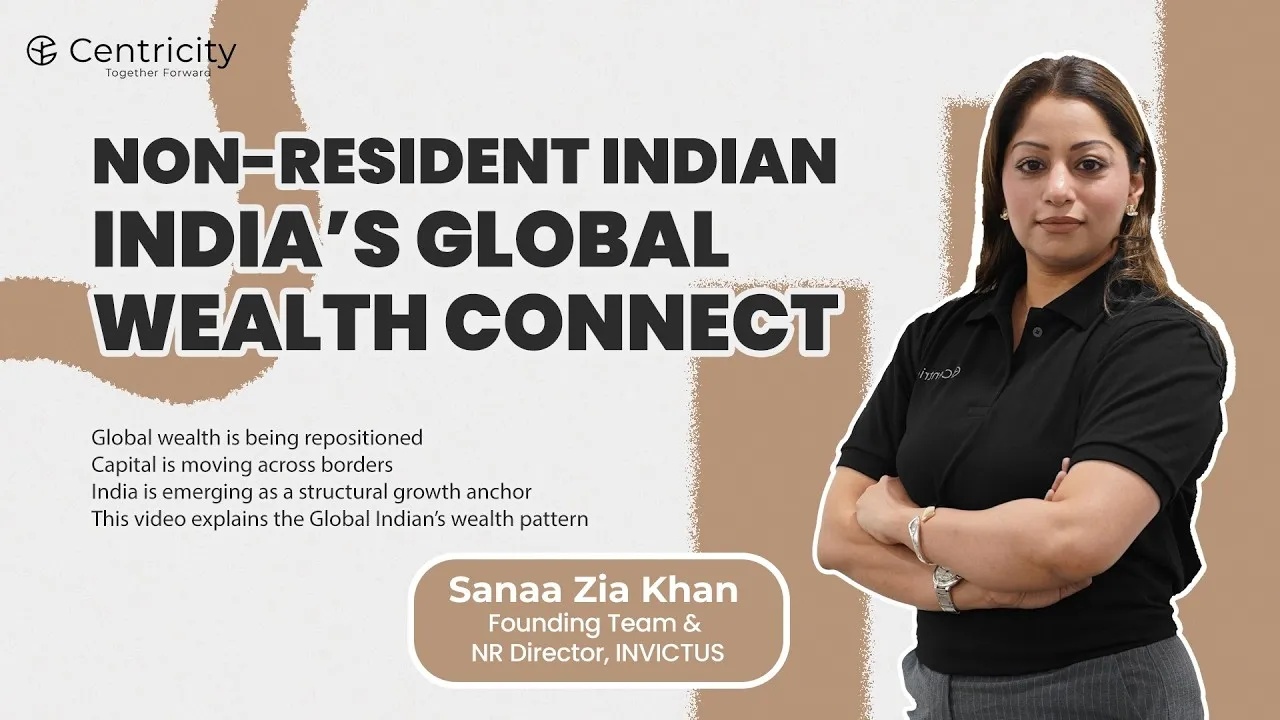
Her appearance in Centricity’s Founder Speaks series discusses global Indians balancing international diversification with opportunities in India. The company’s description places the UAE and Singapore within that conversation. Her overseas role and her public commentary meet here, in the choices made by people whose financial lives span several places.
She has also publicly described an interview on cross-border complexity, succession and governance in ultra-high-net-worth families. Taken together, these subjects suggest the breadth of the planning conversation she wants to have: the family, its assets, its decision process and the jurisdictions connecting them.
The women behind the decisions
When Khan marked International Women’s Day in 2026, she thanked two women close to her: her mother and her mother-in-law. She described their strength, wisdom and influence on her life. The tribute brought the discussion of leadership home, to the people she credits with shaping her values.
It is an illuminating companion to her professional writing. Family appears in her work as a financial unit with decisions to coordinate. In that tribute, it appears as a place where a person learns what she admires. Both dimensions belong in a portrait of someone whose work concerns families.
In August 2026, Khan announced recognition as an Iconic Woman in Wealth & Investment Leadership associated with an awards event in Dubai. Her post spoke about trust, relationships and the conversations that shape legacies. Even in announcing recognition, she returned to the human work around the portfolio.
Her advice to aspiring women leaders makes that involvement personal. Khan urges them to develop their expertise, build mentors and networks, take calculated risks and speak up in consequential conversations. She places learning alongside self-advocacy. The advice asks a woman to prepare for responsibility while making her own contribution visible, including when the conditions are imperfect.
That brings the story back to the entrepreneur with the successful holdings. Khan’s interest lies in what follows the accumulation: an owner who can see the structure, take part in its decisions and give it a direction. A fortune may be counted on a balance sheet. Its purpose has to be decided by someone.