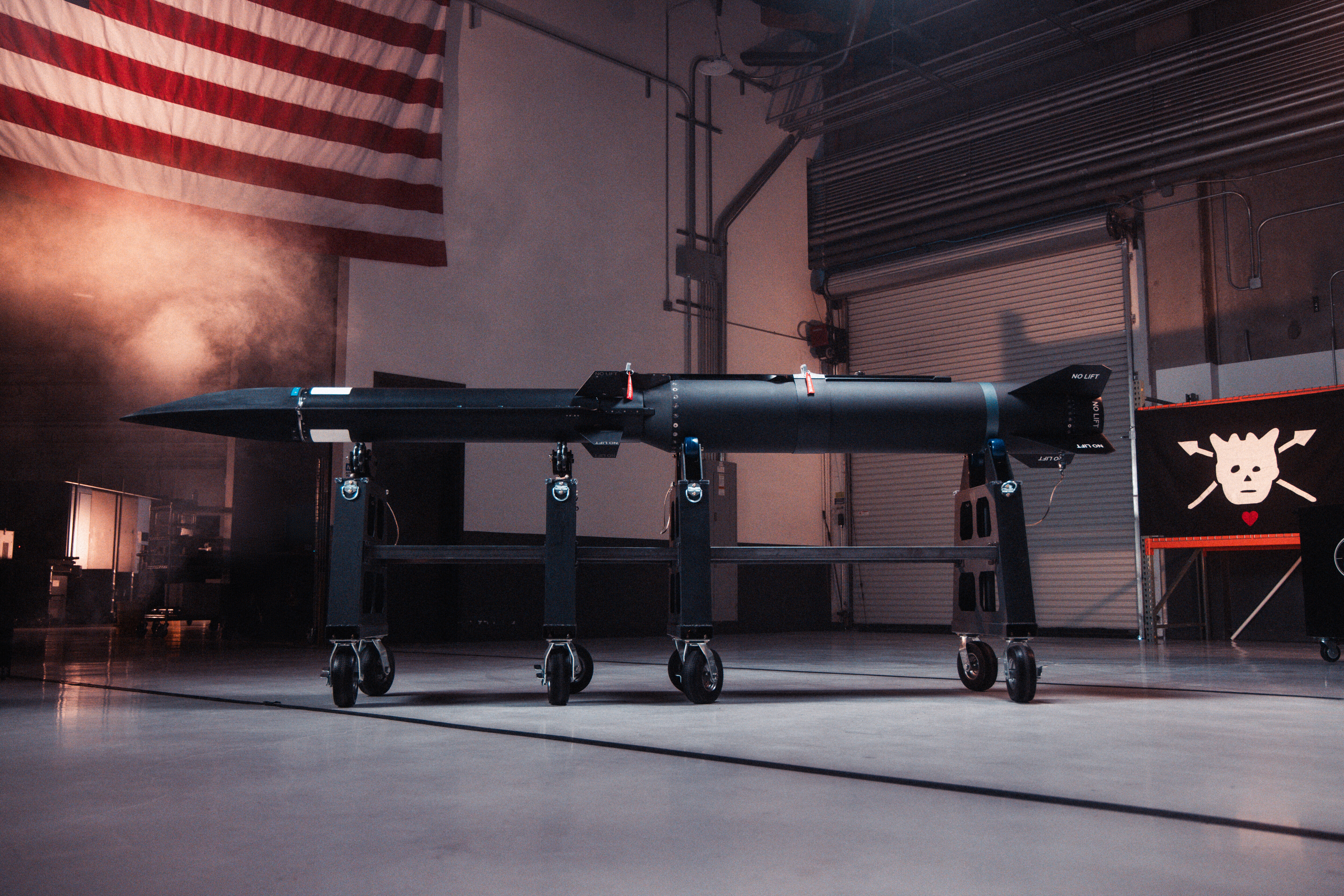
Before Castelion had a manufacturing campus, it had a purchasing decision. The ordinary sequence is to perfect a weapon, demonstrate its performance, then ask how much it will cost to manufacture. Castelion wants the factory in the conversation from the beginning. Its first missile, Blackbeard, is being developed around an uncomfortable question: what use is an impressive weapon if the customer cannot afford enough of them?
- The product: Blackbeard, a hypersonic strike missile for U.S. military customers.
- The wager: in-house hardware, frequent tests and production-minded design can lower cost.
- The examination: turn orders and factory investment into qualified weapons delivered repeatedly.
This is a defense company whose argument reaches beyond defense. Quantity changes what a technology can do. A demonstration proves that something is possible. A stockpile changes the decisions available to the person buying it. Castelion’s mission of conventional deterrence rests on making that transition affordable.
Before the flight, the refusals
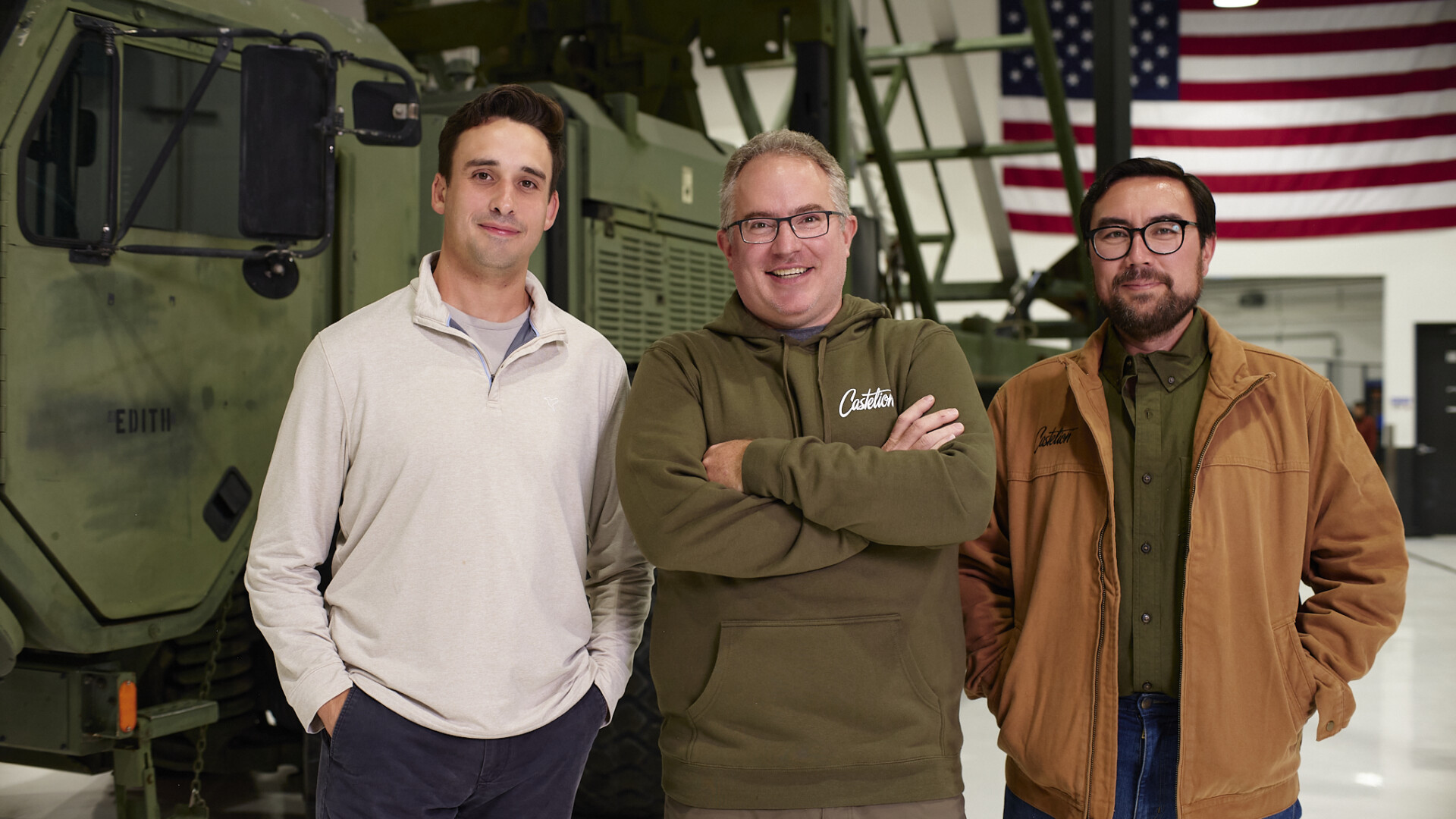
Bryon Hargis, Sean Pitt and Andrew Kreitz founded Castelion in November 2022 after working at SpaceX. Their backgrounds included national-security business development, commercial launch sales and finance. They understood that building a technically credible machine and building an organization that could sell and manufacture it were connected problems.
The first obstacle was money. Forbes reported that more than 50 investors and banks rejected them during their first five months. The team kept building components in borrowed warehouses and accommodating machine shops. Lavrock’s Alex Poulin eventually invested $2 million in April 2023; the following month brought a $5 million government development contract.
What changed Poulin’s mind, in that account, was watching the founders continue to build. Persistence made the proposal tangible. A customer contract then supplied another kind of evidence: someone responsible for buying capability was willing to pay for development. Neither event settled whether the finished weapon would work.
The part that repeats
Castelion’s operating vocabulary is unusually physical. It makes core subsystems internally, including motors, flight computers, seekers and thermal protection. The point is control over the next revision: fewer organizational handoffs between discovering a problem, changing the hardware and trying again. Vertical integration also places more manufacturing responsibility inside the company.
Its December 2025 announcement reported more than 20 development flight tests that year. A test count is a measure of activity; the useful result is what the next design learns. Castelion’s stated culture favors hands-on ownership and short learning cycles. That approach demands both hardware to test and the discipline to turn measurements into changes.
There is a financial logic to repeated testing, too. Each vehicle consumes money, but a long interval between vehicles can leave an expensive team waiting for answers. The relevant comparison is the cost of reaching a useful decision. That is an editorial inference from the operating model, rather than a published accounting result. Frequent flights earn their keep when they resolve uncertainty that would otherwise survive into a more expensive stage of development.
Supplier choices belong in the same argument. In Reuters’ reporting on defense manufacturing, Pitt described buying automotive electronic components and sourcing industrial tubing outside traditional aerospace channels. The general principle is to examine what a part must actually do before paying for the conventions attached to its usual supplier. Qualification still has to establish suitability.
Quantity changes what a technology can do.
The manufacturing argument
Read the invoice
In June 2026, the Navy ordered 50 early-operational-capability pre-production prototypes and 50 storage and shipping containers for $23.4 million. Dividing the package price by 50 produces an average package cost, not a clean production-unit price for the missile. That distinction matters when affordability is the central claim.
The business model combines paid development and integration with weapon deliveries. Private investors finance technology and capacity ahead of military purchases. Firm-fixed-price orders put a premium on controlling manufacturing costs. An announced order ceiling, meanwhile, is different from revenue already earned.
Capital for capacity. A credit commitment is different from cash already drawn.
The August Series C announcement combined $800 million in equity and $250 million in committed revolving credit, at a $13 billion valuation. Its priorities include expanding Blackbeard manufacturing, developing a longer-range strike weapon and pursuing defensive systems. The financing supports ambitions; it does not measure delivered capability.
Project Ranger makes the capital requirements visible. At its January groundbreaking, New Mexico officials described a $220 million private investment in a 1,000-acre campus, with 21 buildings planned by year-end. By August, Castelion described an infrastructure commitment above $250 million and further expansion. These are dated commitments, rather than a completed-factory scorecard.
A missile needs a ride
Blackbeard has to fit the military’s existing world. The Navy is integrating it with the F/A-18E/F Super Hornet. A September 18 flight carried two test articles aboard the aircraft, a developmental milestone reported by USNI News. Captive carriage tests aircraft compatibility. Launching, guiding and fielding the weapon require further evidence.
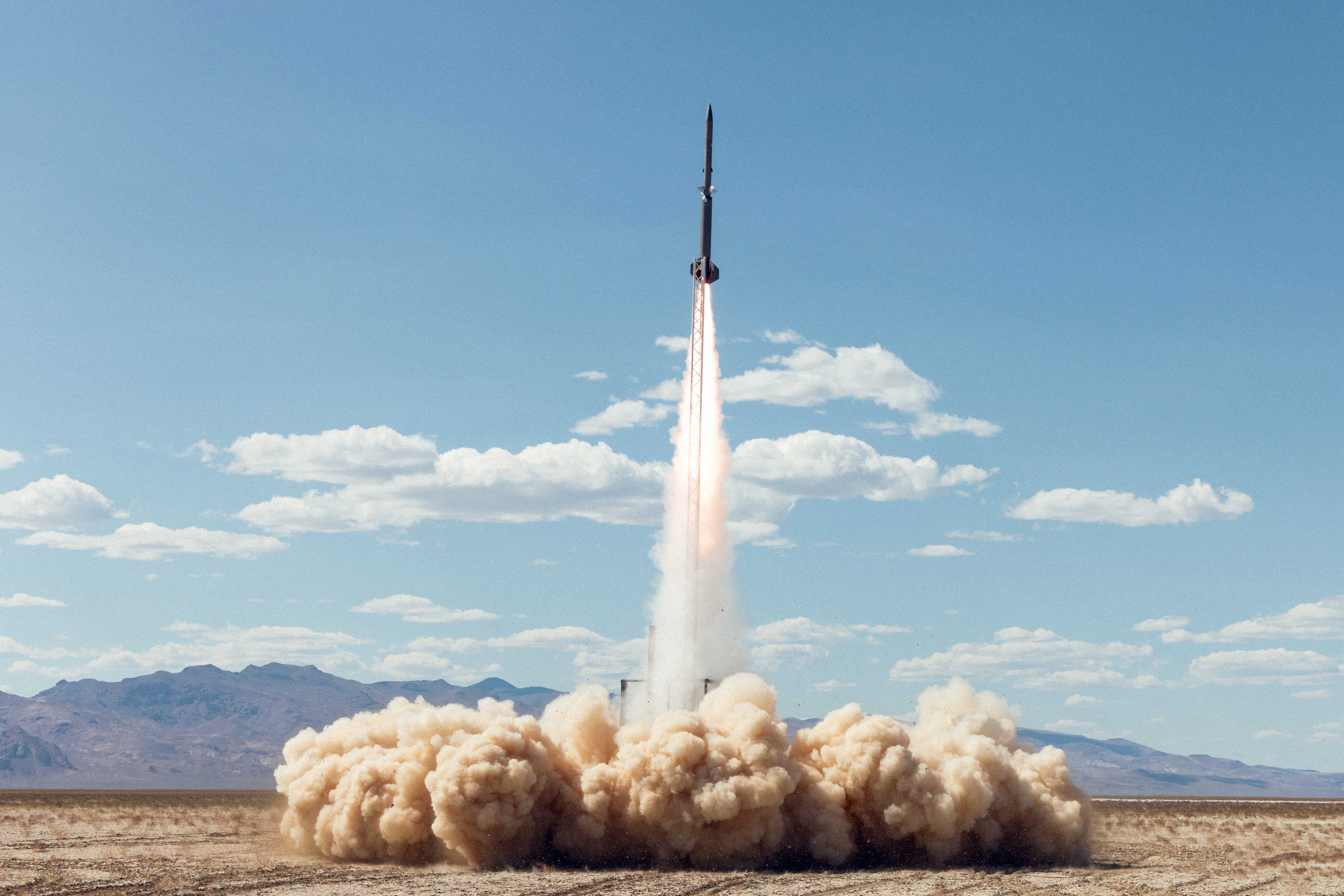
The Army’s Blackbeard GL effort involves launcher pods and HIMARS fire-control integration. Castelion’s October ground-launch photograph offered a public glimpse of that work. Separately, Saronic and Castelion are targeting a maritime launch demonstration in 2027. A photograph, an integration program and a planned demonstration occupy different places on the road to service.
In September, Castelion announced a Navy production order worth up to $200 million. Its market includes established missile suppliers such as Lockheed Martin, RTX and Northrop Grumman, alongside newer entrants competing for strike budgets. Blackbeard’s proposition is affordable quantity; different ranges, missions and integration demands keep the alternatives from being interchangeable.
The useful thing to steal
For builders elsewhere, the transferable idea is straightforward: specify repeatability and cost early, while design choices remain cheap to change. That requires customers who value those tradeoffs and enough capital to test them. Defense adds qualification, platform approval and government procurement gates. A faster learning cycle cannot simply wish those away.
The arrangement also depends on a buyer prepared to follow through. A factory built ahead of demand carries costs while orders wait. The May production framework makes testing and validation conditions for future procurement; it should be read with those conditions attached. For another company copying the model, that is the hard question: does the customer want enough repeat purchases to justify owning the machinery? A promising demonstration alone cannot answer it.
Castelion has moved from borrowed workspaces to production orders and a manufacturing campus under development. Its next proof will arrive through accepted weapons and repeatable output. The missile’s speed is part of the proposition. The factory determines how often the customer can buy it.