On a balcony overlooking Tokyo Bay, the inconvenience was familiar: getting home meant a very long flight. Sassie and Andrew Duggleby were discussing a trip for her grandmother’s birthday. Andrew, a rocket scientist, suggested that a different engine might shrink the journey. Most couples would have returned to packing. The Dugglebys eventually founded Venus Aerospace.
- Venus builds propulsion hardware for defense, space and future high-speed flight.
- A high-thrust rotating detonation rocket engine flew in May 2025.
- A $91 million Series B in July 2026 funds the next step toward customer systems.
- Stargazer M4 remains a proposed passenger aircraft.
That origin explains the ambition. It does less to explain the company you encounter today. The Houston startup’s website now leads with rocket propulsion. Near-term work concerns defense systems, space missions and engine integration. The plane that once supplied the picture has yielded the foreground to the machine that might power it.
01 / The useful part escaped the picture
Venus began in 2020 with founders who knew launch operations. Sassie had worked in launch systems and mission management at Virgin Orbit; Andrew had led launch operations there. She brought an engineering degree and an MBA. He brought propulsion research and experience translating hardware into launch infrastructure. Their division of labor was unusually well suited to a business where physics and schedules regularly quarrel.
The company’s early public ambition was Stargazer, a Mach 9 passenger concept. By its May 2025 announcement, Venus described Stargazer M4 as a proposed reusable Mach 4 aircraft. Those numbers belong to different stages of the plan. Neither represents a scheduled passenger service. You cannot buy a ticket for the grandmother’s birthday trip.
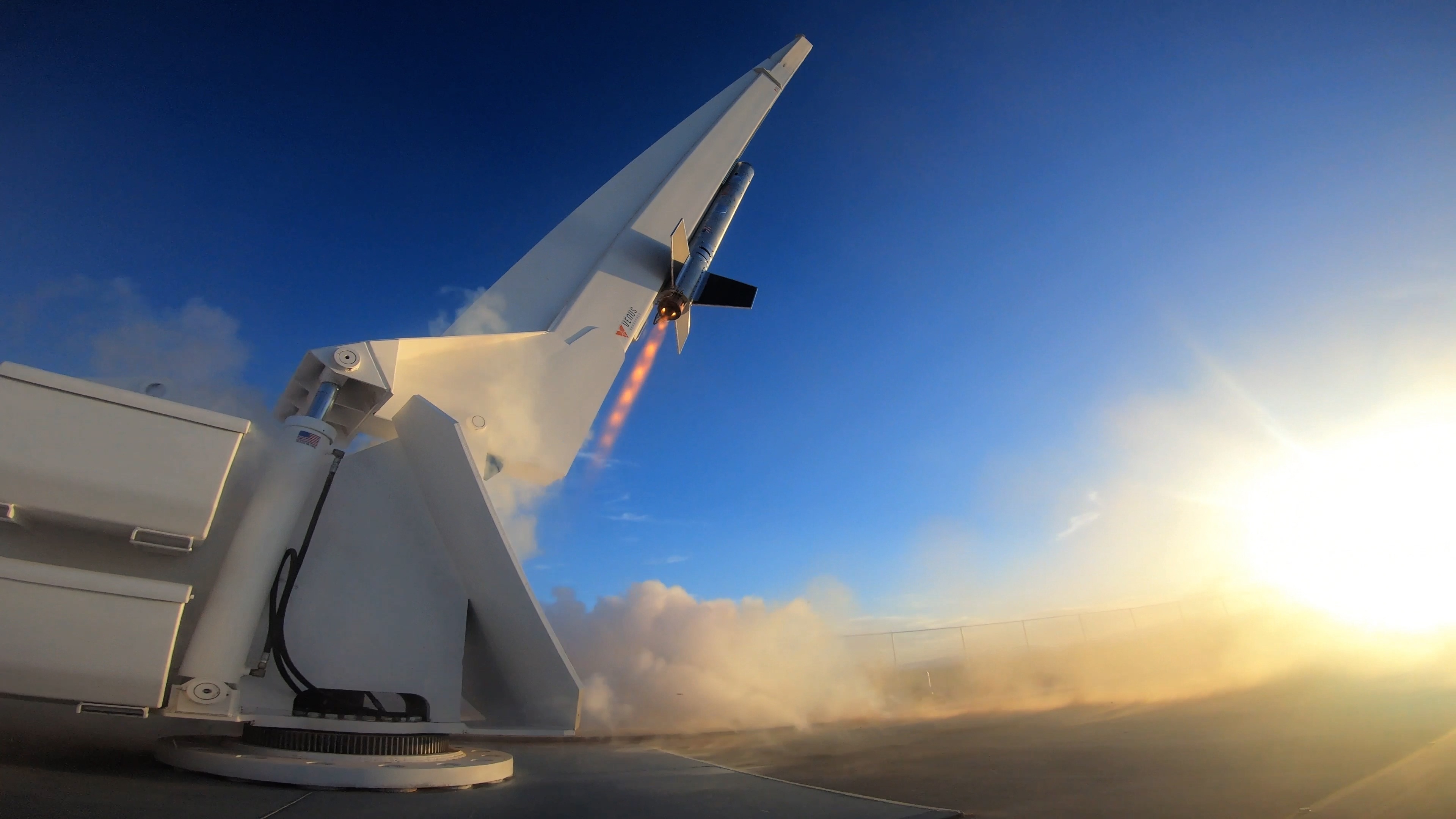
After the May 2025 engine flight, prospective buyers asked Venus to sell the engine itself, shifting its commercial focus toward defense and space.
02 / A ring with a rather loud job
A conventional rocket engine burns propellant. A rotating detonation rocket engine, or RDRE, organizes combustion around a supersonic detonation wave circulating through a ring-shaped chamber. The attraction is pressure gain: a route to getting more useful propulsion from the propellant. NASA has its own RDRE research, so Venus’s claim to distinction concerns its particular hardware and flight demonstration.
Venus reports an efficiency advantage of 15 percent against conventional rocket-engine architecture. Treat that as a company performance claim, rather than a universal promise for every vehicle. An engine improvement becomes valuable when an integrator can turn it into range, payload or another useful mission margin.
Conceptual diagram. Not an engine cross-section or a measured performance chart.
The neighboring product is the Venus Detonation Ramjet, or VDR, an integrated rocket-and-air-breathing system. Its development pairs Venus’s rocket technology with ramjet expertise, including a collaboration with Velontra. Hermeus takes a different approach with Chimera, combining a turbine and ramjet. The choice matters: each architecture must solve how a vehicle accelerates and changes operating modes.
03 / First, fly the smaller question
On February 24, 2024, Venus flew an eight-foot drone released from an aircraft at 12,000 feet. It reached Mach 0.9 and covered ten miles. The propulsion was a hydrogen peroxide monopropellant engine. Despite the company announcement’s “supersonic” headline, this flight stayed below the speed of sound, deliberately, to comply with the test limits.
It answered practical questions about controls, stability, telemetry and air launch. It did not establish that a full RDRE had flown. That distinction gives the development sequence its meaning: prove the vehicle’s supporting systems, then ask the next question with different hardware.
“This is how you do hard things: one bite at a time.”
Sassie Duggleby · March 2024
In May 2025, Venus announced its high-thrust RDRE flight at Spaceport America in New Mexico. The company described a successful first attempt after a windy night. NASA-supported nozzle research had also given it a way to improve the component that shapes and directs the engine’s exhaust.
04 / The next cheque buys harder questions
The financial milestones are substantial. Venus announced a $3 million seed round in 2021 and a $20 million Series A led by Prime Movers Lab in 2022. Airbus Ventures joined its investors in 2023; Lockheed Martin Ventures invested in October 2025.
Led by Mercury Fund. Development and production are the announced priorities.
Venus says it reached the high-thrust flight milestone with $80 million in capital. That figure describes capital supporting the effort, rather than the price of one launch. The new round finances the next stretch: making propulsion systems customers can integrate and manufacturing them reliably.
Lockheed Martin’s July 2026 joint development agreement concerns evaluating and maturing RDRE technology for long-range precision fires. CycloKinetics selected Venus for an Air Force-backed propellant test program. These are concrete development relationships. They place Venus in the supplier market, where the buyer wants an engine that fits a mission.
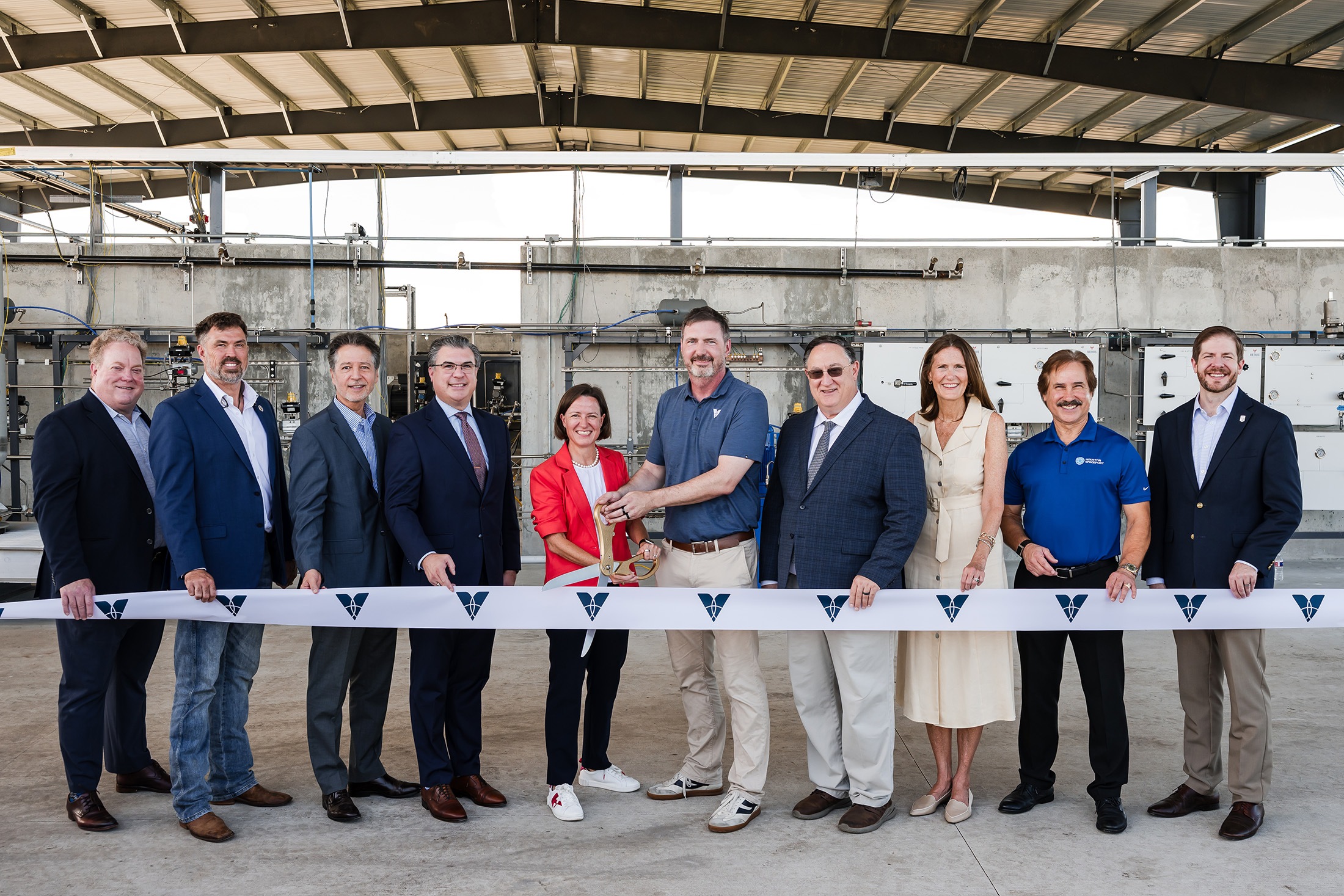
September brought a new Houston Spaceport test stand, supported by the Texas Space Commission. Higher-thrust, longer-duration testing moves conditions closer to customer missions. The opening photograph lacks the romance of a passenger-plane rendering. It depicts the infrastructure needed to make the rendering less speculative.
05 / Keep the invention; revise the itinerary
One early failure was communicative. Sassie told investor The Helm that an investor found their homemade PowerPoint deck confusing. They hired a designer. The lesson travels beyond aerospace: technical merit still needs an intelligible explanation, especially when asking someone to finance years of uncertainty.
The founders also advocated going home for dinner. Andrew described family time as compatible with preserving creativity; their dog walks doubled as informal board meetings. A rocket company whose founders talk about schedules and children has identified a constraint its own technology cannot abolish.
The copyable sequence is to isolate a testable question, demonstrate the component and listen when buyers request it. That approach needs customers capable of integrating unfinished technology. An efficient engine alone cannot settle aircraft cooling, safety, certification or operating economics. Venus’s shorter commercial itinerary gives the engine useful work while the longer journey remains a proposal.
Follow the hardware
Explore Venus Aerospace, its RDRE and VDR, or the company newsroom.