A stack of press clippings is a satisfying thing to bring to a meeting. It has weight, even when it lives in a browser. The awkward moment comes when someone asks what all that attention accomplished. CARMA has made a business of helping communications teams answer the follow-up: what should we do now?
The Dubai-based company tracks news and social discussion, evaluates campaigns and studies reputation. Its working territory stretches from the first alert about a breaking story to the report a communications director takes upstairs. Software collects and organises the material; analysts and researchers help decide what it means. The distinction becomes consequential when the report is supposed to influence next year’s budget.
CARMA’s current pitch puts managed expertise at the centre of that process. The company says it serves 3,500 organisations in 50 countries. For those buyers, the attraction is a way to make a sprawling public conversation answer a specific business question.
01 / The reporting problemWhen the spreadsheet became the job
Tourism Ireland offers a concrete example. Its publicity team was gathering coverage across 20 markets and 14 languages, manually uploading material and reporting volumes and advertising value equivalents, or AVEs. Those figures were frustrating the organisation because they did not capture the strategic significance of its work.
CARMA ran workshops, developed a tailored measurement framework and scoring method, and built market and campaign dashboards. The case study reports that one employee’s time spent on measurement fell from 75 percent to 25 percent. That is an individual account, rather than a measured average for the whole organisation. The project also earned two AMEC awards in 2022.
Less time measuring.
More time doing.
The useful lesson is procedural. Decide what the work is meant to achieve before designing the report. Otherwise, the easiest number to collect can become the definition of success. Changing that habit requires agreement from the people receiving the report as well as the people building it.
02 / How the business took shapeAn old name, a newer assembly
CARMA dates its heritage to 1984, but the present group has a more layered history. In July 2015, an announcement described News Group International bringing Media Watch, Salience, Media Intelligence and parts of Social Eyez under the CARMA brand. Its company profile identifies 2016 as the relaunch. Those dates describe different chapters.
Mazen Nahawi is identified as founder and group chief executive of the contemporary business. Investor Wamda dates its partnership to 2015 and describes the group’s formation through growth and the absorption of owned and acquired entities. The history helps explain the combination on sale today: technology, monitoring operations and consulting expertise gathered into one business.
The company’s stated values are dependability, adaptability and commitment. More revealing is its account of how work gets done: multilingual client teams, customised evaluation frameworks and researchers who interpret machine-processed material. Its consultants have contributed to AMEC resources including the Barcelona Principles and the Integrated Evaluation Framework. Methodology is part of the commercial proposition.
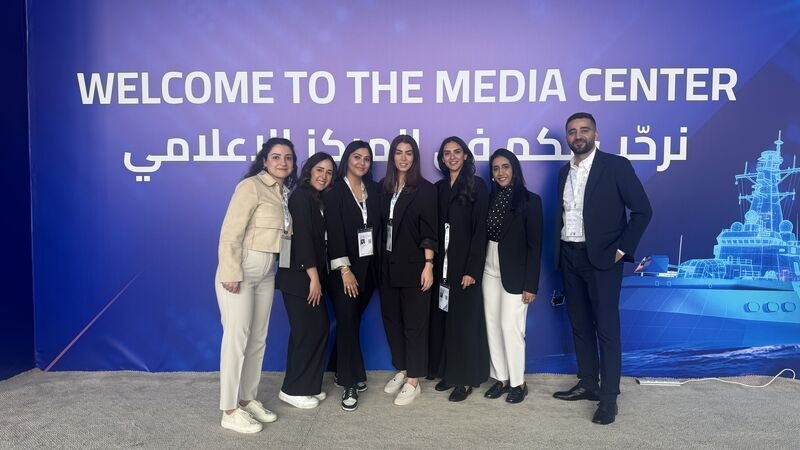
That professional network extends beyond client assignments. PRCA and ICCO announced a global monitoring and analysis partnership with CARMA in 2021. In March 2025, PRCA APAC described a jointly hosted Singapore gathering where communications leaders discussed AI, sustainability reporting and strategic communication. It is an education role that also keeps CARMA close to its buyers’ changing concerns.
03 / What arrives on your deskWho does the reading?
The everyday service begins with finding relevant coverage. CARMA monitors print, broadcast, online news and social discussion, then delivers searchable results, alerts, newsletters and executive briefings. Broadcast monitoring includes transcription and translation. A team can follow its own organisation, a competitor or an industry issue, then filter the material into something a colleague can use.
The software offering makes the division of labour explicit. CARMA Insight’s Standard licence provides automated coverage capture and analytics across the core media types. Professional adds human curation, premium and paywalled content, summaries and curated alerts. Buyers are choosing how much interpretation and preparation they want the supplier to undertake.
Distribution matters too. CARMA Social lets users export dashboards, schedule reports and create public links for colleagues without platform access. Its help centre says those links expire after 30 days. It is a small detail with a familiar office consequence: the report must reach the person who needs it, in a form they can actually open.
The business model combines software licensing with scoped monitoring, analysis and research services. There is an invoice cost and an internal workload to consider. A useful buyer’s brief would specify markets, essential publications, reporting frequency and analyst involvement, then request a quote against that scope. A fee comparison becomes more meaningful when the deliverables match.
CARMA’s own product tiers suggest the trade-off. A team equipped to interpret coverage can buy a different level of support from one that needs curated briefings. The cost question is therefore also a staffing question: who will check relevance, explain a spike and prepare the answer for management? Those tasks still need an owner.
04 / Beyond the mention countHeadlines cannot tell you everything
CARMA’s PR measurement services are built around performance against objectives. Reports can range from predefined quantitative analysis to tailored international evaluations. The intended use is to inform communications plans, spending and strategy. A chart should earn its place by helping somebody assess an objective; a rising line alone does not explain whether the underlying activity was useful.
Reputation by CARMA broadens the evidence. Aimed at corporate affairs and communications directors at large consumer-facing brands, it combines media coverage, social conversation and audience opinion. It evaluates six dimensions: products and services, culture, sustainability, conduct, performance and vision. That structure lets users examine what is driving a result rather than treating reputation as one undifferentiated feeling.
The research business supplies another kind of evidence through focus groups, surveys, segmentation and desk research. CARMA describes a workshop-led consulting approach that involves stakeholders in developing measurement frameworks. The logic is straightforward: media analysis reveals what was published, while audience research can investigate what people understood or believed. Neither question should quietly substitute for the other.
Its customer work spans several versions of that problem. Sotheby’s describes using CARMA to capture media presence in the UAE and Saudi Arabia, with daily newsletters and a portal. Boston Consulting Group’s testimonial emphasises monitoring services and responsiveness. At Nissan, CARMA’s evaluation work won the Measurement and Evaluation Award at the 2024 PRCA APAC Awards. The shared requirement is usable evidence; the assignment varies.
05 / The 2026 additionThe new analyst answers to Noor
On May 20, 2026, CARMA introduced Noor, a conversational AI analyst for clients. Users can ask for a brand breakdown over a chosen period, explore themes and sentiment, request an executive analysis, and export work to PowerPoint, PDF, Excel or CSV. They can also add files to the conversation.
CARMA says its analysts defined Noor’s methodology and answer structure, with an orchestration system selecting among established and proprietary tools. The product is positioned as an extension of the existing team. That design makes the evaluation question fairly concrete: can a user follow the analysis back to the material and get a useful answer to a second question?
The competitive context keeps the claim in perspective. Meltwater also offers a conversational assistant, Mira, within media intelligence workflows, alongside reporting and global monitoring. Onclusive provides overlapping measurement services and reported 12 AMEC awards in 2025. AI, dashboards and professional expertise are features buyers can find across this market.
CARMA’s case therefore rests on the quality of the whole engagement: relevant content, consistent analysis and people who understand the assignment. A sensible demonstration would use the buyer’s difficult coverage examples and reporting questions. A polished sample dashboard tells less about fit than watching a supplier work through an ambiguous story.
06 / The next measurement argumentMake the number earn its place
CARMA’s own recent commentary exposes a complication in the AI opportunity. In an August 2026 discussion, chief insights officer Khali Sakkas described the difficulty of measuring how brands appear in language-model answers. Similar prompts can produce different responses, and the questions real users ask are not publicly visible.
“The technical part is the easiest part of this.”
Khali Sakkas
CARMA Chief Insights Officer / August 2026
Her point concerns research design: an AI visibility score needs an explanation of the prompts, model and method behind it. CARMA presents those findings as directional evidence. The useful habit for a buyer is to ask how the number was made before deciding how much weight to give it.
There are practical boundaries elsewhere, too. CARMA’s social-account guidance requires appropriate business or creator accounts, linked profiles and access permissions for particular connections. A monitoring service depends on the material it can access. And a coverage report, however carefully prepared, cannot by itself establish that publicity caused a sale or changed an audience’s opinion.
That leaves communications leaders with a productive demand to make of CARMA and its alternatives. Bring the objective, agree the evidence and decide what would justify changing course. The next reporting meeting should have room for a recommendation, the reasoning behind it and a question somebody can answer. The clippings can come too.
Keep reading. Try the tools.
CARMA website ↗ · Meet Noor ↗ · The AI visibility discussion ↗
Watch the CARMA Social product tutorial ↗ · CARMA on YouTube ↗ · On-demand webinars ↗