In 1888, Frank Burrelle overheard two Wall Street men complaining. The news mattered to their work, but there was too much of it to read. Burrelle offered to do the reading for them. Soon he, his wife Nellie, and friends were sitting around a kitchen table with newspapers and scissors. They were not selling information. The newspapers already contained that. They were selling the removal of everything the customer did not need.
That distinction built a company that outlived the typewriter, the fax machine, dial-up internet, and several confident announcements about the death of print. Burrelle’s Press Clipping Bureau eventually merged with another 1888 creation, Luce Press Clippings, and became BurrellesLuce, then Burrelles. Today, a LinkedIn page called Industry Insight AI carries the same founding year, Florham Park address, media-monitoring specialties, followers, and employee connections. Its slogan promises to unlock AI across industries. Its website offers two words of product detail: “Launching Soon.”
The temptation is to write the usual AI-reinvention story. The evidence supports a stranger and more useful one. Industry Insight AI’s inherited biography shows a business repeatedly changing the container while protecting the job: find the mention, remove the noise, show the communications director what happened. It also shows the point at which adaptation stops being enough.
The product was a smaller pile
A clipping bureau sounds quaint until you consider the modern equivalent: an executive opens a feed, types a company name, and gets a thousand results. The problem is not access. It is deciding which result deserves three minutes. Burrelles solved that problem with people. Readers located mentions, clipped them, marked the relevant words, and delivered the original page so clients could see size, placement, and context.
The customers were PR agencies, companies, government offices, universities, and nonprofits. They needed to know whether a campaign earned coverage, whether a competitor was gaining attention, and whether a bad story was spreading. Burrelles sold the proof. Its late advantage was almost comically physical: while rivals counted URLs, it could show the actual newspaper page.
“We are not just the ‘clipping people;’ we’re the ‘media monitoring company.’”Cathy Del Colle, then president of Burrelles
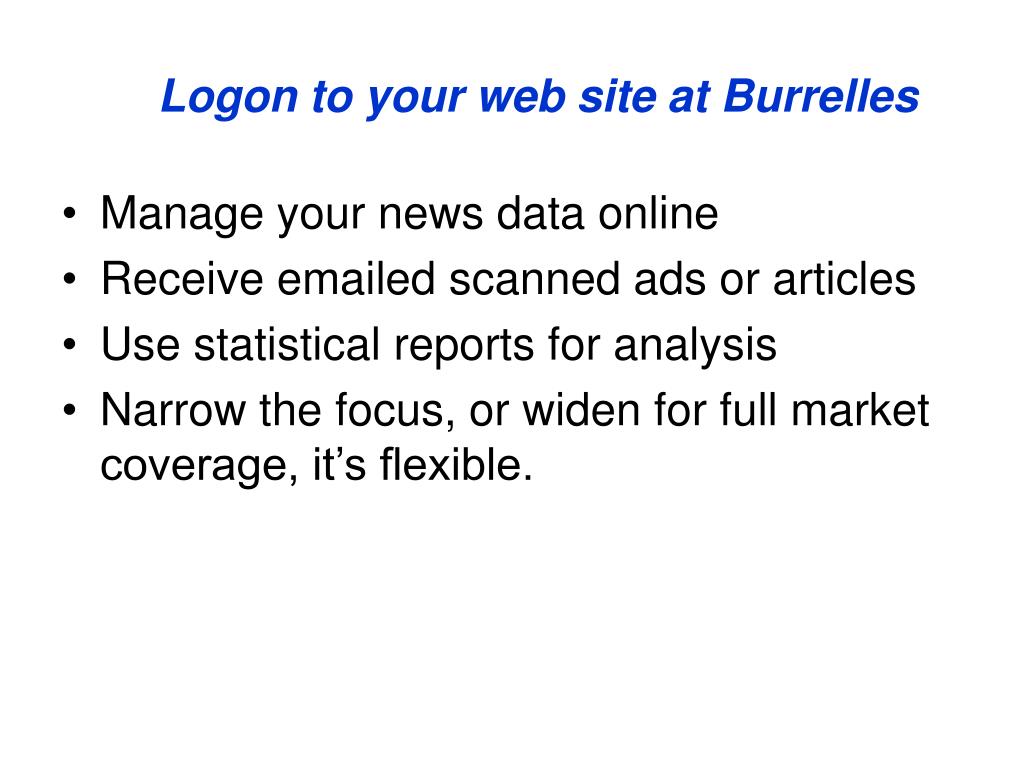
The company followed each new bottleneck. It added television, radio, and wire monitoring in 1970. When clients wanted news before the business day began, Express faxed headlines and summaries in 1984. When the internet became the newsroom, NewsAlert arrived in 1994. In 2010, WorkFlow - later MYNEWSDASH - put media contacts, monitoring, analytics, reporting, and campaign planning into one portal.
One job, five delivery systems
Scissors
Broadcast
Fax
Online
Dashboard
What it cost - and what customers actually bought
An older Burrelles sales presentation advertised access to more than 75,000 publications for $327 a month, with a three-month minimum. That is a historical price, not a quote for any current service. Later MYNEWSDASH pricing was private and customized. Review sites listed no public plan or free trial, a familiar enterprise-software ritual: request a demo, describe the channels and keywords, then receive a contract shaped around volume.
Per month in an earlier print-monitoring offer, with a three-month minimum. Later software and analytics were sold by quote.
What justified the bill was coverage that software often missed. A local paper behind no useful API, a trade journal on someone’s desk, a headline whose significance depended on whether it sat above the fold - these were labor problems disguised as search problems. Human review reduced false positives. Licensed copies reduced copyright risk. Custom reports turned a folder of mentions into something an executive might read.
The last specialist standing
In 2012, Cision sold its American print-monitoring operation to BurrellesLuce. Cision’s explanation was blunt: fewer customers wanted physical news clips as attention shifted online. Burrelles moved the other way. By absorbing those accounts, it became the rare national provider still willing to retrieve and scan print.
This was a sensible consolidation bet. In a contracting category, the last specialist can inherit the survivors and charge for scarcity. It was also a wager that the tail would remain thick enough to support the people, permissions, scanning, sorting, and delivery behind it. The bet lasted another dozen years.
What failed first was demand, not the dashboard. Del Colle said print-monitoring sales had fallen for 15 years. A company representative cited newspaper decline as a factor in the 2024 decision. Reviewers still praised MYNEWSDASH for pulling print, online, and broadcast mentions into one place; they also described its reports as clunky and hard to customize. The beloved differentiator was attached to a shrinking medium, while the software experience was no longer clearly ahead.
The print moat did not suddenly collapse. It became narrower each year until the company protecting it had nowhere left to stand.
The partner was already inside the product
The transition began before the farewell. Agility PR Solutions had supplied white-label monitoring technology to Burrelles from at least 2018. By 2021, customers buying monitoring, a media database, and distribution from Burrelles were effectively working on Agility’s platform. The logo was visible. The plumbing was not a secret.
That arrangement let Burrelles offer a modern suite without funding an entire competing stack. It also changed the meaning of the company. The relationship, service, and print operation remained Burrelles; more of the software belonged elsewhere. When Burrelles exited monitoring on June 30, 2024, clients were directed to Agility. Digital continuity was relatively simple because the technical migration had, in an important sense, already happened. The scanned print article did not cross over.
This is what changed management’s mind: not an AI revelation, but a long demand curve and an available landing place for customers. Burrelles had avoided the private-equity consolidation that shaped much of PR software. It chose a partner instead. When the core economics stopped working, that partner became the exit ramp.
A name can point forward. A product has to arrive.
Industry Insight AI now occupies a curious public position. LinkedIn presents a private company of 201 to 500 employees, founded in 1888, with Burrelles’ location and service vocabulary. The standalone site contains an email box and a launch promise. The supplied contact remains a burrelles.com address. That is enough to establish continuity of public identity, but not enough to describe a new offering, customer, price, funding round, or AI system.
The gap matters because Burrelles’ old pitch was specific. It found your clips. It showed the page. It summarized the morning. “AI across industries” is broader and therefore harder to buy. A credible next act needs the discipline of the original kitchen table: name the overwhelmed person, name the pile in front of them, and remove most of it.
The part worth copying
Burrelles’ useful playbook was never “keep adding channels.” It was to notice the next form of impatience. Customers did not merely want clips; they wanted clips sooner. Then they wanted fewer clips. Then one report. Then proof of value. Each complaint contained a product brief.
- Sell subtraction. Information products earn their keep by removing decisions, not displaying more data.
- Keep the native context. A mention’s placement, source, and surrounding page can matter more than a sentiment score.
- Listen for workflow complaints. “I have no time to read this” created analysis; “I need it this morning” created fax delivery.
- Audit the white label. Outsourcing infrastructure works when relationship and service remain defensible; it weakens when the partner can replace both.
- Measure the medium, not the nostalgia. Being the last provider in a shrinking category only works while the remaining margin pays for specialized labor.
Those lessons travel well when the source material is messy, expensive to license, or improved by judgment - regulated research, local intelligence, specialist databases. They travel poorly when public data is abundant, customers accept automated summaries, and a platform partner already owns the workflow. Under those conditions, tradition becomes a line in the About box rather than a reason to renew.
The company that began by overhearing two busy men now has to make itself equally easy to overhear. Who is Industry Insight AI for? What goes into the box? What comes out? What does it cost? The old company answered those questions with scissors. The new one has a strong name, a remarkable inheritance, and a blank page on which to answer them again.