At five in the morning, the internet has already had a full day. An earnings rumor has crossed three time zones. A product complaint has become a screenshot, then a repost, then a rather different story. Somewhere, a communications executive is about to open an inbox full of alerts that are technically accurate and practically useless. DigiMent Research has built its business around that small, expensive moment.
The company does not begin with a radical technology. It begins with an ordinary annoyance: software is excellent at finding words and less dependable at deciding what those words mean. A company name in an article might be praise, criticism, a passing reference or the wrong company entirely. Sentiment can turn on sarcasm. A syndicated press release can look like dozens of independent stories. The feed gets bigger. Understanding does not.
The product is not the pile of mentions. The product is the judgment that makes the pile smaller.
One machine finds it. One person decides.
Founded in 2017 by Biju D. Vincent, DigiMent operates from Wilmington, Delaware, and Nagercoil, Tamil Nadu. Its premise is a hybrid one. Crawlers, algorithms and machine learning sweep online news, social networks, blogs, print, television, radio, journals, white papers and patents. Analysts then search, check, classify, summarize and score what comes back. The system performs reach; the people perform restraint.
This sounds modest until you consider what fails first in automated monitoring. It is rarely collection. It is prioritization. False alerts train people to ignore alerts. Weak keyword rules miss stories behind paywalls or bury them under irrelevant results. Machine sentiment mistakes tone. By the time a human opens the dashboard, the burden of interpretation has merely changed desks.
The morning email is the interface
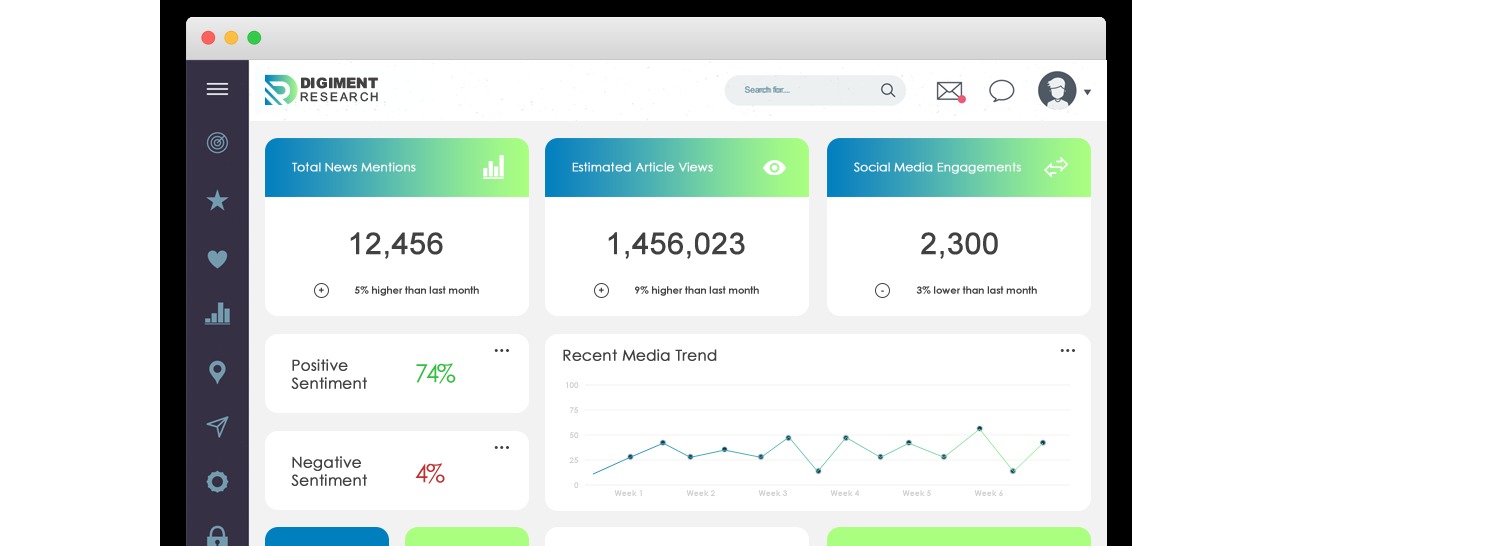
DigiMent's clearest product may be its least glamorous: a daily news digest. The company says it can deliver one as early as 5 a.m. Eastern, arranged in a client's own categories and branding. Each item can include a headline, date, text preview, source, author, original link, an analyst-written synopsis and a sentiment score. For multilingual tracking, machine translation is reviewed by an analyst. This is not a fire hose in miniature. It is an edited publication for an audience of one company.
The numbers are company-reported, but they reveal the shape of the work. This is a service business with software inside it, not simply a software subscription with support attached. Its buyers are PR executives, corporate-communications teams, agencies and senior leaders who value a finished artifact more than another login. DentaQuest appears in a named testimonial. Other logos displayed by DigiMent include Media One, PeakMetrics, Soteryx, X12 Capital and AG.

The founder and CEO built DigiMent around a conviction formed over years in digital and social monitoring: coverage becomes useful only after someone understands its context.
A catalog built around moments of anxiety
The rest of the portfolio follows the same logic. Industry briefs track not only brands but white papers, surveys, rankings and key opinion leaders. Social Media Highlights keeps influential posts and drops the low-impact chatter. Human-Curated News Alerts are designed to interrupt a client only after an analyst believes the threshold has been crossed. Media-analysis reports measure sentiment, themes, messages, media drivers and competitive share of voice.
For a launch, event or crisis, the workflow becomes almost theatrical. The client tells DigiMent the moment has begun. Analysts monitor the coverage and issue digests or alerts. When the moment ends, they analyze what happened and deliver the patterns back. A launch, summit, IPO, recall or data breach becomes a bounded body of evidence rather than an endless search result.
The price of attention
DigiMent does not publish a fixed menu of prices. Engagements are customized, with prospects invited to request a sample, trial or callback. The company says its reports can save as much as 60 percent against an internal team or agency-built reporting. That is a marketing claim, not a universal outcome, but it identifies the cost center DigiMent is attacking: trained hours spent collecting, cleaning and formatting coverage before analysis even begins.
There is another route to revenue. DigiMent offers a white-label reseller program for agencies that want to sell monitoring without hiring an analyst team or building a platform. DigiMent supplies the technology, labor and technical support; the agency keeps its branding and client relationship. The company deliberately stays out of sight. For a business devoted to visibility, its most interesting partnership product is invisibility.
“After years of automated platform services, I firmly held that human intervention is required for effective media monitoring.”Maya Linson · DentaQuest testimonial
The useful part to steal
A communications team does not need to hire DigiMent to borrow its core operating idea. Put human judgment at the narrowest, highest-value point in the funnel. Let machines gather broadly. Define an explicit alert threshold. Require a person to review negative or ambiguous mentions before they reach leadership. Separate the morning digest from the emergency alert. Clean duplicates and syndications before calculating share of voice. Write the summary for the decision-maker, not for the database.
The approach works best when coverage is abundant, the cost of a missed story is meaningful, and context changes the correct response. It is less compelling for a tiny brand with a handful of obvious mentions, a team that only wants raw exports, or a buyer who needs a cheap, instant, self-serve tool with no custom analysis. Human review also introduces a constraint that software companies prefer not to discuss: expert attention does not scale at zero marginal cost.
Automate the abundant task. Keep a person on the consequential one. In DigiMent's case, gathering is abundant; deciding what warrants action is consequential.
That constraint is also DigiMent's position in a market crowded with Meltwater, Cision, Muck Rack, Brandwatch, Talkwalker, Onclusive and a long tail of alerting tools. It is not trying to win by presenting the largest possible stream. It is selling customization, analyst accountability and an edited result. The company calls its approach AI plus human expertise. The more revealing description is simpler: a newsroom built for corporate attention.
The media-monitoring industry was built on the fear of missing something. DigiMent's wager is that the next problem is the opposite - seeing everything and understanding too little. At five in the morning, that distinction is the difference between another inbox and a briefing.