In the old picture of public health, the expert stands at a podium. A fact is polished, approved and released. The public, sensibly grateful, changes its behavior. The internet ruined that picture. A rumor can outrun a press release before lunch, while a technically perfect message dies three levels deep in a government website. The Public Good Projects exists in that uncomfortable gap between what experts know and what people hear.
PGP is a New York-based nonprofit with roughly 11 to 50 employees publicly listed and a strange, useful combination of jobs. It monitors public conversations, designs behavior-change campaigns, trains clinicians, publishes health news, manages coalitions and evaluates the results. Its customers and collaborators include health systems, foundations, government agencies, medical associations, community groups and global institutions. Imagine a research lab sharing a hallway with a newsroom, an ad agency and a public-health department. Then remove the hallway: the organization is fully remote.
The problem was never only the facts
CEO Joe Smyser arrived at this idea by taking an unusual route. He worked across local, state and national health agencies, earned graduate degrees in public health and completed postdoctoral work at the CDC. At the same time, he consulted in media and technology, including Google and Tumblr, and even led marketing and partnerships for OutKast's reunion tour. The lesson from those parallel careers was blunt: health communication was strong in theory and weak in practice.
“I found that health communication programs were strong in theory but weak in practice.”Joe Smyser, CEO
That was the first thing to fail: the broadcast assumption. More information did not automatically produce more trust, and an authoritative messenger was not always a persuasive one. What changed Smyser's mind was seeing media and technology companies observe audiences, segment them, test creative work and adjust quickly. PGP, which was formed in 2013, became a place to apply those techniques without dropping the evaluation standards of public health.
A rumor gets an outbreak protocol
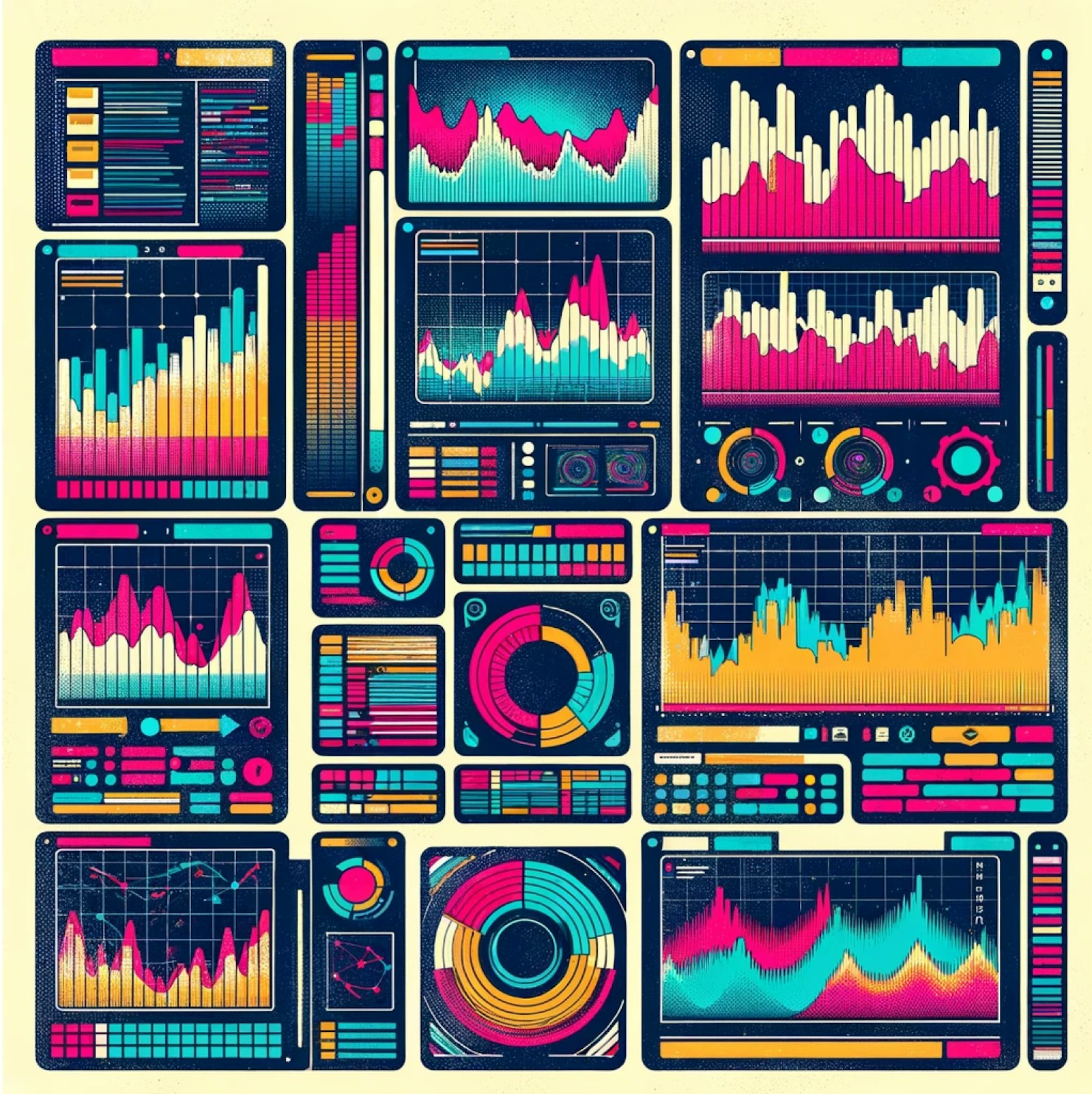
PGP calls the discipline infodemiology: studying how information spreads in order to improve health. Since 2017, its teams have monitored public data around mental health, opioids, tobacco, domestic violence, vaccines and COVID-19. In 2019, Project VCTR began collecting and classifying vaccine conversations in English and Spanish. The work expanded across every U.S. state and more than 20 countries, and the project was reported as serving about 800 organizations by 2023.
at scale
risk
voices
change
The distinction is response, not surveillance for its own sake. Analysts identify a fast-moving narrative, estimate its reach and risk, and translate the finding into something a partner can use: a weekly alert, messaging guidance, a training module, a newsroom story or a campaign brief. Project VCTR later joined Infodemiology.com, broadening the dashboard beyond vaccines to areas including opioids, mental health and reproductive health. A separate global program, the Vaccine Demand Observatory, was built with UNICEF and the Yale Institute for Global Health.
The output can look deliberately ordinary. Public Good News publishes accessible reporting in English and Spanish. Some stories travel by WhatsApp or SMS. The Trusted Messenger Program trains health professionals to handle difficult conversations and offers a train-the-trainer model, so one participant can take the material back through an organization. The point is not to make marketing visible. Smyser has said he wants tools and techniques that feel invisible to audiences.
The Stronger campaign was really a distribution machine
In 2020, PGP launched Stronger, a national vaccine campaign built around a less obvious audience: not only people spreading misinformation, but the much larger group willing to support accurate information. The campaign taught people to block, hide and report false claims, issued alerts when narratives spiked, and gave partner organizations and influencers material they could carry in their own voices.
Those were first-year figures presented by PGP researchers. The campaign had less money than large government-backed efforts, yet produced comparable media measures. Its transferable trick was collective impact: build a clear common task, let many organizations distribute it, and avoid insisting that every useful message wear the central campaign's logo. In another Kaiser Permanente flu effort, 100 micro-influencers reached more than 9 million people in African American and Latino communities.
The money tells you what kind of company this is
PGP is a 501(c)(3), but its latest filing does not resemble a charity waiting beside a donation jar. In fiscal 2025 it reported $9.65 million in revenue and $8.93 million in expenses. About $8.31 million - 86% of revenue - came from program services. Contributions supplied 12.5%. The result is a nonprofit business model built largely around delivering research, communication and program work for institutions.
FY2025 revenue mix
Total revenue: $9.65M. Total expenses: $8.93M. Net assets: $1.70M.
The model also creates an obvious tension: some partners operate in industries with a direct stake in health policy. PGP says industry has historically supplied no more than 10% of program funding, funders cannot edit newsroom work, and its research team controls methods, sampling, analysis and publication. Those guardrails are not decorative. Without visible independence, a trusted-messenger strategy can collapse into sponsored messaging with a friendlier face.
The cost of the whole operation was $8.93 million in FY2025. Individual programs vary. A 2021 Altman Foundation grant put $100,000 over 18 months toward rebutting COVID-19 misinformation in New York City; a 2026 Gates Foundation commitment supplied $1.6 million for 11 months of work supporting efforts to eliminate river blindness and lymphatic filariasis in Africa. The organization moved from $3.9 million in revenue in FY2020 to $9.65 million five years later.
What is worth copying
The useful part of PGP's approach is not a particular dashboard. Software changes. Platforms close their data. Today's loud network becomes tomorrow's empty mall. The durable idea is an operating sequence that gives listening the same status as message production.
A five-step brief for your next campaign
- Define the behavior, not merely the awareness goal.
- Map the live questions and narratives before writing copy.
- Score each narrative by reach, velocity and potential harm.
- Give credible local messengers adaptable material, not a rigid script.
- Decide the evaluation method before the campaign launches.
It works best when public conversation is visible, the desired behavior is specific, local partners have earned trust, and a team can keep adjusting. It works poorly when social data excludes the people most affected, when the intervention cannot solve a material barrier such as cost or access, or when the sponsoring institution mistakes borrowed credibility for genuine trust. A better message cannot open a closed clinic. A dashboard cannot substitute for community relationships.
That caveat explains PGP's move toward coalitions and training. The Common Health Coalition connects health care and public health organizations. The Trusted Messenger Program puts communication skills inside clinical institutions. Its latest research separates conversations about flu, COVID-19 and RSV rather than treating “respiratory vaccines” as one tidy topic. The more the organization listens, the less tidy the audience becomes.
This is PGP's place in the market. Agencies can create campaigns. Software vendors can monitor mentions. Academic centers can publish studies. Newsrooms can explain. PGP tries to close the loop across all four. The work is less glamorous than the fantasy of the perfect national slogan. It is also more honest about how people decide: locally, socially, with practical constraints, through voices they have reasons to trust.