At Trussville Gas and Water in Alabama, approving an invoice once required a small journey. Paper vendor invoices traveled from the operations facility to the main office, across town, every day. The business had accounting software. It also had a person carrying paper between buildings. That trip tells you quite a lot about the territory Cargas occupies.
When Cargas implemented Microsoft Dynamics 365 Business Central and Power BI, the paperwork shuttle disappeared. Approvals moved into the system. The change went live in spring 2021. A useful test of business software, it turns out, is whether somebody can finally leave the car parked.
- Cargas connects accounting, operations, sales, and service software.
- It implements five vendors’ platforms and develops its own energy software.
- Employee ownership, training, and ongoing support are central to the business.
The invoice that needed a car
Trussville’s difficulties went beyond the daily drive. Its old system made staff jump between windows to investigate accounts, sometimes causing crashes. Information was hard to retrieve. Paper piled up. Chief financial officer Tony Riley also learned that the software would eventually lose support.
He had chosen Business Central before choosing Cargas. What helped win him over was a representative who explained the implementation hours clearly. The obstacle for colleagues was more personal: replacing familiar routines. “I was terrified,” recalled Pam Brannum, a longtime employee. Weekly updates and extra time to learn helped the team make the transition.
“I was terrified.”
Pam Brannum, Trussville Gas and Water, on changing systems
Cargas works in that space between a software purchase and a functioning workday. It sells ERP systems for finance and operations, CRM systems for customer relationships, and the services required to configure, connect, and use them. The 2026 company booklet reports serving more than 800 organizations annually.
A company you can buy into
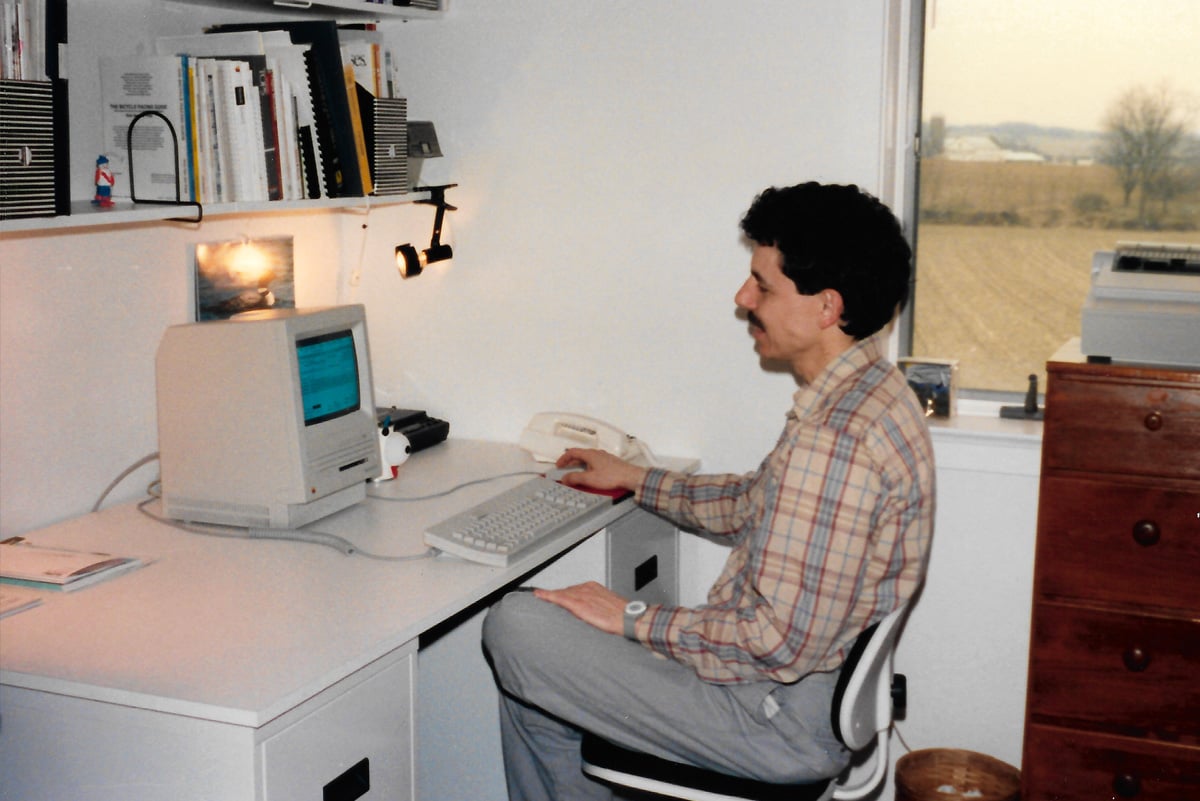
Chip Cargas started the business in a bedroom corner in 1988, with a Macintosh SE and a dot matrix printer. The computer’s nine-inch screen is still displayed in the office. His original assignment was straightforward: help businesses use computers effectively.
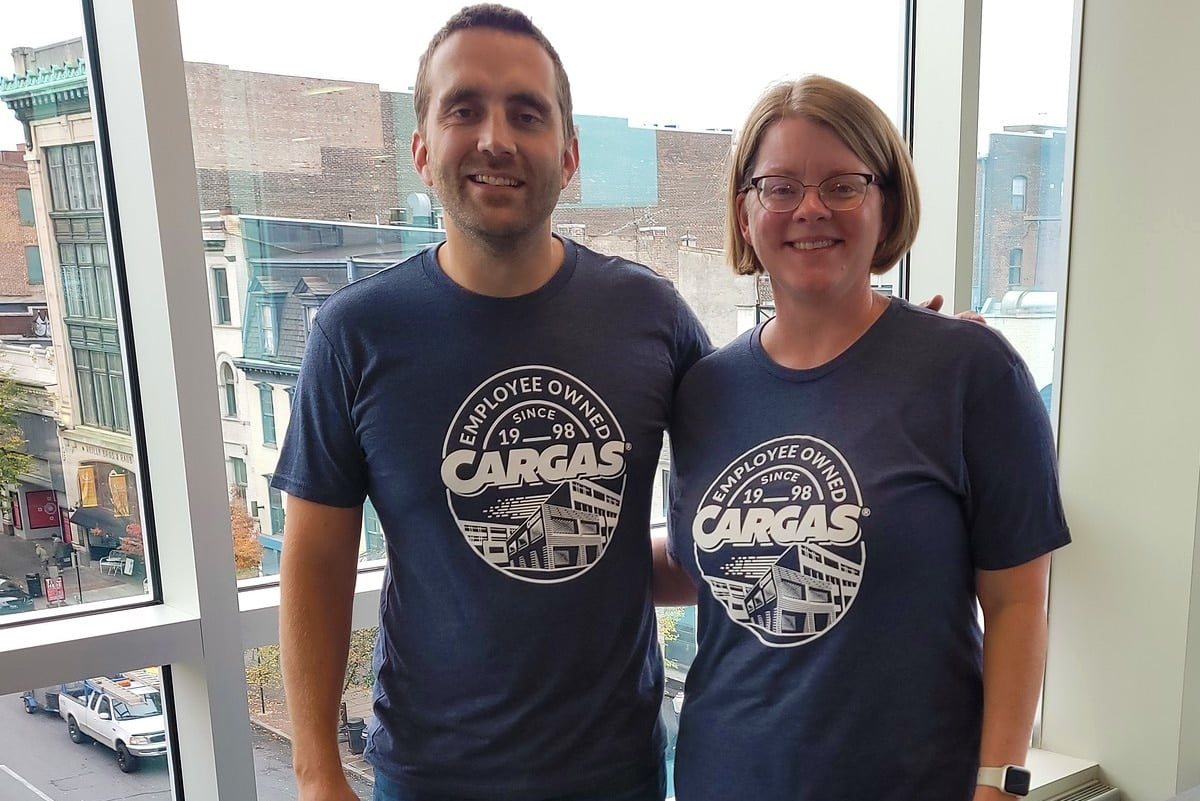
The ownership experiment arrived in 1998, when employees gained the opportunity to buy shares directly. Nearly 90% now hold stock, according to Cargas. That is a personal investment by employees, with a succession purpose: ownership can move to the next generation of colleagues.
The arrangement has other moving parts. Cargas shares financial information with employees, and its profit-sharing program distributes 20% of pretax profits across the team. Its careers page even describes an interview as a conversation with a potential owner. The incentive is explicit; the claim that this improves customer care remains the company’s proposition.
There is a financing choice behind the culture, too. Cargas says it has funded growth primarily by reinvesting profits. For roughly 18 months around 2011, it raised capital from 33 employees and 11 friends and family to expand Cargas Energy. Its stated plan is to remain at least two-thirds employee-owned.
The company’s own growth policy acknowledges the trade-off: expanding too quickly can hurt service while new staff learn the business. It says it will slow growth if teamwork and customer care suffer. That is a useful question for a prospective customer to ask any consultant: who will actually do the work, and how much capacity do they have?
Three ERPs walk into a CRM
At industrial chemical distributor Gantrade, the problem was scattered information. HubSpot handled marketing, while three Microsoft ERP systems served operations across regions. Before a purchase order existed, salespeople worked through email and spreadsheets. Preparing a quote meant hunting for inventory, prices, and previous quotes.
Cargas connected Dynamics 365 CRM with HubSpot, Business Central, Dynamics NAV, and a data warehouse drawing from the three ERPs. Work started in April 2024; the solution went live in late August. Gantrade began with a small group, then expanded adoption in stages.
One shared view of sales activity across systems.
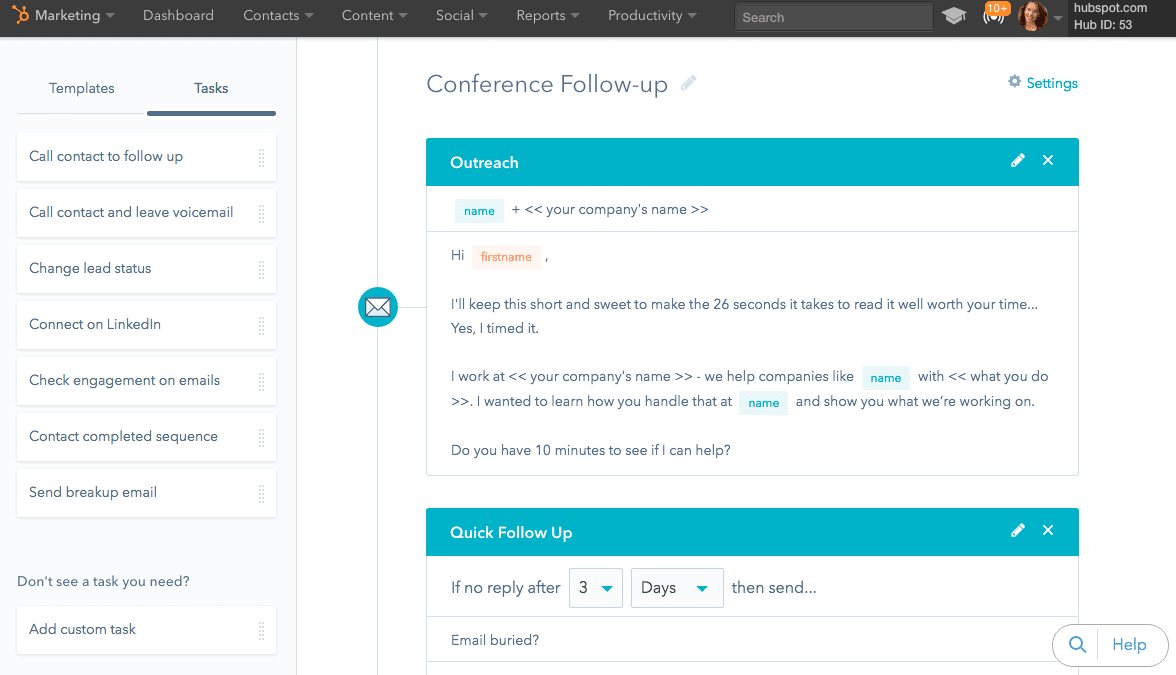
Business manager Melissa Lutz estimates that quoting prices or checking samples takes 50% less time. Treat that as a customer estimate about specific tasks. The transferable lesson is the rollout: connect the information people actually need, standardize terminology, and give a small group time to get comfortable before widening access.
The price after the price
Cargas’s portfolio includes Sage Intacct, Acumatica, Microsoft, Salesforce, and HubSpot. It supplies custom development, integrations, and reporting expertise alongside them. Customers include manufacturers, distributors, nonprofits, healthcare organizations, and professional services firms. The business combines software sales with implementation, training, and continuing support.
The distinction matters when budgeting. Cargas’s 2026 Sage Intacct guide puts typical customer subscriptions at $25,000-$35,000 annually. Implementation with Cargas is estimated at another 1 to 1.5 times the annual subscription. On a $25,000 subscription, that means $25,000-$37,500 to implement.
Guide estimate. Scope, integrations, and data condition affect the quote.
That is a substantial commitment for a company with simple bookkeeping needs. For a business managing disconnected departments or entities, it may address expensive friction. Buyers should price migration, customization, staff time, and support together. A team unwilling to change its routines will struggle to reproduce the customer stories, however capable the software.
Other implementation partners, including Velosio, serve similar ERP needs. In fuel software, ADD Systems is an alternative. Cargas’s combination of several vendor relationships, proprietary industry software, and direct employee ownership gives buyers concrete differences to assess. Fit still depends on the work.
From the dispatcher to the doorstep
Cargas Energy, launched in 2005, handles fuel delivery and HVAC operations. Dispatchers can build routes; drivers receive assignments on mobile devices; completed deliveries feed customer accounts. Here Cargas develops the product itself.
In February 2026, it acquired MyFuelPortal from Silverline Solutions, adding customer self-service technology for payments, delivery requests, and service. Silverline retained its hosting business and continues infrastructure support. The deal extends Cargas’s reach along the same transaction, from the dispatcher’s desk to the customer’s account.
There is a practical exercise here for anyone shopping for business software. Follow one invoice, sales quote, or service request through your company. Count the retyping, the waiting, the places somebody has to ask what happened. Bring that map to the meeting. You will have something more useful than a wish list.