The trouble at Nextech was almost embarrassingly ordinary. An education nonprofit had built its work around Salesforce, then watched its data model grow tangled. Reports became harder to trust. Workshop invitations, reminders, and follow-ups consumed staff time. The software could do more. The people operating it were getting less done.
- 10K supplies Salesforce specialists when a team needs extra expertise.
- Its work ranges from architecture advice to integrations and AI agents.
- The useful lesson: simplify the system before adding to it.
Nextech brought in 10K. Together they reduced custom record types and page layouts from more than 20 to six and automated training administration. Nextech reports saving more than 420 hours of manual work. That is time its staff could spend on fundraising, grants, and curriculum. The revealing detail is the subtraction. Progress arrived with fewer things to manage.
A consultancy built around the gap
10K began in 2016, when founder Nick Hamm saw two developments moving toward each other. Customers wanted relief from slow consulting sales cycles and cumbersome commitments. Experienced Salesforce practitioners wanted the freedom of independent work. His company would help those two groups find each other and get the work moving.
Today, 10K offers access to a community it describes as more than 800 specialized consultants. Architects, developers, consultants, and project managers can fill a temporary gap or join a continuing initiative. A customer buys access to skills without having to assemble the entire relationship alone. An independent expert gets work and operational support without building every business function from scratch.
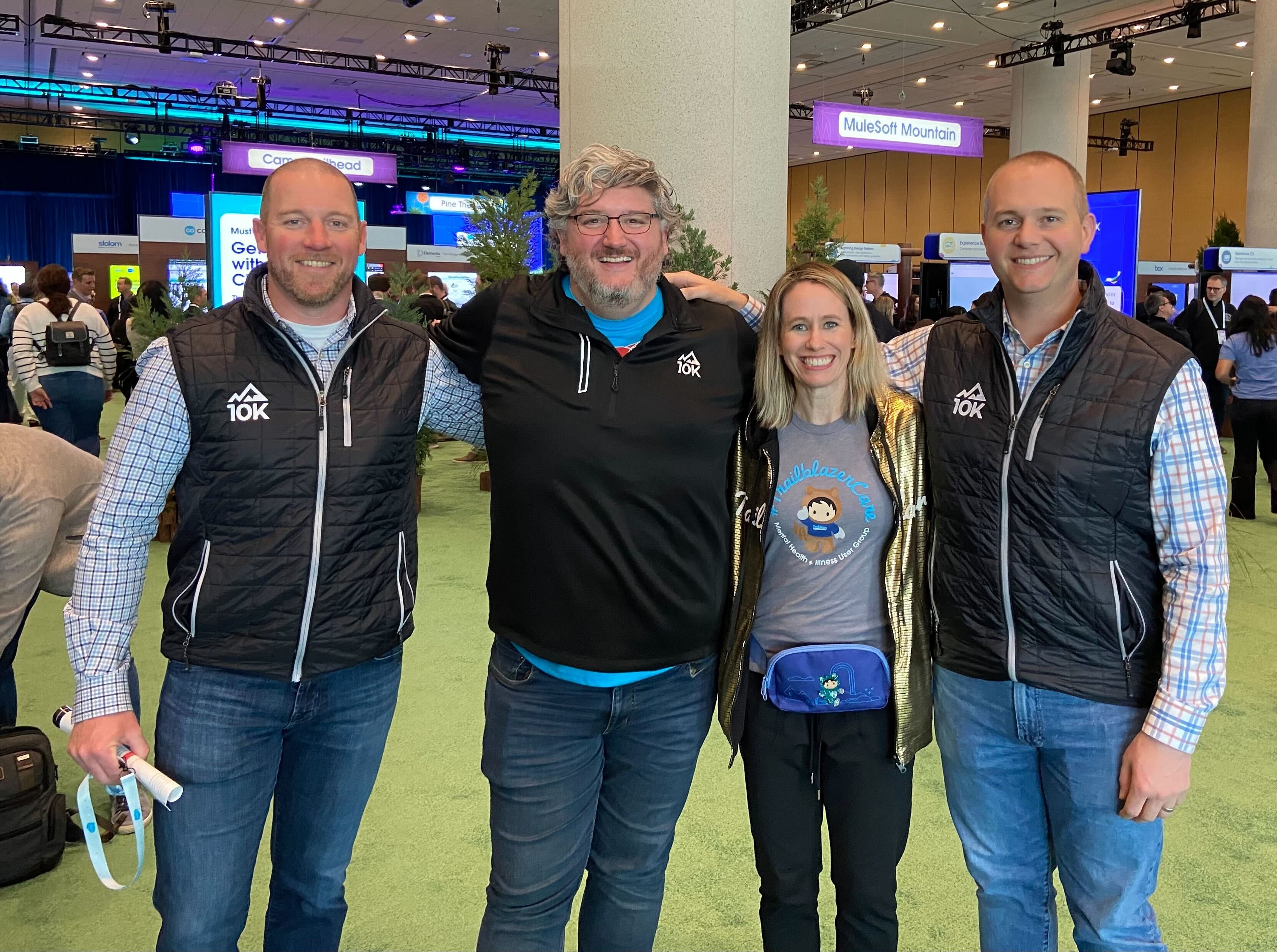
This puts 10K between familiar alternatives: a traditional consulting engagement, a direct contractor hire, and an internal team. Its distinction is the combination of specialist matching, flexible capacity, and support around delivery. That arrangement still requires judgment. Finding an available developer and finding the person who understands a particular migration are different jobs.
Three systems out. One team still moving.
Hyland’s problem illustrates the difference. Acquisitions had brought new products, integrations, and Salesforce consolidation work. When Nuxeo’s data needed migrating, internal staff and existing partners were occupied. Pulling them away would have added three months to other timelines, according to Hyland’s account.
10K supplied support for data migration and baseline configuration, including an architect with NetSuite migration expertise. Hyland says the resulting consolidation allowed it to retire three legacy systems: a CRM, an ERP, and a customer-success tool. It also reports starting work in eight weeks, about half the time expected. This was additional capacity aimed at a specific constraint.
The services behind that intervention are practical: architecture reviews, cloud implementation, integrations using tools such as MuleSoft and Boomi, and custom development. Governance work helps clients decide how Salesforce changes should be managed. The company’s stated preference for configuration before custom building matters. Every extra component becomes something somebody must maintain.
The $2,500 question
Consulting can be awkward to buy when a company cannot yet describe what is wrong. Instant Architect gives 10K a smaller entry point. Its public price is $2,500 for guidance on a particular Salesforce challenge. Customers describe the issue, receive an architect match, pay through 10K Connect, and collaborate there.
Published entry price for architecture guidance on a specific Salesforce challenge.
10K Connect provides a shared place for communication, files, completed work, and remaining time. Broader services begin with discovery and an agreement. The commercial idea is straightforward: begin with the expertise the situation calls for, then adjust capacity as the work develops. The purchase becomes easier to evaluate when the problem has boundaries.
When the customer is Salesforce
One of 10K’s customers is Salesforce itself. Its global communications team had an aging internal application, PRForce, that people rarely used. Unreliable data followed. With employees and agencies approaching the same reporters, coordination suffered. A system intended to help people communicate had become another source of confusion.
10K helped the team develop the application into CommsForce, adding automation and collaboration features as needs evolved. The customer reports adoption growing from 10 users to 200. The interesting measure is participation: a useful internal tool earns repeat use. Adding fields alone cannot accomplish that.
Morgan & Morgan offers a related lesson in changing the plan. Its original approach involved migrating more than 100 visual workflows to Lightning. 10K helped find a way to keep legacy flows operating in Classic mode while moving them in phases. The firm reports getting important new functionality out ten times faster than originally planned. Sequencing became part of the solution.
Independence needs discipline
Hamm’s own account of running the business includes a useful admission. Priorities had become too scattered. In a 2023 reflection, he recalled recognizing the problem at a leadership meeting four years earlier:
“I realized that I had spread our priorities so thin that we weren’t excelling at any of them.”Nick Hamm, founder, writing in 2023

His answer was greater focus. The same lesson runs through the customer work: decide which constraint matters, choose the relevant expertise, and resist making every improvement at once. AuditMate began with support for its Apex codebase; the relationship later expanded into data architecture, DevOps, and a Salesforce Center of Excellence. A bounded beginning can reveal a larger job.
The next job is an agent
10K now sells Agentforce Activator for AI workflows across sales, support, and operations, with optional integrations and continuing optimization. SaaS Simplified targets quoting, onboarding, renewals, and support. These offerings extend the company’s existing role: making connected business systems useful to the people relying on them.
For a buyer, the copyable approach is to isolate one costly bottleneck and measure the result. Flexible expertise works best when someone inside the business can set priorities, provide access, and make decisions. If those responsibilities remain unsettled, adding specialists can leave the underlying delay intact. Nextech’s six layouts offer a better starting question: what could become simpler tomorrow?