Before a consultant can fix somebody else’s paperwork, there is the awkward matter of its own. At ABSYZ, a Salesforce implementation business, departments had accumulated separate tools and manual ways of tracking information. The company knew the platform. Its operations still needed work. That small embarrassment provides a useful introduction to what this business actually sells.
- ABSYZ configures, connects and supports Salesforce for enterprise customers.
- Its work spans bank onboarding, retail execution, customer service and employee administration.
- Youngsoft acquired a majority stake in 2019. AI agents are now part of the offering.
A consultant meets its own paperwork
In a 2022 branded interview, co-founder Balesh Lakshminarayanan described moving sales, operations, HR and finance onto Salesforce. Leads flowed into a shared system; contracts and invoices became trackable. He reported that annual paper costs fell from ₹500,000 to ₹50,000. That is a paper bill, not a calculation of the entire project’s return.
The adoption story has a useful catch: employees already knew Salesforce. Lakshminarayanan reported complete adoption across the organization. A hospital or manufacturer cannot assume the same starting advantage. The transferable idea is to follow information from one department to the next, then remove the places where somebody must copy it again.
Annual paper expense. Company-reported figures; not total implementation cost.
Twelve weeks. Two hundred users.
A bank offers a less forgiving test. In a published ABSYZ case, an Asian bank’s onboarding process involved multiple systems, manual work, errors and delays. The intervention was specific: Service Cloud, custom Lightning components and a dashboard bringing account and transaction information into a customer view. ABSYZ reports deployment in 12 weeks for more than 200 users, with close to a 5% reduction in onboarding complaint tickets.
Those numbers describe a particular engagement. Their interest lies in the sequence: identify a troublesome process, put the necessary information within reach, then measure a consequence customers notice. A complaint ticket is a more useful test than a handsome login screen.
Another company-published case concerns a tobacco manufacturer’s retail network. ABSYZ says two earlier attempts with global strategic partners had failed, leaving tight budgets. Its team built a Salesforce backend connected in both directions to Ivy Mobility’s front-end software, releasing modules in stages. The case describes a rollout across countries and a network exceeding five million stores. That scale is the company’s account, rather than an independently audited usage count.
For a global spirits producer, the troublesome handoff involved pricing and delivery disputes. A September 2025 case describes connecting Service Cloud to SAP through MuleSoft, giving agents a shared customer view and structured routing. Different industries; a recurring job. Find the information, connect the systems, make the next action easier.
The small-tool theory of enterprise software
ABSYZ’s catalog contains a pleasingly ordinary problem: the next lead goes to an employee who is on leave. R-Robin, its configurable assignment tool, can skip that person. Junction Builder helps create relationship records. Multiple Lead Converter handles batches of leads, with duplicate checks and fault tracking. These are the administrative splinters that make a large platform irritating to use.
ConnectEazy takes on a larger slice of office life. Its published modules cover recruitment, employee administration, projects and timesheets. The common thread is extending a platform customers already use. ABSYZ develops these tools alongside its consulting work; the catalog gives buyers concrete examples of the company’s development expertise.
The commercial engine is professional services. Organizations buy help with strategy, implementation, customization, integration, testing and continuing support; staffing adds specialist capacity. Sales Cloud, Service Cloud, Marketing Cloud, Commerce Cloud and industry-specific offerings supply the underlying platform. The consultant’s job is to make those capabilities fit a customer’s actual work.
That relationship can continue after launch. A new sales process, an acquired business or a changed reporting requirement can send the customer back for more configuration and integration. Managed support gives that continuing work a home. For the buyer, the useful question is how clearly the engagement defines responsibility for maintenance, user training and the next round of changes.
A specialist gets a bigger map
Anshul Jain and Balesh Lakshminarayanan founded ABSYZ in June 2011. The company traces its beginnings to a two-bedroom Hyderabad apartment; a 2017 announcement described it as bootstrapped and marked an expansion into Bangalore. The founding choice was depth in Salesforce, with complementary development skills built around it.
When Youngsoft announced its majority-stake acquisition in January 2019, it described a business with more than 130 employees and over 100 completed Salesforce projects. For ABSYZ, the transaction offered access to US customers. For Youngsoft, it added Salesforce delivery expertise. The combination paired a specialist practice with an established technology-services business.
“What we liked the most was their flexibility, transparency, the hard work and honesty in dealing with project issues.”
Doni John / customer testimonial published by ABSYZ
Today, public testimonials name customers including Sycomp, Perfios, Stanton Chase India and Bower Group Asia. The practical alternative for a buyer is another Salesforce specialist, a larger systems integrator or an internal team. ABSYZ’s position rests on concentrated platform experience and delivery capacity. Buyers still need to assess the proposed people and scope.

AI inherits the old homework
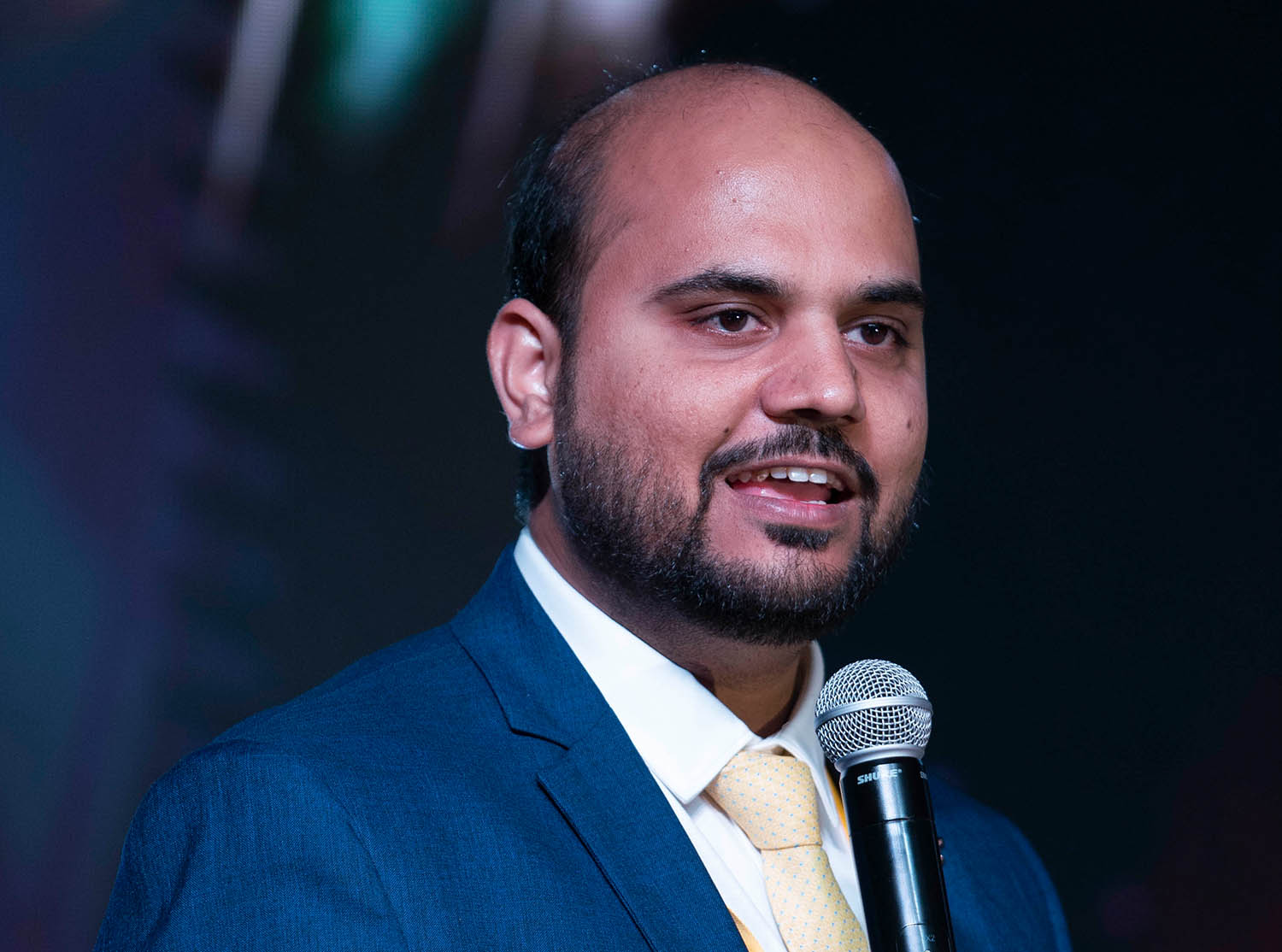
Shubham Khilauria became CEO on January 1, 2026, succeeding Lakshminarayanan. ABSYZ now offers Agentforce services, designing Salesforce AI agents and connecting them to enterprise workflows. A February 2026 insurance case describes another current priority: guided quoting on Financial Services Cloud and OmniStudio, integrated with carrier and legacy systems.
The buyer’s homework remains concrete. Choose a workflow, agree who owns it, establish a baseline and test the handoffs before expanding. That approach needs usable data and willing users. A small business with straightforward requirements may need only standard configuration. An enterprise with tangled systems has a larger integration problem. ABSYZ’s cases are useful because they show what that work looks like.