Consider the small beep at a shop counter. For the customer, it means the purchase is over. For the merchant, it starts a chain of obligations: authorize the card, protect the number, close the batch, locate the deposit, reconcile the books. CardConnect makes its living inside that chain. The interesting question is how a company selling merchant accounts came to own more of the machinery around them.
- For merchants: CardPointe accepts payments and organizes transaction activity.
- For partners: CoPilot handles onboarding, equipment, and portfolio reporting.
- For software: gateway APIs connect payments to existing applications.
- The catch: compare the full merchant agreement, including fees and equipment terms.
A gateway with naming rights
Brian Shanahan founded the business in 2006 as Financial Transaction Services. It operated in merchant services, a crowded trade in helping businesses accept electronic payments. Selling the account gave the company a relationship with the merchant. Owning the technology could give that relationship a longer life.
The consequential purchase came in 2012: Princeton Payment Solutions, whose assets included a gateway called CardConnect. In contemporary trade coverage, Jeff Shanahan described the move from signing up merchants toward supplying transaction technology. By 2013, the gateway’s name had become the company’s name. The product had effectively swallowed the business card.
Acquisitions also left the organization scattered. Operations were consolidated in King of Prussia after the headquarters moved from Cleveland. Recruiting mattered: Shanahan said employees had resisted relocating to Cleveland. The company even passed on Pennsylvania incentives rather than wait for approval. “We were a bit impatient,” he said. A mundane constraint, where people would work, helped shape the company.
“We just wanted to get here.”
Jeff Shanahan, on the headquarters move / 2013
Two customers, two control rooms
Today, the distinction to understand is between CardPointe and CoPilot. CardPointe faces the merchant. Its browser-based virtual terminal can process payments without a conventional checkout station. Reporting brings transactions into view. Recurring billing handles scheduled collections. Mobile tools and payment terminals extend acceptance beyond the desktop. The gateway connects those functions to other software.
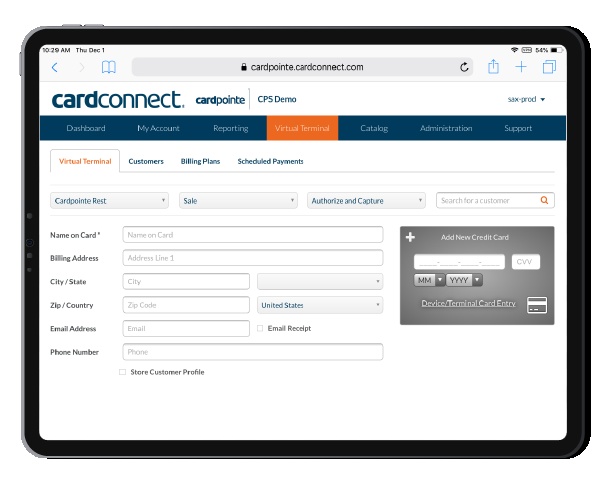
CoPilot faces the independent sales organizations and agents who manage merchant relationships. Its concerns are different: applications, equipment orders, support requests, commissions. Residual reporting breaks out the continuing income associated with a portfolio. A merchant wants to see whether a payment landed. An agent wants to see how hundreds of merchant accounts are behaving.
That second audience explains CardConnect’s position in the market. The business equips intermediaries as well as end users. Better onboarding and clearer reporting give partners reasons to keep bringing merchants onto the platform. This is an interpretation of the product structure: distribution becomes part of the software problem.
Merchant tools
Payment data
Partner portfolio
The number you would rather not keep
CardSecure addresses a peculiar feature of payments: some of the information a business receives is information it would be happier never possessing. Its tokenization replaces sensitive card details with a substitute reference while the underlying data sits in a secure vault. Point-to-point encryption protects card data from the point of interaction in supported deployments.
The practical benefit is a smaller footprint of sensitive information inside business systems. That can reduce PCI compliance scope. It does not make a merchant immune to fraud, nor turn compliance into somebody else’s entire responsibility. Configuration, supported devices, and the way software captures data still matter. A security feature becomes useful through the installation around it.
Integration gives the proposition a concrete purpose. D-Tools Cloud, for example, announced CardConnect support for collecting card and ACH deposits during proposal acceptance. An installer can connect the moment a customer approves a job with the moment money is collected. The appeal is fewer disconnected steps between selling work and getting paid.
The $750 million shortcut
In 2016, CardConnect entered the public market through a merger with FinTech Acquisition Corp. Its independent public chapter was short. First Data completed its acquisition in July 2017. The approximately $750 million transaction included debt repayment and preferred-stock redemption. It was a purchase price, not a venture round.
Historical deal figures, not current operating metrics.
The acquisition call supplied the strategic explanation. First Data said some CardConnect capabilities overlapped with technology it had been developing itself. Buying the company would save investment and time to market. CardConnect’s enterprise integrations also opened another route into customers’ business systems. First Data was buying a shortcut through work already completed.
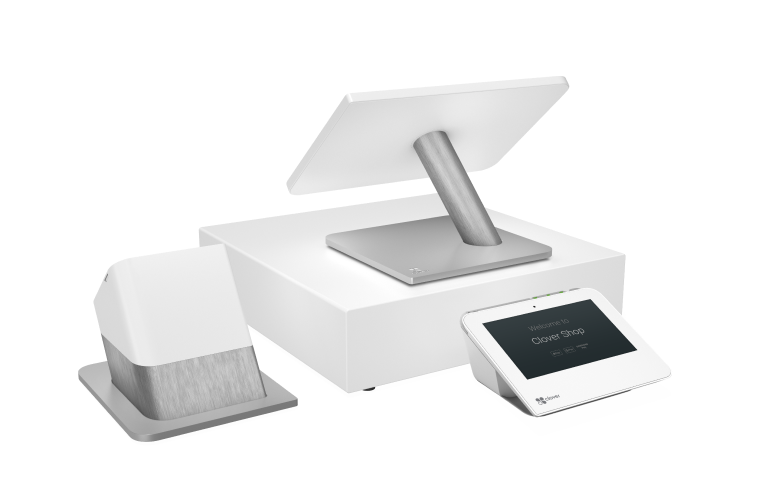
Fiserv acquired First Data in 2019, bringing CardConnect into its current parent. CardConnect’s present offering combines CardPointe with access to Clover products and the broader Fiserv infrastructure. Alternatives include Stripe, Square, Adyen, and Authorize.net, depending on the job. The meaningful comparison starts with the workflow: retail checkout, an online application, an agent portfolio, or enterprise accounting.
The bill, and the lesson
CardConnect earns processing and service fees, alongside technology revenue. Its 2016 results illustrate why payments numbers require care: $589.3 million in reported revenue became $156.5 million in non-GAAP net revenue after interchange and pass-through costs. The larger figure was not money the business simply kept.
For buyers, the same discipline applies. CardPointe advertises a free virtual terminal and mobile app; that says little about the complete processing bill. Request a written comparison covering transaction charges, recurring fees, hardware, contract duration, and cancellation. A useful integration can justify work and expense. A merchant with simple needs may place greater value on a simpler purchasing process.
The transferable idea is to study the chores surrounding a transaction. CardConnect built around those chores. Even its May 2026 gateway update concerns practical details: filtering funding reports by ACH or card and identifying commercial cards in inquiry responses. The customer hears a beep. Somewhere else, someone needs the numbers to agree.
Follow the transaction
Explore CardConnect, the product guides, and LaunchPointe articles. Watch the company’s terminal setup demo or a partner’s CardPointe tutorials.