Forty-five studios are a lot of doors to close. For Candid, the clear aligner company founded in 2017, those doors once made the business visible: places where a person could walk in, get scanned, and start moving toward straighter teeth. In January 2022, Candid announced it would shut every one. The surprising part was where it wanted the next appointment to happen. At a dentist’s office.
- Candid supplies clear aligners through dental professionals.
- Its system connects treatment planning, custom trays and remote progress checks.
- The business lesson: an existing patient relationship can be a distribution advantage.
Forty-five doors, one difficult decision
Consumer brands often begin with an attractive proposition: remove a layer, reduce the price, make buying easier. Candid started with that kind of logic. Its early business offered clear aligners directly to consumers, with remote orthodontic involvement. A professional channel, CandidPro, later gave dental practices a way to offer the company’s system themselves. For a while, the approaches coexisted.
Then the smaller experiment started making a larger argument. Candid said its professional service had grown tenfold in case volume and revenue since the third quarter of 2021. It already reached more than 300 practices when the pivot was announced. Those were company-reported figures, and a fast-growing small business is still small. Yet they supplied something a strategic theory cannot: evidence that dentists would use the product.
The other evidence came from patients. In a February 2022 interview, CEO and co-founder Nick Greenfield said four out of five prospective patients wanted to begin with an in-person dentist. Online advertising was also becoming more expensive and harder to target. What weakened first was the case for acquiring every patient directly. Convenience alone did not settle the question of whom people wanted responsible for their teeth.
“we’re thrilled to be working in concert, not competition.”
Nick Greenfield, announcing the 2022 pivot
The decision had a price. Closing the studios meant abandoning a network the company had spent years building. Greenfield told Modern Retail that direct sales still supplied well over 90 percent of revenue at the end of 2021. Giving up that channel therefore meant an immediate revenue sacrifice. The company chose to concentrate its people and resources on the professional business.
The appointment between appointments
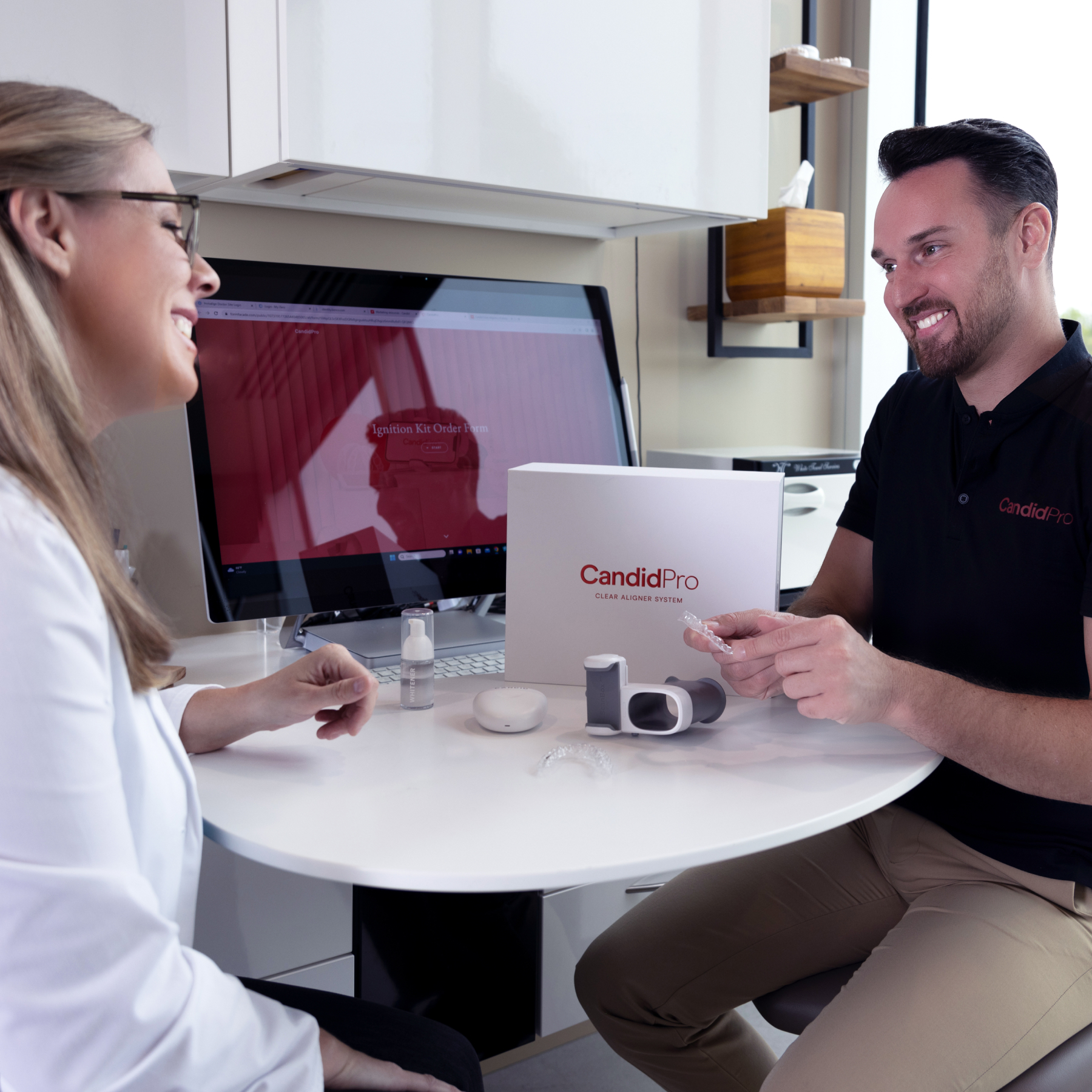
Today, Candid sells dental practices a combination of manufactured appliances and the tools surrounding them. The dentist evaluates the patient, submits diagnostic records and approves a treatment plan. Custom aligners move teeth through a sequence of stages. The interesting operational question is what happens after the patient leaves the office.
With CandidMonitoring, patients submit scans through the ProMonitoring app at aligner changes. The system analyzes fit, progress, hygiene and scan compliance. A patient may need to remain in the current stage rather than advance on schedule. The provider can use that information to decide when an office visit is necessary. Remote checking gives the practice another view of treatment between appointments.
- 01 Dentist assesses
- 02 Plan approved
- 03 Aligners worn
- 04 Scans reviewed
Progress informs the next step. The treating provider makes the clinical decisions.
That responsibility matters. Candid’s provider terms explicitly put clinical decisions with the treating practice. The technology supports the relationship; the practice still owns the examination, judgment and patient care. For a dentist evaluating the system, the useful question is whether the workflow helps the team spot issues and respond efficiently.
A smaller case gets a smaller bundle
CandidPro Comprehensive combines a flat case fee with orthodontist consultation and remote monitoring. Elements, introduced in April 2026, takes a different approach: pay per tray, including single-arch treatment, for smaller corrections such as simple crowding or relapse. CandidConsult is excluded from Elements, and monitoring is an extra-cost option. The distinction makes the buying decision more specific than choosing a brand.
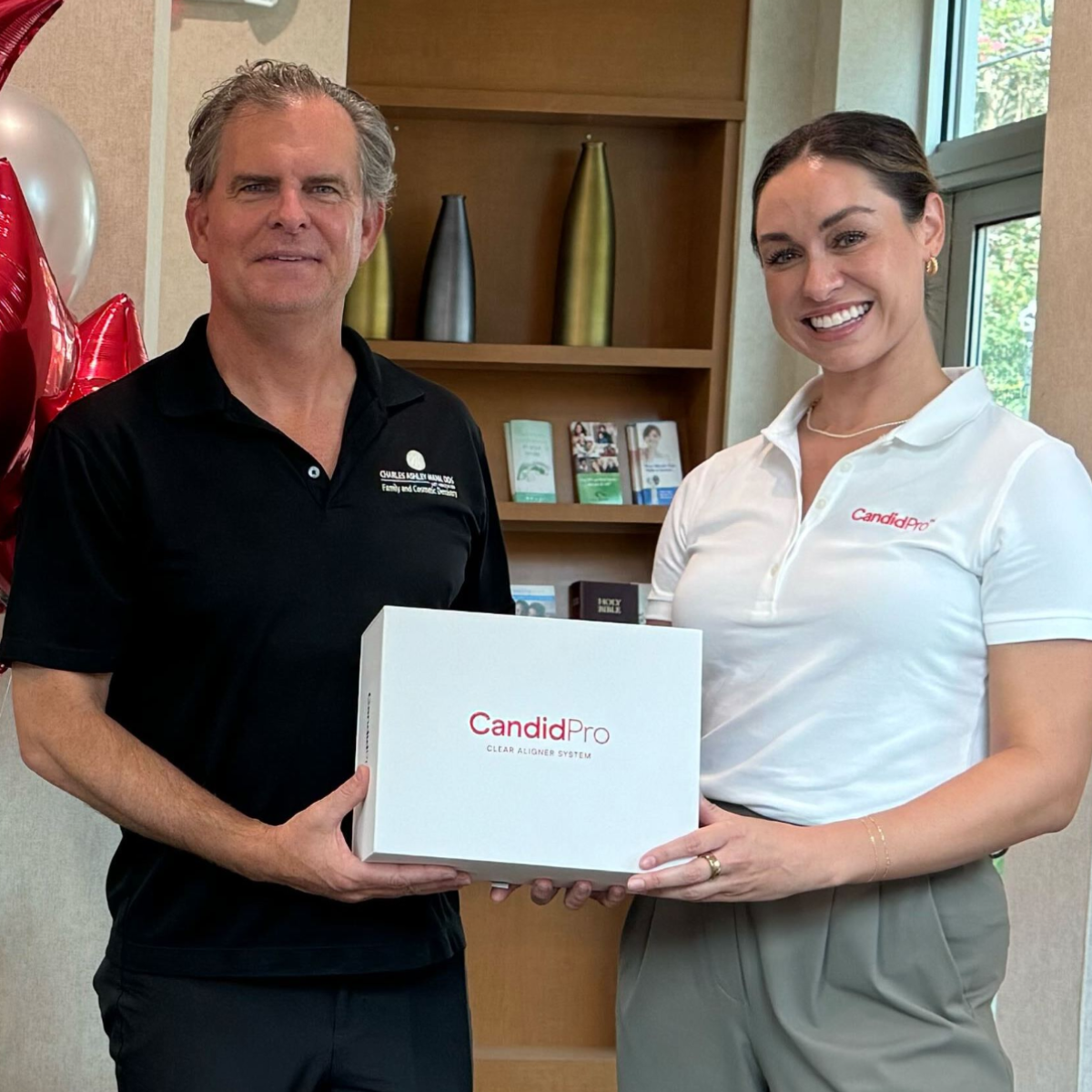
There are two prices to understand. One is what a practice pays Candid. The other is what a patient pays the practice. In a June 2025 pricing article, Candid put its providers’ average treatment charge at about $4,000, with fees varying by local market and complexity. That historical average is a reference point, rather than a nationwide quote.
Average patient fee cited by Candid in June 2025.
Individual practices set their own prices.
The wider range includes PermaForm retainers and Philips Zoom whitening. Within the professional aligner market, alternatives include Invisalign, ClearCorrect and Spark. Candid’s pitch centers on the general dentist: help selecting and planning cases, an emphasis on minimizing attachments and interproximal reduction, and support with the business of delivering treatment. Case selection remains essential; a limited product cannot substitute for the capabilities a complicated case requires.
The relationship was already in the room
Its partnerships follow that logic. Philips announced a collaboration in February 2023 and disclosed a minority interest in Candid. The agreement brought professional relationships and education into the picture. A separate SoftSmile partnership added VISION treatment-planning software, including automation and three-dimensional controls. Candid was assembling capabilities around the dental practice.
The less glamorous part may be equally instructive. In a June 2026 company case study, Napa Valley Dental Group moved from a typical three to five new aligner patients a month to a 37-case month after team training. Hygienists began taking photographs before cleanings, documenting concerns and handing a structured evaluation to the dentist. The team also offered financing. It is one practice’s reported experience, with several changes happening together.
For another business, the move to copy is testing a partner channel while the original operation still runs. Look for repeated customer preferences, actual partner adoption and a workflow people can execute. Candid’s route depends on engaged dentists and patients who wear their aligners and submit scans. Without that participation, the convenience promise loses its mechanism. Forty-five closed doors make a memorable story. What happens inside the next dental office determines whether the decision works.