Before Brian Raney helped founders find investors, he helped students find textbooks. At the University of Kentucky, BookExchange offered a way to buy and sell books outside the campus bookstore. The problem was familiar enough to require little explanation. Students had books they no longer needed. Other students needed those same books. Between them sat the possibility of a business.
It is an unglamorous beginning, which is part of its appeal. A textbook exchange starts with people who have a reason to use it. There is no need to persuade a student that textbooks exist, or that paying for them is an interesting experience. Raney’s venture expanded to other campuses. Luke Murray and Nathan Fort worked with him on taking the service beyond UK. Some of the relationships that later shaped Awesome Inc were already taking shape.
The career that followed would include custom software, an indoor mapping startup, university teaching, coding education, a book and investment funds. Through those changes, Raney kept returning to a fairly ordinary question: where does someone go when they want to start?
A respectable fallback
Raney earned his computer science degree in 2005 and a master’s in economics in 2006. He had also started a software company, Sfenity, before graduating. The combination put making things and understanding their economics on the same résumé. It also left him with a decision that degrees alone could not make for him.
In 2007, Raney and Murray sought advice from Lee Todd, the University of Kentucky president and an entrepreneur himself. Todd encouraged them to try starting a company, with an ordinary job available later if the venture failed. APAX Software began that year. For someone contemplating a first company, the suggestion of a fallback can make an uncertain choice feel manageable.
Raney’s earlier software business merged with APAX, and he led its development from web design into web and mobile applications. Building software supplied a practical education alongside the academic one: customers, colleagues and the work of delivering what had been promised.
By 2010, he had been named Lexington Young Entrepreneur of the Year. Recognition was arriving. Finding other people doing similar work had been harder. A city can contain entrepreneurs without making them easy for one another to find.
The address for an uncertain idea
Awesome Inc opened in 2009 with Raney, Murray, Fort and Rachel Cunningham as its founders. Its home on East Main Street gave their ambition a physical address. Raney had helped establish Young Entrepreneurs of Lexington the previous year. Now there was a place around which a wider set of activities could gather.
The name is cheerfully difficult to say with a straight face. That fits some of the organization’s habits. Its culture pairs an appetite for business with a willingness to have fun, and its rules include choosing something awesome over something not awesome. A newcomer need not first acquire the solemn expression sometimes mistaken for entrepreneurial seriousness.
The underlying problem, however, was real. Raney described his early search for fellow entrepreneurs as a lonely experience. He and his collaborators wanted to make starting a company less isolating. In 2010, the network added 5 Across, a pitch competition, and the Kentucky Entrepreneur Hall of Fame. One offered a place to present a young idea. The other made examples of established Kentucky entrepreneurs visible.
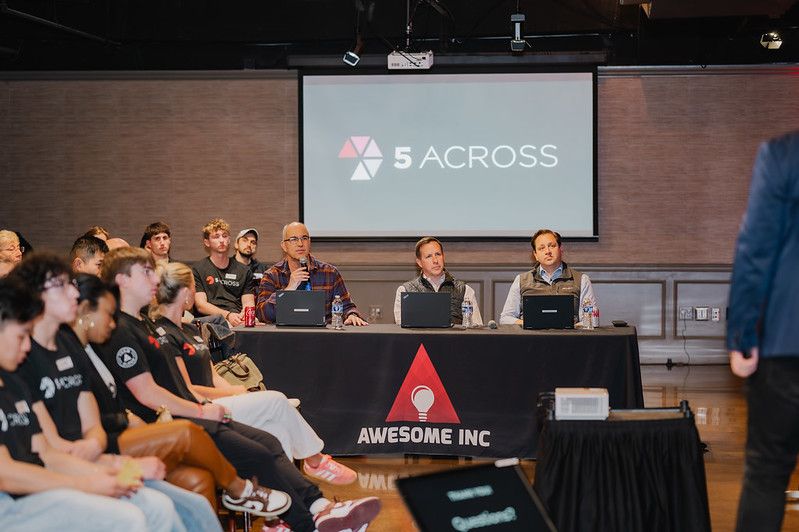
The two activities make an interesting pair. Pitching puts an unfinished business into public view. Celebrating an experienced entrepreneur lets a beginner see what a longer career can look like. Both give people a reason to show up, listen and talk afterward.
Back on campus, with a different assignment
In 2012, Raney returned to UK as the first entrepreneur in residence for iNET, its Innovation Network for Entrepreneurial Thinking. His responsibilities included speaking to classes, mentoring students interested in starting companies and coaching teams for venture competitions.
“I’m passionate about helping students become entrepreneurs and turning their ideas into realities,” he said at the time. The work put an experienced founder within reach of students who might have an idea but no obvious person to ask about it.
That is a particular kind of teaching. It involves helping someone take a proposition apart before they stake too much on it, then helping them put the useful pieces back together. A competition gives the process a deadline and an audience. A mentor offers another opportunity to revise.
In 2017, Awesome Inc joined UKAccel, a university program for researchers considering whether to turn intellectual property into a startup. The collaboration extended the connection between campus and downtown beyond student ventures. People with research to commercialize could encounter the routines and decisions involved in company building.
The first line of code
Raney began coding in middle school. His older Awesome Inc team profile also records a water-gun-selling business from that period. There is something pleasing about those two beginnings sharing a biography: programming and retail, each offering a young person a way to make something happen.
His interests also include surfing, snowboarding, soccer and travel. That list supplies some relief from the vocabulary of accelerators and investment rounds. His team profile names Coldplay’s “Fix You” as a favorite song and Truett Cathy as a favorite person. The details are small, but they belong to someone whose public work is often described through institutions.

Awesome Inc U launched in 2013. Its origins included a need for more developers at APAX and other technology businesses. Teaching coding offered a practical response, while opening a door for people who had never tried it.
That December, Raney, Nick Such and their team visited Tates Creek High School for an Hour of Code event. Around five students initially raised their hands when asked whether they had written code. At the end, practically all 120 students could do so. Much of the work happened on smartphones, with some students using tablets or laptops.
The change took an hour. It did not turn an auditorium into a room of professional developers. It gave the students something smaller and immediately demonstrable: they had tried a skill that previously belonged to someone else.
Practically the whole room had written code by the end of the session.
A mentor who kept taking notes
Helping other people did not end Raney’s own apprenticeship. After a 2015 Fellowship mentor session with Jim Host, he wrote down lessons about communication, honesty, organization and confidence. His account paid attention to the mechanics: tell a story clearly, keep track of the important work, begin with the difficult task.
It is easy to collect advice as a kind of ornament. Raney’s notes were concerned with how a person behaves through a working day. The founder running the room was still listening to the person visiting it.
Two years later, Raney and Murray assembled Unbridled Spirit, collecting lessons from Kentucky Entrepreneur Hall of Fame members. Among the people featured were Todd, Host, Bill Gatton and John Y. Brown Jr. The book made those careers available beyond an event or a wall of photographs.
There is continuity in that choice of subject. Raney had benefited from advice given by a Kentucky entrepreneur. He then helped put Kentucky entrepreneurs’ experiences into circulation. Local examples allow someone contemplating a business to connect ambition with a place they already know.
“The only unacceptable behavior is not trying.”
Brian Raney, reflecting on Awesome Inc’s purpose
When encouragement needs a check
Connections and instruction solve some early problems. A company may also need money. Raney launched Cherub Fund to invest in early-stage businesses. Awesome Fund later added another vehicle, and lists him as a general partner alongside Emily Wehrle, with Keith McMunn as managing partner and Ben Strevy as fund principal.
In February 2025, Awesome Fund reported exceeding its $5 million target in December. It had invested nearly $1 million in nine startups since August 2023. Its stated investment range was $50,000 to $250,000 for early-stage companies using scalable technology. Those figures describe the fund and its activity, rather than Raney’s personal finances.
The addition matters to the shape of the network. Someone who first encounters Awesome Inc through an event can discover further forms of support as their work develops. There is room for a class, a mentor, a workspace or an investment discussion, depending on the problem in front of them.
- MeetEvents and shared workspace
- LearnCoding and founder support
- BuildSoftware and mentorship
- FundEarly-stage investment
A map of offerings, rather than a compulsory route.
The invitation comes back
At a live conversation marking Awesome Inc’s fifteenth year in 2024, Middle Tech’s Logan Jones recalled being taught by Raney at UK. An invitation to the Entrepreneur Hall of Fame introduced him to the local startup community. Jones later worked as Raney’s assistant and helped make a startup community yearbook, meeting people across Lexington.
The recollection gives Raney’s work a scale a fund total cannot provide. A student went to an event. He met people, took on work and found further opportunities. Years later, he could describe the connection to the person who had made the invitation.
Raney’s ambition remains tied to helping people pursue their own aims in Kentucky. The interesting part is the range of things that can require: software that serves customers, a beginner’s class, a mentor’s time, a place to pitch, capital and an introduction. For the next person wondering where to start, each is a possible answer.
Continue the conversation
- Awesome Inc - programs, workspace and events
- Brian Raney on LinkedIn · Twitter / X
- Middle Tech’s 2024 conversation with Raney, with video
- Awesome Inc on YouTube · Instagram · Facebook
- Raney’s letter reflecting on 2015
- Unbridled Spirit and its Kentucky stories
- Meet the Awesome Fund team
- Awesome Fund’s February 2025 investment update