An empty theatre seat is an unusually unforgiving piece of stock. At seven o’clock it has possibilities. After the performance, it has upholstery. Brian Fenty built his working life around the distance between those two conditions, with a detour through finance and a friendship that began long before either founder had a company to discuss.
TodayTix, which he co-founded with Merritt Baer, launched in New York in December 2013. The proposition had the pleasing directness of a good invitation: here are the shows; here are the tickets; come along. Behind that simplicity sat a rather personal ambition. Two people who loved theatre wanted more people to enter it.
Fenty’s story has since acquired several settings: a baseball organisation, an investment firm, Broadway, London’s West End and, most recently, a wider live-events business. Yet the recurring character is the audience. His career keeps arriving at the same practical question: what would persuade somebody to take a seat?
A friendship before a business plan
Fenty and Baer met as children at French Woods, the performing arts camp in upstate New York. The connection preceded the pitch deck by years. Theatre supplied a shared enthusiasm before there was any reason to call it a market.
That is a useful detail in a business biography. Founding stories often come polished into a moment of revelation, as though the entrepreneur sprang fully formed from a spreadsheet. Here there were two young theatre enthusiasts, time apart and, eventually, enough different experience to make their shared interest commercially useful.
Fenty grew up in Connecticut and has described himself as an introvert, despite performing from an early age. There is a recognisable theatrical paradox in that combination. A script gives a person something to do with an audience; ordinary conversation is less obliging. His early stage experience later helped him present ideas and raise capital.
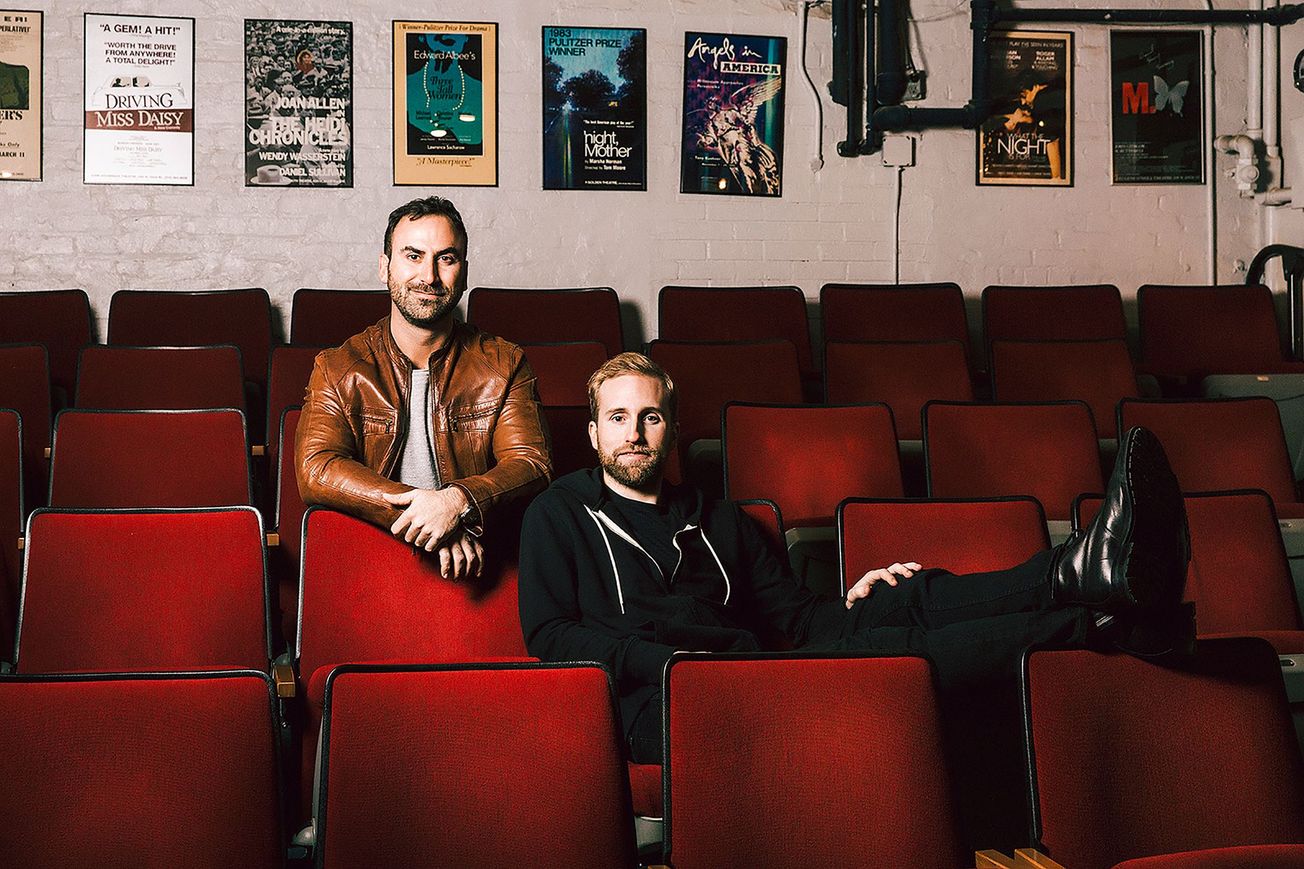
His professional preparation also included work with the New York Yankees and a managing director role at Hamilton Investment Partners. Marketing, ticketing and investing brought different views of the same transaction: somebody must decide that an experience deserves both their money and their time.
As an investor, he worked around consumer businesses; as a producer, he saw the economics of an evening’s entertainment from inside the theatre. Those perspectives gave the eventual app a particular sensibility. The experience had to appeal to an audience and make sense to the people putting on the show.
The ticket needed a better entrance
At launch, TodayTix offered a mobile route to theatre tickets for the coming week. Its early service mixed software with something charmingly physical. Customers could collect tickets from participating box offices or meet a representative outside the theatre. The representative wore red and sent a photograph so the buyer knew whom to find.
A person in a red shirt is a wonderfully literal answer to the question of user experience. The app could arrange the purchase; somebody still had to make the final few feet work. A night out is full of small uncertainties, and the ticket handoff was one the founders could actually solve.
“We are just theatre fans who want to sell more theatre tickets,” Fenty said in the company’s launch period. He pointed then to an average of 20 percent of Broadway seats going unsold each night. The figure described the opportunity they saw in 2013, rather than a permanent law of Broadway economics.
Illustrative share of 100 seats. Yellow = unsold. Historical estimate, not a current occupancy measure.
The founders built the app with an initial investment of $500,000. In 2014, Fenty described the target audience with admirable economy: “Young people with smartphones.” They already carried a way to buy things. Theatre needed to become a more natural thing to buy.
The early concierge service also reveals something about the company’s priorities. A digital product could have treated the pavement outside the theatre as somebody else’s concern. Instead, the experience extended to the handover. The customer was buying an evening, and an evening is a poor place to discover that two systems have declined to speak.
A little helium, applied carefully
Fenty became CEO in 2017, having served as chairman. The change moved a co-founder into the executive job while Baer took responsibility for Europe. It was a rearrangement within a longstanding partnership, with the company already looking beyond its original home.
His account of leadership is more candid than the usual executive performance. Early in his investing career, he was given a financial modelling assignment he did not understand. Embarrassment stopped him asking for help. He attempted to teach himself overnight and drew on friends elsewhere, with disappointing results.
The lesson he drew was practical: admit the gap, find help and spend more time using the abilities you actually have. He has also described optimism as “helium”. It is a memorable choice for a business that must persuade people to leave the house, though buoyancy still needs something useful attached to it.
“There’s a fine line between fake it till you make it and learn it and do it well.”
Brian Fenty
His public account of innovation is similarly grounded in everyday work. Listen to members. Try improvements. Take iterative bets on products and tools. The emphasis is on making room for ideas through attention to customers, rather than waiting for a suitably theatrical flash of inspiration.
There is a family resemblance between that approach and the original ticket handoff. Both begin with a specific inconvenience. Neither requires the customer to admire the ingenuity involved. Ideally, the customer has a pleasant evening and gives the mechanism very little thought.
Acquiring an audience, keeping its character
Growth brought a broader collection of brands. In 2020, TodayTix acquired Encore, the London ticketing business, and Show-Score, a community built around theatre reviews. With Show-Score, Fenty was interested in an audience that already cared deeply about the subject.
The acquisition offered more than another place to put a purchase button. Show-Score’s members reviewed productions, attended events and discussed what they had seen. Its audience differed from TodayTix’s younger New York-centred customer base. The plan preserved the brand while giving it access to the group’s wider reach.
It is an instructive distinction. People who share a taste do not necessarily want to be addressed in the same voice. A recommendation from a familiar community carries something a generic catalogue cannot manufacture on demand: a sense that the person making the invitation understands the evening you want.
Secret Cinema joined the group in 2022, extending Fenty’s work into events where a film’s world becomes somewhere an audience can physically enter. Alongside ticket distribution, the company now had a business concerned with creating the experience itself. The journey from discovery to attendance was acquiring more stops.
- 2013TodayTix launches in New York.
- 2017Fenty becomes CEO.
- 2024His consortium acquires The Mousetrap.
- 2025TodayTix Group joins MARI.
A new custodian for an old mystery
Then came Agatha Christie. In 2024, a consortium led by Fenty acquired The Mousetrap from Adam Spiegel. The change made the consortium the production’s fourth lead producer. In a trade built around opening nights, taking responsibility for a play that opened in 1952 is an unusual assignment.
The play’s longevity creates its own commercial and artistic puzzle. A familiar title can reassure a buyer while leaving a younger audience unsure why it should care. Looking after such a production involves the present tense as much as the past: tonight’s audience still needs a reason to be there.
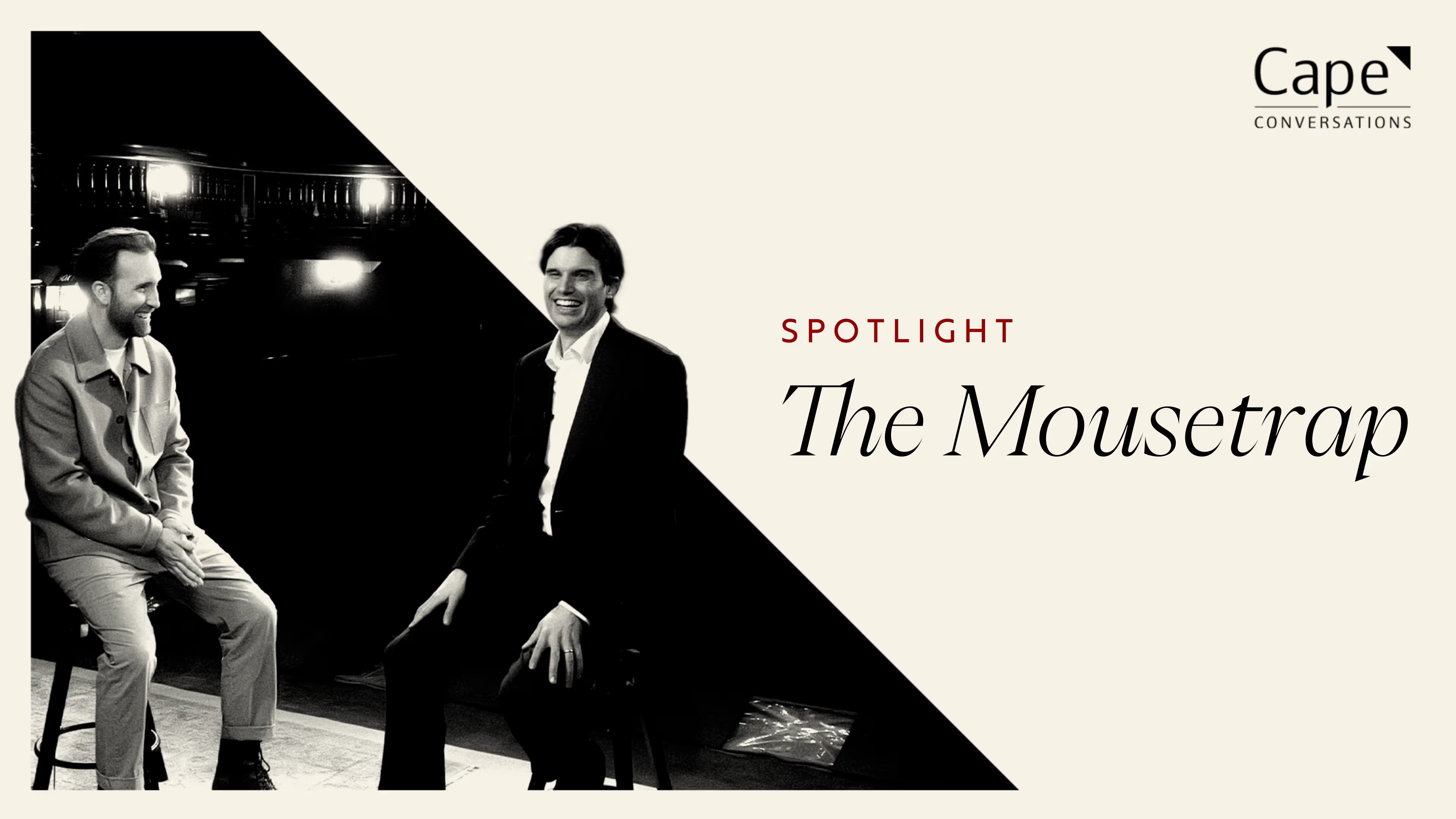
Fenty’s involvement also makes the personal arc rather pleasing. The theatre enthusiast who helped people find tickets is now responsible for a theatrical fixture. It is possible to follow the commercial logic without losing the delight of the thing. Accountancy has its uses; Agatha Christie supplies a more entertaining meeting agenda.
In September 2026, a Toronto engagement of the London production was announced for the Royal Alexandra Theatre, scheduled for January 30 to March 28, 2027. Hannah Chissick was named as director and Fenty as producer. The announcement offered a concrete expression of his interest in taking the production to another audience.
The appeal is easy to understand. A mystery creates a small, temporary society of people who know something they have agreed to keep to themselves. For a producer interested in the value of being present, that is an elegant product feature. The evening ends; the shared secret travels home.
The next invitation
In October 2025, MARI, the events company founded by Ariel Emanuel, announced its acquisition of TodayTix Group from Great Hill Partners. Fenty remained CEO and joined MARI’s executive leadership team, with a wider remit across the portfolio.
The announcement put TodayTix Group at more than 20 million members across the United States, United Kingdom and Australia, working with over 10,000 theatres, producers and cultural institutions. Those dated figures describe the scale of the business entering its next ownership chapter. They also suggest how far an app born around theatre tickets had travelled.
MARI’s portfolio included tennis tournaments, Frieze and collector-car auctions. Bringing ticketing technology and audience knowledge into that setting widened the possibilities for discovery. Someone’s interest in a West End evening need not exhaust their appetite for going out. The difficult work is deciding which invitation will feel welcome.
There is another, quieter thread in Fenty’s life: his relationship with the University of North Carolina at Chapel Hill, where he graduated in 2008. His support for its Institute for the Arts and Humanities includes faculty philanthropy. He has served on its advisory board and sees investment in educators as a way to reach successive generations of students.
It is a fitting place to leave him. A company, a production and a university all depend on somebody making an introduction to a world another person has yet to enter. Fenty’s work keeps returning to that first invitation. The curtain can take care of the drama once people are inside.