Brian Elias once bought a year’s worth of advertising on the backs of supermarket receipts. It sounded sensible. People near his window business shopped at Kroger. Their purchases would come with his pitch. He signed, waited for the telephone to ring, and acquired an education instead. The campaign failed to bring the response he expected. The receipt had delivered a lesson more valuable than a coupon: test before committing.
That small embarrassment belongs near the beginning of Elias’s story because the later numbers can make his career look prearranged. He founded 1-800-HANSONS in 1988 with $5,000 and eventually built a business approaching $80 million in annual revenue. Then he sold a majority stake. Then, having reached the point where starting another company was optional, he started another company.
Today his title at Refloor is Chief Imagination Officer. It has a certain extravagance for an enterprise concerned with what goes beneath the dining table. But imagination, in Elias’s working vocabulary, has practical obligations. Someone must answer the inquiry, measure the room, arrange the installation and keep the promise. The title can wander. The appointment cannot.
An apprenticeship in disappointment
Before HANSONS, Elias worked as a canvasser for a friend of his father who sold windows. He spent a year accompanying salespeople, then took a sales job at another replacement-window company. There he encountered an attitude toward customers that he disliked intensely: customer concern in the pitch, contempt behind the scenes.
He later described that workplace as an education in how he did not want to operate. The disillusionment mattered. He was learning a trade in which the customer usually knows less than the seller and must live with the result for years. A persuasive presentation could win the order. It could also conceal a thoroughly unpleasant business.
Starting his own company gave him control over the promise, although very little room for financial error. With limited credit, he passed customer deposits straight to suppliers to obtain materials. Sometimes a supplier would accept the contract and wait for payment to clear. The distance between a sale and the ability to fulfill it was painfully short.
That is a useful place to locate the young Elias: between the doorstep and the supplier, responsible for making both ends meet. A window order had to become an installed window. Whatever ambitions followed, this elementary obligation came first.
The phone number that learned to sing
HANSONS acquired a much larger presence than a solitary canvasser could achieve. Its television commercials put Elias in front of households across Michigan and Ohio. Its jingle put the telephone number somewhere even more useful: in their heads. “Get It Done” made a compact promise in a business that can produce rather expansive explanations.
By the time Huron Capital announced its investment in October 2017, HANSONS had eight locations across those two states. Its products included replacement windows, roofing and siding. Underneath the familiar advertising, the buyer saw a systematic approach to generating leads and managing projects.
Those two descriptions belong together. The memorable commercial earned attention. A functioning operation had to turn attention into completed work. Homeowners hearing a jingle do not see appointment allocation, purchasing or crew schedules. They notice very quickly when any of those things fail.
Recognition followed the growth. Elias received the Fred Case Entrepreneur of the Year Award in 2012; the innovations cited included computerized canvassing, mobile appointment setting and a company monitoring and command center. In 2018, he was honored among the Legends of the Home Improvement Industry. The public face of the company had spent considerable effort organizing what happened out of view.
A business with an eventual buyer
The sale took preparation. Several years before the transaction, Elias began working toward a leaner business, with higher profits and lower expenses. By 2017, the one-person operation had become a company with nearly $80 million in revenue. A founder could admire the size. A prospective buyer would examine how reliably the company produced its earnings.
The distinction changes the work. An expense that seems tolerable during ordinary trading becomes more conspicuous when somebody is putting a value on the whole enterprise. The sale process required Elias to look at his company as an asset another owner would have to understand and operate.
Huron Capital invested alongside management in October 2017. The transaction’s price was not disclosed. Elias spoke publicly about his confidence in the partner and the prospect of expanding into further products and markets. Selling a majority interest gave the business a new ownership structure while keeping him connected to its future.
For all the years spent convincing homeowners to choose HANSONS, this was a different kind of sale. The prospective customer was buying the organization behind the advertisement. A founder’s confidence had to survive a close reading of the accounts.
“The only reason to build a business is to sell it.”
Brian Elias, discussing the HANSONS transaction
Another room, another generation
Refloor, which his own company history dates to 2020, gave Elias a new product category and a reason to build alongside his son, Daniel. He had spent nearly three decades in a business that brought the sales conversation into the customer’s home. Flooring offered another setting where seeing the actual room could matter.
The family connection gives this second company a different texture. Elias had already demonstrated that he could build a substantial operation. Working with Daniel gave the new venture a purpose beyond repeating a familiar revenue target. The work was shared across generations, with the accumulated experience of the first business available to the second.
By 2023, Refloor completed 7,844 jobs and recorded $63.3 million in revenue, figures published with its subsequent appearance on the Qualified Remodeler Top 500 list. It ranked No. 43 on the list discussed in April 2025. Those numbers make the second act substantial in its own right.
They also keep the story anchored to work delivered. Revenue can become an abstract measure in a founder’s biography. A count of flooring jobs restores the rooms, appointments and installations underneath it. Each job required a customer to let somebody into a home and trust that the promised result would follow.
The imagination officer’s reading list
Elias’s personal website offers an unusually revealing little bookshelf. There is The E-Myth, with its emphasis on building business processes. There is Good to Great. There is Traction, a guide to giving an organization clearer direction and operating discipline. The books fit comfortably beside his continued interest in repeatable work.
His business interests extend beyond installation. They include Credit Card Rate Lending by Hunter Financial, where he is founder and CEO, and DontGo.com, a business concerned with retaining website visitors. Financing and online inquiries sit close to the daily concerns of a home improvement operator. A customer needs to find the company, then find a way to pay for the project.
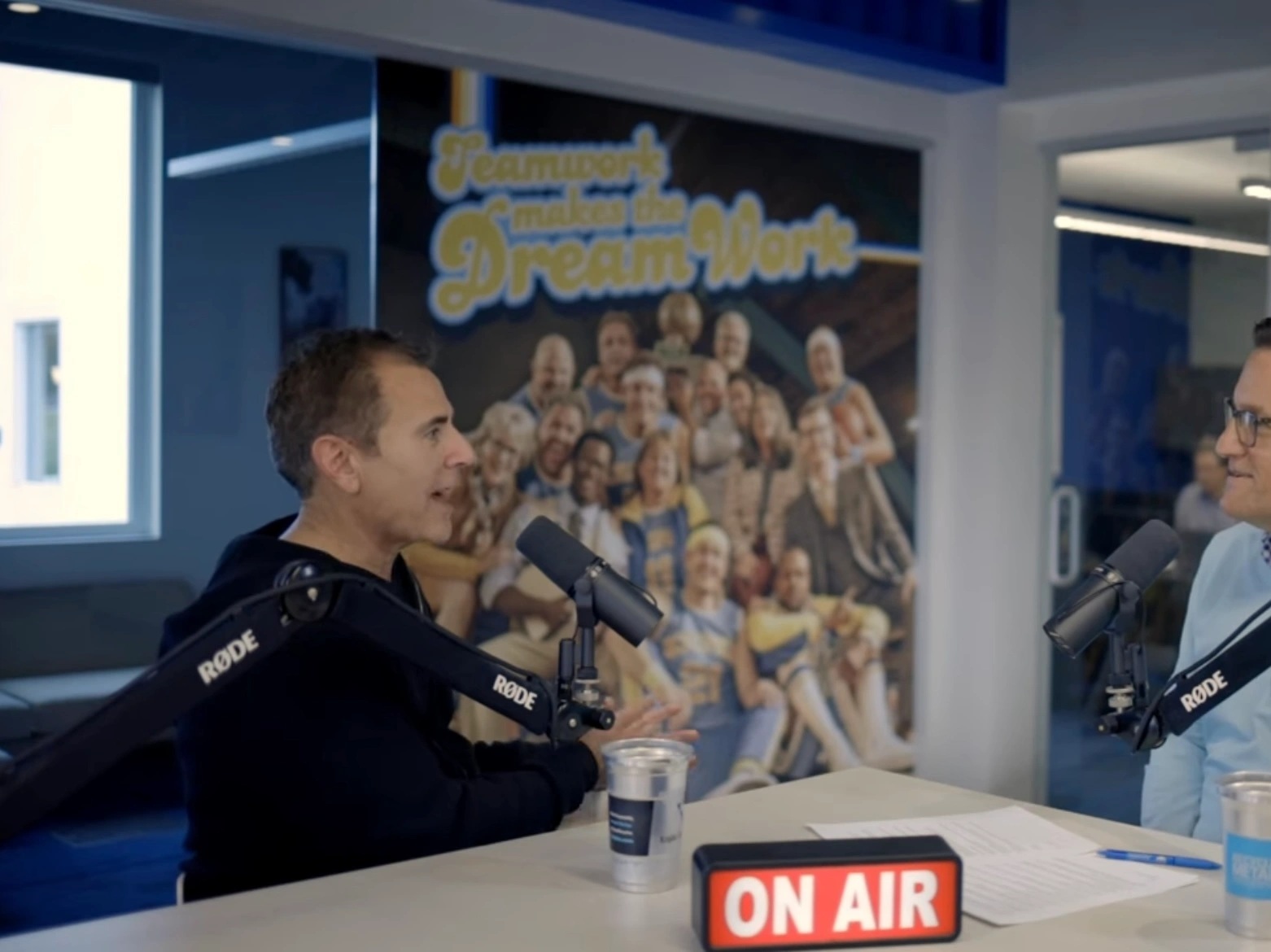
On a 2025 appearance on Systems Simplified, he discussed building an organization that can function without constant intervention from its founder. Clear processes, hiring around values and effective delegation were central to the conversation. For someone carrying the title Chief Imagination Officer, he spends a notable amount of time on the machinery of follow-through.
His public persona allows some playfulness around that seriousness. The title itself does some of the work. So does the personal website, where business observations share space with reflections on relationships and parenting. The operator has interests outside the organization chart, even if the chart keeps finding its way back into the conversation.
The mistakes worth taking to a microphone
In August 2026, a published conversation from The Pinnacle Experience in Baltimore showed Elias returning to a less comfortable subject: hiring mistakes. He spoke about recruiting the wrong people and keeping them too long. Those are admissions that give a leadership talk some substance. Most audiences have already heard that the speaker believes in success.
“Talking about success is easy,” he said. The useful discussion concerned the decisions that had made success harder. His answer was to interview for core values and train for skills, with more willingness to act when someone did not fit. It is a demanding position, particularly for an owner whose earlier work had depended on persuading people to say yes.
The emphasis has shifted over the length of his career. Early on, the immediate problem was obtaining enough business and enough materials to finish the job. At scale, the problem includes deciding who should carry responsibility, what they need to know and when the founder should stop stepping in.
Elias’s second start is interesting because he brought the first company’s lessons with him and still found more to learn. He has sold windows, sold a majority stake in a company and returned to selling floors with his son. The building habit survived the sale. Now it has another generation at the table.