Brett Cravatt and Jason Cohen are smiling in the stands, with a football pitch behind them and supporters all around. It is a good photograph of a business partnership that has acquired an unusually public set of performance reviews. A customer-acquisition company can discuss its results in a meeting. Swansea City gets a verdict from the crowd.
The two built Centerfield together in Los Angeles. Years later, they became controlling owners of the Welsh club. Along the way, Cravatt made a case for sharing power that was more candid than the usual celebration of teamwork: another person can disagree with you, regularly, and still be exactly the person you want beside you.
His route to that conclusion began in a profession with rather more paperwork. Cravatt studied at the University of California, Berkeley, earned a law degree at Stanford, and worked as an attorney. His later working life would include online games, advertising operations, prepaid cards and football ownership. The legal qualification survived. The original career plan did less well.
The lawyer with $30,000 and a sports idea
Contract law did not hold his interest. Cravatt saved $30,000 and used it to start an online fantasy-sports company. He liked sports and saw a practical improvement: games that consumed considerable administrative effort could work more efficiently online. His business licensed games to companies including Yahoo and Fox. He sold it in 2002.
There is something refreshingly concrete about those beginnings. A sum saved from work. A cumbersome activity. A proposed improvement. The attraction was a problem he could understand well enough to attempt a solution. The audience happened to care about sports; the business also needed to care about the time it took to play.
Cravatt subsequently became a founder and operator across several businesses. At Vendare Media, he served as chief operating officer during a period in which annual revenue rose from about $10 million to more than $120 million. He founded WebYES! and co-founded Achieve Financial Services, the prepaid-card business acquired by Green Dot. His board experience included interCLICK, later acquired by Yahoo.
These were different products with different customers. They supplied a working education in the less theatrical side of entrepreneurship: media buying, operations, distribution, and what happens when a company grows beyond the people who started it. A founder’s next venture carries some of that experience along, even when the name on the door changes.
A dinner proposal with a long afterlife
Centerfield began with a conversation between people who already knew one another’s work. Cohen had invested in a business Cravatt sold. At a celebratory dinner, Cravatt raised the possibility of starting something together. Months of calls followed between New York and Los Angeles. Cohen eventually moved west.
They founded Centerfield in 2011 as equal partners and co-CEOs. Cravatt later described Cohen as direct and persistent in business development, while characterizing his own operational approach as more analytical and reserved. He also wanted a working arrangement that would leave room for family life as he and his wife prepared for their first child.
“Jason and I disagree on something nearly every day.”
Brett Cravatt, 2020
That admission gives their partnership some texture. Cravatt argued for respecting different strengths, reconsidering a disagreement and learning from the other leader. The arrangement required each to be a teacher on one occasion and a student on another. Two signatures on the same level of an organization chart were only the beginning.
2011: Centerfield
2023: A new CEO takes over
2024: Swansea ownership changes
2026: A new commercial capital partnership
Finishing the journey after the click
Centerfield worked in performance marketing, where the useful question is what an advertisement actually produces. A person can see an ad, click it, ask a question and leave. Each stage produces activity. A completed purchase produces something the client can take to the bank.
The company expanded its ability to handle that journey. In 2017, it announced $156 million in financing led by H.I.G. Capital and acquired Qology Direct. The purchase brought substantial consumer-sales capacity alongside its advertising technology. Cravatt’s explanation was straightforward: brands were already purchasing the component services, but often from separate providers.
Putting more of the work together meant Centerfield could help close the sale as well as generate interest. The Qology acquisition was consequently an operating change as much as a transaction. It added people who could speak with consumers and complete purchases on clients’ behalf. Software and sales staff now had more of the same job to finish.
Platinum Equity acquired Centerfield in December 2019 and announced the deal the following January. At that point, the company employed more than 1,000 people across seven offices. Its Dugout platform supported customer acquisition across millions of shopping experiences. The new partnership supplied a route toward further investment and acquisitions.
Digital Ventures joined the business as that transaction was announced. Savings.com and Business.com followed during 2020, with Datalot added in 2021. Those purchases widened the business beyond its original configuration. The company’s reach increasingly included websites where consumers were already researching decisions, as well as the technology and sales operations that could help turn interest into business.
Knowing when to give up the title
In May 2023, Kris Barton succeeded Cravatt and Cohen as Centerfield’s CEO. The company had recently marked its twelfth anniversary. That March, Dugout passed 70 billion consumer engagements. The number describes interactions processed by a platform, rather than 70 billion separate people, but it gives a sense of how far the operation had travelled.
Barton arrived from Gannett’s digital-marketing business. The founders endorsed the succession together. For a partnership that had spent years sharing the chief executive role, there was now another decision to make jointly: placing the operating title in someone else’s hands. Centerfield had become an institution large enough to have a next chapter under another leader.
Cravatt and Cohen also established Magellan Equities. The firm targets businesses generating $2 million to $20 million in EBITDA, with interests including software, sports and service businesses. Its pitch to entrepreneurs rests on operating experience: having built and financed companies themselves, the partners propose helping other owners manage growth and prepare for a sale.
Cravatt remains based in Manhattan Beach with his wife and four children. The geography of his investments, however, has become considerably less local. One opportunity brought the former fantasy-sports entrepreneur into the ownership of a team whose results would be played out on actual grass.
From a fantasy game to a real club
In July 2023, Swansea City announced Cravatt’s appointment to its board, following an earlier investment. He had already attended matches at Cardiff and at home against Coventry with his family. The welcome from supporters featured in his account of those visits.
He identified data science, analytics, marketing and sponsorships as areas where he wanted to contribute. Those are recognizable extensions of his professional experience. They are also only part of running a football club, where a decision must make sense in the accounts and survive the entirely separate examination of a Saturday afternoon.
The commitment deepened in November 2024. Cravatt, Cohen, Andy Coleman and Nigel Morris acquired the previous majority owners’ remaining shares. The ownership group and its partners committed more than £20 million of new funding to support operations and investment in the first team. Cravatt emphasized culture, dedicated staff and decisions informed by data.
The club’s ownership statement now identifies Swansea Football LLC, controlled by Cravatt and Cohen, as its majority shareholder. The distinction matters: this is a partnership with responsibility for the institution’s direction. The people who once divided the work of building a marketing company now share responsibility for a club with a history and constituency of its own.
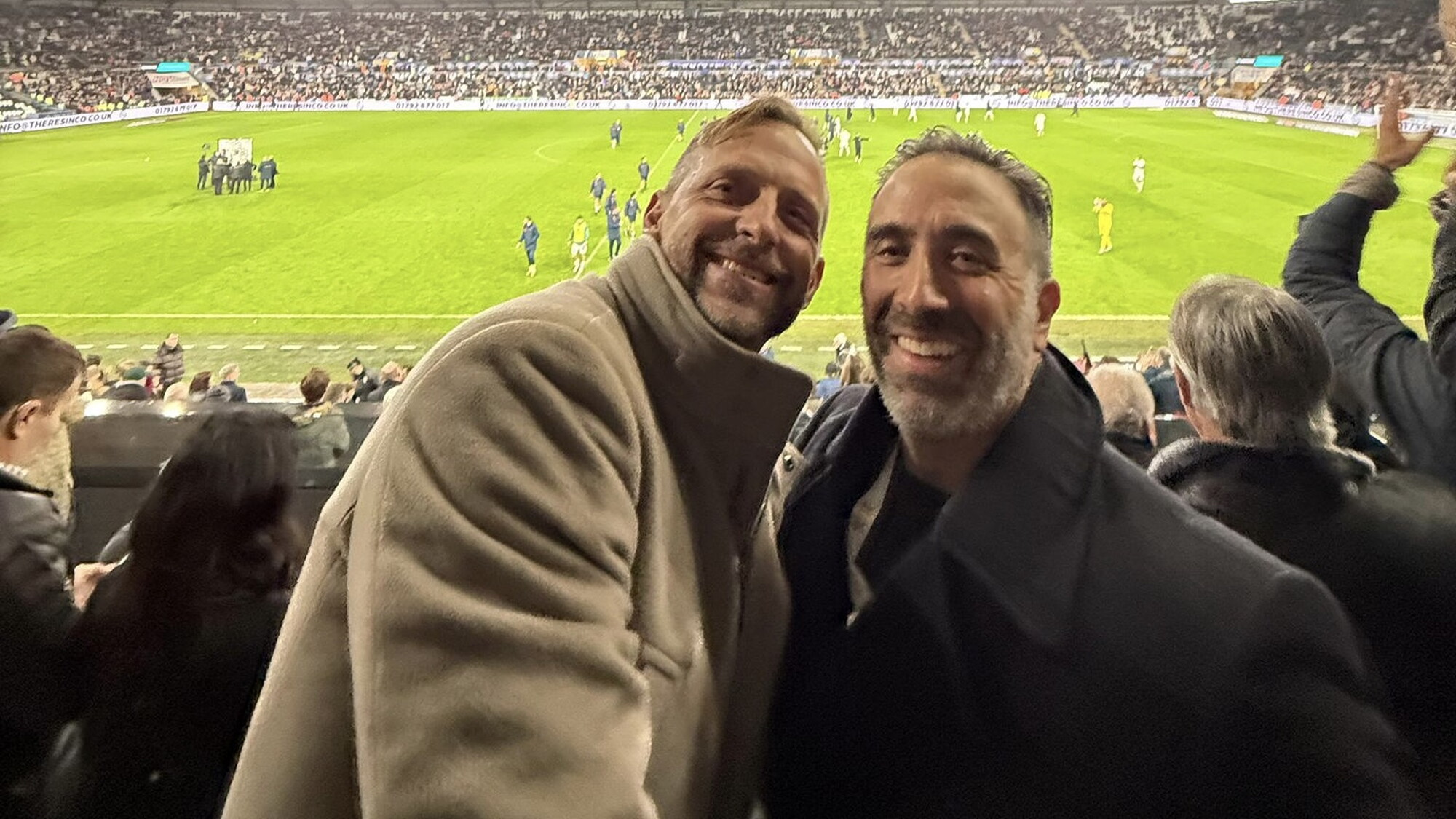
The crowd is part of the business
In April 2025, the pair set out priorities that included more efficient operations, stronger use of data and regular dialogue with supporters. They also made a tangible offer: personally purchasing 500 tickets for each remaining home game for community and grassroots groups, and paying for supporters’ coach travel to an away match at QPR.
Later that year, they explained why Luka Modrić and Snoop Dogg had joined the ownership group. Famous partners could introduce Swansea to a wider audience, increase its commercial profile and help generate resources for the team. The ambition connected audience development to the club’s ability to invest on the pitch.
By December, Martha Stewart had also become a minority owner. Cravatt and Cohen had attended the win over Wrexham and joined supporters for beers named Golden Boy and Drop it like it’s Hops. Football ownership can involve complicated capital arrangements. Occasionally it also requires ordering a pun at the bar.
A further commercial step arrived in June 2026, when Swansea announced a long-term strategic partnership with Shamrock Capital. The investment firm committed capital and sector expertise, with participation in the club’s future commercial success. Cravatt and Cohen welcomed the agreement as support for Swansea’s business objectives.
The next results will belong to the club, its players, staff and supporters as well as its owners. Cravatt has spent much of his career studying how interest becomes action. In Swansea, he has a particularly vivid place to watch: a stadium full of people who already care, and who expect that care to be answered.