July 2008 was an awkward moment to open a business promising access to private investments. Brendan Lake did it anyway, launching PPB Capital Partners from his Philadelphia condominium. The financial crisis followed. By December, the Madoff fraud had been exposed. A new firm asking wealth advisors to trust it had acquired a rather difficult backdrop.
Lake later recalled feeling vulnerable, with an unprofitable business and a proposition that had yet to catch on. His response was to control expenses and keep working with advisors. The advice he had received before launching was modest enough to fit on a business card: grow “one wealth advisor at a time.” In finance, where ambition often arrives wearing several zeroes, that was a useful restraint.
Today, Lake is PPB’s founder and CEO. His work sits between private fund managers and the wealth advisors who want to use their strategies. Getting those parties together requires more than an introduction. Funds need structures, documents, operations, and people who can answer questions after the initial enthusiasm has worn off. Lake has spent his career making that middle ground into a business.
A Philadelphia education in the middle ground
Lake’s path into finance began with PLANCO, a national investment product marketing firm, where he worked as a regional marketing director. Before PPB, he co-founded Pacer Financial LLC, a startup developing alternative investment products for private wealth advisors. He was already working where investment products met the people expected to explain them to clients.
His education was local: a bachelor’s degree at Temple University, followed by a master’s degree at the University of Pennsylvania’s Fels Institute. He has described growing up in blue-collar Delaware County. His adult life remains anchored in the Philadelphia area; he lives in Villanova with his wife and daughter.
There is a practical continuity in that career. Product marketing puts someone close to the point at which a financial idea must become understandable and usable. Developing products adds another layer of responsibility. Running a firm that builds and operates fund structures adds still more. Lake’s work moved progressively toward the details that determine whether an advisor can actually put an investment idea into practice.
The work after the handshake
In July 2017, PPB served as a strategic partner in the fundraising for Fundamental Advisors’ third private equity fund. Fundamental closed that fund with $993 million in aggregate commitments. Its focus included municipal-market and public-purpose assets, with areas such as housing, infrastructure, and alternative energy. The total belonged to Fundamental’s fund; PPB’s role was helping connect private wealth with it.
That distinction matters to understanding Lake. He built a firm that helps other professionals reach one another and operate together. In that partnership, Fundamental’s investor-relations director, Rich Beecher, described PPB as reducing the operational burden for both investors and the business. The paperwork was part of the value being sold.
By January 2020, PPB reported more than $1 billion in total capital invested and over 250 investments made. Lake credited Kate Reilly, who had been with the business since its launch and was being named chief operating officer, with providing a foundation through her attention to detail and execution. The founder’s story included someone who had been doing the necessary work alongside him from the beginning.
A February 2021 podcast appearance offered another dated view of the business: nearly $2 billion in capital commitments, relationships with more than 100 private wealth firms across the United States, and fund minimums as low as $100,000. Those figures describe different measures at different moments. Together, they show a firm developing beyond its condo beginnings without turning its history into an imaginary investment-performance chart.
Six steps, and several places to get stuck
Lake’s business becomes easier to understand when its work is laid out in order. PPB’s custom-fund process starts with identifying investment objectives, then moves into legal structure and documents. Consulting and due diligence follow, along with distribution, fundraising, compliance, onboarding, and ongoing management. A subscription is one moment in a much longer relationship.
The scope is revealing. An advisor may have a strategy in mind but still need operating agreements, terms, subscription documents, custodial review, and filings. Later come capital calls, records, tax support, and communications. An attractive investment thesis can coexist with a very unattractive pile of unfinished administration. Lake’s firm occupies the space between them.
PPB also offers an operations service for funds an advisory firm already runs. In that arrangement, PPB takes on the general-partner role while the wealth professional remains the investment advisor. Its listed responsibilities include due-diligence records, auditor requests, capital calls, tax documents, and reporting. The firm describes more than 45 tasks per fund in this service.
That division of labor is central to the company Lake has built. It gives advisors a way to retain their role with clients while handing a defined set of operational responsibilities to another team. The point is concrete: an existing fund still needs to function tomorrow, even when the advisor would rather spend tomorrow talking to a client.
- DiscoveryGoals and fund objectives
- Design & structureTerms, documents, and filings
- ConsultingConstruction and due diligence
- DistributionInvestors and subscriptions
- OnboardingCompliance and commitments
- ManagementRecords and tax support
A portal should know its place
Lake’s approach to technology has a mildly unfashionable quality. He is willing to question the appeal of putting everything in one system. “A one-stop shop technology solution for RIAs does not exist,” he says in PPB’s explanation of its technology approach. It is a pointed opening for a business that also operates a private-wealth portal.
Under the PPBx umbrella, the Private Investments Exchange, or PIX, supports account onboarding, maintenance, trade processes, and reporting. PPB describes its approach as researching available technology and integrating tools rather than limiting itself to one provider. The aim is to make the work easier to complete and the information easier to see.
For Lake, the question is how technology serves an advisor’s practice. A portal can organize access to documents and information. It still has to fit the people using it. The attraction of a single login is obvious; the harder question is whether the system behind that login can accommodate the advisor’s actual needs. His skepticism gives the technology proposition a useful boundary.
“A one-stop shop technology solution for RIAs does not exist.”
Brendan Lake · PPBx technology
Who gets to choose?
In his July 2026 writing, Lake connected alternative-investment platforms with the independence that registered investment advisors prize. He drew on Jack Bogle’s advocacy for putting clients’ interests first, then asked advisors to examine the incentives of the platforms they choose. Ownership relationships, manager interests, fees, and restricted choices all entered the discussion.
His argument was that an independent advisory business should look for alignment in its partners as well as in its own model. He challenged the assumption that a large menu of managers necessarily delivers the flexibility an advisor needs. Smaller and more specialized strategies, he argued, can be overlooked when a platform is dominated by large firms.
The position gives Lake a subject beyond access alone. An advisor can get through the door and still find the choices inside constrained. His preference for open architecture places the advisor’s ability to assemble an appropriate solution at the center of the relationship. Independence, in this telling, requires attention to the companies standing behind the platform.
A wider door needs a working hinge
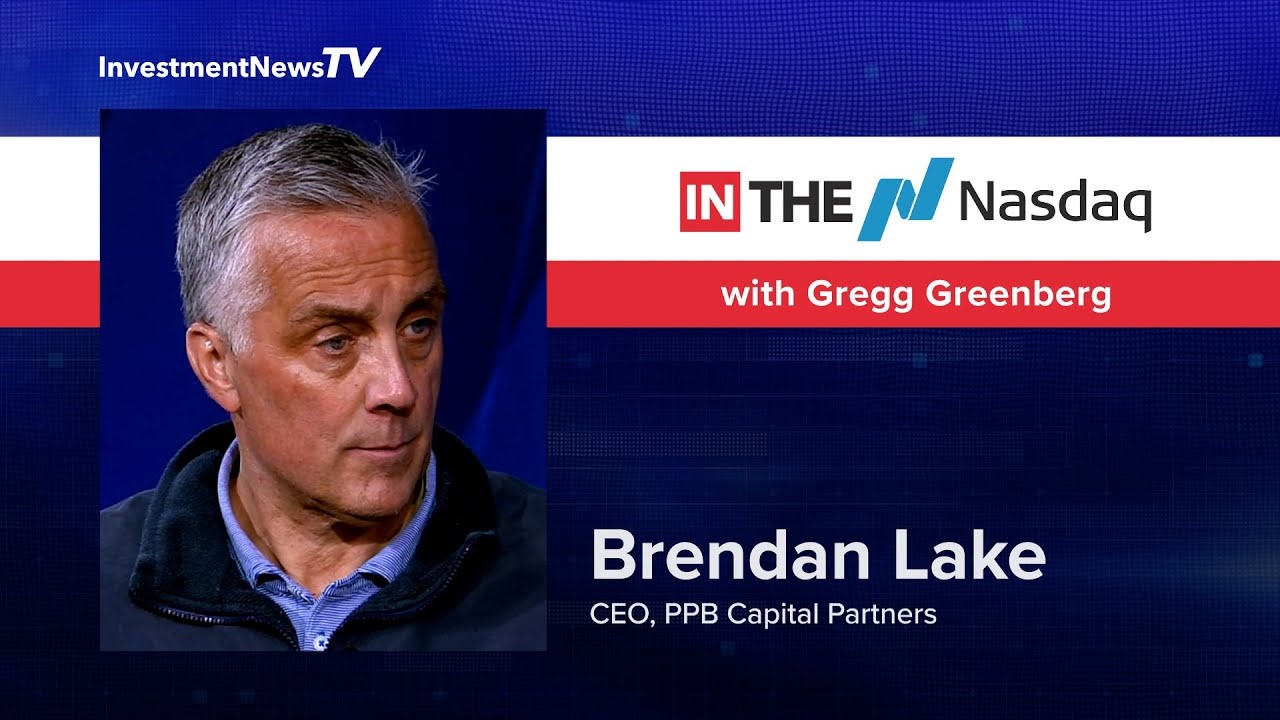
Lake has also been talking about who comes next. In a May 2025 conversation with Gregg Greenberg at Nasdaq, he discussed wealth managers distinguishing themselves through private-market knowledge. The discussion included diversification beyond a traditional stock-and-bond allocation and the importance of structuring liquidity correctly. He was describing an expanding opportunity with a practical condition attached.
In January 2026, he turned to evolving fund structures and registered products in an Asset TV interview. He identified the mass-affluent segment as an important driver of growth and discussed how advisors could execute private-market strategies. The emphasis remained on the means of implementation, alongside the prospective audience.
PPB’s registered-products offering makes the change tangible. The firm says that, having previously served advisors with $1 billion or more in assets under management, its registered product now allows it to serve advisors with $100 million and above. Those thresholds refer to advisory businesses, rather than minimum investments for individual clients. Expanding access involves changing the structure through which it is delivered.
For Lake, that creates another version of the problem he set out to solve: more advisors can consider private markets, and more of them need the support to put a program into operation. The door may be wider, but someone still has to make sure it opens properly.
Making room at his own table
In March 2026, PPB announced a larger operating role for Bob Oros, the former Hightower and HD Vest chief executive who had already joined its board. Oros would work alongside Lake on business operations and infrastructure. The arrangement gave Lake more room to focus on client service and stewardship of the brand.
In September, PPB added Olivia Eisinger as chief growth officer and Anthony “Tony” Wilson as head of strategic partnerships. Both would report to Oros. Eisinger’s remit included the advisor-relations team and growth strategy; Wilson’s included relationships with custodians, national RIAs, banks, trust companies, and independent broker-dealers. Lake described the hires as an investment in stronger relationships with advisors and partners.
The growth was visible in an August announcement too: PPB ranked 1,950 on the 2026 Inc. 5000, its second consecutive appearance. The company said it had advanced more than 800 places from the previous year. The ranking measured revenue growth from 2022 to 2025. It was a business-growth recognition, rather than a verdict on fund returns.
Time invested elsewhere
Outside work, Lake’s public account of his interests centers on philanthropy. In a March 2026 interview feature, he discussed supporting initiatives for grammar-school-aged children, with an emphasis on curiosity, confidence, and exposure to new ideas early in life. Giving time to the next generation appears alongside his professional interest in helping people gain access to opportunities.
The connection is an appealing one, provided it is kept human in scale. A child finding a new interest and an advisor building a private-market program inhabit very different worlds. Both depend on practical help arriving at a useful moment. Lake’s account of his charitable interests gives the financial executive a life beyond fund structures, and a reason to think about opportunity on a longer horizon.
His career has brought him from product marketing to founding, from early uncertainty to a firm hiring experienced leaders for its next stage. The recurring work is deceptively ordinary: organize the process, make room for another person’s needs, and keep the relationship functioning. A door is a pleasing metaphor. The hinge deserves some credit.
Continue the conversation
- PPB Capital Partners
- Brendan Lake on LinkedIn
- PPB on LinkedIn
- PPB on Twitter / X
- Watch: In the Nasdaq with Gregg Greenberg
- Watch: How Private Markets Are Reaching More Investors
- Watch: Out of Office with Brendan Lake
- Listen: Gaining Perspective, February 2021
- Listen: ValueTalks with Lake and Frank Burke
- Read: Lake on advisor independence, July 2026
- Read: Reflections, June 2020
- Read: PPB’s 2026 leadership appointments
- Read: PPB’s Inc. 5000 announcement