The decisive moment in the life of bread & Butter was not a pitch, a funding round or a ribbon cutting. It was a text message. In 2007, Meredith Vachon had ordered business cards and helped make a website for the freelance work she was doing with Rachel Mays Ayotte. The evidence was suddenly difficult to ignore. “I think we just started a company,” she wrote.
The two women were working from separate living rooms, Ayotte in Los Angeles and Vachon in Austin. They had a little over $1,000. They also had a grievance. At larger public-relations firms, hospitality accounts could feel like pieces moving down an assembly line. But restaurants are not assembled that way. A restaurant is a hundred small acts of noticing: the regular’s preferred table, the moment a drink needs replacing, the neighborhood’s appetite for something new.
Their proposition was that communications for hospitality should carry the same sensitivity as hospitality itself. The agency would be close enough to understand a market and broad enough to make that local knowledge travel. Nearly two decades later, that proposition has become a network in 20 markets and a menu much longer than public relations.
Scale, served locally
Most companies expand from the center. bread & Butter expanded toward the need. In 2013, six years after that text message, the firm had six offices, 25 employees and more than 50 clients. New York opened because clients needed New York. Texas grew under Vachon because hospitality brands there needed people who understood Texas. The cost was extra office overhead. The trade was less travel and more useful proximity.
This is the company’s real product, even more than publicity: coordination with context. A hotel manager can send one note about a new happy hour and set several systems moving. The public-relations team considers the story. Social plans the posts. Digital shapes the email. The website gets the update. Influencer work finds the right guests. One brief replaces five agency calls.
“We grow to accommodate our clients versus bringing on clients to grow.”Rachel Mays Ayotte
That order matters. Growth follows an observed demand; it does not precede one. It also explains how bread & Butter differs from both a neighborhood boutique and a giant integrated agency. The boutique knows the streets but may lack range. The giant has range but can arrive by plane. bread & Butter tries to combine the local agency’s reflexes with a national network’s leverage.
The first thing to fail was the old map of attention
For years, the publicist’s map was straightforward. Win editorial coverage, collect the clipping, repeat. Then diners began checking social feeds and review sites before they read a critic. The channel that had organized the business no longer organized the customer. Ayotte’s response was not to declare traditional media dead. It was to stop treating it as sufficient.
The firm added social media management, digital and email marketing, influencer campaigns, photography, creative work, websites and brand partnerships. Its ideal customer is correspondingly busy: a chef who wants to stay in the kitchen, an understaffed general manager, a director of sales who would rather not referee five vendors. Restaurants, hotels, resorts, destinations, spirits makers and packaged-food brands buy an integrated team rather than a single channel.
What changed the agency’s mind was ordinary customer behavior. People were discovering places differently. Measurement also improved. Digital work made it easier to see what moved, what stalled and what deserved another try. The company’s stated habit is practical: test the campaign, and pivot when it is not working.
The useful audience is not the biggest audience. It is the audience that might actually come through the door.
Ayotte has a compact way to make the point: a Brooklyn business should prefer 500 followers in Brooklyn to 50,000 in Brazil. This sounds obvious until one remembers how many marketing dashboards are built to reward the larger number. Hospitality makes the flaw visible. A distant impression cannot occupy a barstool.
Make the event carry the message
Consider Saucy by KFC, the fried-chicken chain’s sauce-centered spinoff. bread & Butter organized the Orlando launch in three phases: introduction, opening and sustained attention. The preview gathered media, influencers, community VIPs and the brand team. An aura photographer matched each guest’s energy with a sauce. A “Sauce Sommelier” explained flavor profiles. It was silly in precisely the productive way. The details gave guests something to photograph, describe and repeat.
The agency reports 82 press hits, 20 influencer partners, 23,000 engagements, 546,000 influencer impressions and 2.4 billion media impressions. Those are campaign figures, not a proof that every impression sold a tender. But the mechanics are clear enough to copy: make the experience interesting before demanding attention for it.
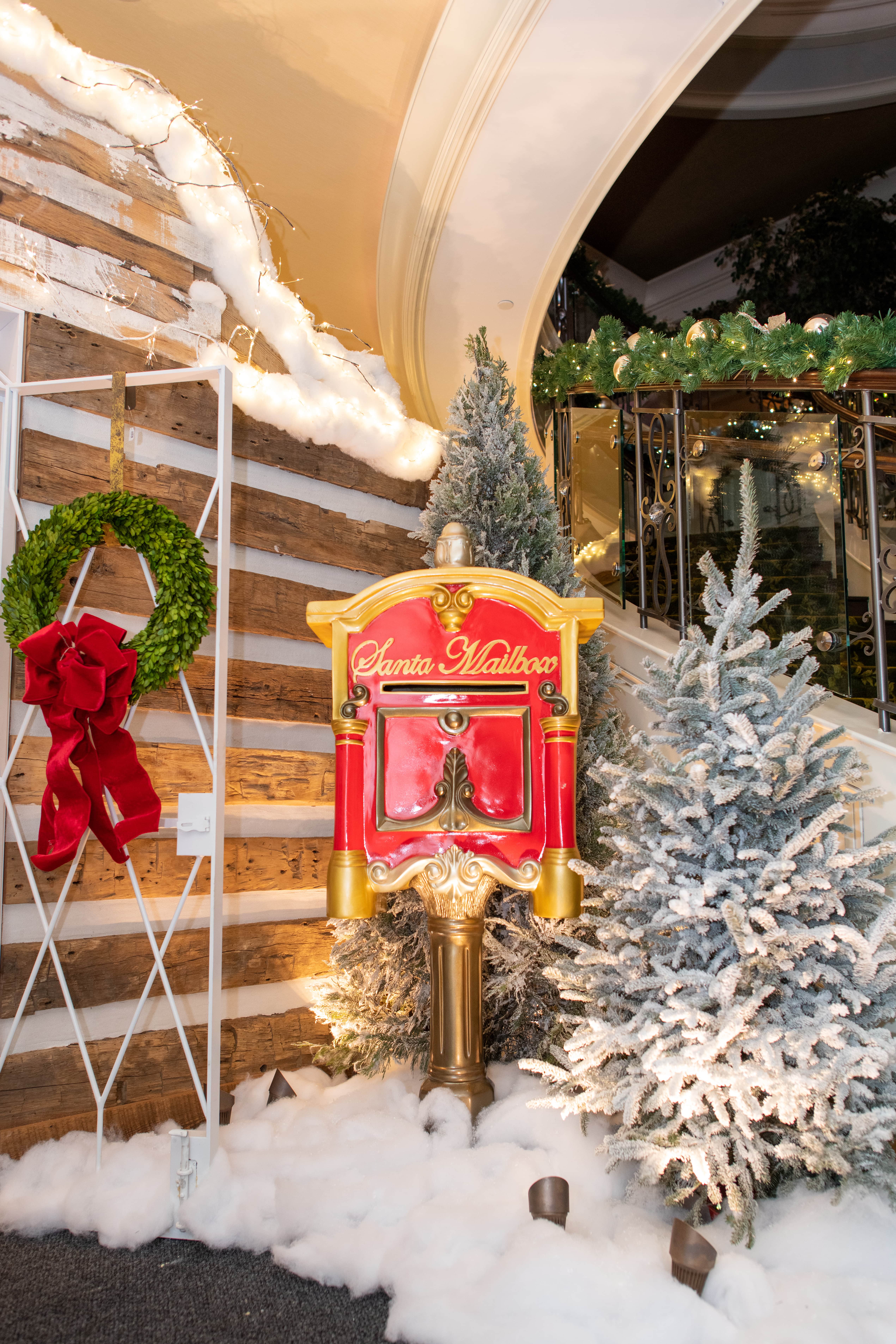
The St. Regis Atlanta offers a second version. To give the hotel’s holiday programming a local and national reason to exist, bread & Butter helped assemble Lucy’s Market, architects, designers and antique-wood specialists into the Astor Chalet. A 24-foot tree, a Swiss-inspired room and a seasonal shop turned a hotel promotion into a place. The case study reports a 40 percent sales increase and 25 percent more holiday covers.
The method depends on a few conditions. There must be a real audience overlap, an experience people would choose even without the publicity, and enough operational capacity to welcome the demand. A partnership with mismatched brands is merely two logos sharing oxygen. A viral opening with poor service teaches more people to stay away. Local expertise also loses its edge when the buying decision has no meaningful local component.
The part worth borrowing
- Start with the customer’s actual route to purchase, not the channel you happen to sell.
- Give one owner responsibility for the brief across PR, social, email, web and creators.
- Choose partners for audience overlap and character, not name recognition alone.
- Measure the behavior nearest the business: bookings, covers, sales and relevant local reach.
When the publicist becomes the publisher
Late Checkout began as an internal joke with strategic teeth. The team could recognize a worthwhile trend, but editors had their own calendars. Perhaps, they said, we should start our own magazine. Chief Digital Officer Samantha Markiewicz shaped the idea first as a LinkedIn feature. Readers responded, and it grew into a daily newsletter and a standalone site about food, drink, travel, design and culture.
The publication is not positioned as a breaking-news desk. Ayotte describes it as the friend who reads everything and sends you the cool thing. That modest description conceals a meaningful business shift. An agency traditionally rents attention from editors and platforms. Late Checkout lets bread & Butter cultivate an audience it can reach directly. The publicist has not abandoned the gatekeeper. She has built another gate.
This is where bread & Butter sits in the market now: part specialist PR shop, part integrated creative agency, part distributed local network and, increasingly, part media company. Its competitors can match pieces of that stack. The difficulty is making the pieces behave as one without sanding away the local judgment that justified them.
The firm’s own rule is useful here: when there is nothing surprising, interesting or useful to say, it does not say it. That is less a slogan than a constraint. Hospitality marketing often fails when it confuses activity with a reason to care. bread & Butter’s best work reverses the order. First create the thing worth crossing town for. Then tell the people who might cross town.