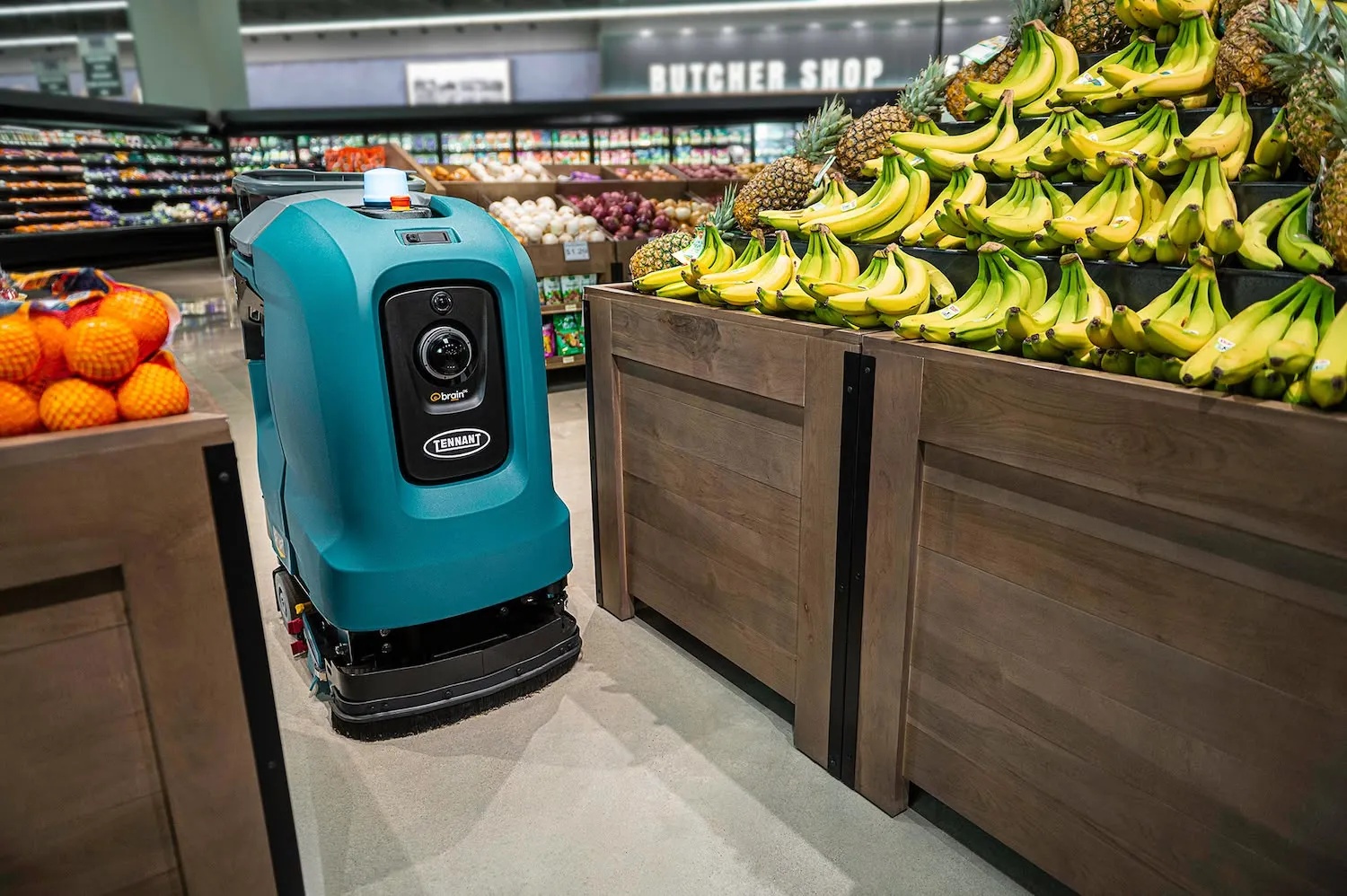
The floor scrubber already knew the way. Across Sam’s Club warehouses, it was making its rounds, passing pallets and merchandise while doing the unglamorous work of keeping a store clean. Then somebody gave that familiar journey another purpose. What if the machine could inspect the inventory along the way?
- Brain builds the autonomy software inside partner-made commercial robots.
- Sam’s Club added inventory scanners to almost 600 existing scrubbers.
- The payoff depends on useful work, reliable routes and people acting on the results.
By October 2022, Sam’s Club had completed a national rollout of scanning towers on almost 600 autonomous scrubbers. The accessories captured shelf data as the machines moved. Product location, stock levels, price accuracy: suddenly a cleaning machine had reasons to look up. The ingenious part was the reuse. A robot had already earned its place in the building. The next job rode along.
A brain without a single body
Brain Corp occupies an unusual position in this story. It supplies BrainOS, the autonomy platform, while equipment partners supply machines. Think navigation, obstacle avoidance, fleet management and software updates. The customer may recognize the Tennant name on the scrubber long before learning which company helped it find its way around.
The company began in 2009 with Eugene Izhikevich and Allen Gruber. Izhikevich’s background was theoretical neuroscience; he also founded Scholarpedia, a peer-reviewed encyclopedia. It is an entertaining origin for a business whose software now helps clean commercial floors. The connection is less mysterious than it sounds: perception and movement become difficult together, especially around people.

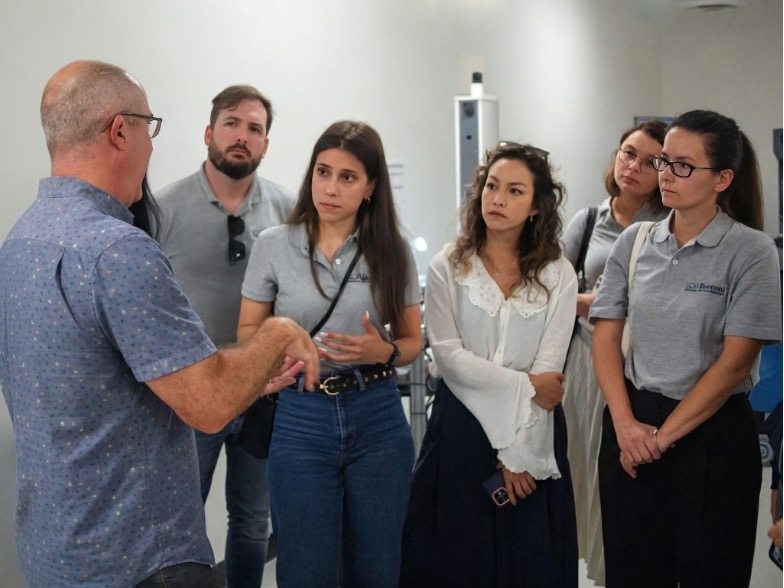
Today, Clean Suite covers floor-care operations, including reports showing where machines cleaned. Sense Suite handles inventory capture, analytics and remote visibility. These products serve retailers, distributors and facility operators. Brain’s expertise sits between a machine’s sensors and a manager’s decisions: navigating the space, collecting information and making the work visible.
That makes comparisons slightly slippery. Avidbots sells autonomous cleaners; Simbe’s Tally scans shelves. Brain competes across those applications through its platform and partners. Its appeal is the ability to combine autonomy with established equipment, distribution and support. A buyer still has to compare the complete service, machine and operating cost. For an equipment maker, the question is whether buying an autonomy platform saves enough development work. For a store operator, it is whether the combined system makes tomorrow’s shift easier to run.
The price of the second job
There are two kinds of money in Brain’s story. One is capital: a $114 million Series C announced in 2017, followed by $36 million in Series D funding in 2020. Tennant then made a $32.1 million minority investment in February 2024. The manufacturer became an investor in the intelligence powering its equipment.
The other is the customer’s calculation. Brain’s software-as-a-service model adds recurring software and support to physical equipment. In April 2026, Tennant and Brain extended their relationship, including three more years of next-generation floor-care exclusivity and a simpler, integrated buying model. Equipment, autonomy and service have to add up to a worthwhile daily operation.
Veritiv offers a concrete example. In a Brain-published customer case study, the distributor reported reallocating 14,000 worker hours across 23 locations and cutting maintenance and labor costs by roughly half. Its $3.4 million savings figure was a ten-year projection. Those distinctions matter: reassigned hours, reduced costs and forecast savings describe different things. A purchasing team should keep separate columns for each.
Across 23 locations. Case-specific results, published October 2024.
A store refuses to hold still
The awkward detail about a retail floor is that it changes. Displays move. An aisle that worked yesterday acquires an obstruction today. Brain’s March 2026 Clean 2.0 release addressed manual route training with SelfPath AI, allowing compatible Tennant X-series robots to generate and adjust routes. The change reveals a persistent operating burden: teaching the machine can become another job for the staff.
Brain reported 22% greater coverage in initial deployments of the update. That is a company-reported early result, rather than a promise for every building. The sensible test is local: does the robot finish useful work with fewer interruptions, and does the team spend less time managing it? A beautiful route map cannot answer those questions alone.
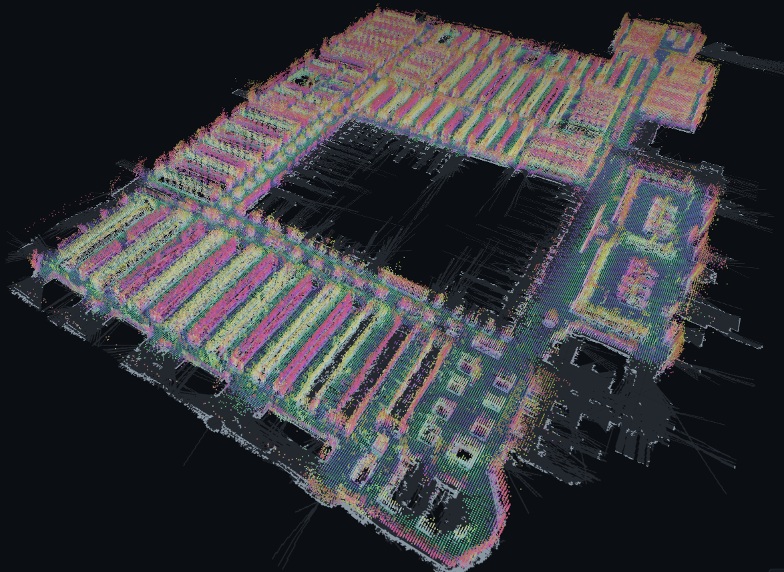
In May 2026, Brain expanded research with UC San Diego on semantic mapping and contextual intelligence. The ambition is to help robots understand what surrounds them. “The challenge is no longer simply movement or perception, but understanding,” CTO John Black said in the announcement. This is research aimed at stronger context, not evidence that machines understand every retail surprise.
There is also the question of trust. These machines share space with customers and employees. Brain’s Trust Center lists SOC 2 Type II compliance and independently recognized controller components. Cybersecurity controls and physical safety address different risks; neither substitutes for matching equipment to its intended environment. For enterprise buyers, the paperwork belongs beside the route demonstration. A fleet has to satisfy the people responsible for operations, security and safety.
The humans at the end of the route
Another adjustment arrived through ShelfOptix, launched with Driveline in September 2025. Instead of asking every retailer to run robots, the managed service pairs portable shelf scanners with Driveline’s field network. Southeastern Grocers was among its launch pilots. The buying proposition shifts toward delivered shelf intelligence and help acting on it.
That arrangement makes an important constraint visible. A shelf scan produces evidence, while store execution requires time, access and responsibility. The service model brings those activities closer together. It also gives buyers another choice: compare owning and operating equipment with paying for a managed result. The right comparison depends on what their teams can reliably handle.
A robot can find the empty space. Someone still has to fill it.THE OPERATIONAL QUESTION
The practical lesson is to attach automation to a task that already matters, then give the resulting information an owner. For a prospective customer, that means measuring route completion, staff attention and resolved shelf issues. Sparse cleaning demand, frequent interventions or a team unable to act on alerts can weaken the arithmetic. More data alone will not replenish a shelf.
Brain reported more than 50,000 deployed robots worldwide in August 2026. Scale makes the idea interesting; the ordinary journey explains it. Floors need cleaning again. Shelves need checking again. Brain’s opportunity lies in making those repeated trips useful enough that people keep asking the machines to return.