robotics-software
(7)
Intrinsic wants robots to stop needing a specialist for every new job
Google’s robotics software group is betting that the expensive part of automation is teaching the machine. Its answer combines reusable skills, a virtual workcell and an unexpectedly useful respect for loose cables.
FieldAI and the Robot That Outgrew Its Map
A building site changes faster than a floor plan. FieldAI is betting that robots can keep up - and that the most useful machine is the one that knows when to be cautious.
Hirebotics Hid the Robot Code - and Put a $105,000 Welder on Wheels
The Nashville robotics company started by renting general-purpose cobots by the hour. A welding distributor, a stubborn programming bottleneck and one unusually useful app turned that experiment into a hardware-plus-software business for fabrication shops.
Realtime Robotics, Inc.
Realtime Robotics is a Boston-based deep-tech company that gives industrial and collaborative robots the ability to plan collision-free motion in real time. Spun out of DARPA-funded research at Duke University in 2016, its RapidPlan software and RapidSense perception system let robots generate and adjust their own paths in microseconds, cutting the time and cost of programming, deploying, and coordinating multiple robots in a shared workspace. Its technology is used by manufacturers including the BMW Group, and the company is backed by strategic investors such as Mitsubishi Electric, HAHN Automation, and SAIC Capital.
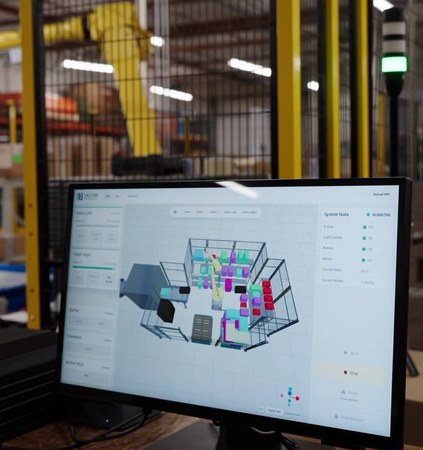
Jacobi Robotics
Jacobi Robotics is a UC Berkeley spinout building AI-powered motion planning software that lets industrial robot arms be programmed and deployed in under a day instead of a month. Its platform generates collision-free trajectories in under a millisecond, and its flagship product, the Jacobi OmniPalletizer, handles real-time mixed-case palletizing without pre-sequencing. Founded in 2022 and launched publicly in 2024 with a $5M seed round, the company partners with robotics providers like Formic and ABB to bring faster, cheaper automation to manufacturers and warehouses.

Benji Barash
Benji Barash is the co-founder and CEO of Roboto AI, a Seattle startup building an analytics platform for robotics and physical AI. A former engineering leader on Amazon's Prime Air drone delivery program, he spent his Amazon days writing throwaway scripts to wrangle sensor logs - and turned that frustration into a company. After more than six years at Amazon and a year as entrepreneur-in-residence at the Allen Institute for AI, he and CTO Yves Albers-Schoenberg launched Roboto out of stealth in 2023 with a $4.8M seed round, on the conviction that robotics doesn't have an algorithm problem, it has a data problem.

Eliot Horowitz
Eliot Horowitz is the founder and CEO of Viam, a New York robotics-and-automation software platform that lets developers build, deploy, and manage machines in the physical world. He wrote the original core code of MongoDB, which he co-founded in 2007 and steered as CTO for 13 years through a 2017 IPO and a market cap that climbed into the tens of billions. After tinkering with a cat feeder, a chess-playing robot, and a smarter sprinkler during the pandemic, he concluded that robotics hardware had outrun its software, and built Viam to close that gap.