Shipping is the part of ecommerce that acquires a personality only when it goes wrong. A label refuses to print. A promised date slips. A package begins an unscheduled tour of the Midwest. The customer does not blame a carrier network, an API call, or a warehouse rule. The customer blames the shop whose name appeared on the checkout page.
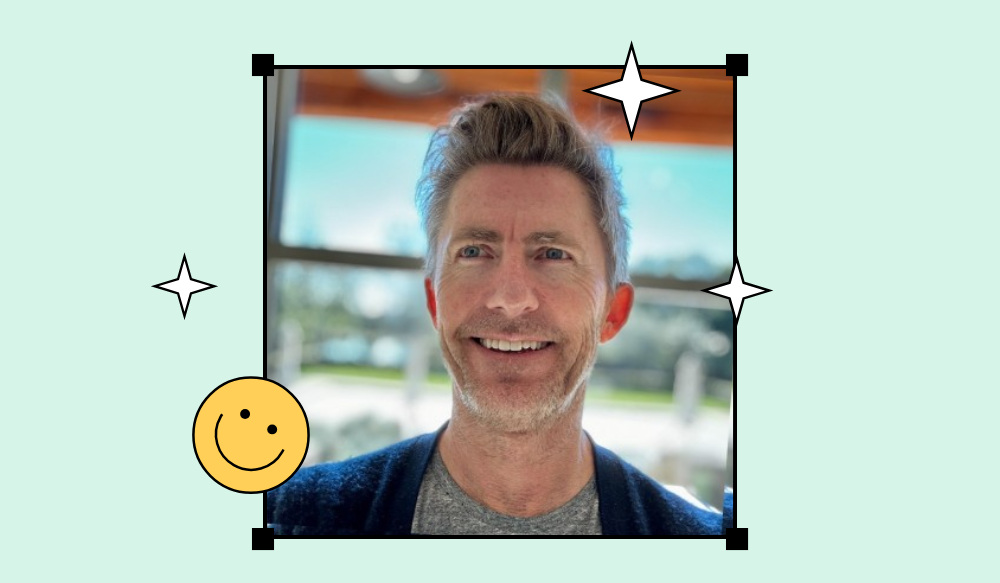
Brad Ramsey has chosen this unglamorous threshold for his latest act. In January 2026, Shippo appointed him chief marketing officer, reporting to co-founder and CEO Laura Behrens Wu. His remit joins global marketing with global sales and stretches across small businesses, midmarket companies, platforms, and developers. It is a broad audience for a product category often known for generating tracking numbers.
Ramsey's job is to give that backstage machinery a front-of-house meaning. Shippo connects merchants to more than 40 carriers and handles the routine but consequential work of comparing rates, producing labels, preparing international paperwork, tracking parcels, and managing returns. The software does not need to become theatrical. It needs to become legible: a system that helps a business keep its word after a shopper clicks buy.
The scientist in the marketing department
The first useful surprise in Ramsey's biography is his degree. At Indiana University Bloomington, he studied biochemistry. The laboratory did not become his profession, but the habit of moving between hypothesis and evidence is easy to recognize in the career that followed. Marketing, particularly inside a large technology platform, is an endless experiment conducted in public. Change the message, choose a channel, measure the response, and resist the temptation to mistake a loud result for a lasting one.
His professional route reads like a compact history of the commercial internet. He worked in partner marketing at eBay, moved through global marketing leadership at Yahoo, and became chief marketing officer at IGN Entertainment. At Google he led marketing for YouTube before taking on consumer marketing in Asia-Pacific. He then moved to Facebook, now Meta, where his roles included North American business marketing and regional marketing leadership in Asia-Pacific.
By 2018, he was vice president of global marketing at Twitter. A 2019 announcement for a new head of global business marketing placed that executive under Ramsey, a small organizational detail that reveals his position between the platform's public identity and the advertisers financing it. Consumer delight and business utility were not two separate stories. They had to share the same product.
Meet the audience before writing the campaign
Ramsey arrived at Quizlet in February 2020 as chief marketing officer and later carried the additional title of senior vice president, international. The timing put a learning platform in the center of a sudden global shift toward remote classrooms. It also made the difference between distribution and usefulness unusually clear. Reaching students was easy to count. Helping them learn was the harder standard.
In a 2021 interview about Quizlet's partnership with TikTok, Ramsey offered a tidy test for any marketer looking at a fashionable platform: Understand your audience, where they are
. The rest of his answer centered on what would improve that audience's experience and what distinctive value a partner could contribute. Teachers were already making educational content on TikTok. Quizlet could let them connect study materials directly to that activity. The partnership followed behavior instead of trying to invent it.
“The channel is not the strategy. The audience's useful next step is.”An editorial reading of Ramsey's public partnership framework
The same audience-first instinct appeared in Quizlet's 2021 brand refresh, which Ramsey introduced with Sean Daily. The work celebrated the unphotogenic middle of learning: all-nighters, self-quizzes, snack-fueled sessions, and the effort that a final grade compresses into one character. Its line, “Learn it. Own it.”, shifted the emphasis from possessing information to developing command of it. The campaign made struggle part of the visual language rather than an embarrassing scene to crop out.
Two years later, Ramsey publicly celebrated Quizlet's launch of Q-Chat, an adaptive tutor built with OpenAI technology and Quizlet's educational library. It was another change in medium, from flashcards to conversation, while the customer promise stayed recognizable: help a learner test understanding rather than merely collect an answer.
A pirate ship, then a hippo
In February 2024, Ramsey moved from education technology to Pirate Ship. The category jump is less dramatic than the mascots suggest. Both Quizlet and shipping software take a process with many small decisions and reduce its cognitive tax. At Pirate Ship, Ramsey led brand and growth as the company expanded further into small and midsize businesses. Its identity made inexpensive postage unusually playful, but the promise remained practical: simple software, discounted rates, and support when a package went off course.
Ramsey described the brand as making shipping “fair, accessible, and fun.” That sentence contains the challenge of marketing an operational tool. Fair and accessible belong to the product and price. Fun belongs to the experience. Lose the first two and the third becomes costume jewelry.
His move to Shippo kept him in the domain while changing the canvas. Shippo serves individual merchants, larger operators, marketplaces, and technology partners. Some customers live in a dashboard. Others encounter Shippo as an API inside a product someone else has designed. The marketer must explain the same company at multiple levels of technical depth without making the language feel as though it passed through six approval meetings.
The transferable play: begin with the moment a customer feels. Only then explain the machinery that improves it.
The sales meeting inside the brand story
Putting marketing and sales under Ramsey gives the story a short walk to reality. A campaign can promise easy carrier access; a sales conversation will discover which carrier, country, integration, or reporting requirement makes “easy” credible. Product positioning gets better when those objections travel back quickly. The arrangement also suits a leader whose career has crossed consumer and business audiences. He has spent years watching one product mean different things to the person using it and the organization paying for it.
Shippo's announcement describes the immediate priorities: scale cross-segment go-to-market execution, evolve the brand, and support platform growth. Ramsey framed his aspiration in human terms, saying he wanted to create “stronger connections with merchants and partners.” The phrase is gentler than the typical vocabulary of pipeline and capture. It also places the relationship before the transaction.
There is an operational discipline beneath that warmth. Behrens Wu praised Ramsey's mix of brand leadership, rigor, and experience scaling marketing organizations. His resume supports the global portion of that assessment: North America, Asia-Pacific, international expansion, consumer products, advertising businesses, education, and logistics. The work has repeatedly required a broad idea to survive local context.
That range matters because “global” is among the easiest words to place in a strategy and one of the hardest to honor in practice. A useful message has to travel without assuming every merchant has the same margin, every market has the same carriers, or every customer has the same patience. Ramsey's years in Asia-Pacific and his international remit at Quizlet gave him experience with the negotiation between a consistent brand and a varied world. At Shippo, the negotiation becomes tangible. A parcel crossing a border meets currencies, customs forms, service levels, and expectations that no universal tagline can wave away.
This may be where the biochemistry preface returns clearly. A system is not made simpler by pretending its variables do not exist. It becomes usable when the important relationships are understood. Good positioning performs a similar reduction. It does not erase complexity; it organizes complexity around the customer's next decision. For a small seller, that decision might be choosing a rate. For a platform, it might be trusting an integration at scale. Ramsey's assignment is to let both recognize the same company.
What the long route teaches
Ramsey's career offers a useful correction to the idea that a marketer needs to fall in love with a category's surface. Video, social feeds, flashcards, and package labels do not share much visual vocabulary. They do share a deeper problem: a complex network is valuable only when people can use it with confidence. The marketer's task is translation without distortion.
A former Quizlet colleague once thanked Ramsey for teaching him that marketing was an art rather than smoke and mirrors. The distinction is generous and precise. Smoke and mirrors hide the mechanism. Art gives it form. At Shippo, that form must hold carrier economics, developer infrastructure, warehouse routines, merchant ambition, and the ordinary impatience of someone refreshing a tracking page.
The charming thing about a package is that it forces every lofty brand promise into physical space. It has weight. It meets weather. It must pass from one set of hands to another. Ramsey has marketed products that moved messages, videos, and ideas around the world. Now the object moves too.
If his public playbook holds, the campaign will not begin with a grand speech about logistics. It will begin with a merchant, a platform team, or a developer and the next useful thing each needs. Shipping may remain backstage. The better outcome is that it performs so well the audience remembers only that the promise arrived.