An underground pipe is an awkward candidate for a business profile. It has no launch party. Its best work attracts remarkably little attention. Yet the business of repairing things beneath our feet offers a useful entrance to Brad Morgan’s working life: choose a company, support its growth, and stay interested after the announcement has disappeared from view.
Morgan is co-founder and co-CEO of Houston’s Platform Partners. The firm began in 2006 and invests through a perpetual holding company structure. That arrangement gives its owners room to decide when an investment should end. A calendar remains useful for meetings. It need not become the reason to sell a business.
The distinction matters most in the years between transactions. Those years rarely come with a neat headline. They contain the difficult arithmetic of adding customers, people and capabilities without losing the business that made the investment attractive. Morgan’s career is worth reading through those middle chapters.
Six years beneath the surface
In November 2017, Platform invested in Vortex Companies, a Houston business working in trenchless infrastructure rehabilitation. Its customers needed ways to repair existing systems. Its management wanted capital for expansion and acquisitions. Morgan, then Platform’s president, publicly welcomed the partnership with the executive team.
“We look forward to our partnership with Vortex and its executive management team.”Brad Morgan · November 2017
The word “trenchless” supplies an unusually concrete description of a market. The business works on infrastructure that already exists, using techniques intended to avoid the disruption associated with digging everything up. For an investor, it also presents a practical question: can the company bring together the products and services its customers need?
By September 2023, when Platform sold Vortex to funds managed by Quad-C Management, the company had more than quadrupled in size. Growth came both from the existing business and from acquisitions. Vortex had expanded into Europe and developed international alliances. Morgan had served on its board.
Reported increase in business size during Platform’s investment. A measure of company growth, not investment return.
Vortex co-founder Mike Vellano credited common ground around people, quality businesses, safety and service. That is a revealing description of an investor relationship. It places the partnership inside the operating business, where the consequences of decisions have to be lived with.
The distinction between growth and investment return is worth keeping. A larger company does not, by itself, tell us what shareholders earned. It does tell us that the organization at the end of the partnership was different in scale from the one at the beginning. The story has substance even without a sale price.
There is a temptation to make a completed deal sound inevitable. The useful question is less flattering and more interesting: what had to happen in between? Acquisitions bring people as well as assets. Expansion brings unfamiliar customers. A board has to think about the whole business while managers keep it working.
Permission to choose the ending
Vortex’s sale helps clarify Platform’s premise. Permanent capital gives the firm flexibility; it does not oblige it to keep every investment forever. Its published strategy explicitly allows sales. Morgan’s work belongs within that distinction, where patience and a transaction can occupy the same career without contradiction.
Evergreen Industrial Services offers another completed chapter. Platform sold the business to funds managed by The Sterling Group in June 2016. Over the preceding five years, Evergreen had more than tripled in size, combining organic expansion with the acquisition of GEM Mobile Treatment Services. Platform retained a minority interest after the sale, leaving a continuing relationship alongside the transaction.
Morgan, identified at the time as executive vice president and chief operating officer, credited founder and CEO Jon Hodges and the management team. The attribution is useful. An investment firm may provide support and governance, but the operating team still has a company to run.
Evergreen supplied industrial cleaning services to energy customers. The work was practical, specialized and necessary to the customers who bought it. It gives Morgan’s investment record a texture that an abstract list of financial transactions would miss: these were businesses doing jobs for other businesses.
Put the Evergreen and Vortex chapters together and a pattern becomes visible. Platform entered partnerships, businesses expanded, and sales eventually followed. Each had its own history. The shared point is that ownership involved a period of development, rather than simply a change of names on the paperwork.
There is no romance in holding an investment merely because the years are passing. Time is useful when the business has something productive to do with it. A patient structure leaves room for that judgment. It also leaves the owners responsible for making it.
Another founder, another long horizon
In October 2024, Platform invested in Progressive Pipeline Management, based in Wenonah, New Jersey. The company rehabilitates underground infrastructure, principally natural gas distribution pipelines. Founder and CEO Dave Wickersham continued to manage the business and retained a substantial ownership interest.
The transaction included a fresh 20-year exclusive Starline technology license covering North, Central and South America. That is a useful detail in a story about investment horizons: the company’s commercial planning extended well beyond the announcement date.
Morgan’s public comment focused on supporting Wickersham’s growth strategy and developing further opportunities. The deal placed him back in infrastructure rehabilitation after Vortex’s sale. It also showed a founder remaining involved in both management and ownership while bringing in an outside partner.
Host pipe + fitted liner
Progressive Pipeline Management uses cured-in-place lining to rehabilitate existing gas distribution pipes. Illustration is conceptual and not to scale.
For an owner, retaining a stake changes the character of the conversation. The deal creates an ongoing relationship. Both sides have to live with decisions about the business, rather than treating the closing as a finish line. A founder’s continued involvement makes those obligations visible.
Underground infrastructure also makes a useful corrective to the language of finance. A strategy ultimately meets a job site, a customer and a system that needs to work. Whatever the capital structure, the business has to deliver something people can use.
The ownership question
Not every business owner wants the same transaction. Some need money for expansion. Others want to take part of their wealth out of a company while keeping a role in its future. A management team may want to buy the business it already runs. The word “investment” covers rather different conversations.
Platform Capital’s 2018 closing addressed one of those differences. It expanded the firm’s senior and preferred equity capabilities, offering business owners a route to growth or liquidity capital while maintaining majority ownership. Jeremy Newsom joined the effort, and Morgan spoke publicly about the additional capital and expertise.
That initiative widened the range of choices the firm could discuss with owners. It is easy to describe capital as though it were a single product. In practice, control, ownership and the purpose of the money all shape the relationship. The useful question is what the business and its owners need next.
Platform’s operating support includes recruitment, growth planning, financing and corporate functions. Those are ordinary nouns with substantial work hiding inside them. Hiring a finance executive or evaluating an acquisition can become a turning point for a company. Neither task is completed by transferring money.
As co-CEO, Morgan works alongside Fred Brazelton, with Fred Lummis serving as chairman. The leadership arrangement puts collaboration at the top of the firm as well as inside its investments. The companies have founders and management teams; the investor has colleagues. Ownership is populated work.
Houston has other meeting rooms
Morgan’s route to that work included New York investment banking at Credit Suisse First Boston and a move to CapStreet in 2003. His University of Texas education combined Plan II Honors with finance. The sequence places banking experience before the firm he helped establish.
His continuing university connection includes the McCombs MS Finance advisory council. That role puts an established investor alongside a program preparing people for financial careers. It gives the career another point of contact beyond the companies in which Platform invests.
In Houston, Morgan is a past president of the Children’s Museum board and remains listed among its directors. The museum’s 40th anniversary campaign named him, Jeb Bowden and Jeff Scofield as board members whose gifts matched donations. The campaign raised $307,045 from 159 donors.
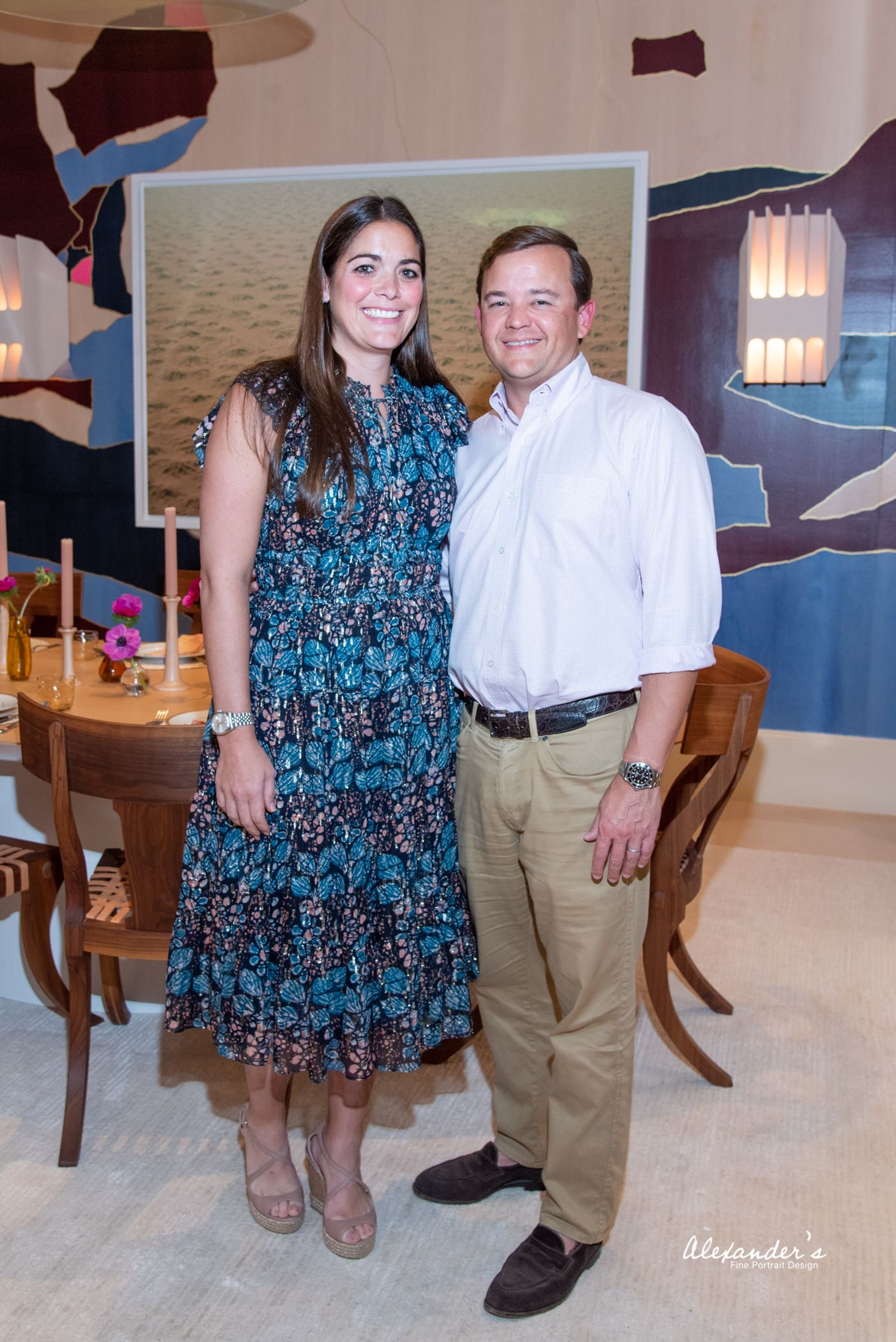
The 2020 virtual gala provides a different picture of Morgan from a transaction announcement. He and Lauren Morgan appear in an event photograph, part of a Houston gathering that moved into participants’ homes. He was also among the executive committee members who chaired the event, which raised more than $700,000.
Two years earlier, they were photographed at the museum’s Día de los Muertos gala, an evening that raised more than $1 million. The crowd had costumes, music and an Astros game to check between dances. Civic fundraising has its own methods of keeping people engaged; a spreadsheet would have struggled to compete with that evening.
These appearances place Morgan within a local institution over time. They need no grand claim about what philanthropy proves. Board service, matching gifts and participation are specific activities. Together, they add a civic chapter to a career otherwise measured in investments.
Morgan’s story returns, finally, to the interval between beginnings and endings. A company receives capital; people decide what to build with it. A partnership lasts; the business changes. A sale arrives when the owners choose it. His work at Platform gives those intervening years a place on the page, where they belong.