A family business can spend years trying to escape its founder’s shadow. Jay Fields bought a piece of his father’s former employer. In September 2021, JD Fields & Company acquired L.B. Foster’s piling products division, bringing part of the older company into the Houston enterprise Jerry Fields had started after leaving it. There are many ways to announce that the next generation has arrived. This one came with steel inventory.
The transaction made a satisfying family circle. It also made business sense for a chief executive working to connect steel distribution, manufacturing and the equipment used to put foundations in the ground. Fields was expanding a company whose name already carried his father’s initials. The question was how much more that name could contain.
His answer has taken him into a Houston pipe mill, Texas land development, a record label and college sports sponsorships. The steel remains central. The other interests make the portrait harder to file under a single occupation. An executive producer credit on a comedy about a campus bus driver is an unusual addition to a steel executive’s résumé. Fields has one.
The purchase with a family resemblance
Jerry Fields founded JD Fields & Company in 1985. Before that, he had spent 17 years at L.B. Foster, rising to president of its pipe division. He left with three other executives to establish a steel supply company. Decades later, the business his son led was buying the piling division of that same employer. Jerry’s response was succinct: “It feels a little bit like déjà vu.”
There was a practical distinction between father and son. Jerry had set up a distribution business. Jay’s expansion added more of the activities around it: making products, fabricating them, supplying machinery and investing in property. Each addition changed what the group could offer a customer, and each brought people with a different kind of expertise into the family business.
The buyer acquired inventory, a customer backlog and facilities connected to a wider domestic supply network. The deal gave JD Fields access to additional Gerdau piling products. L.B. Foster completed the sale on September 24, 2021; its subsequent filings recorded total proceeds of about $23.9 million. Family symbolism had an accounting entry.
The seller had its own logic. L.B. Foster was pursuing a strategy centered on technology and infrastructure solutions, and the divestiture generated cash to reduce debt. The two companies could look at the same business and see different futures. For Fields, piling belonged inside the expanding enterprise. For the seller, letting it go supported a different set of investments.
“It feels a little bit like déjà vu.”
Jerry Fields, on the 2021 acquisition
That difference makes the transaction more interesting than a family reunion. A next generation executive has to decide which parts of the inherited business deserve more capital. Fields chose to deepen the group’s involvement in foundation materials, while giving other interests room alongside them.
Getting closer to the job site
Fields studied economics at Southern Methodist University, attending from 1995 to 1999. By 2018, he was chief operating officer of JD Fields. The Fields Companies holding organization emerged in 2020, giving the expanding businesses a common parent. It was a way to organize activities that increasingly extended beyond buying and selling steel.
The 2020 acquisition of Alameda Pipe & Fab added a California steel piling and foundation manufacturing business. In 2021, JDF Equipment entered the portfolio with vibratory and impact hammers for rent or sale. Mike Songer, an industry veteran with more than four decades of experience, was brought in to lead its operations.
Those hammers supplied a useful next step. Customers buying piling also needed equipment to install it. Fields’s stated purpose was to add another layer of service and pass savings to customers. The expansion was organized around the work a contractor needed to finish, giving the group more ways to participate in the same project.
- 01MakeStructural pipe & piling
- 02FinishFabrication & coating
- 03SupplyDistribution networks
- 04EquipFoundation machinery
A diagram of the group’s expansion, rather than a required sequence for every order.
This is vertical integration in work boots. The term can make a straightforward idea sound like an examination question. Here it means bringing related manufacturing and services into the same business group. Its usefulness depends on whether the connections help customers with costs, delivery and the particular demands of a job.
A mill with a specific assignment
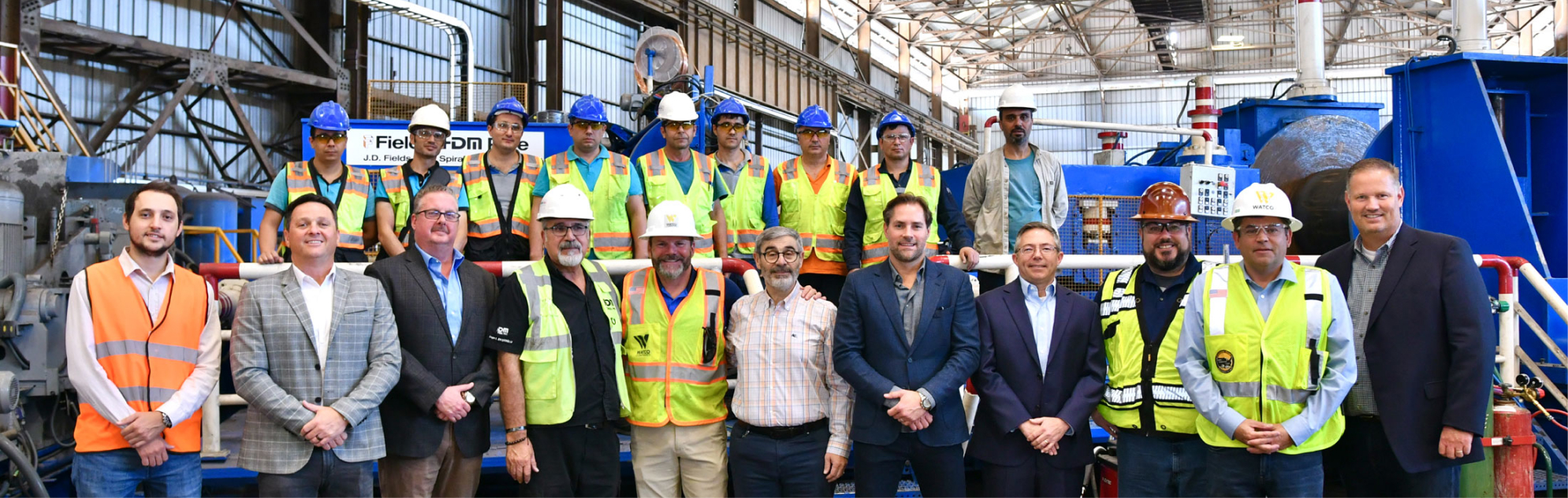
On September 28, 2022, JD Fields marked the opening of its Houston spiralweld mill with a ribbon cutting. The project joined the distributor with Turkish pipe manufacturer HDM, turning an established material relationship into a domestic manufacturing operation. At opening, the facility occupied 130,000 square feet at Watco Greens Port Industrial Terminal.
Its assignment was structural pipe piling for transportation, marine and infrastructure foundations. Spiralwelding turns steel coil into tube along a helical seam. The finished product may help support a bridge or a waterfront structure, doing work that is essential even when the people using the completed project never see it.
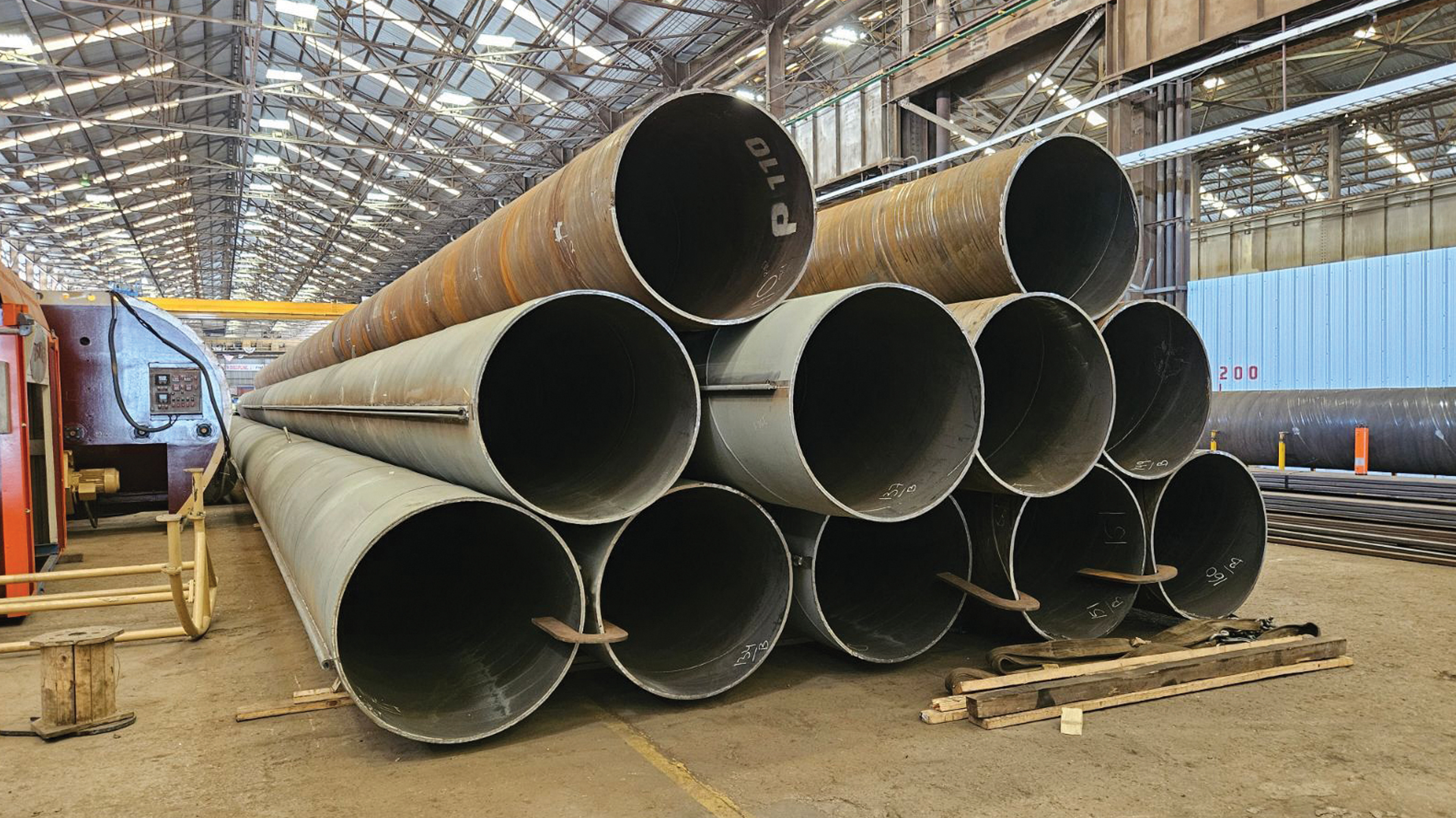
The location mattered as much as the machinery. Access to the Houston Ship Channel connected the facility to truck, rail and water transport. Engineering director Dean Abbondanza described those routes as a way to serve projects around the country. For a business handling large steel products, geography belongs in the operating plan.
The mill also brought fabrication and coating closer to production. Those downstream services could prepare material for delivery to job sites. The partnership built on years of supplying structural piling to North American markets, combining HDM’s manufacturing experience with JD Fields’s technical and commercial work.
By a company update published in early 2025, the facility had grown to 250,000 square feet and was producing more than 50,000 tons of structural piling and geostructural systems annually. The update described deliveries across the United States, Canada, Mexico and the Caribbean. What began as a Houston manufacturing project was serving a broader map.
The steel executive with a soundtrack
A factory provides one way to understand Fields. Foxgate Records supplies another. He is president of the Houston production company and artist management group, whose roster includes singer-songwriter Charlie Mars. The label’s work ranges from recorded music to film, putting a different sort of production inside the wider Fields portfolio.
Fields is credited as an executive producer of Drunk Bus, directed by John Carlucci and Brandon LaGanke and starring Charlie Tahan. The comedy follows a young campus bus driver and an unconventional friendship. The film’s official production credits place Fields among several executive producers. It is a concrete entertainment credit, alongside his industrial responsibilities.
His hospitality interests have been similarly tangible. With longtime friend Eric Houston, he launched Eric & Jay’s RV Resort in 2020. The Houston property covered ten acres and offered 114 landscaped slips, a clubhouse, a pool terrace and a fishing pond. Designer Renea Abbott worked on its interiors. Even a parking place for a recreational vehicle, apparently, can have an interior designer nearby.
Foxgate Capital’s biography of Houston now describes his involvement in the resort’s acquisition, construction and sale. Their relationship continued into real estate investment: Houston serves as Foxgate’s chief development officer. The venture offers a glimpse of Fields working with a longtime connection on a project outside steel, with a location and a customer experience to build.
Foxgate, founded by Michael Carroll in partnership with Fields, focuses on Texas real estate. Its Capital Creek Ranch case study describes a 1,426-acre property in Willis and a development partnership with Amelia Homes. The plan sets aside roughly 1,000 acres for sellable land, with home tracts of two acres or more and remaining space for amenities. The industrial executive’s interests include where people might live, as well as what supports construction.
A sponsorship that came with a conversation
Fields’s connection to SMU extends beyond his economics degree. His public professional profile lists membership in the university’s Circle of Champions from 2012. The Fields Companies later sponsored SMU athletes through name, image and likeness agreements, adding a commercial relationship to an existing university connection.
The company lists agreements with football players Rashee Rice and Roderick Daniels Jr., and basketball players Kendric Davis and Matt Cross. Cross’s sponsorship covered the 2024-2025 season. In a company interview, he described the value of Fields checking in regularly and making the relationship feel personal. His opening words were “I’m extremely grateful for Jay.”
That account gives a more specific view of the executive than a list of corporate titles. Cross spoke about feeling appreciated and gaining confidence. It also preserves the distinction between support and performance: a sponsor can provide resources and attention, while the athlete still does the work on the court.
The group’s charitable interests include Houston Ballet, the Contemporary Arts Museum, YES Prep and Southern Methodist University. Fields also lists himself as a founding member and director of the Harris County Sheriff’s Office Foundation from 2011. These commitments sit alongside the investments, connecting his public career to education, culture and local institutions.
The next foundation has a date attached
In September 2025, Maryland announced a Fields HDM fabrication center at Tradepoint Atlantic, on the Sparrows Point peninsula. The announced project represented $50 million in capital investment, a 200,000-square-foot facility and approximately 150 planned jobs. Operations were expected to begin in early 2027. Those figures describe a project being built, with delivery still ahead.
$50mcapital investment
150planned jobs
2027expected start of operations
The new site would convert steel plates and coils into specialized structural steel, with access to Baltimore’s port facilities. It extends the same practical concern visible in Houston: put production near routes that can move the product. A family business founded around distribution is adding another place to manufacture.
Fields was also named among Houston Business Journal’s 2026 Most Admired CEO honorees. But his own explanation of keeping younger generations engaged, given for the group’s 2025 family business recognition, was less ceremonial. He emphasized hiring talent, providing incentives and keeping the atmosphere loose. “It’s a marathon, but we want to win in the end.”
The marathon now includes pipe, property, music and a bus movie. The inherited business gives those ventures their starting point, while the factory projects keep tying the story back to steel. Fields bought a piece of his father’s past. His next job is to finish building the additions.