The most revealing thing about the original Boosted Board was what happened when the ride ended. Its owner could pick it up. The little electric longboard belonged in the awkward gap between a station and an office, a lecture hall and an apartment. It carried a person uphill, then disappeared under a desk. For a transportation company, that last gesture was almost indecently elegant.
Sanjay Dastoor, John Ulmen and Matthew Tran founded Boosted in 2012 after working on a powered longboard. Ulmen had been exploring electric motors; the founders found an everyday use for the work on campus. Their first pitch treated the board as a six-mile vehicle, capable of roughly 20 miles per hour and light enough to take indoors. The idea was simple enough to demonstrate in seconds. Making enough of them reliably would take years.
- What it did: sold electric skateboards, then a personal scooter, for short trips.
- Who bought: commuters, students and riders who wanted to own their last-mile vehicle.
- What it cost: 2018 boards ran from $749 to $1,599; the 2019 Rev scooter launched at $1,599.
- First big product setback: a 2016 recall of second-generation battery packs.
- What happened: Boosted cut staff in 2020; Lime later bought its assets and intellectual property.
A commute you could carry
Boosted joined Y Combinator's summer 2012 batch and launched a Kickstarter asking for $100,000. Backers pledged $467,167, from 1,110 people. That is excellent evidence of desire, though crowdfunding is a promise to deliver, rather than a completed sale. Boosted then had to turn a prototype into a product that could tolerate cracked pavement, steep streets, water, luggage, storage closets and impatient riders.
The founders' distinction was to treat an electric skateboard like a small vehicle. A handheld remote controlled acceleration and regenerative braking. Dual motors delivered hill-climbing power; the board still carved like a longboard. Its size made it unusually compatible with trains and offices. A bicycle can do a longer trip. A shared scooter avoids the purchase price. Boosted offered a different bargain: own the ride, learn its feel, take it with you.
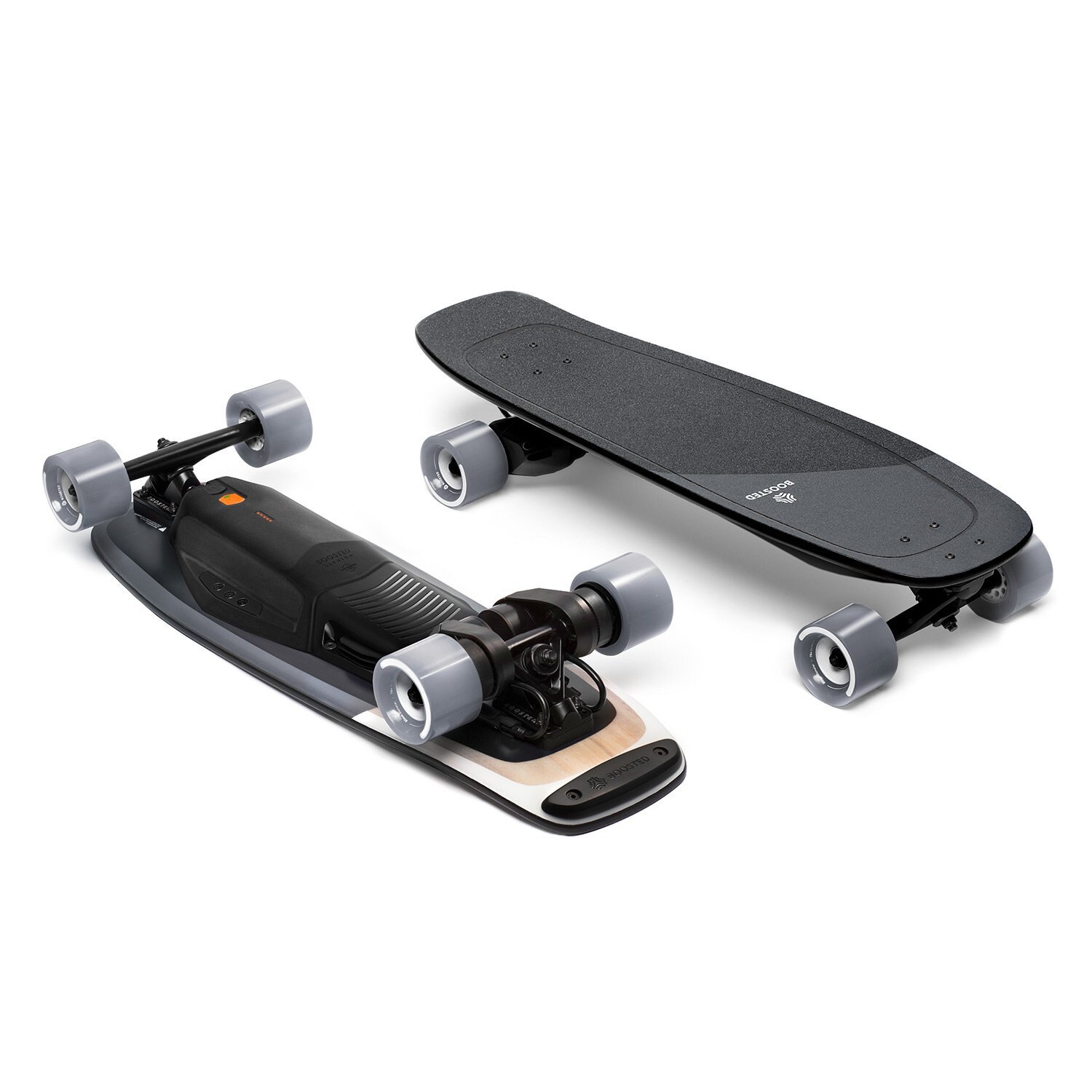
This was a premium bargain. Boosted was competing with bicycles, transit, ZBoard and later a swelling field of electric skateboard makers. It could not win on sticker price alone. Its pitch depended on the precise feeling of the throttle, predictable braking, a flexible deck and responsive service. None of those qualities fits neatly into a row of specifications, which is why early demonstrations and riders telling other riders mattered so much.
The price of a smile
The 2018 lineup made Boosted's market logic visible. The Mini S, at $749, put a shorter board within reach of buyers who found the longboard too costly or cumbersome. It claimed up to seven miles of range and 18 mph. The $999 Mini X doubled the claimed range to 14 miles and reached 20 mph. For longer rides, the $1,399 Plus promised up to 22 mph; the $1,599 Stealth offered a fifth riding mode and up to 24 mph. Those were launch prices and manufacturer range claims, not guarantees for every rider or route.
Boards launched in 2018; Rev launched in 2019. Bars compare original US list prices.
Boosted sold vehicles and accessories, mainly as one-time purchases through its own site and retailers. There was no rental network to unlock and no fare to collect. That kept the product personal and portable, but it put assembly, parts, support and warranty work on the manufacturer. The battery is not a detail in a vehicle that a person stands on; it is a safety system and a recurring service obligation.
The first warning came from underneath
In 2016, Boosted introduced a second-generation board with a more modular design and swappable battery. It soon told owners to stop riding certain boards while it investigated battery venting. A federal recall followed for affected Dual+ battery packs. The recall did not end the company. It did reveal an unfriendly fact of hardware: a defect can interrupt shipping at precisely the moment demand is arriving, and solving it consumes money and attention that marketing cannot replace.
Boosted still grew. Its 2018 Series B brought in $60 million, co-led by Khosla Ventures and iNovia Capital, with Stanford-StartX Fund and Bay Meadows participating. The financing came with a wider thesis. Boosted was no longer merely the electric board maker. It wanted to build more kinds of light vehicles, widening the market beyond people happy to stand sideways on a longboard.
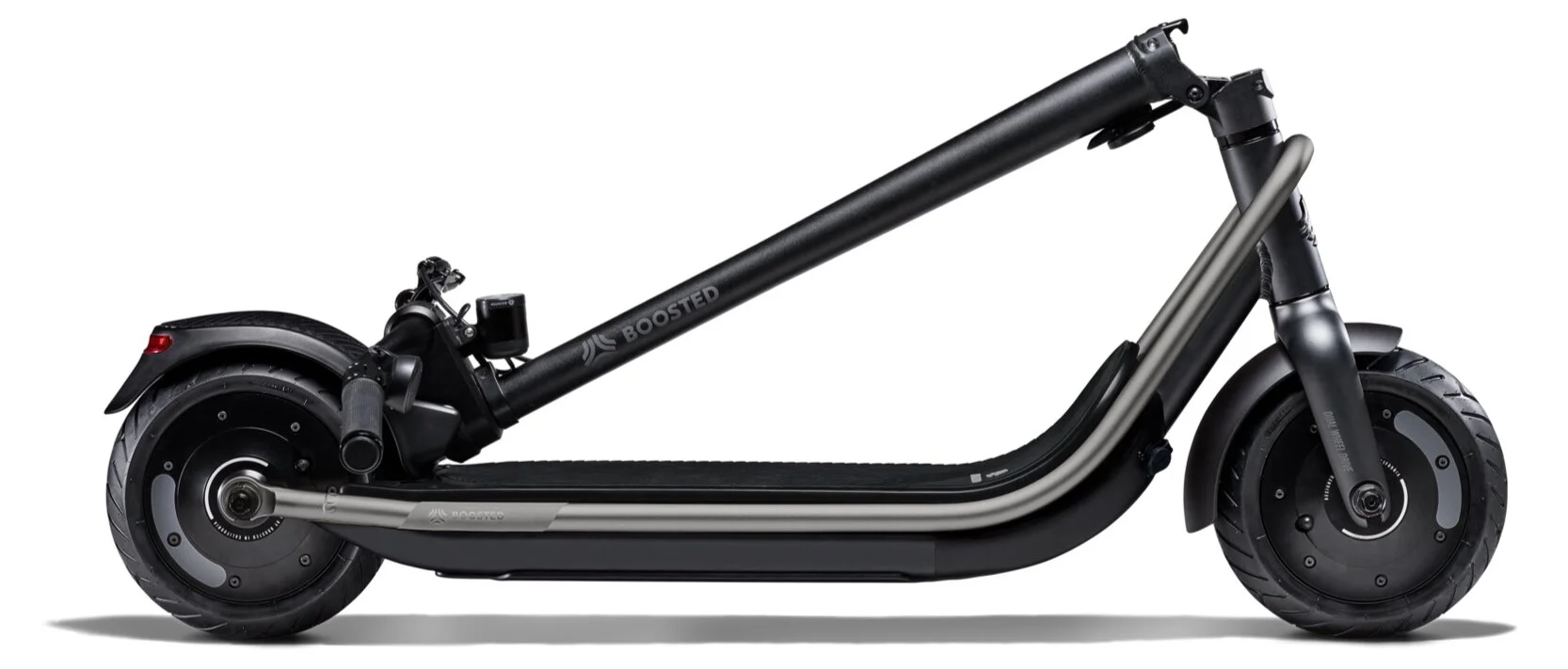
The result was Rev, a scooter with handlebars, dual-wheel drive, three ways to brake and a claimed 22-mile range. It cost $1,599 when announced in 2019. At 46 pounds, it was a very different companion from a 17-pound Stealth longboard. It offered a more familiar stance, but it was heavier to carry and entered a market where cheaper personal scooters and shared rentals were already familiar. The engineering was substantial. So was the new cost structure.
The rider outlasted the maker
By March 2020, Boosted said more than 100,000 riders had covered tens of millions of miles on its products. The same month, CEO Jeff Russakow and CTO John Ulmen announced layoffs of a significant portion of staff and said the company was seeking a new owner. They named the cost of developing, producing and maintaining electric vehicles, and the expense of US-China tariffs. The scooter expansion added complexity and a bigger financing need. There is no neat single villain here; the accounts differ in emphasis, while the public announcement makes the financial pressure plain.
Lime bought Boosted's assets and intellectual property in April 2020. The original manufacturer ceased operations. A separate retailer, Boosted USA, sold remaining products and parts. Owners organized documentation and repair advice in forums and independent communities. For someone with a board in the closet, that distinction matters: a brand name on a parts site is not the factory that originally guaranteed the ride.
What should another company copy? Start with the exact nuisance people will pay to remove. Boosted did not ask commuters to love transportation in the abstract; it made the final few miles tactile, fast and easy to store. Demonstrate the experience before buying enormous inventory. Price the entire ownership promise, including safety, service and repairs. If the product is a vehicle, those obligations are part of the product.
And when would the Boosted idea fail for a rider? A long, wet or rough route, a place that restricts motorized boards, an inaccessible charging routine or an inability to carry the device changes the arithmetic. A cheap shared scooter or a bicycle may fit better. Boosted's genius was never that one board could replace every trip. It was that a small stretch of city, previously endured, could suddenly be enjoyed. The company itself could not carry that feeling to profitability. The riders, curiously, kept carrying it home.